
The box that would not open
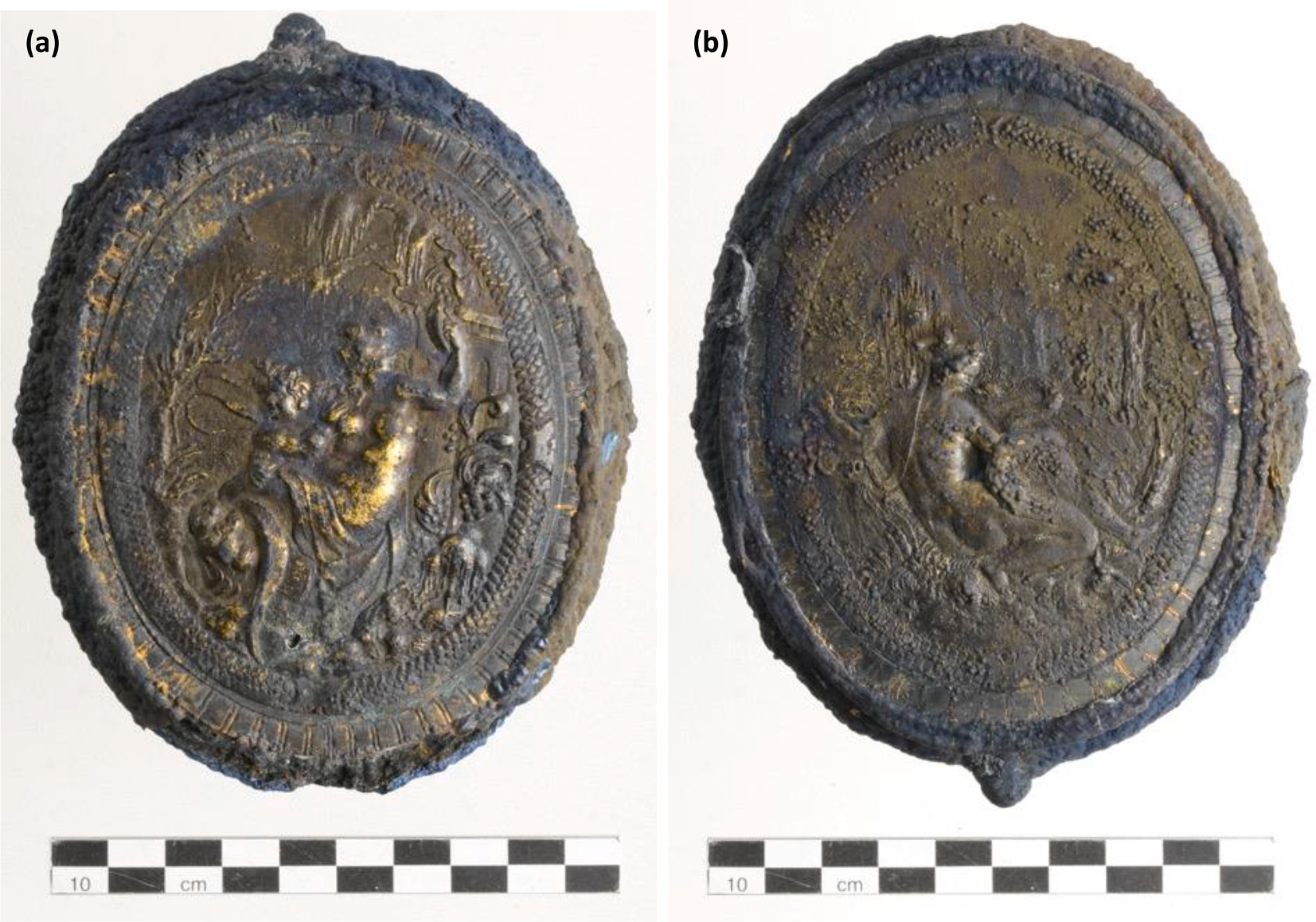
In 2021, Museum Kaap Skil on Texel brought research on a shipwreck box to a public lecture. The oval object came from the Palmhoutwrak wreck. Both faces carry mythological reliefs, with gilding still visible, yet centuries on the seabed had left it too fragile to open. Its elaborate exterior offered little certainty about what held it together.
The box, inventory 5372-007, is only about thirteen centimetres long. Removing the layers that obscured it might also remove evidence of manufacture and use. A study published in 2021 therefore examined the object before cleaning and conservation. The immediate problem was to understand a structure that could not safely be opened.
Han’s contribution was a section drawing
Han’s contribution to that study is specific: she made the reconstructed cross-sections of the box. The paper credits Tracy Han of the University of Amsterdam, and its construction illustration bears her name. Her drawing presented the researchers’ most plausible arrangement of the parts, making their interpretation easier to follow.
She had sought this kind of specialist training after working at Chimei Museum in Tainan. In a 2020 interview, she described limited metal-conservation training resources in Taiwan at the time. Her teachers had arranged additional courses; Chimei later permitted up to five years of unpaid study leave, and a Ministry of Education scholarship helped her study conservation in Amsterdam.
One image did not answer every question
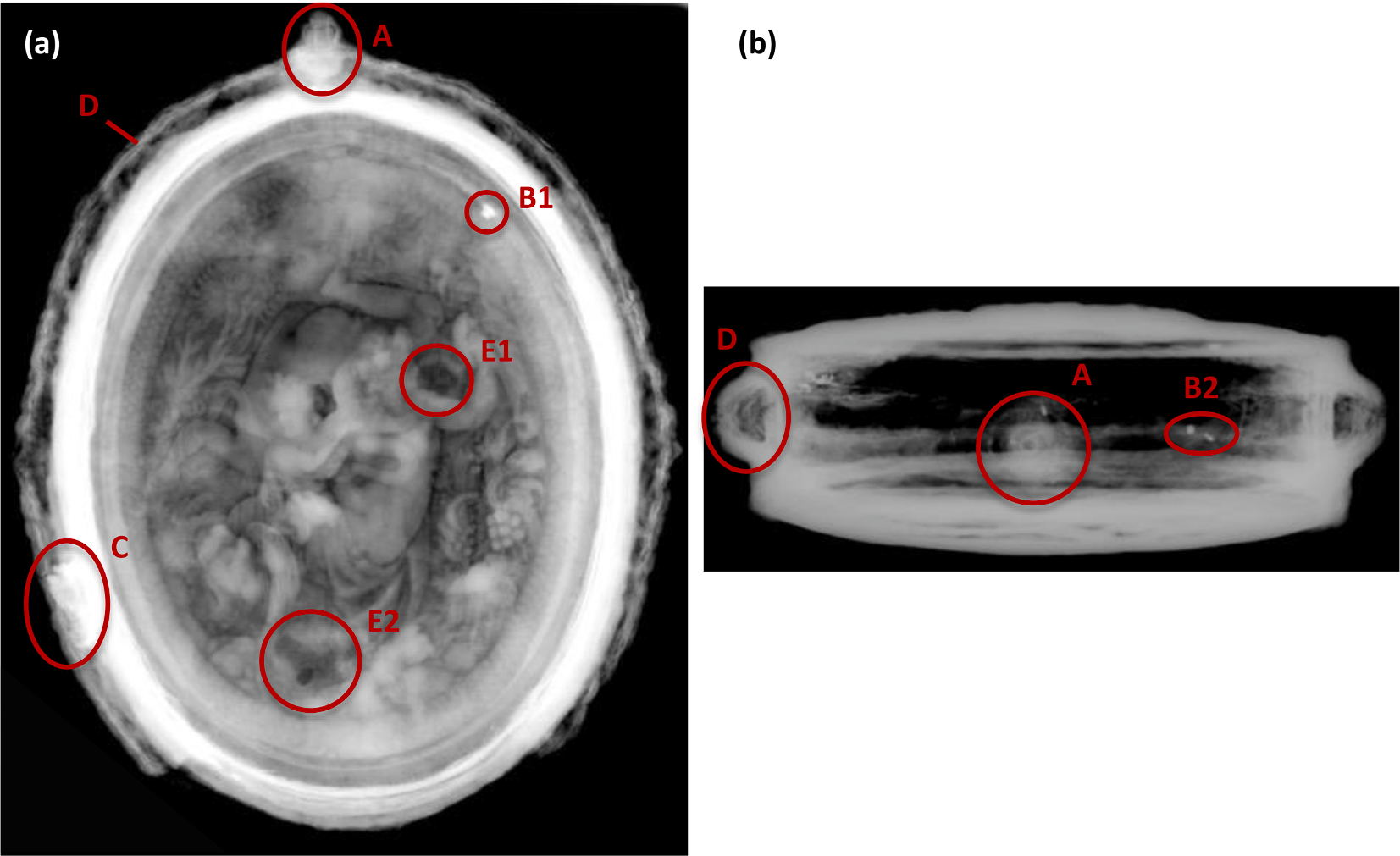
The team’s X-radiographs revealed a hollow structure around the box’s side and cracks within it. But a projection through the whole object could not reliably show whether its decorated faces had been cast or embossed. Neutron tomography supplied further evidence; the familiar X-ray image was one stage of the investigation.
The combined evidence supported cast decorative plaques alongside worked sheet-metal parts, and helped identify possible earlier repairs. Han’s section drawing made the resulting interpretation visible. Calling it the “most plausible” construction preserved the distance between evidence and certainty—a useful distinction before anyone intervened in the object.
Back in Taiwan, the tool became heavier
For Han, knowing how something was made mattered to what should be preserved. In the 2020 interview she explained that practical making experience helped her distinguish a flaw left by casting from later damage. Removing the wrong feature could erase historical information. That concern connects the Dutch box’s hidden structure with her continuing choice to learn by doing.
A March 2023 report found her back in Taiwan, taking a 600-hour welding course. She described sore hands and shaking after practice. Her trainer, Chien Chuan-en, spoke of fumes, dust and noise. Learning abroad had not ended her training: to read materials more closely, she had chosen to become a student at the workbench again.
Read a metal surface in Tainan
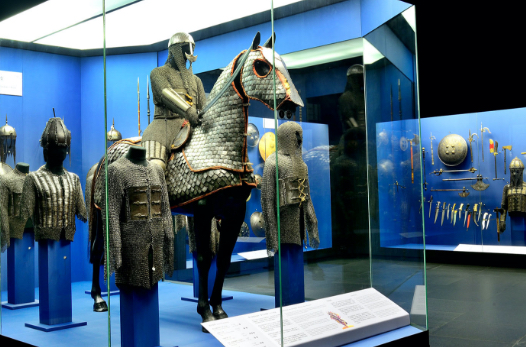
In Taiwan, the public continuation is Chimei Museum, where Han worked and received support for overseas study. Its arms-and-armour galleries arrange objects from Europe and other regions to show changing technologies, forms and decoration. Comparing a piece’s shape and assembled parts gives a visitor a concrete starting point for the question that guided her: how was this made?
The museum’s official guide gives a walk of about fifteen minutes from Baoan railway station. For the return, allow time to walk back and check the day’s trains. The public galleries offer the visit; the conservation rooms are not part of an ordinary walk-in itinerary. A little longer in front of a case can turn a polished surface into a record of manufacture, repair and care.