
A cultural invitation needs a community’s own story
Oriental Daily’s account of the July 2025 Alishan promotion in Kuala Lumpur placed Indigenous culture and local crafts alongside forest tourism. The phrase can cover many very different communities. A visit becomes more meaningful when one place can explain its own symbols and the work behind them. In Laiji, the boar provides that opening.
The Laiji community association tells of ancestors coming from Tefuye, following a boar and finding fertile land below sacred Tashan. It presents this as the community’s origin tradition. The animal therefore means more than a decorative mascot for a visitor. A small carving refers to the way residents recount where their community began.
Produce was trapped; fields still needed tending
Typhoon Morakot devastated Laiji in 2009. The association’s earlier visitor-shuttle operation broke apart as the surrounding infrastructure suffered. Liang Shu-fen later described farmers’ predicament: produce could not be transported out, but leaving the fields unattended would cause further loss. Rebuilding and maintaining a livelihood had to take place at the same time.
Liang had returned to the community in 2005 and joined the association in 2008. Her work crossed the disruption rather than beginning after it was over. The association looked beyond farming and visitor transport for another skill residents could use. Older community members’ craft knowledge offered a starting point, but making something saleable brought a new set of material and labour problems.
Changing the wood changed the work
The first craft attempts used an expensive, hard timber that took too long to work economically. During the cleanup of homes, residents found fallen camphor wood. Switching to the softer material made production faster and reused something the disaster had left behind. Orders for awards and wedding gifts followed. A material choice became one part of recovering income.
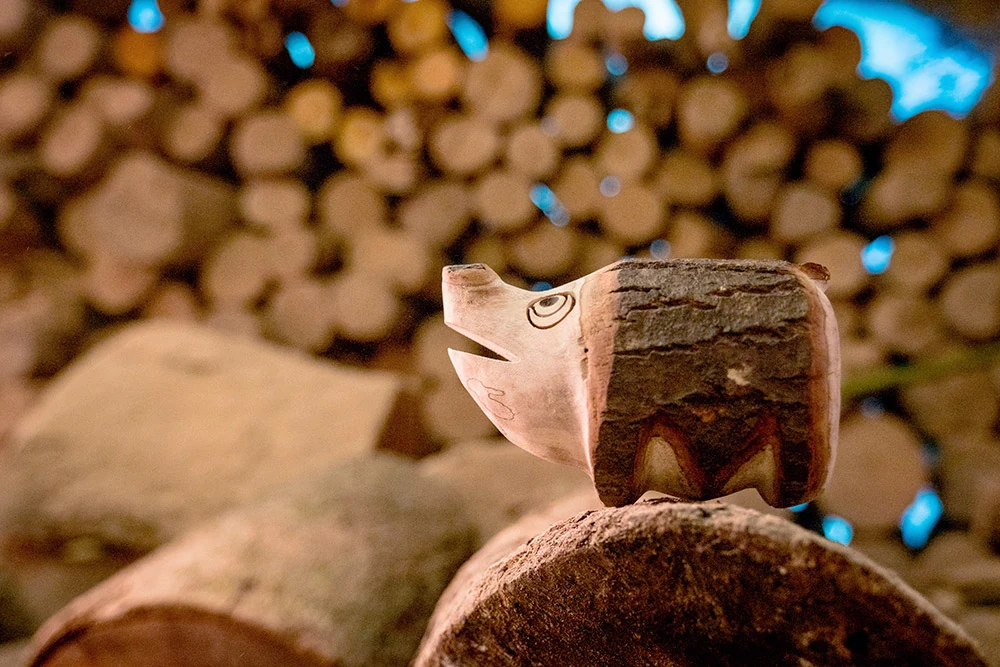
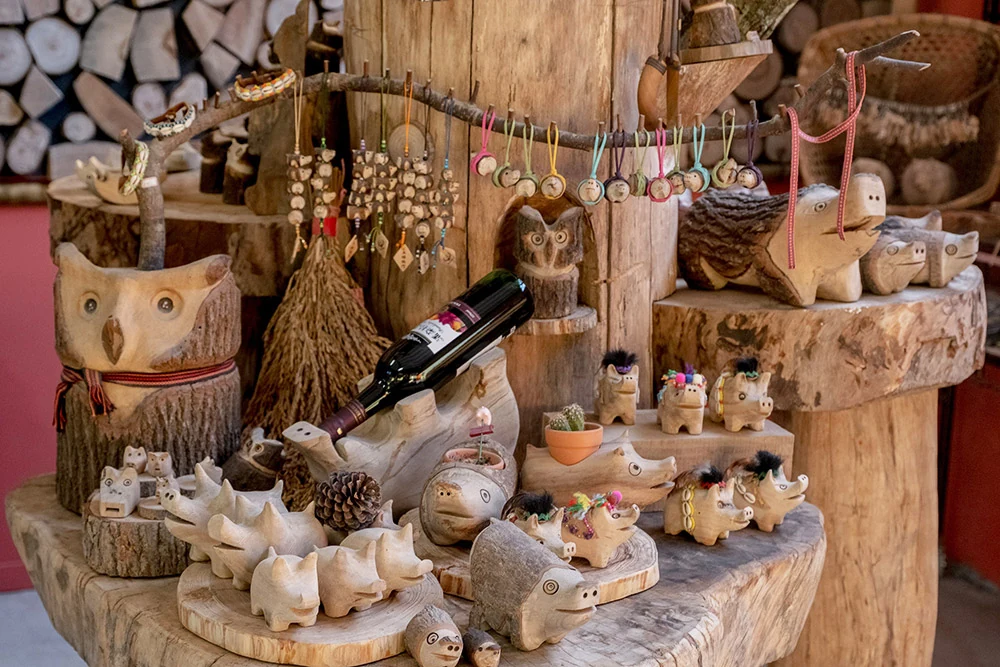
The association’s Fuzu workshop continues to describe its crafts as hand-made by community members, mostly in camphor. Look at the contrast between a boar’s simplified shape and the irregular wood it is cut from. Different grain, bark and proportions make the object particular. The work combines a recognisable community symbol with the decisions needed to turn a piece of wood into something usable.
A livelihood cannot depend on one kind of visitor
Craft work did not solve every problem. As nearby tea work recovered, its earnings drew younger people away from the workshop. Later, the pandemic reduced visitors and craft purchases. The association tried vegetable boxes sold online; when local growing space could not keep pace, it handed that business to neighbouring farmers and turned its own attention to preparing community shops and resting places.
These changes show a community responding to more than the arrival of tourists. A field, a workshop and a shop need different kinds of labour and different rhythms of demand. One can help when another is interrupted, but each must still be made workable. Liang’s later wish to create opportunities for young people belonged to that continuing effort; it was a future goal rather than proof that the problem had been settled.
Hold the boar, then ask about the material
The association lists a hand-polishing boar activity lasting about forty to sixty minutes, with telephone reservation. It also offers guided community experiences. Choose a session that has been confirmed for your date. Ask which parts are already prepared and what you will finish by hand; the answer helps distinguish a visitor’s activity from the full work of the workshop.
At the public workshop, give the wood and the craft space time rather than passing quickly from one boar sculpture to another. If a community guide explains the origin tradition, let that account provide the meaning of the object. A carved animal can then carry both belonging and labour: where a community says it came from, and how residents kept finding ways to live there.