← Countries & stories

A Malaysian viewer’s wish to return to the cinema leads to Tsai Ming-liang’s journey from Kuching to Taiwan, his work with Lee Kang-sheng, and a 2014 exhibition shaped with curator Lin Man-li, art director Lee Tien-jue and student makers.

Hand-painted cabbage cushions in MoNTUE’s2014 exhibition, showing how objects changed the position of spectators. The exhibition has ended.

From Kuching to Taiwan, a place and time for looking

Malaysian critic Chen Weiguang wished he could revisit Tsai Ming-liang’s films on a large screen. Tsai’s own cinema memories began beside his grandparents in Kuching. In Taiwan, actors, a cinematographer, a curator and student makers helped him give viewers more ways to stay with an image. Follow their decisions to a public film venue in Xinzhuang.

Hand-painted cabbage cushions on the floor of MoNTUE’s 2014 Stray Dogs exhibition

A viewer wants the film back on a large screen

In 2021, Malaysian critic Chen Weiguang described a gap in his viewing of Tsai Ming-liang. He had watched many films on discs or online; Your Face was an exception, seen in a cinema through the third Malaysia International Film Festival. He wished he could revisit the others on a large screen. For this particular viewer, a film reaching him and having a place to watch it properly were two different things.
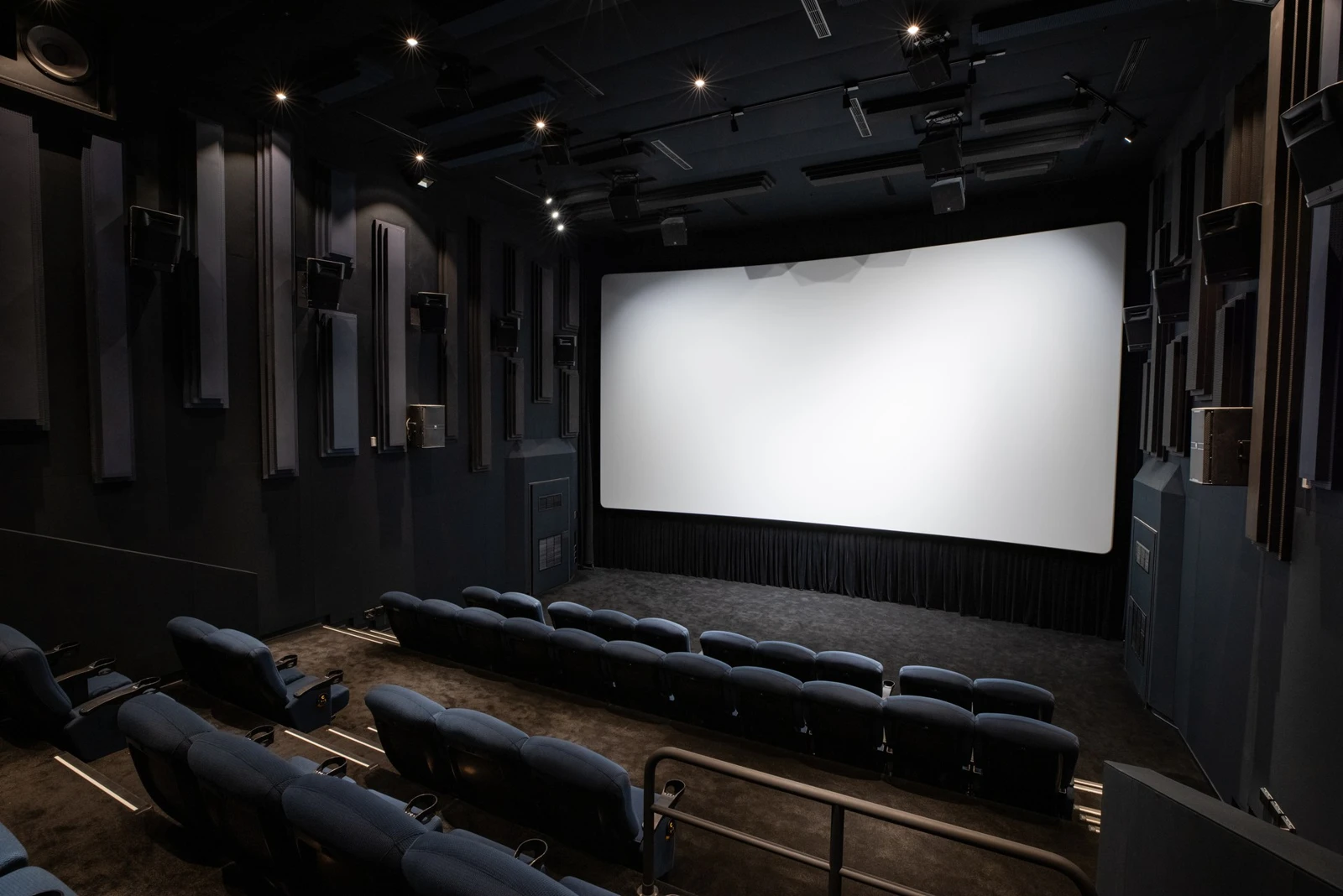
The institute’s Small Frame screening room, in the original venue photograph. Photograph date unstated; select a current programme and screening time before visiting.

Chen wrote about the time a shot gives to a meal, a body or an emotion. In his experience, looking away and returning to an apparently unchanged frame could interrupt the feeling gathering inside it. His column also discussed Past Present, a documentary that follows Tsai’s return to Kuching and his childhood cinema memories. A Malaysian viewer’s wish for a screen leads back to a child whose daily life once included sitting before one.

The institute’s Small Frame screening room, in the original venue photograph. Photograph date unstated; select a current programme and screening time before visiting.

Grandparents, a departure and travelling cinema seats

Tsai grew up in Kuching, Sarawak. In a 2023 interview, he recalled living with grandparents who loved films and took him to the cinema. The memory belongs to the 1960s, before television entered that childhood. Watching a film was tied to being with family and encountering a world beyond the city. Those repeated trips gave him something he could carry into later work.

The institute’s Small Frame screening room, in the original venue photograph. Photograph date unstated; select a current programme and screening time before visiting.

After secondary school, he had considered staying in Kuching to work. Many friends went to Taiwan, and he decided to go as well, later recalling that he studied theatre rather than film. Chinese Culture University’s theatre department lists him among its alumni. The crossing was still an open choice when he made it: a young filmgoer entered the practical work of performance and creation.

The institute’s Small Frame screening room, in the original venue photograph. Photograph date unstated; select a current programme and screening time before visiting.

Memory later travelled through objects. For the installation It’s a Dream, shown at the Taiwan Pavilion of the Venice Biennale in 2007, Tsai used old seats from a closed Malaysian cinema. In a 2010 interview about its Taipei Fine Arts Museum display, he described arranging the chairs so viewers could notice their neighbours. The audience sat on remains of an earlier cinema while watching a place preserved by film.

The institute’s Small Frame screening room, in the original venue photograph. Photograph date unstated; select a current programme and screening time before visiting.

A face requires people, light and time

In Taiwan, Tsai met actor Lee Kang-sheng in 1991. Their continuing work gave him a person whose changes he could follow through the years. Lee also appears in Your Face. Speaking about that film, Tsai described looking for people with cinematographer Xiao-gu, then choosing Guangfu Hall in Taipei’s Zhongshan Hall for its quiet and the sense of time held by the room. Finding a face also meant finding somewhere to film it.

The institute’s Small Frame screening room, in the original venue photograph. Photograph date unstated; select a current programme and screening time before visiting.

Most participants were older people, so the team planned their arrival to avoid long waits. Tsai gave each a position and background; lighting each face took patient work. In the same interview, he identified the changing light in the final room shot as natural light. The production account turns a spare image into a set of decisions: who arrives when, where a person sits, how light falls and how long the camera can remain.
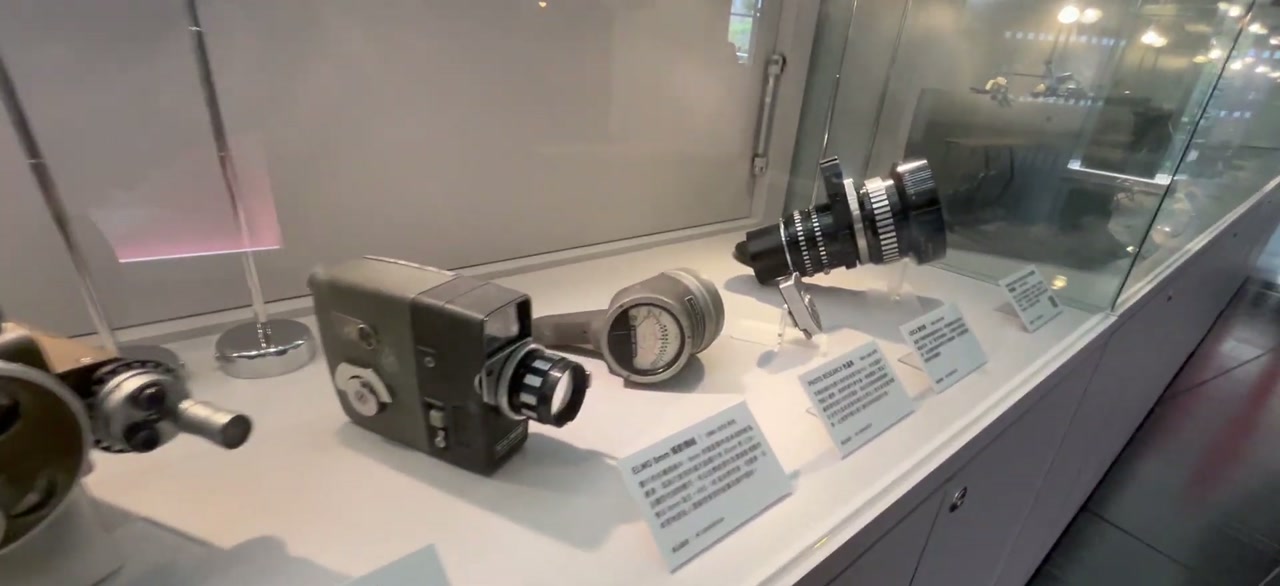
Image-making equipment displayed at the institute, recorded in a visit video uploaded27April2025. Exact filming date and present display status are unstated.

Lin Man-li asks the museum to do different work

Before filming Stray Dogs, Tsai had discussed showing it at MoNTUE with Lin Man-li. Their jointly curated exhibition ran from 29 August to 9 November 2014. The museum offered room to separate and rearrange the film’s images. An exhibition could then give the completed work another form, and visitors another way to spend time with it.
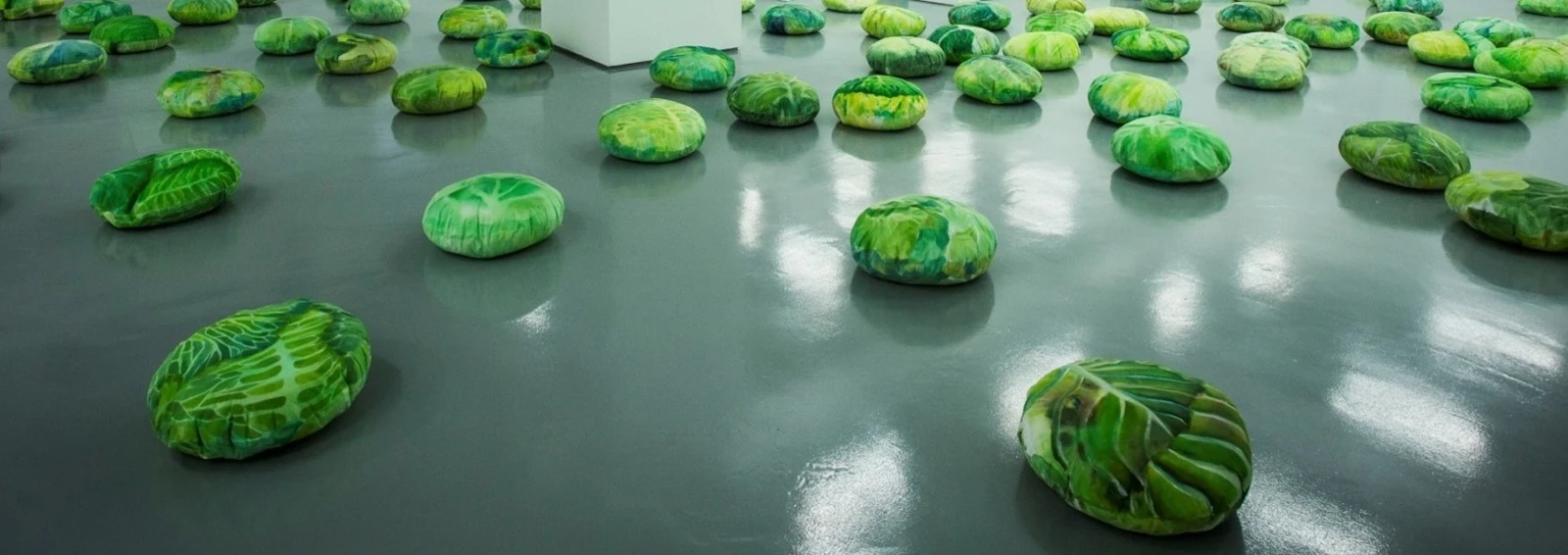
Hand-painted cabbage cushions in MoNTUE’s2014 exhibition, showing how objects changed the position of spectators. The exhibition has ended.

Tsai brought branches gathered after a typhoon into the museum. Paper from his stage work Xuanzang became a projection surface. Branches and images now sat beside daylight and views of the city. A visitor could move between the filmed scene and the world beyond a window.
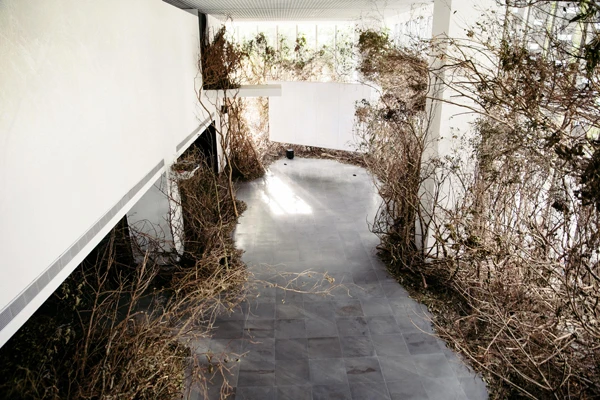
Branches and an empty projection surface in the2014 Stray Dogs exhibition at MoNTUE. This is historical exhibition documentation.

Lin urged Tsai to use the museum’s space; art director Lee Tien-jue advised on the installation. Art students painted cabbage cushions for the basement’s floor seating. Mattresses on the third floor let visitors come and go during a complete screening. Several people’s work changed how an audience could stay with one film.

Hand-painted cabbage cushions on the floor of MoNTUE’s 2014 Stray Dogs exhibition
Branches and empty projection surfaces in the 2014 Stray Dogs exhibition at MoNTUE

The exhibition changes its evenings

Tsai had sold tickets himself for years. Moving films into museums and universities offered other ways to reach viewers. At MoNTUE, that search became a practical question for the collaborators: how could their building give people more time with the work?

Image-making equipment displayed at the institute, recorded in a visit video uploaded27April2025. Exact filming date and present display status are unstated.

The venue changed its schedule during the exhibition. From 9 September 2014, responding to visitors’ requests, MoNTUE stayed open until 21:00 and added evening screenings. A wish to remain longer led to an additional period of access. Tsai would still say in 2023 that he wanted to show work in cinemas too. The experiments widened the possible places for his films, while the question of enough space and time continued.

Hand-painted cabbage cushions in MoNTUE’s2014 exhibition, showing how objects changed the position of spectators. The exhibition has ended.

Choose a film and give it its full time

Today’s public continuation can begin at the Taiwan Film and Audiovisual Institute in Xinzhuang. Its current programme includes restored films and different screening formats. In the 2026 listing for The Game They Called Sex, the institute identifies Tsai among the film’s screenwriters, offering another view of his work with Taiwanese collaborators. Choose a session from the current programme and use the auditorium named on that listing. Small Frame’s fixed seats and prepared sound environment offer another place to concentrate on a complete film.

The institute’s Small Frame screening room, in the original venue photograph. Photograph date unstated; select a current programme and screening time before visiting.

The centre’s public areas open Wednesday–Sunday, while cinemas follow their sessions. Leave time for the whole selected film and arrive before it starts; return by the same walking route to A4 Xinzhuang Fuduxin station. MoNTUE can be a separate-day visit arranged through its current notices. Its 2014 exhibition belongs to history, but the question travels onward: how do a seat, a room and the people preparing them allow someone to look for longer?
Empty seating in the Small Frame auditorium at the Taiwan Film and Audiovisual Institute

Leave a session’s time for looking

Main visit
Taiwan Film and Audiovisual Institute, 2 Wenyi Road, Xinzhuang District, New Taipei City. Use the current programme to choose a film, auditorium and session before planning the visit.
Opening
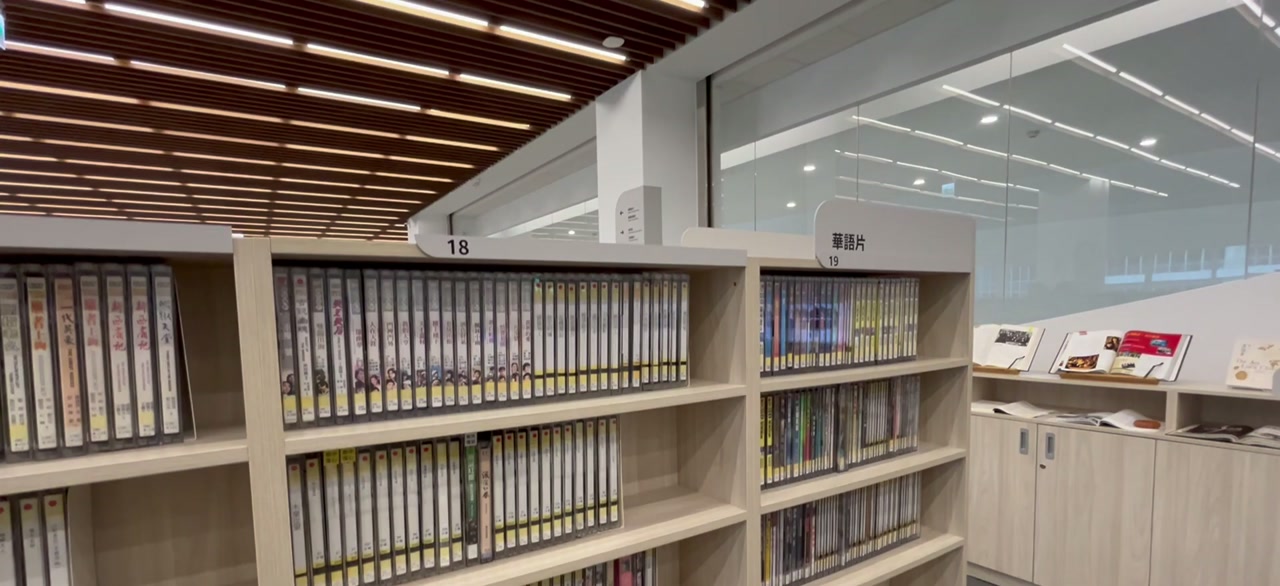
The 1F public areas and 2F exhibition area open Wednesday–Sunday 11:00–20:00 and close on Monday and Tuesday. Cinemas follow their screening sessions; the 3F library requires a membership card.
Arrival and return
Use Exit 2 of Taoyuan Airport MRT A4 Xinzhuang Fuduxin station. The institute lists a walk of about six minutes. Walk back to the same station after the film, and check the Airport MRT’s current return trains when choosing an evening session.
Admission and time
The institute normally opens cinema admission ten minutes before a film, with special sessions governed by their notices. Allow the selected film’s full duration and any introduction or discussion listed for that session.
Current programme
The 2026 programme includes the restored The Game They Called Sex, listed at Small Frame on 24 October, 18:00–20:10, with a staff introduction. Use the programme’s current booking status when choosing a session; other films are listed in the same programme overview.
MoNTUE on another day
MoNTUE, 134 Section 2, Heping East Road, Da’an District, Taipei. Its visiting page lists Tuesday–Sunday 10:00–18:00, Monday closure and an approximately five-minute walk from Technology Building MRT station. Check current exhibition notices and admission arrangements; the 2014 Stray Dogs exhibition has ended.
What to observe
Notice the relationship between the seat, screen and room, and how image and sound hold your attention over a complete screening. Filming, photography and recording are prohibited during films in the institute’s auditoriums.

A visit for today

Begin with a current film programme and allow its full running time. The building, exhibition circulation and apparatus in this film are earlier records; they do not establish which objects or exhibitions will be on view now. The institute’s library is a specialist membership library. Check the official venue, library and ticket pages for current access, and respect the rule against filming during screenings. The2014 MoNTUE exhibition belongs to a separate venue and a past period.

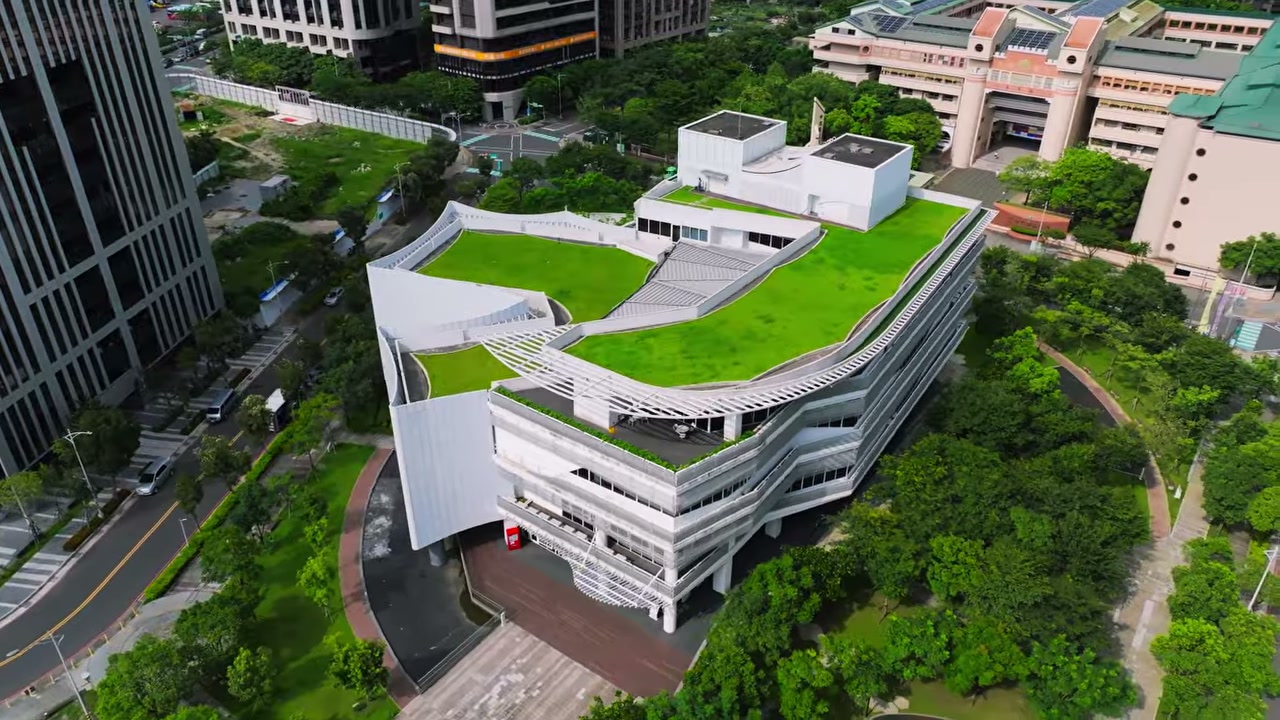
Taiwan Film and Audiovisual Institute within Xinzhuang’s cityscape. Original aerial source; filming and upload dates not recorded in the surviving source ledger.
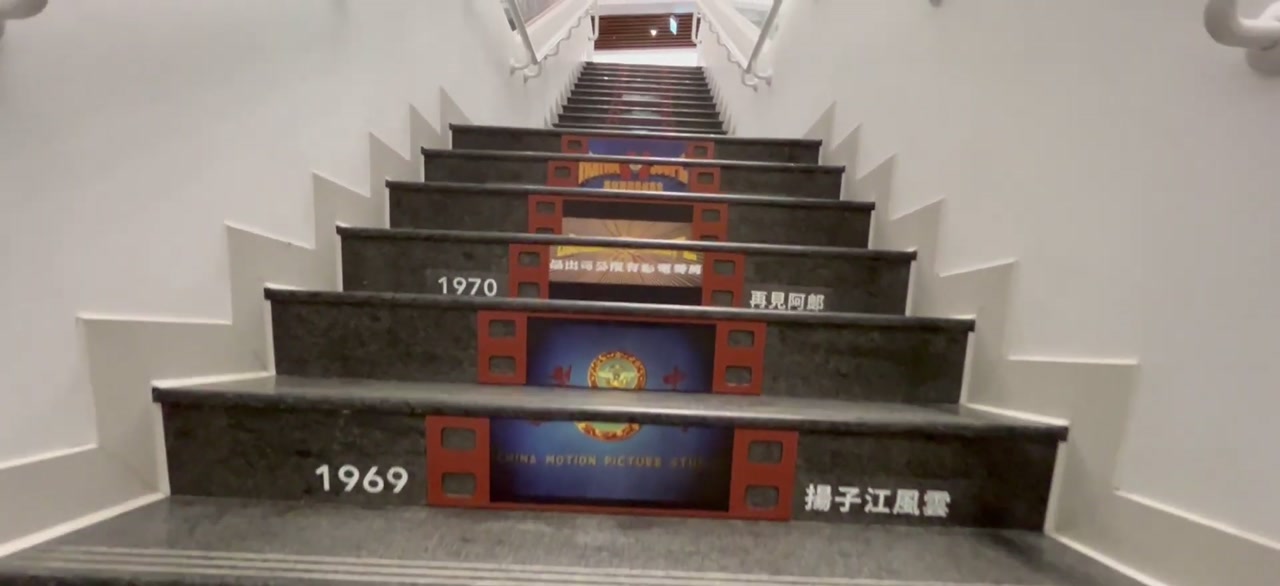
Film years appear on a staircase in the institute’s earlier exhibition route, recorded in the2025 upload. Check the current exhibition before visiting.
The institute’s specialist library in the2025 visitor film. Access follows membership and current library rules.
Additional source and footage information