A destination enters a route people already use
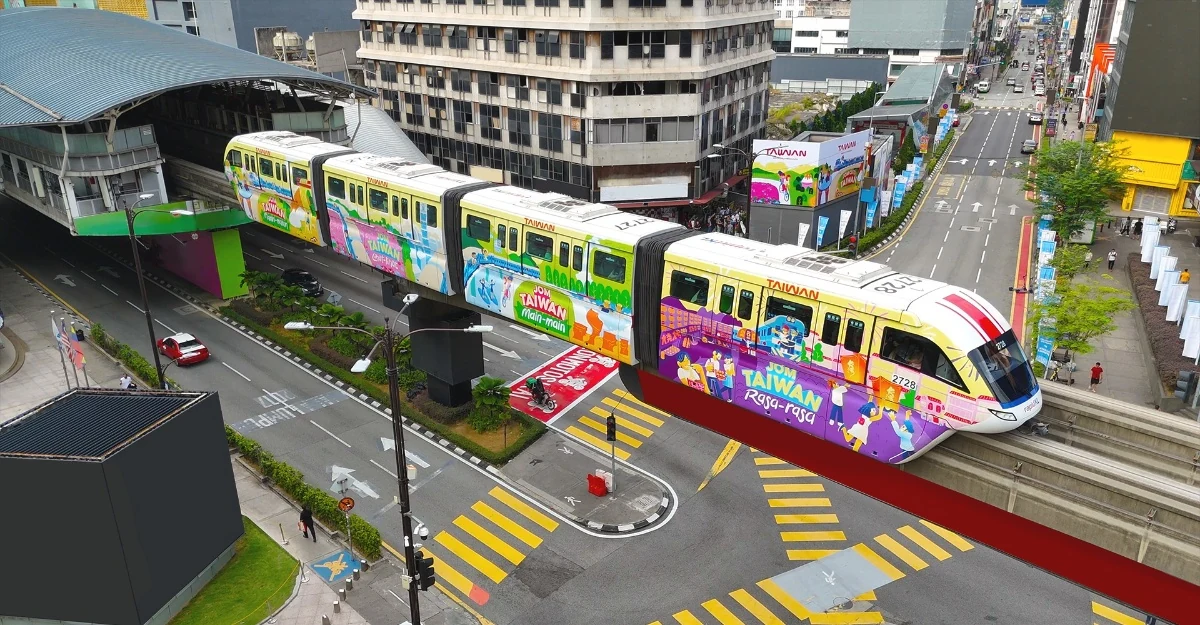
On 26 September 2024, Taiwan’s Kuala Lumpur tourism office launched Jom Taiwan: Ride the Adventure with Book of Lai. TRP’s Malay-language account followed the campaign from its launch to the Monorail and Bukit Bintang MRT advertising settings. A destination was placed inside an existing daily journey, rather than waiting for a traveller to open a guidebook.
Hype Malaysia reported attending the launch at the Slate, The Row. Its brief local diary places the collaboration in an identifiable Kuala Lumpur cultural setting. The interesting design question is what happens between that launch and a commuter’s glance: which Taiwanese details can become legible quickly, and what kinds of travellers are allowed a place inside the picture?
Lai had been drawing homes that could move
Lai’s own studio account describes Tiny Moving Place, a series begun in 2015 that imagines small vehicles as self-contained living spaces. Cafés, shops and homes can become portable in this visual world. When a mobile home enters the Taiwan campaign, it therefore carries a longer creative interest, rather than being a decoration invented only for one tourism advertisement.
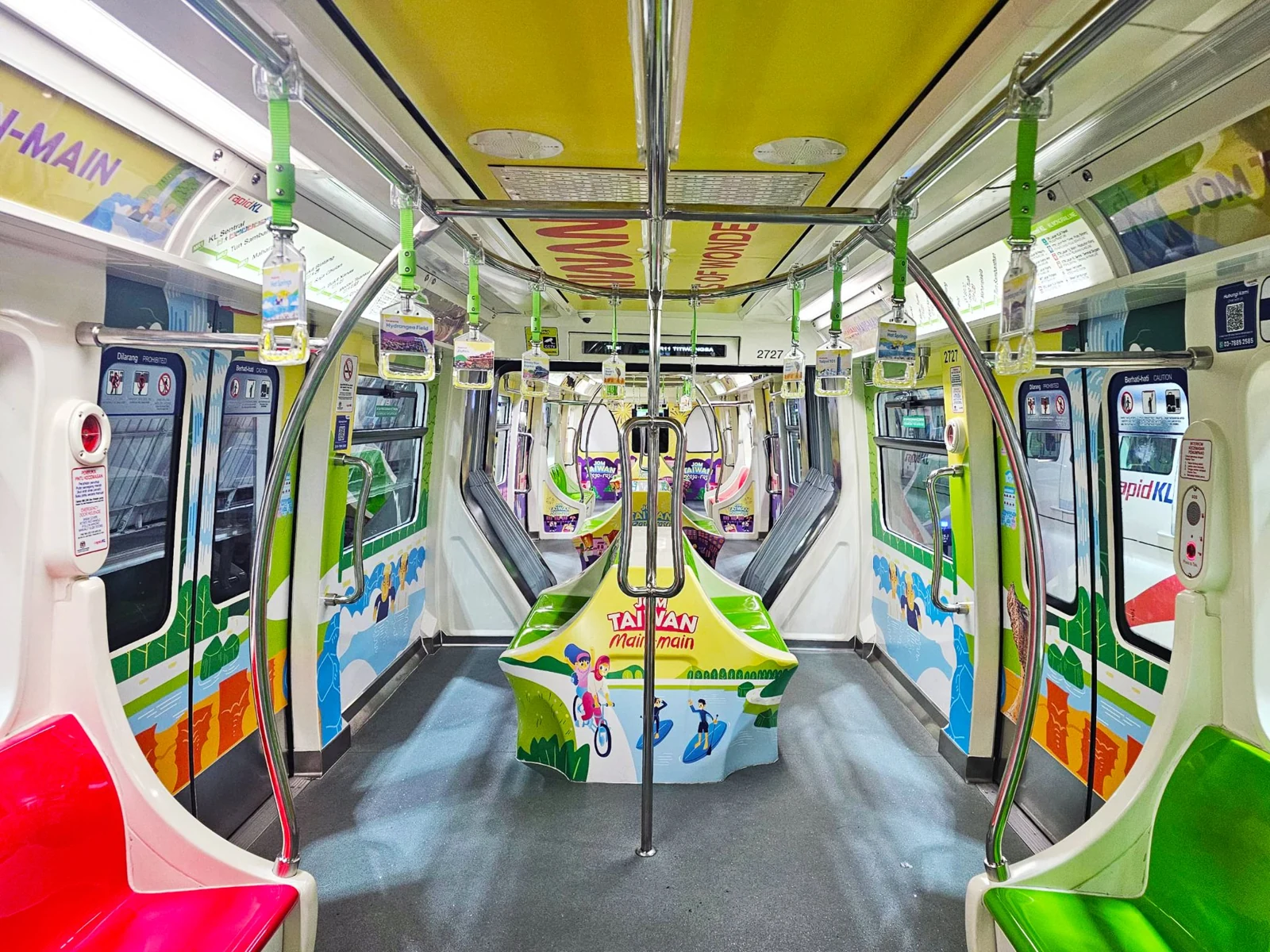
The campaign also placed Malay, Chinese and Indian characters in its travel scenes. Taiwan’s local commissioning office offered the destination; Lai gave the invitation a vocabulary connected to Malaysian society. The characters are part of how the work addresses its audience. They do not tell us how every Malaysian passenger responded, but they show who the illustration chose to picture as a traveller.
Food becomes a place to pass through
Siakap Keli’s campaign account describes the Breezy Blue train passing through a bubble-tea tunnel, a beef-noodle slide, a fried-chicken forest and mountains of soup dumplings. Changing the scale turns a food into a landscape. A passenger can follow an impossible journey through familiar shapes, with the vehicle and the meal sharing one drawn world.
Read the image through that transformation. A dumpling mountain invites a second look at a small object whose shape is usually understood at table height. The drawing need not function as a literal map to do its work. It can begin with a joke of proportion and leave a viewer curious about what the real object requires: ingredients, a hand-worked wrapper and a place where people make it.
In Taipei, an oil shop had to find another use
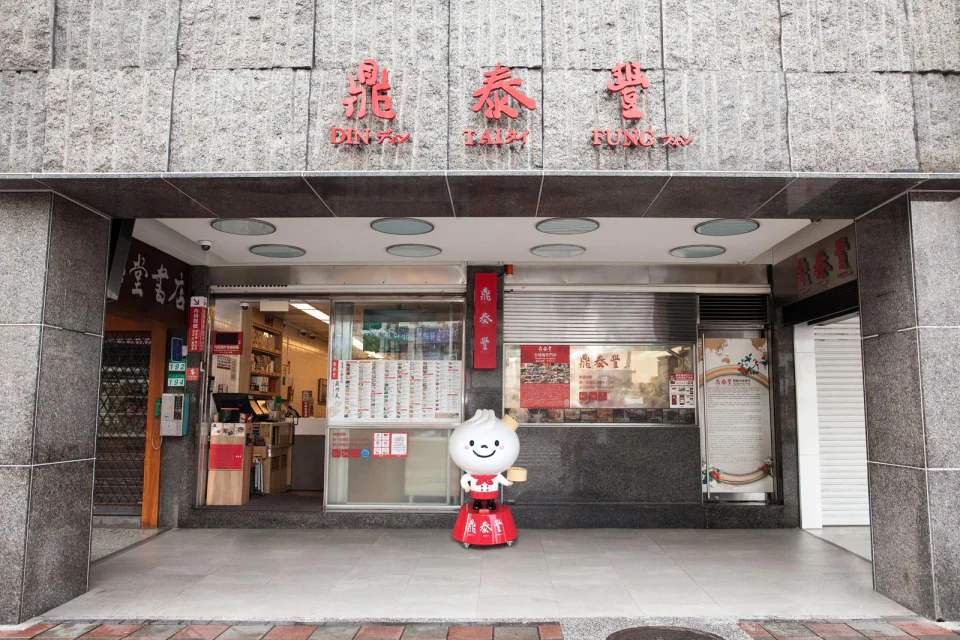
Choose a real soup-dumpling story to follow that curiosity. In 1958 Yang Bing-yi and his wife Lai Pen-mei began Din Tai Fung as an oil retailer. By around 1972, canned salad oil had changed buying habits and the family’s trade was struggling. They accepted a friend’s suggestion to use half of the shop for dumplings while keeping the other half for oil.
The shift used an existing address rather than beginning with an international restaurant plan. Din Tai Fung’s own history traces how growing demand for dumplings eventually displaced the oil business. This is one Taiwanese example of the labour and decisions behind a food now recognisable overseas. Lai’s campaign does not name this restaurant; following the motif here is a way to turn a drawn food into a particular local history.
A picture can open the trip; an address lets you stay
The original Xinyi Road shop now lists takeaway service only. That change is itself useful to notice: a historic address can remain important while its present operation differs from an old dining-room memory. Look from the public street at the entrance and the continuing trade, then use a confirmed dining branch if you want to sit down for a meal. Do not expect a 2024 Kuala Lumpur campaign train to remain available for a visit today.
Return to the illustration after that visit. Its food is large enough to become a landscape; the actual shop makes space for a much smaller object and the people who keep producing it. Between the two scales lie different kinds of creative work. A Malaysian illustrator starts the invitation, and a Taiwanese address lets the traveller give one detail more time than a passing glance.