A Taiwanese researcher followed the temple back to its builder’s home
A temple ceiling can begin a journey in the opposite direction. Following Wang Yishun’s work, Taiwanese researcher Li Chien-lang returned to the craftsman’s village. In Bangka, surviving timberwork and later rebuilding reveal the people who commissioned, made and kept caring for a temple.
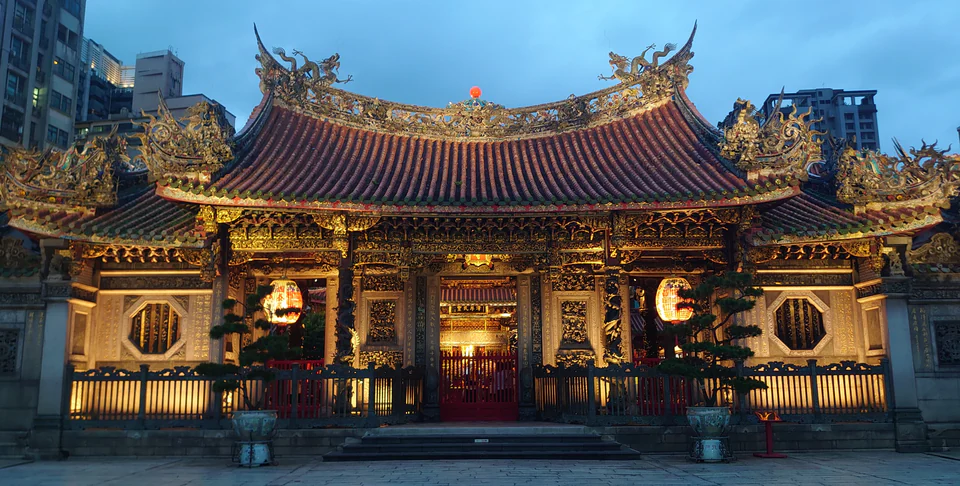
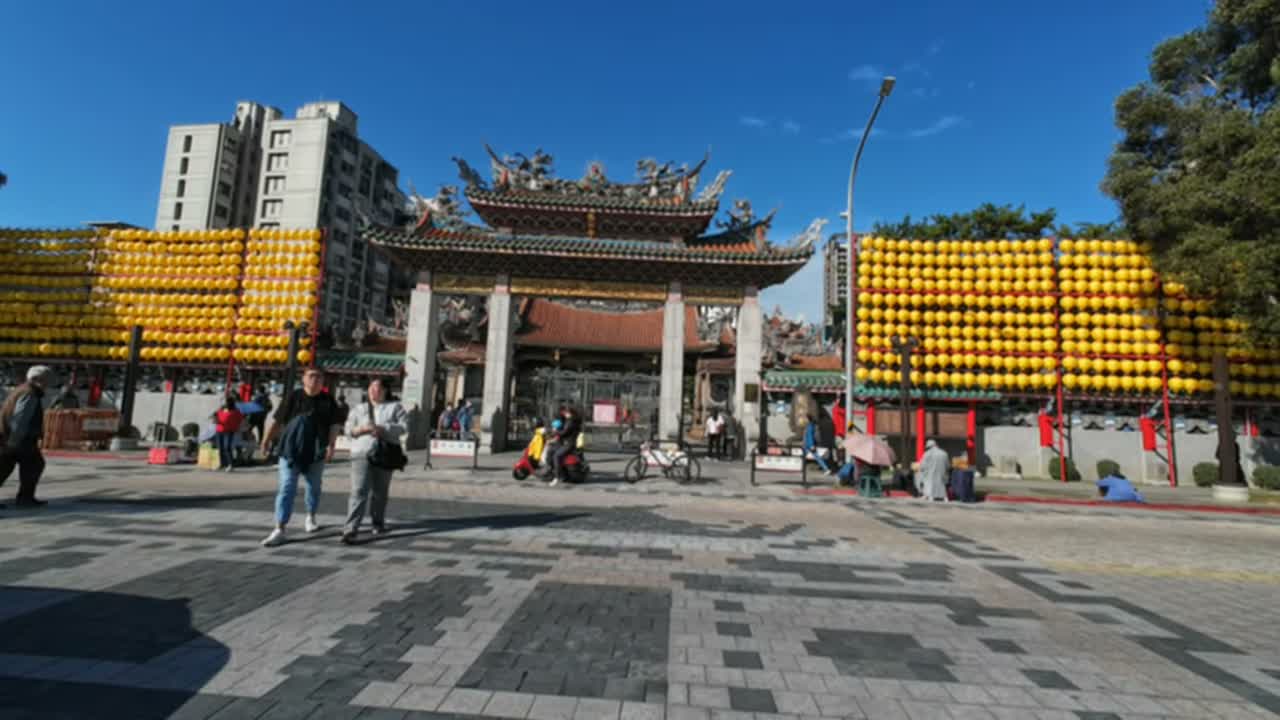
Bangka Lungshan Temple’s Three-Gate Hall and forecourt, photographed on 17 June 2022 · Original image informationYu tptw · Original · CC BY-SA 4.0 · Original JPEG; not cropped or edited
Key points
A research journey returned to the craftsman’s village.
Read the entrance hall and main hall as different building periods.
Notice how timber parts support one another.
01 / CHAPTER 1
A search returns to Chongwu
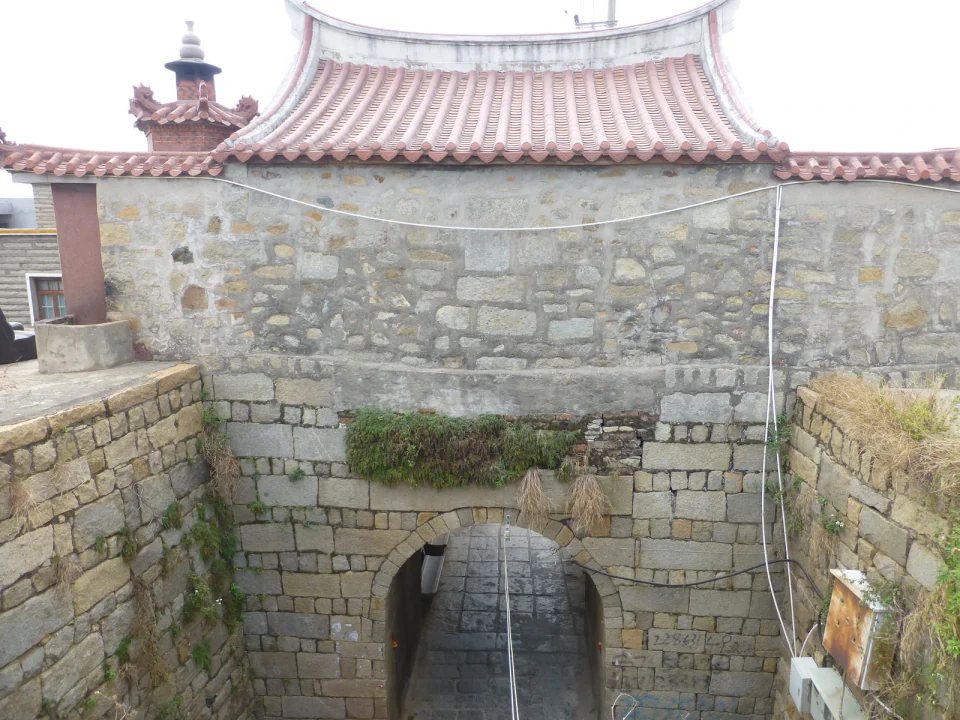
In 1988, Li Chien-lang visited Xidi village in Chongwu to find Wang Yishun’s home and descendants. He had first encountered Wang’s name in a Longshan Temple history in 1978. Questions raised by a Taiwanese building now required a journey to its builder’s hometown.
A week-long Quanzhou exhibition in August 2024 drew on Li’s research. The return journey had acquired another public form: work preserved in Taiwan could be studied and presented where the craftsman came from. The exhibition was temporary; the questions remain useful when visiting Bangka.
Chongwu city gate, photographed 26 October 2015; hometown context, not Wang Yishun’s house · Original image informationUser:Vmenkov · Original · CC BY-SA 3.0 · No crop; proportionally resized if over 1600px and converted to WebP
02 / CHAPTER 2
Bangka had to decide to repair
Termites and deterioration made Longshan Temple unsafe in 1919. Abbot Fuzhi contributed his savings; local organisers gathered money and materials and commissioned Wang to lead the repair. The project was completed in March 1924. Bringing a master across the sea began with people taking responsibility for their own building.
Timber framing, carving, stonework, masonry and ceramics belonged to the same undertaking. A ceiling and a column need different skills, but the people passing beneath them need one usable temple. Looking at how the parts meet makes the shared work easier to see than a list of famous craftsmen would.
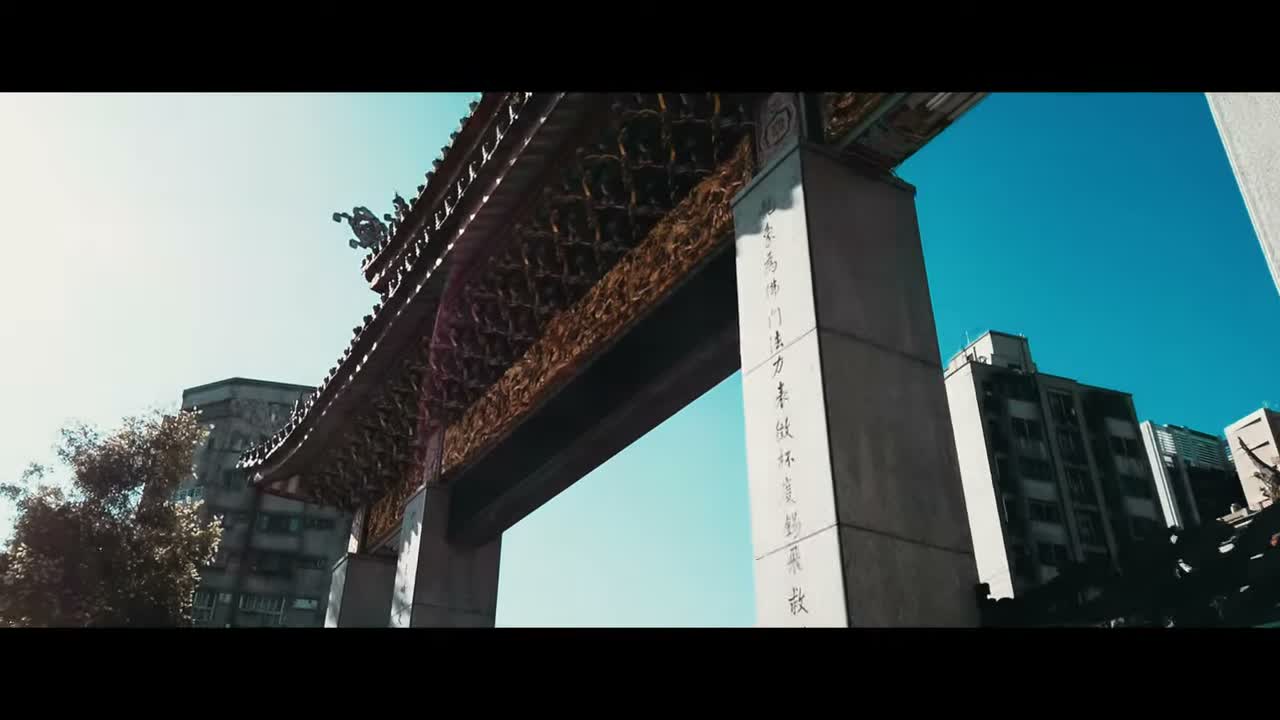
The Three-Gate Hall eaves and timberwork. Visit record uploaded 15 February 2024; filming date unstated.
03 / CHAPTER 3
The first hall holds a structure in the air
The temple identifies the Three-Gate Hall as Wang’s 1920s design. Beneath its eaves, lattice brackets, carved timber and suspended elements fill a compact space; pale and darker stonework meet at the walls. Start here, where the surviving entrance structure gives the craftsman’s work a precise location.
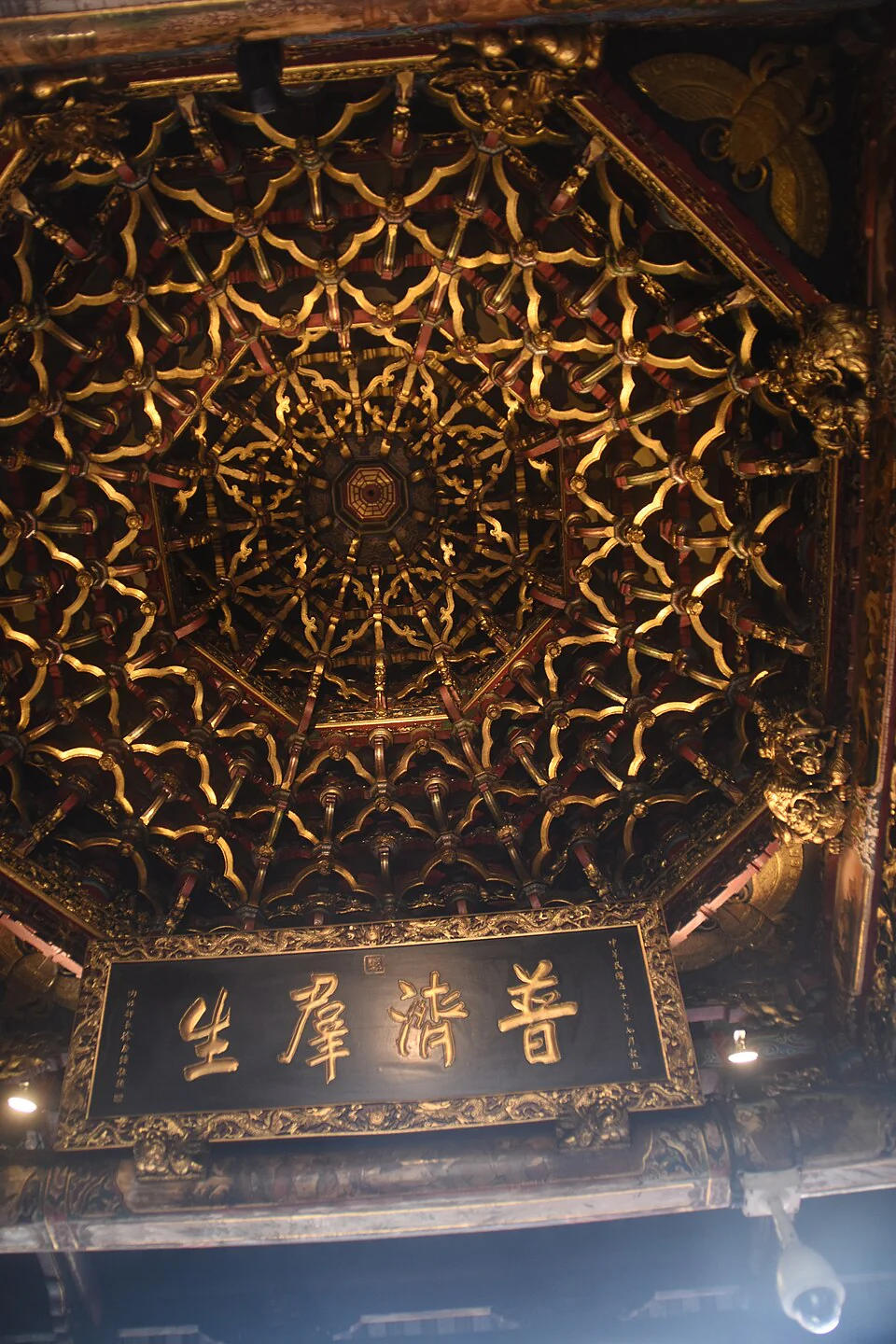
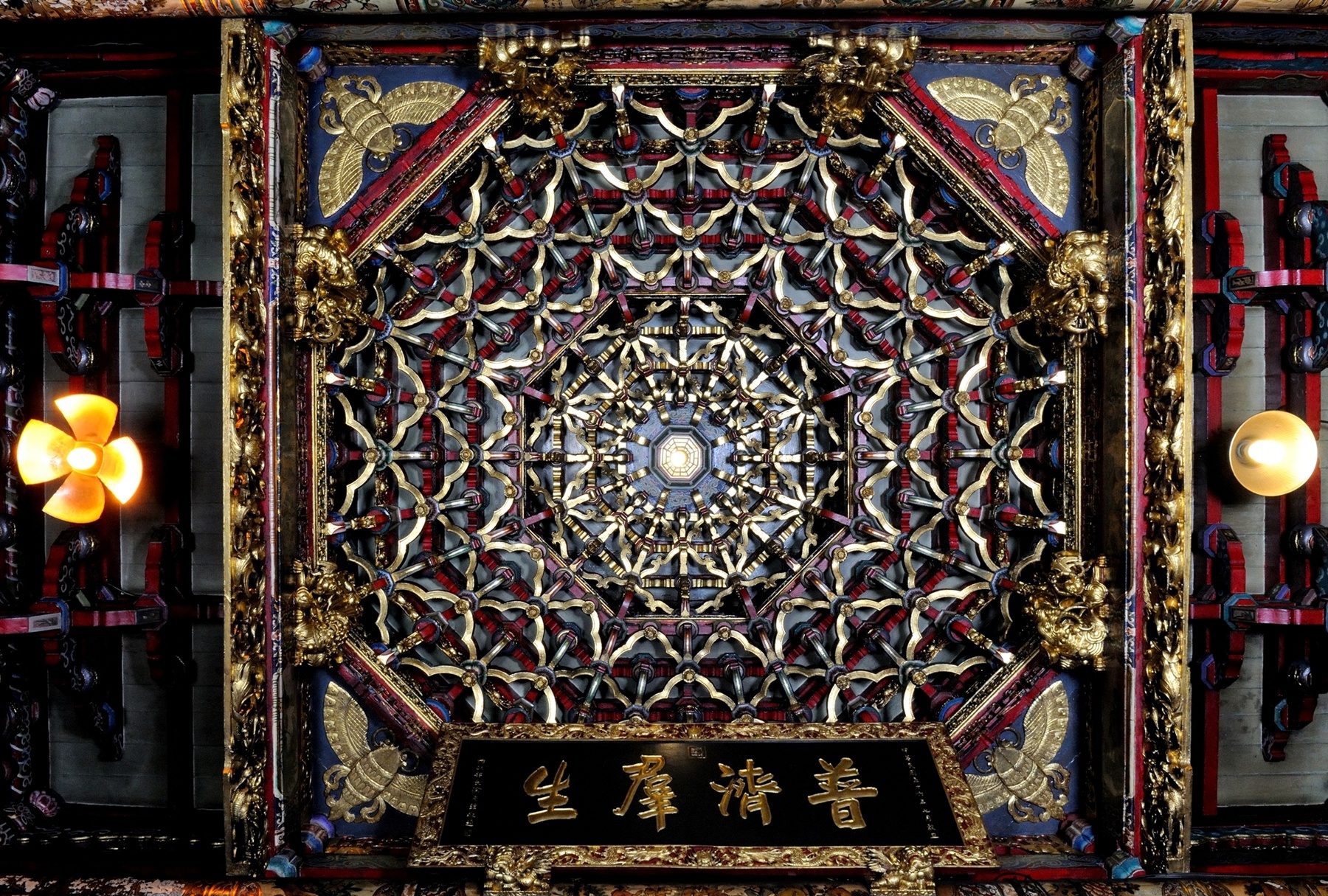
At its centre, an octagonal caisson ceiling rises through eight interlocking bracket layers. Eight carved lion supports sit beneath it. Follow the change from the lower edge towards the centre with your eyes: what first looks like dense decoration can also be read as an arrangement of parts that carry one another.
Octagonal caisson and the 普濟群生 plaque in Bangka Lungshan Temple’s Three-Gate Hall, photographed on 9 July 2017 · Original image information林高志 · Original · CC BY-SA 4.0 · Wikimedia Commons proportional 960×1440 JPEG rendition; no crop or further image edit
04 / CHAPTER 4
A later builder enters the story
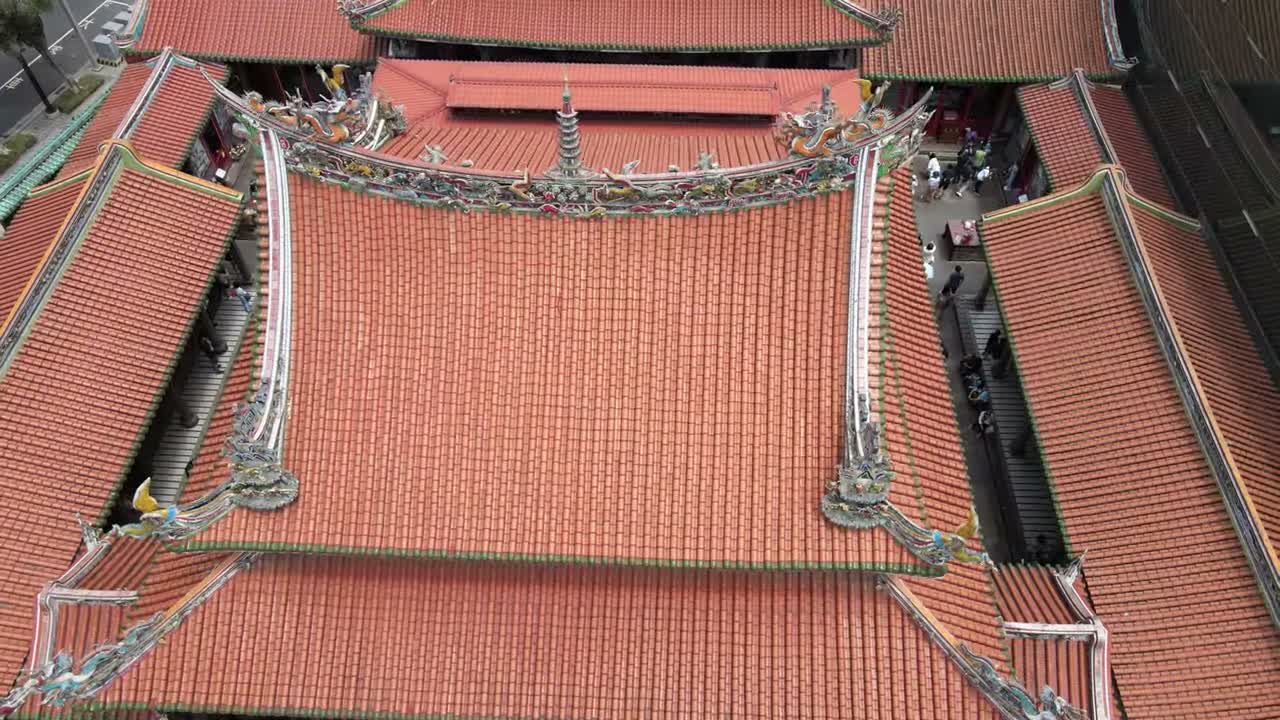
Bombing destroyed the main hall in 1945. Wang Shinan took responsibility for rebuilding it, with completion in 1959. The present main hall therefore belongs to a later chapter than the entrance hall. Looking through the first courtyard means looking across more than one building period.
Keeping those periods apart gives later workers their place. A repaired temple can preserve an earlier maker’s influence while requiring new decisions, materials and labour. For the visitor, asking which part stands before you is a small way of recognising the people who kept the place in use.
The later main hall roof, distinct from the surviving Three-Gate Hall. Visit record uploaded 29 August 2023; filming date unstated.
05 / CHAPTER 5
A familiar craft finds a different working life
Wang also worked on temples elsewhere in Taiwan. The cultural-memory record singles out caisson ceilings, lattice brackets and flat ceilings among his characteristic forms. A visitor familiar with Minnan building traditions can begin with those recognisable parts, then ask how they serve a particular Taiwanese temple.
Li’s search offers a question to carry back: how much of a building’s story is hidden in the name of someone who made it? After noticing one joint or carved support, the hometown no longer remains a distant label. It becomes a place to which a specific question can be addressed.
The complete octagonal caisson at Bangka Lungshan Temple.
06 / CHAPTER 6
Look carefully while the temple continues its day
Longshan Temple is at 211 Guangzhou Street, near the Bannan line’s Longshan Temple station. Current city visitor information lists daily opening from 06:00 to 22:00, with final admission at 21:45. Arrange the craft visit within that window and leave room for worshippers and the day’s ceremonies.
Stand where you can see the entrance ceiling without blocking movement. Then compare its lower supports with the roofline across the courtyard. Carry away one detail you can describe, rather than an impression that everything belongs to the same distant past. The walk back to the MRT gives that detail time to settle.
The outer gate and temple forecourt. Visit record uploaded 2 February 2024; filming date unstated.
Visit information
Temple and access
211 Guangzhou Street, Wanhua, Taipei. Use the Bannan line to Longshan Temple MRT and continue on foot.
Opening
Daily 06:00–22:00; final admission 21:45. Check the temple’s notices for the day’s ceremonies.
Bopiliao extension
Tuesday–Sunday: outdoor area 09:00–21:00, indoor spaces 09:00–18:00; closed Monday. Individual exhibitions follow their own notices.
Time and return
The existing Bangka cultural walk allows 2.5–3 hours including visits. After its final stop, walk back to Longshan Temple MRT; onward train time is additional.
On-site observation
Compare the entrance caisson, its carved supports and the main-hall roof across the courtyard. Leave the worship route clear.
Take the Bannan MRT line to Longshan Temple. Start at the temple, visit Bopiliao, then walk to Qingshan Temple. Return on foot to Longshan Temple MRT. Local return walking is included; MRT travel is extra.
After returning to Longshan Temple MRT, take the Bannan line to Taipei Main Station and transfer to the Tamsui–Xinyi line towards Xiangshan. After the climb, return to Xiangshan MRT. Allow transport time separately. Follow the guide’s start link for the onward connection to Yongchungang trailhead; the descent ends at Beixing Baogong before returning towards the MRT.