Atami is the starting point: Beitou’s public bathhouse drew on Izusan in 1913. Decades later, children and residents in Taiwan helped give it a new life.
01 / CHAPTER 1
A local-history lesson left the classroom
In 1994, teachers and pupils from Beitou Elementary School encountered an abandoned bathhouse through local-history learning. They petitioned for preservation. Residents and cultural-history advocates joined the effort, bringing a neglected building back into the city’s attention.
The children had been studying the place where they lived. Their work became part of deciding what that place would retain. The bathhouse survived not merely because it was old or beautiful, but because people acted on its behalf.
02 / CHAPTER 2
The earlier thread reached Izusan
Beitou’s public bath opened in June 1913 under Japanese colonial rule, with Izusan hot springs in Atami as a model and public-health funding behind it. For someone familiar with Atami, the specific place-name offers a thread across the sea.
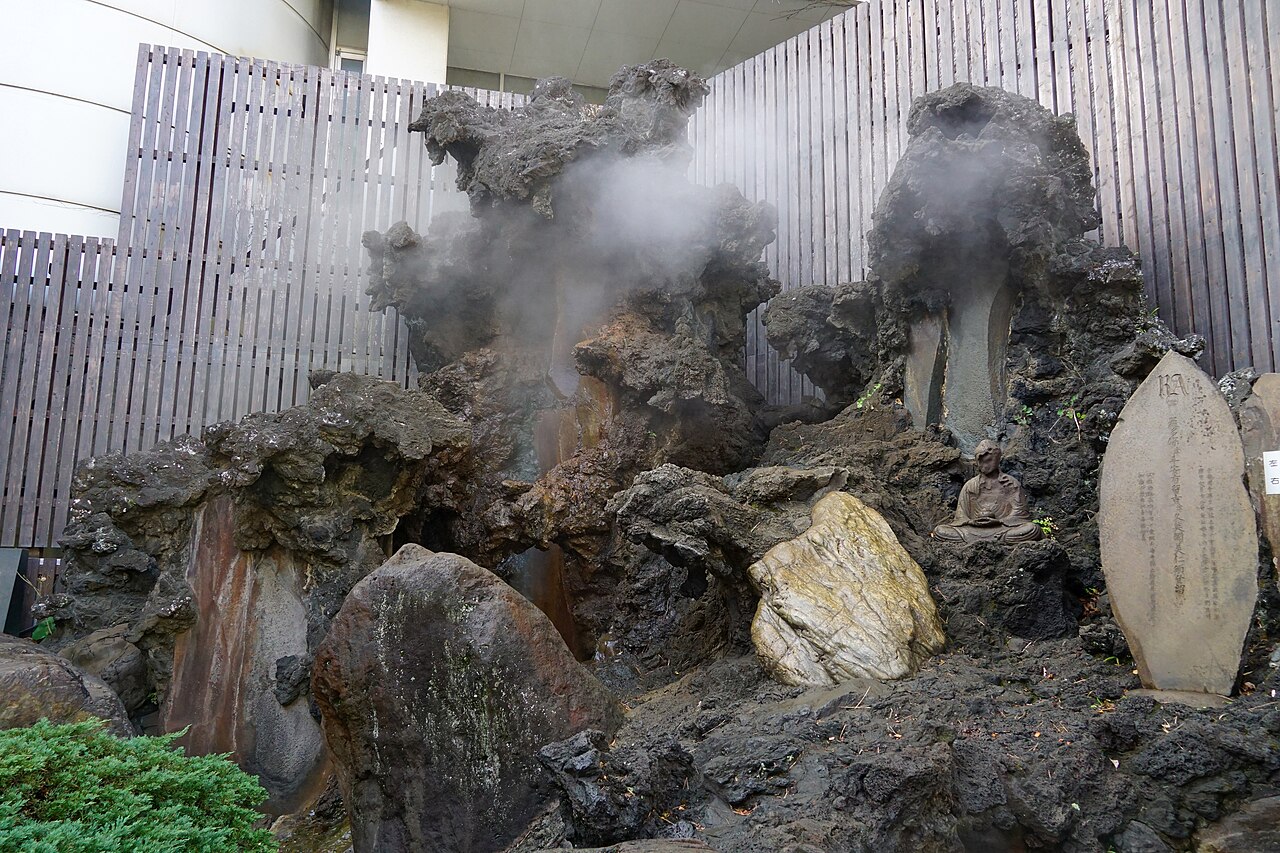
Izusan’s Hashiriyu emerges from a horizontal cave near the sea and has a history connected to shrine belief. Beitou has its own geothermal setting and community. A reference in construction does not make their springs, customs or later lives identical.
03 / CHAPTER 3
The bath organised more than water
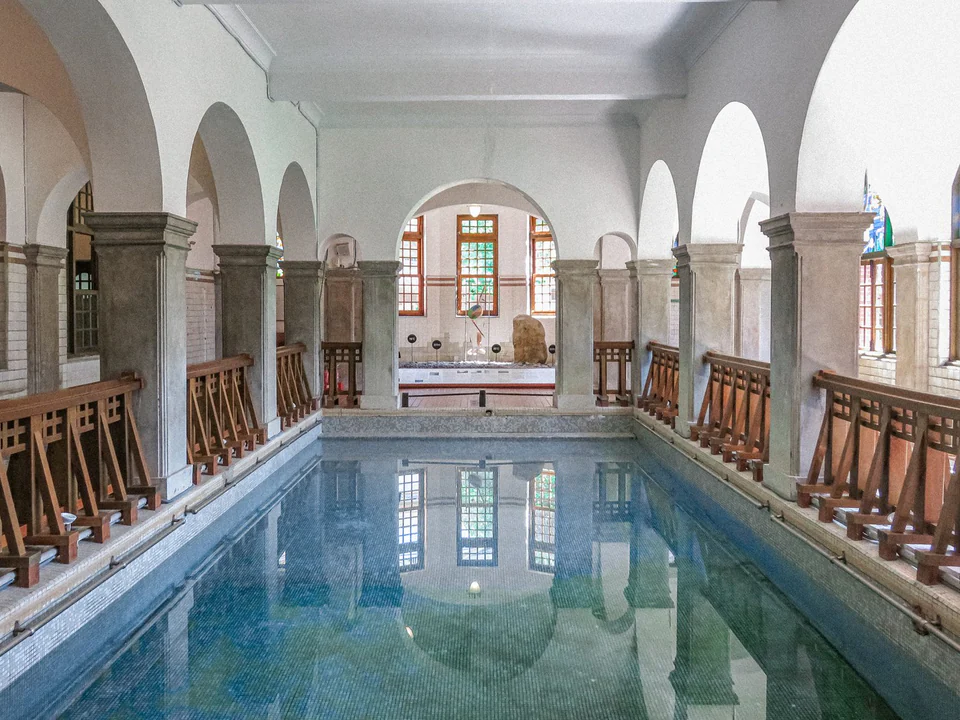
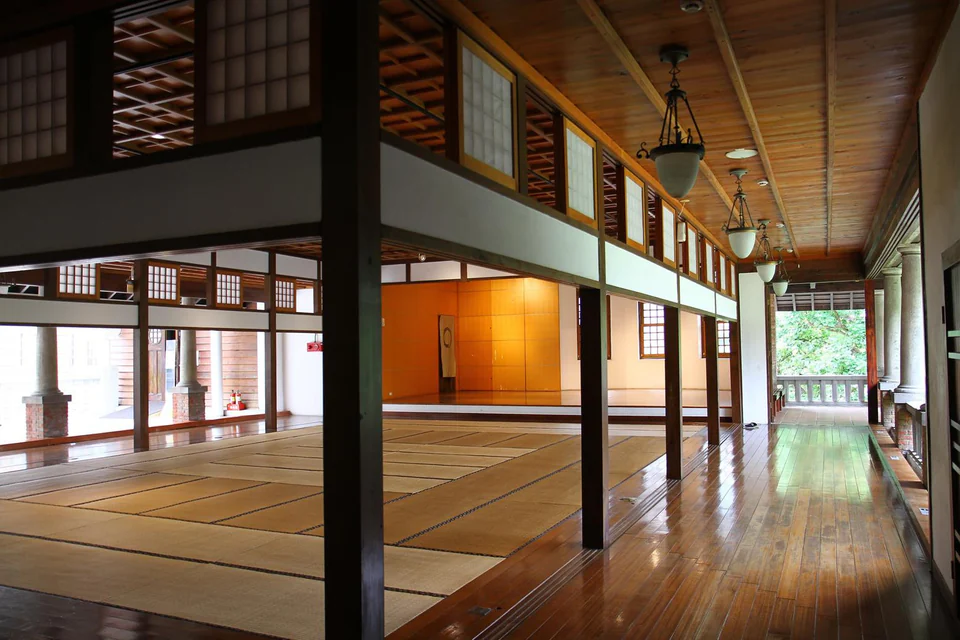
The original entrance was upstairs. Visitors changed shoes, descended to separate bathing and changing spaces, then could rest in the tatami hall. Important guests had separate bathing and resting rooms. The public building contained differences in privacy and status.
Stand by the pool, then go upstairs. That movement makes the former visit legible through a body’s ordinary needs: belongings, washing and rest. It also shows why a single nostalgic picture cannot represent everyone’s experience.
04 / CHAPTER 4
The same building reopened for another purpose
After the war the building passed through different administrations and fell out of use. Following the preservation campaign and city-supported restoration, it reopened as Beitou Hot Spring Museum on 31 October 1998. A place once used for bathing became a place to examine that shared past.
The change in use matters. You cannot bathe in the museum today. What the pupils and residents kept was the space and its ability to tell a neighbourhood story to people who would otherwise never enter the old bath.
05 / CHAPTER 5
Kyoto brought a present-day question
In 2024 the museum and Kyoto’s Gen-yu took part in a public-bath cultural exchange. Yutonamisha’s work continuing old Japanese sentō supplied a contemporary partner. Izusan belongs to the early design reference; Kyoto belongs to this later exchange.
Gen-yu continued bathing while Beitou’s old bath had become a museum. Both choices ask how an inherited place can remain part of local life. Preservation does not have to mean freezing a building at one date or giving every bathhouse the same future.
06 / CHAPTER 6
Before leaving, look out of the window
Look from the upstairs hall towards the park. The pool, the place to rest and the pupils’ campaign now belong together. What first looked like a familiar Japanese bath also contains Taiwan’s choices about remembering it.
The Xinbeitou cultural walk joins the park, library, museum and Thermal Valley. The valley returns you to the geothermal landscape; it is not a bathing venue. Allow a separate plan for a bath or mountain hike.
On-site guides
Find this story in Taiwan
What to see
Read three spaces at Beitou Hot Spring Museum: the pool for bathing, the corridors connecting rooms, and the upstairs tatami hall for resting. Compare how the building organised water, movement and rest.
Location and transport
Xinbeitou MRT → Library → Hot Spring Museum → Thermal Valley → return to the station.
Time
Allow 2–3 hours including visits and the walk back. MRT travel is extra; gentle slopes and steps.
Before visiting
Museum: Tuesday–Sunday 10:00–18:00, last admission 17:45; closed Monday, free entry. Checked 9 October 2026; temporary changes may apply. If closed, use the permitted park paths and arrange another museum visit. Neither the museum nor Thermal Valley offers bathing.