Hengchun’s gates: historic walls stand in streets still being lived in
Return to Hengchun before a separate walk through its gates and lived-in streets.
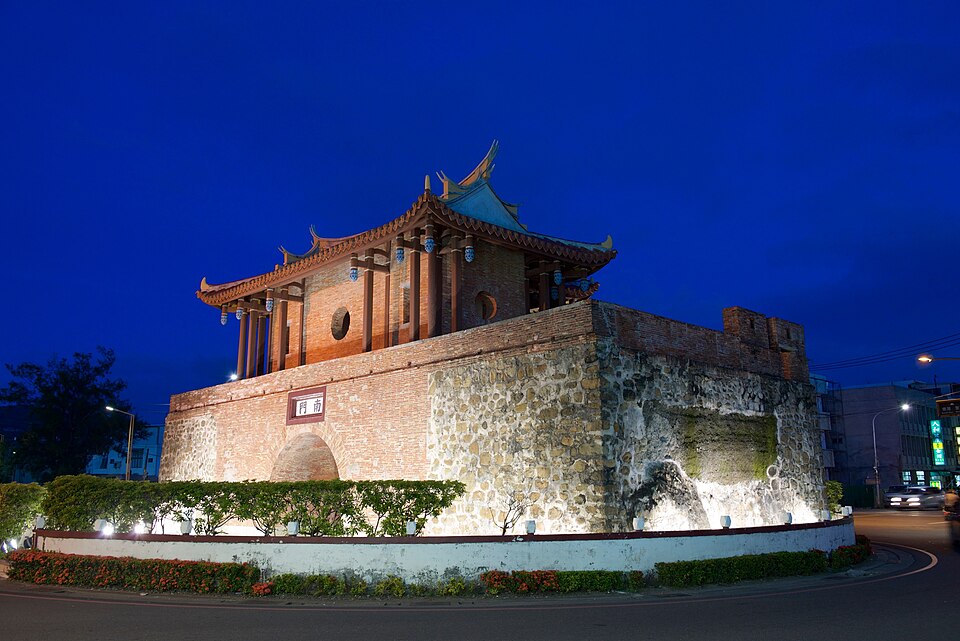
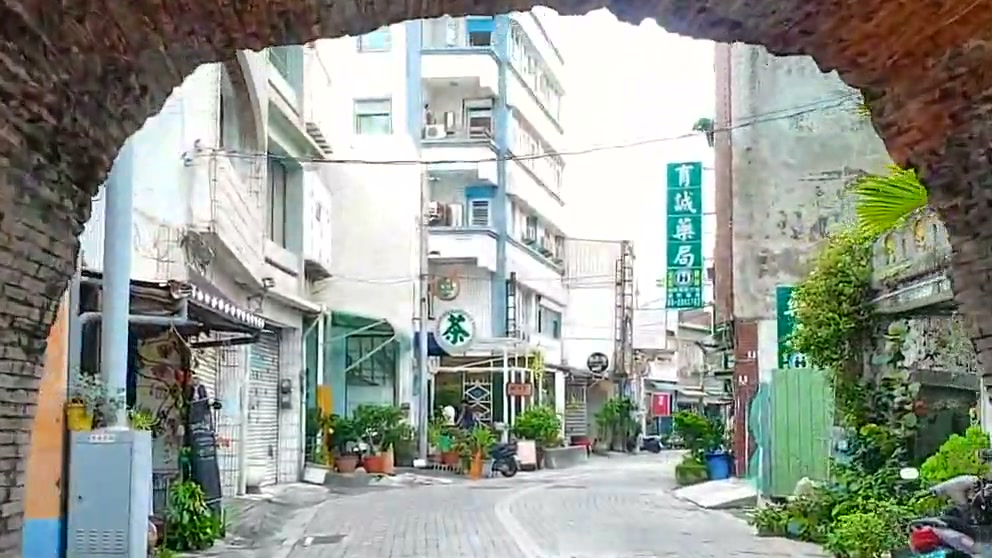
The town’s surviving gates give historical form a place in present-day streets. Look at how traffic and walking approach the structures, then compare nearby homes and shops. Do not assume that a fortification is fully walkable or that every wall-top section is open.
The county town was built from 1875 to 1879. Its gates are not detached monuments: arches, surviving walls and present-day streets still meet in the same space. From permitted public areas, compare the thickness of an entrance with the homes, shops and roads beyond it. You can read the old town’s scale without assuming that every wall-top section is open.
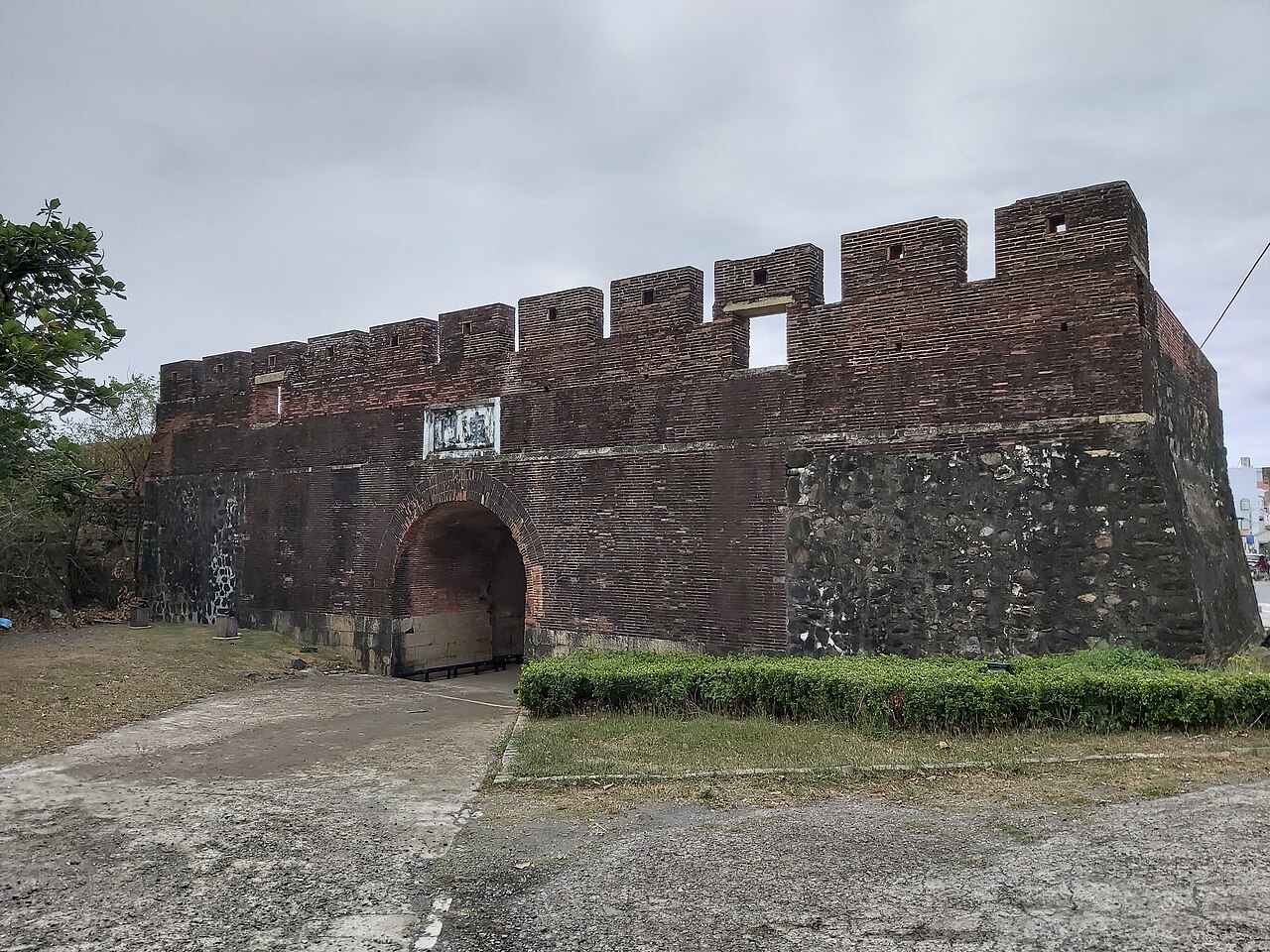
Begin with the stone bearing a gate’s name. The four inscriptions use basalt with recessed lettering, framed by coral-lime plaster and painted decoration. Stone, plasterwork and brick belong to different parts of one entrance. The towers are not all unchanged Qing structures: the official account identifies the East and South Gate towers as later reconstructions, with many visible battlements rebuilt during repairs after 1980.
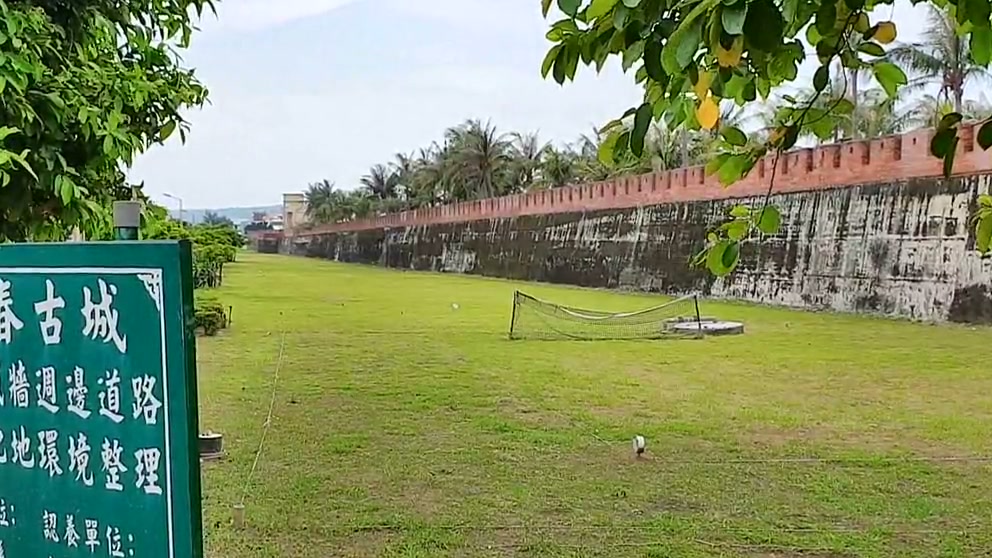
The wall-top passage, called the madao, uses a T-pattern of Minnan bricks. Outside, a moat once reinforced defence; traces remain near the East Gate. Distinguishing inscription, tower, battlement, passage and moat reveals older material alongside later repair. Knowing these names does not grant wall-top access: observe only within currently permitted public areas.
Visiting and return
Begin from Hengchun bus station and use public old-town streets. Wall access depends on signs; town walking and onward bus travel need separate time.
A separate visit to public old-town streets and permitted gate areas; wall-top access is a separate condition.
Public-street viewing does not mean every wall-top section is open. Follow current signs and check temporary restrictions; individual shops set their own entry arrangements.
Use Hengchun bus station as a separately planned transit base. Confirm the actual stop, town walking route and onward service for your travel date.