Four Four South Village: an arsenal moves, and families begin again
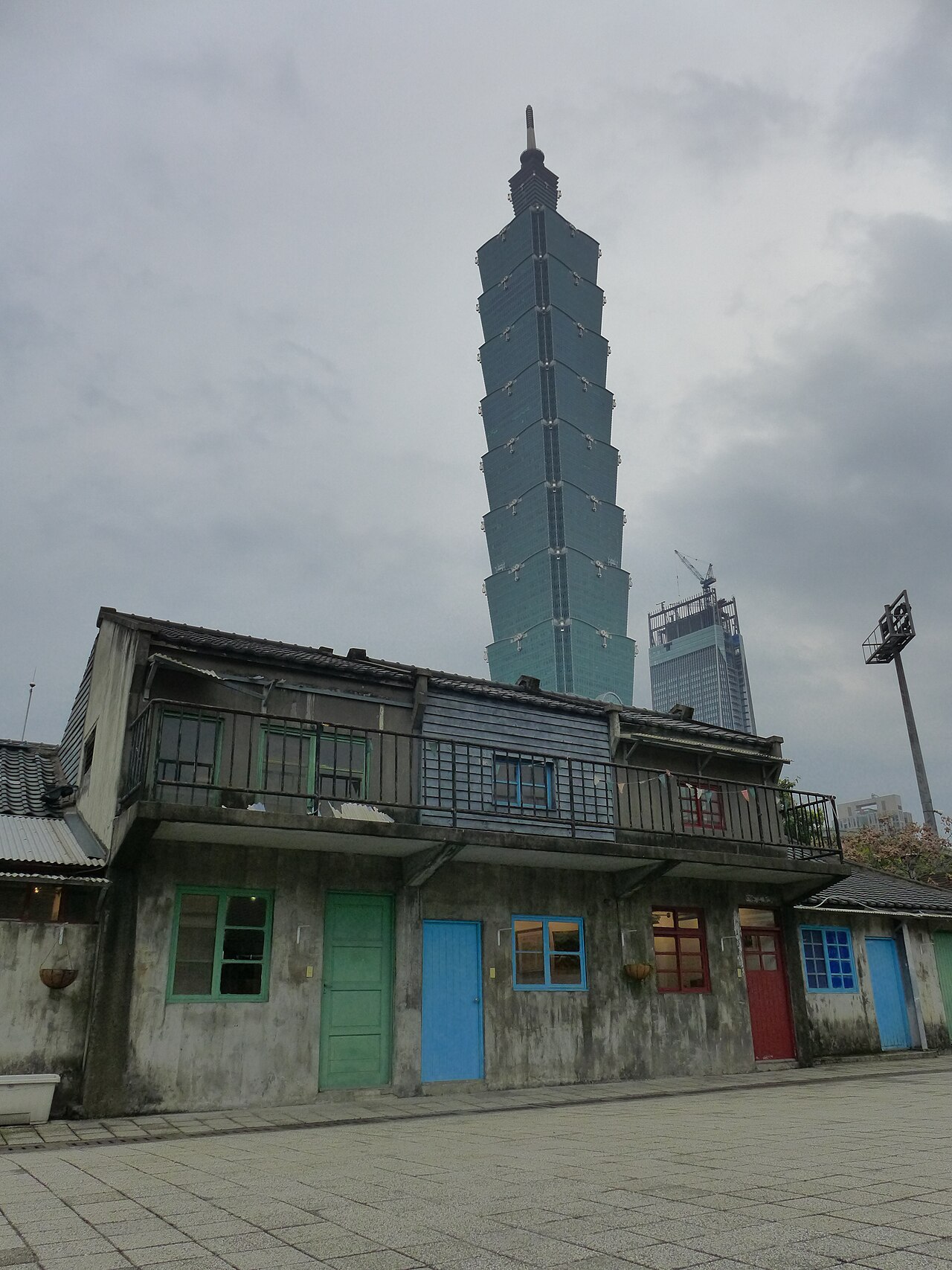
From Xiangshan, you see the skyline. Enter Four Four South Village and you begin to see daily life beyond the towers: a room, an alley and homes rebuilt after leaving another place.
Four Four South Village begins with arsenal employees and their families crossing the sea to Taiwan. In 1948, the 44th Arsenal retreated to Taiwan, and its families needed somewhere to live. Simple houses became the starting point for settling down. Beside Xinyi’s towers today, it can be difficult to connect these low buildings with that migration. Their first purpose, however, was to accommodate work, families and the routines of starting again.
‘Four Four’ refers to the arsenal, while ‘South Village’ describes the settlement’s position south of the factory. The factory provided employment and shaped nearby housing and schooling, closely connecting employees’ lives with those of their families. This history offers a way to read a military dependants’ village as a community formed around work: factory grounds, houses and schools together made up the residents’ familiar surroundings.
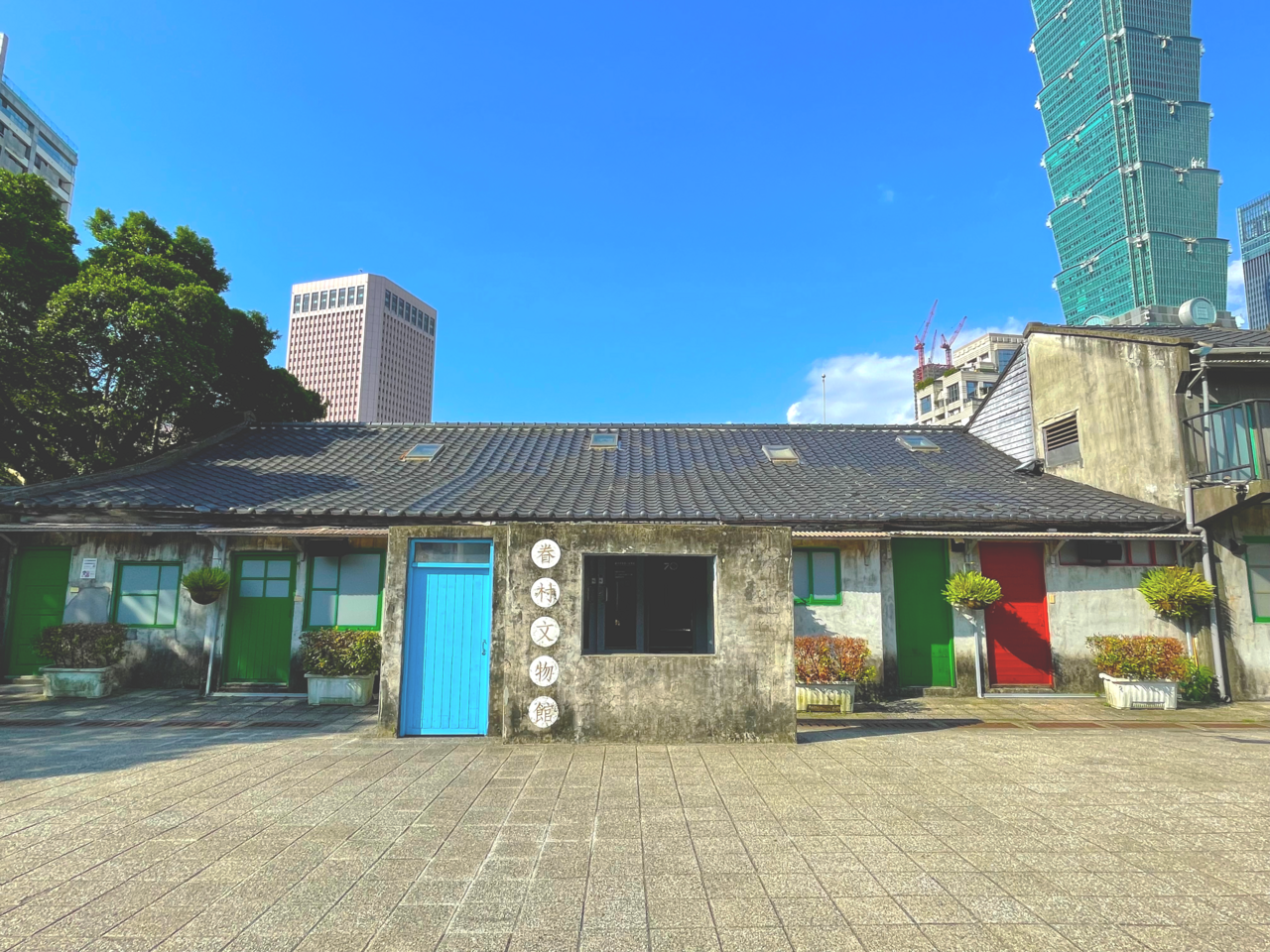
The Xinyi Civic Hall now preserves four symmetrically arranged buildings, surrounded by the military dependants’ village cultural park. Xiangshan’s view shows how much taller the city has grown. Coming down to the village brings low houses, doors, windows and alleys into view. Roofs and the spaces between buildings give migration history a physical form, and give Xinyi a story beyond shopping centres and skyscrapers.
The house materials bring the story closer to the work of settling in. A cultural-memory record describes the early homes as self-built by arsenal workers, using timber, bamboo strips, lime and roof tiles. These were skilled workers as well as dependants of a military institution; early residents included technicians without military status. Read the roofs and wall surfaces with that distinction in mind: a household’s relationship to an arsenal did not make every resident a soldier. The surviving buildings have undergone preservation and maintenance, so appearance alone cannot establish which pieces are original. The materials provide a way to ask how homes were assembled, beyond seeing the village only as a low-rise contrast to Taipei’s towers.
Four buildings, more than four memories
Moving somewhere new can mean rebuilding home in a very small space. In 1948, Sisi Nancun housed logistics personnel and their families. Each attached dwelling occupied roughly ten square metres, arranged in rows branching like a fishbone. Look at how close the homes stand, then consider the space available for a family’s work, sleep and daily life.
After relocation, there was no single answer to what the land should become. A city statement published in 2013 recounts differing positions held during the preservation process by residents, local historians and parents at Xinyi Elementary School. Proposals, oral-history activities and public discussion in 1999 widened the question beyond the buildings: shared memories mattered, but so did space for the school and neighbourhood.
Residents and cultural workers formed a local-history studio. Four buildings were eventually retained as a community museum presenting military-family settlement life. What remains is the outcome of preservation choices, not the entire former settlement. It records both how displaced families made lives in Taipei and how people took part in deciding what should be remembered.
Between the dwellings, notice the distances between doors, lanes and walls. Taipei 101 is nearby, but the settlement makes more sense when you begin with the space a household could use. Families came from different places; these surviving homes cannot tell one migration story for everyone.
Visiting and return
Plan this visit separately where necessary. Check opening arrangements and the return journey; follow public paths.
Former military housing, public squares and exhibition buildings.
50 Songqin Street, Xinyi District, Taipei
Public outdoor space and indoor exhibitions have different access arrangements; use open visitor entrances.