Fuyang Forest: In the Shade of a Former Depot
Look at former depot traces alongside trees and wildlife. Use the open paths and check current park notices before visiting.
90 seconds · English captions in the film; optional English and Traditional Chinese CC.
Film sources and complete bilingual captions
Selected from Aiky’s walk uploaded on 3 October 2020. This is the upload date, not an independently verified filming day. Presenter passages and adjacent Fuzhoushan/Lihe Park scenes are excluded. Separate windows do not form continuous route guidance.
00:00:00,000 --> 00:00:06,200
Fuyang Eco Park
Taipei, Taiwan
富陽自然生態公園
臺灣・臺北
00:00:06,200 --> 00:00:08,700
The city meets the trees.
城市,在這裡遇見樹林。
00:00:08,700 --> 00:00:12,000
An old military tunnel
remains beside the path.
舊軍事涵洞,
留在步道旁。
00:00:12,000 --> 00:00:18,500
A small bridge leads
between broad leaves.
小橋,
穿過寬大的葉片之間。
00:00:18,500 --> 00:00:21,300
Ferns fill the shaded edges.
蕨類,長滿了陰涼邊緣。
00:00:21,300 --> 00:00:27,500
Steps climb between
roots and leaves.
階梯,
從根與葉之間向上延伸。
00:00:27,500 --> 00:00:33,800
Wooden paths thread
through the understorey.
木棧道,
穿行在林下。
00:00:33,800 --> 00:00:39,300
The ground dips
towards shallow water.
地面降低,
走近一汪淺水。
00:00:39,300 --> 00:00:45,700
Look up:
trees close over the valley.
抬頭看,
樹木在谷地上方聚攏。
00:00:45,700 --> 00:00:50,100
Stone, earth and roots
change the ground beneath you.
石塊、泥土與樹根,
讓腳下的地面換了樣子。
00:00:50,100 --> 00:00:58,100
Old walls remain
among the trees.
舊牆面,
留在林木之間。
00:00:58,100 --> 00:01:02,600
Weathered walls frame
a narrow opening.
風化的牆面,
框出狹窄的開口。
00:01:02,600 --> 00:01:08,000
Roots and branches
grow around the remains.
根與枝條,
沿著遺構生長。
00:01:08,000 --> 00:01:13,400
Beyond the old walls,
the forest path continues.
越過舊牆之後,
森林小徑仍在延伸。
00:01:13,400 --> 00:01:21,700
Different levels.
One shaded valley.
不同的高度,
同一片林蔭谷地。
00:01:21,700 --> 00:01:27,900
Pause beneath the trees
before returning to the street.
在樹蔭下停一停,
再走回街道。
00:01:27,900 --> 00:01:30,000
Taiwan, Layer by Layer
島嶼年輪
Fuyang forest: what remained after the ammunition depot?
On the Nangang hills’ walk to Linguang, the ending is more than an abrupt end to the mountain. Fuyang retains traces of military use and invites another question: how should a city approach nature?
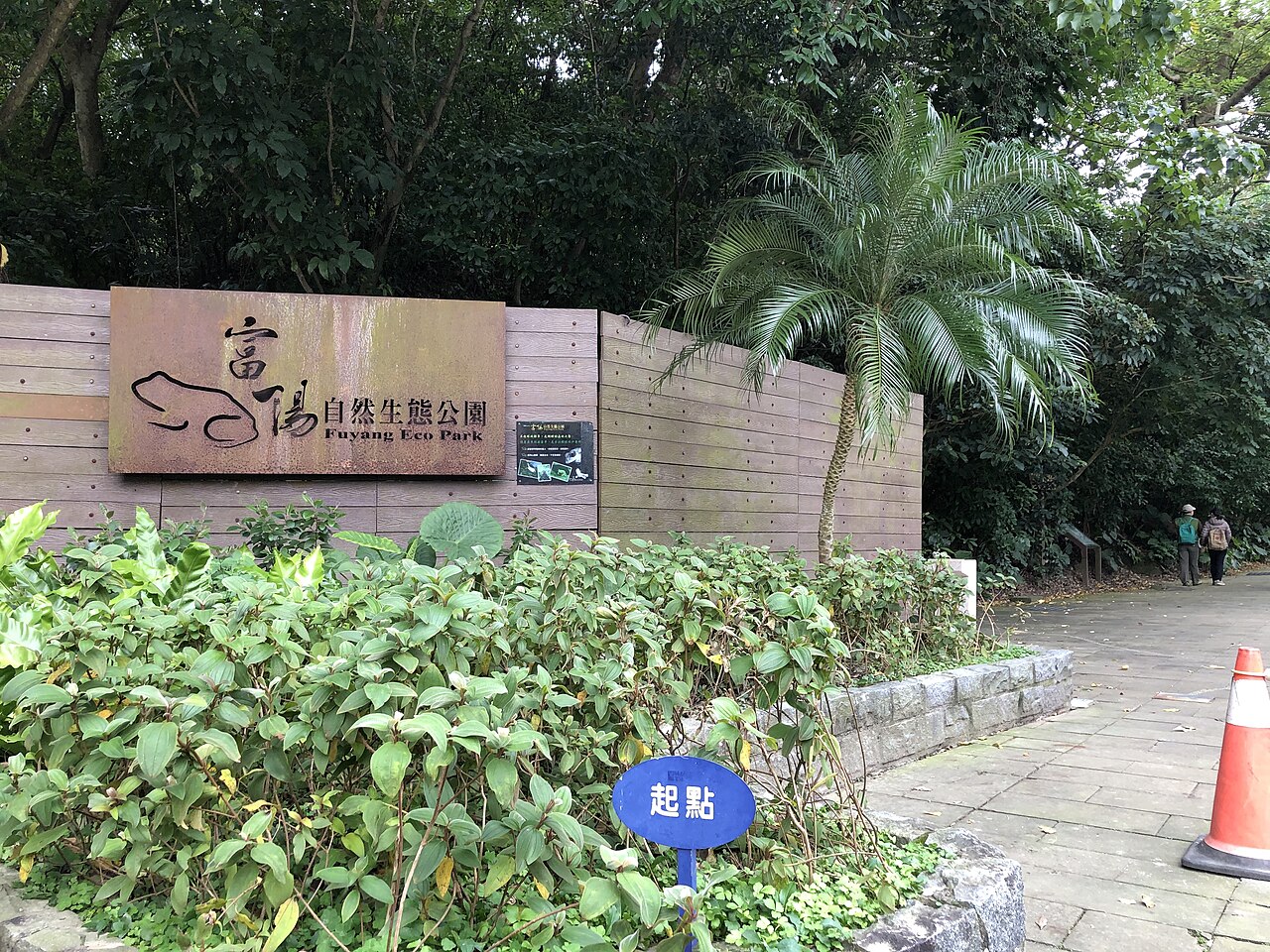
At Fuyang, let the shade slow your steps. The forest is close to urban streets, yet its sounds and light differ from those of the road. After a long hill walk, pause before leaving. Look at the spaces between trees, the paths and slopes, and consider why this greenery could remain so close to the city. Fuyang once served as a military ammunition depot and later became an ecological park. Its long history of land use shaped the forest seen today. Military use and nature are not unrelated topics here: who could enter and how land could be used in different periods both left results. Being able to walk here now also reflects a changed role for the space. When returning to the streets around Linguang, look back at the entrance. Forest and housing are separated by only a short approach, yet carry different histories. This makes a useful cultural ending to the Nangang hill outing: read the terrain from the ridge, then read how people used land at the city’s edge. Entrance, shade and street offer three views through which to understand the place. Another history of movement lies beside Fuyang. The official Danlan account identifies Zhongpushan, above Xinhai Tunnel, as a nineteenth-century passage for tea carriers from Shiding and Shenkeng into Taipei. Fuyang’s surviving culverts and bunkers belong to its later military use. Tea trading, ammunition storage and today’s park represent different uses at different times; an opening in the hillside is not automatically a tea-route relic. Read military structures from open paths without entering tunnels. Continuing to Zhongpushan brings dirt, roots and gravel-and-timber paths and requires separate hiking preparation. A park visit does not complete a Danlan trail itinerary.
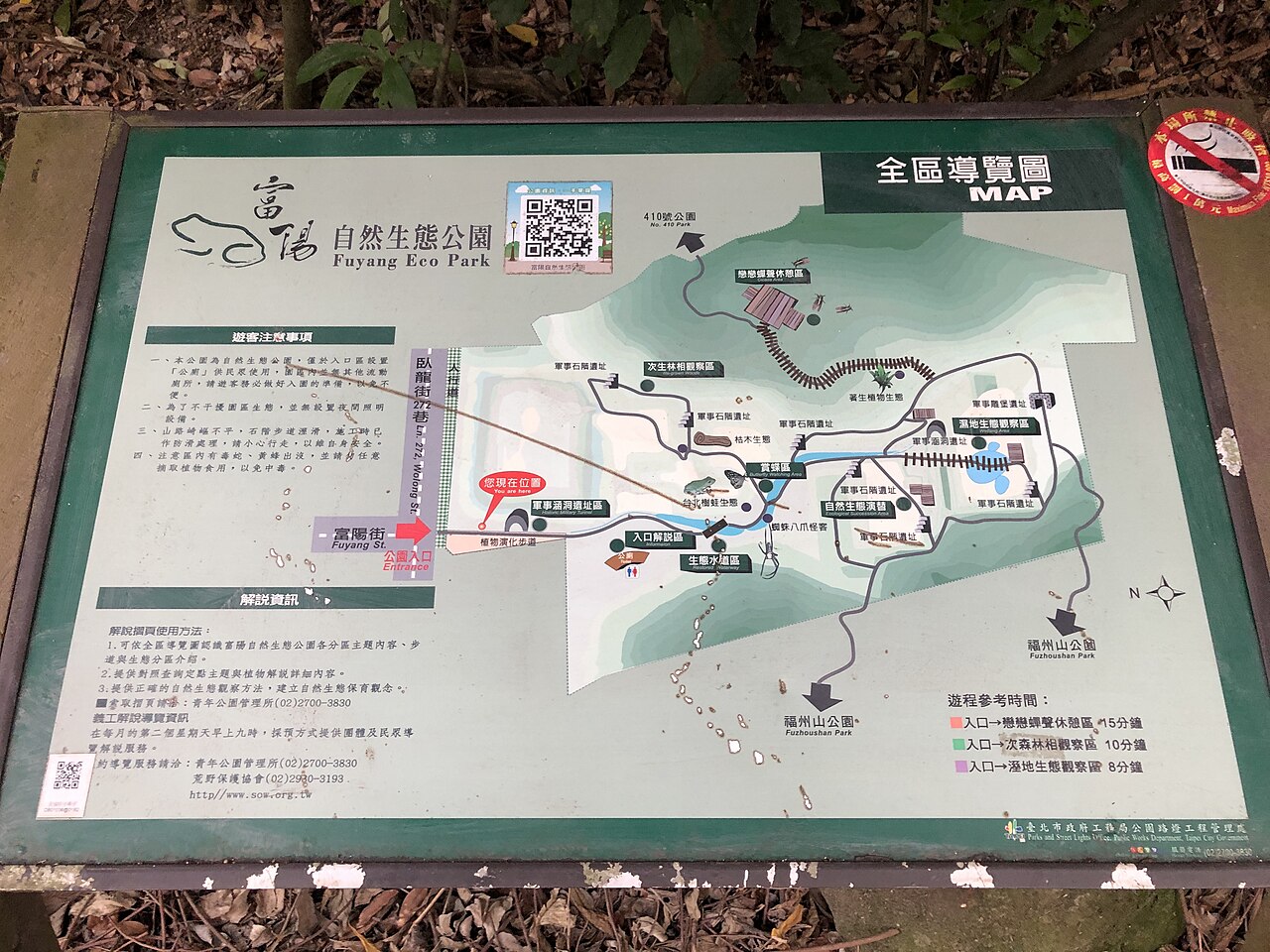
Visiting and return
Plan this visit separately where necessary. Check opening arrangements and the return journey; follow public paths.
Fuyang Street park entrance, Da’an District, Taipei
Keep to established park paths and do not enter wetland or habitat restoration areas. Hill-trail extensions need separate planning.
From MRT Linguang exit 1, follow Fuyang Street to the park. This is the approach, not a complete hill route.
1. From the street into another timescale
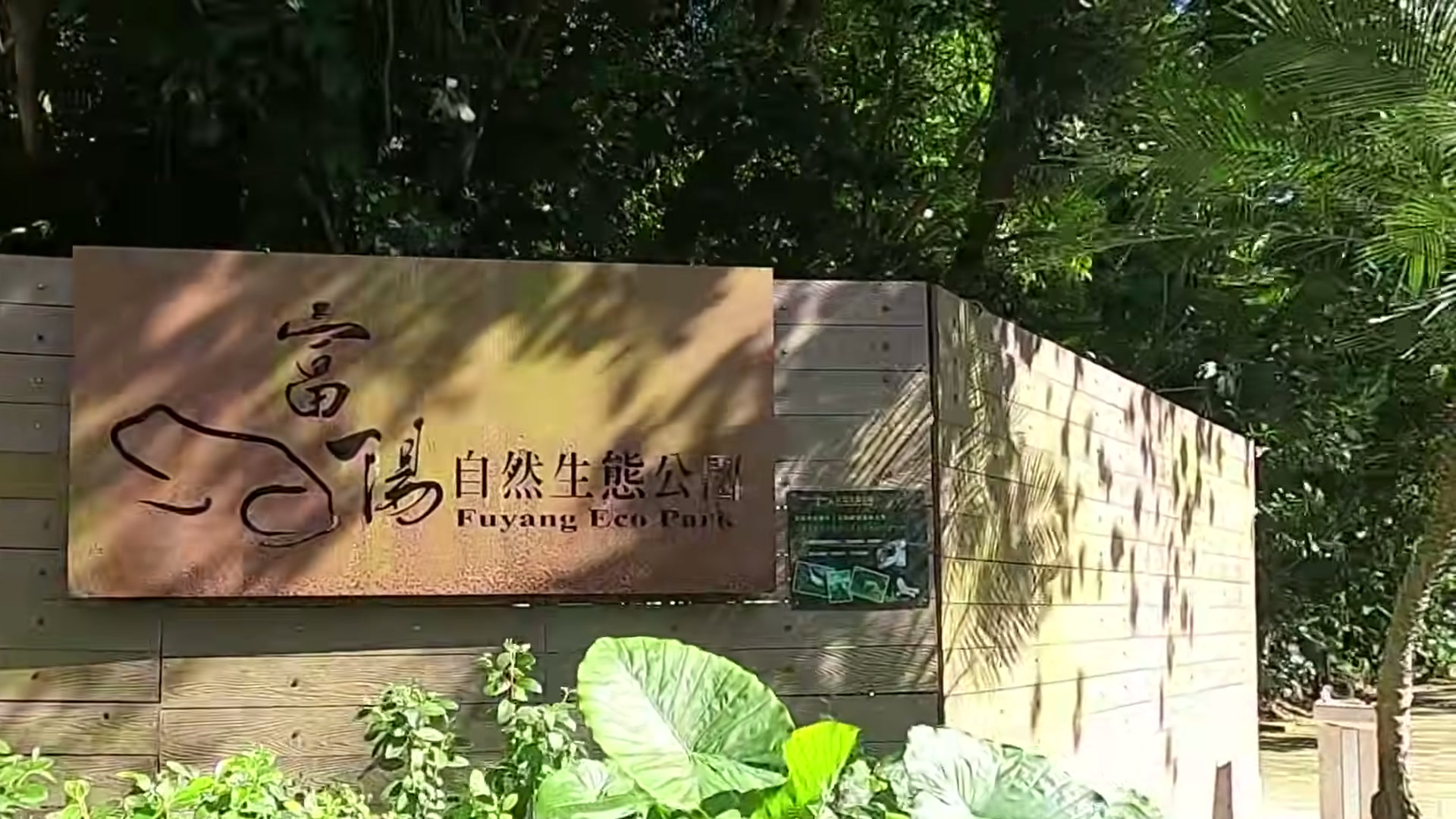
The homes on Fuyang Street stand close to the park entrance. The sign names Fuyang Eco Park while the street remains just behind you and the tree canopy reaches overhead. A few steps change the view from vehicles and buildings to paths and wooded slopes.
This 3.8-hectare valley in Taipei’s Daan District once served as a military ammunition-depot site. Official records place the military withdrawal in 1988, followed later by its designation as park land. Begin the walk with a question: what did decades of restricted access leave for the city?
2. Read the land’s former use beside the tunnel
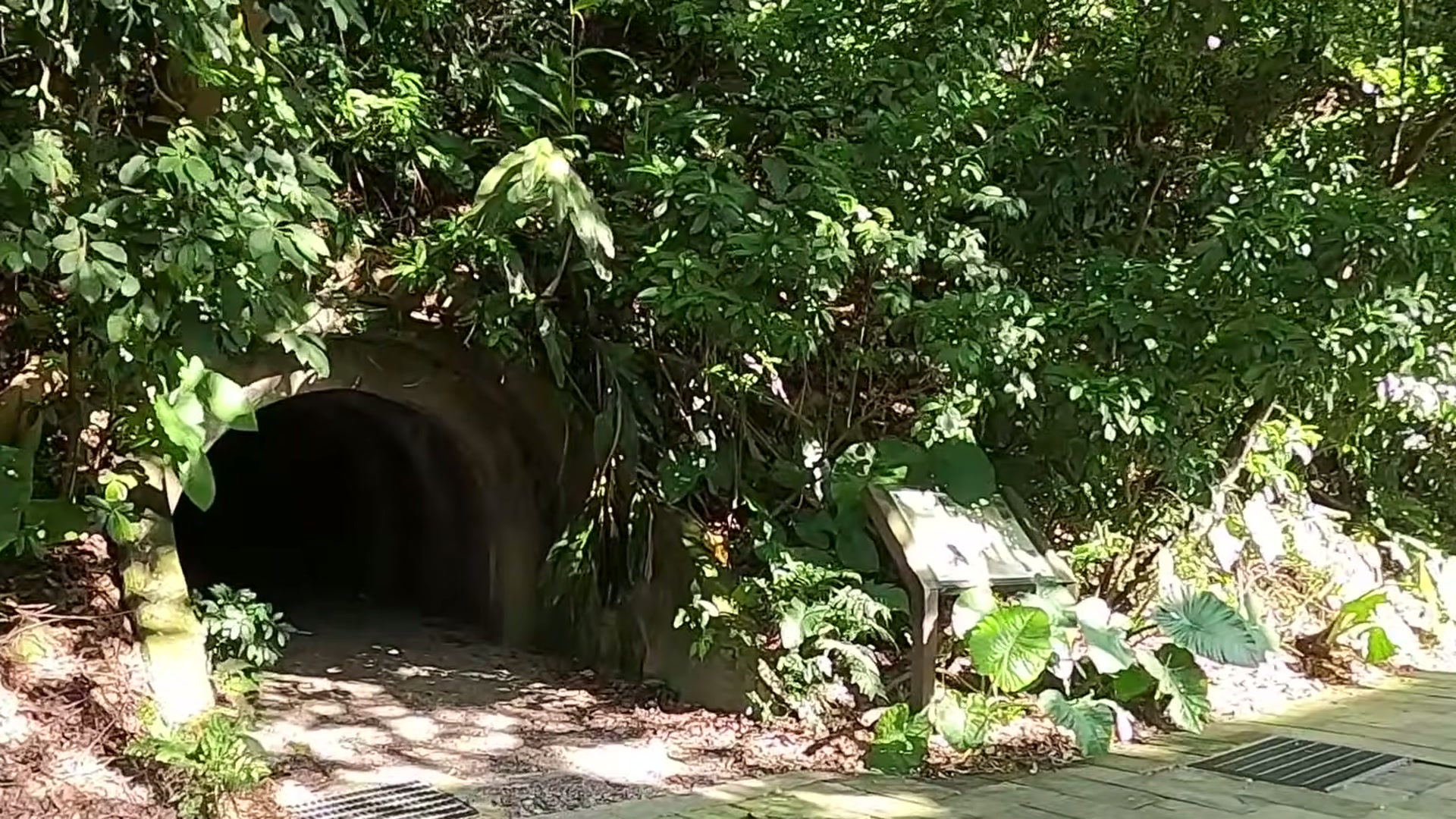
Beside the entrance path, an arched military tunnel sits among the plants. Its curved outline, dark opening and sunlit surroundings make an earlier use of the land visible. Observe it from the open path: the structure and today’s park can be read together without entering the passage.
City sources record surviving tunnels, bunkers, guard posts and military-era steps. From the open park paths, compare the materials and shapes of the arches, walls and steps, then their positions on the wooded slopes. At the tunnel, use current barriers and access signs as the boundary for observing the entrance and its inner arch rings.
3. Bridges, steps and water on the valley floor
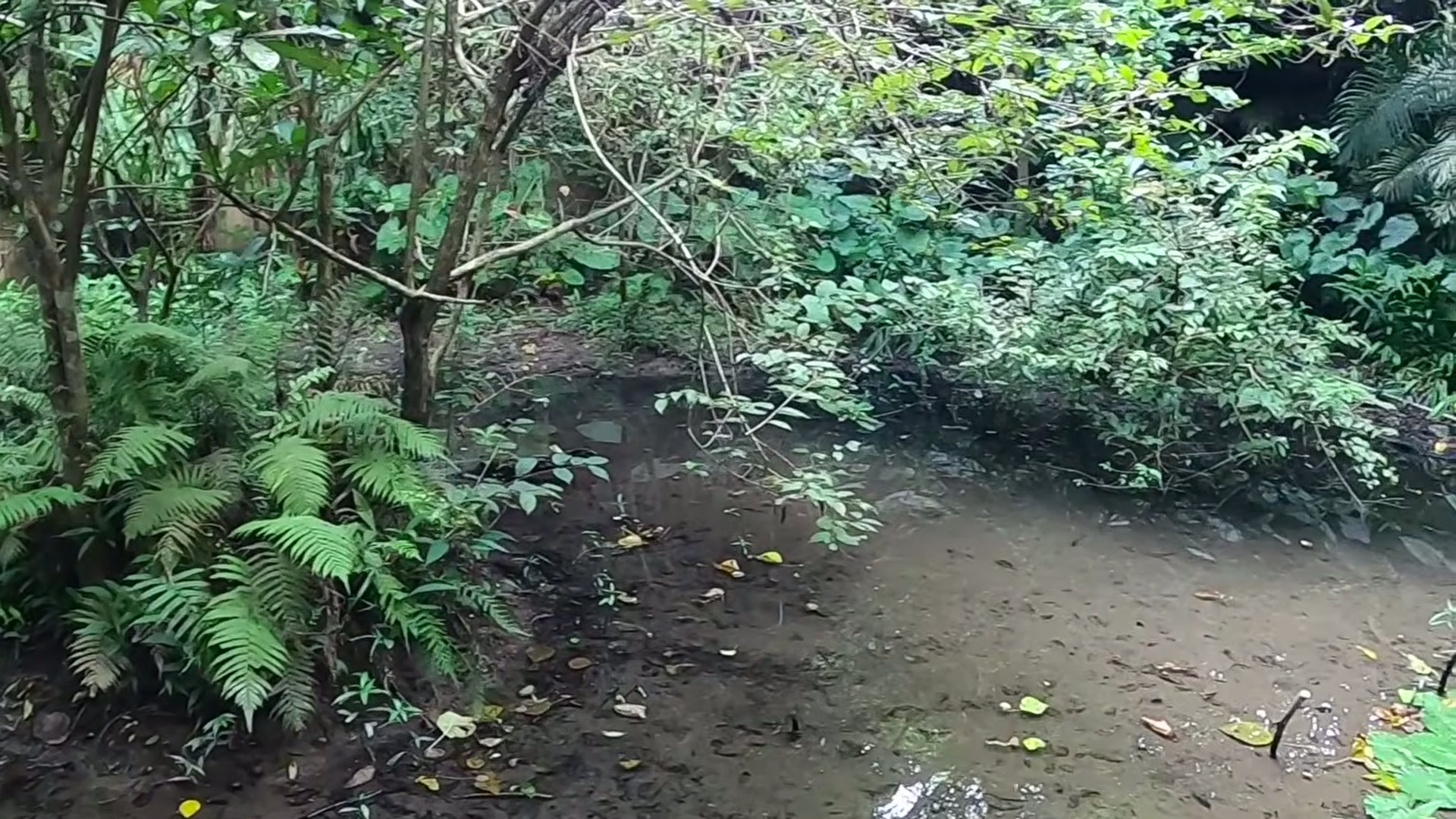
Beyond the hard entrance surface, a wooden bridge carries the path between broad leaves and ferns. Stone steps, earth and shallow water follow. Notice changes underfoot and beside you. Slopes, understorey and the valley floor offer different spaces within the same patch of green.
Fuyang’s low-elevation woodland and stream environment offer different views from the slopes, understorey and water’s edge. On the valley floor, notice where shallow water, bankside plants and shade meet, then look into the foliage and canopy. Pause on established paths, leaving room for wetlands and restoration areas so the habitat can remain undisturbed.
4. Wall openings among branches
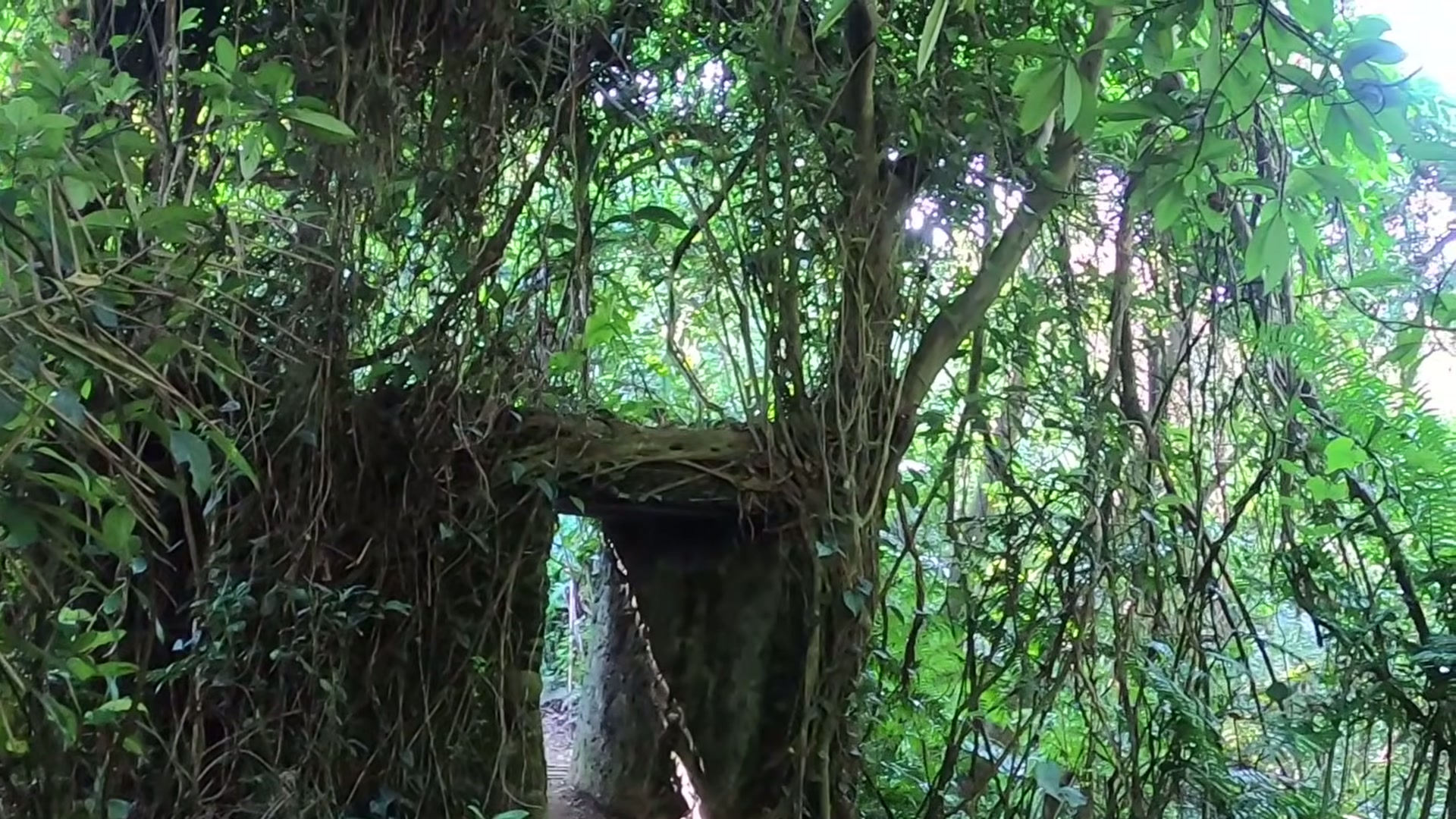
A weathered wall appears among the trees. Its opening frames darkness and greenery beyond. Look at the stones, wall surface and narrow opening, then step back to include roots, branches and the canopy. The shape and its setting reward attention even before each structure is given a name.
City sources record surviving tunnels, bunkers and guard posts at Fuyang, and connect long military restrictions with reduced human disturbance. Read the materials, openings and surrounding ground without assigning a function to every wall by appearance alone. Keep the surviving structure and the growing forest in the same view.
5. Carry the forest back towards the city
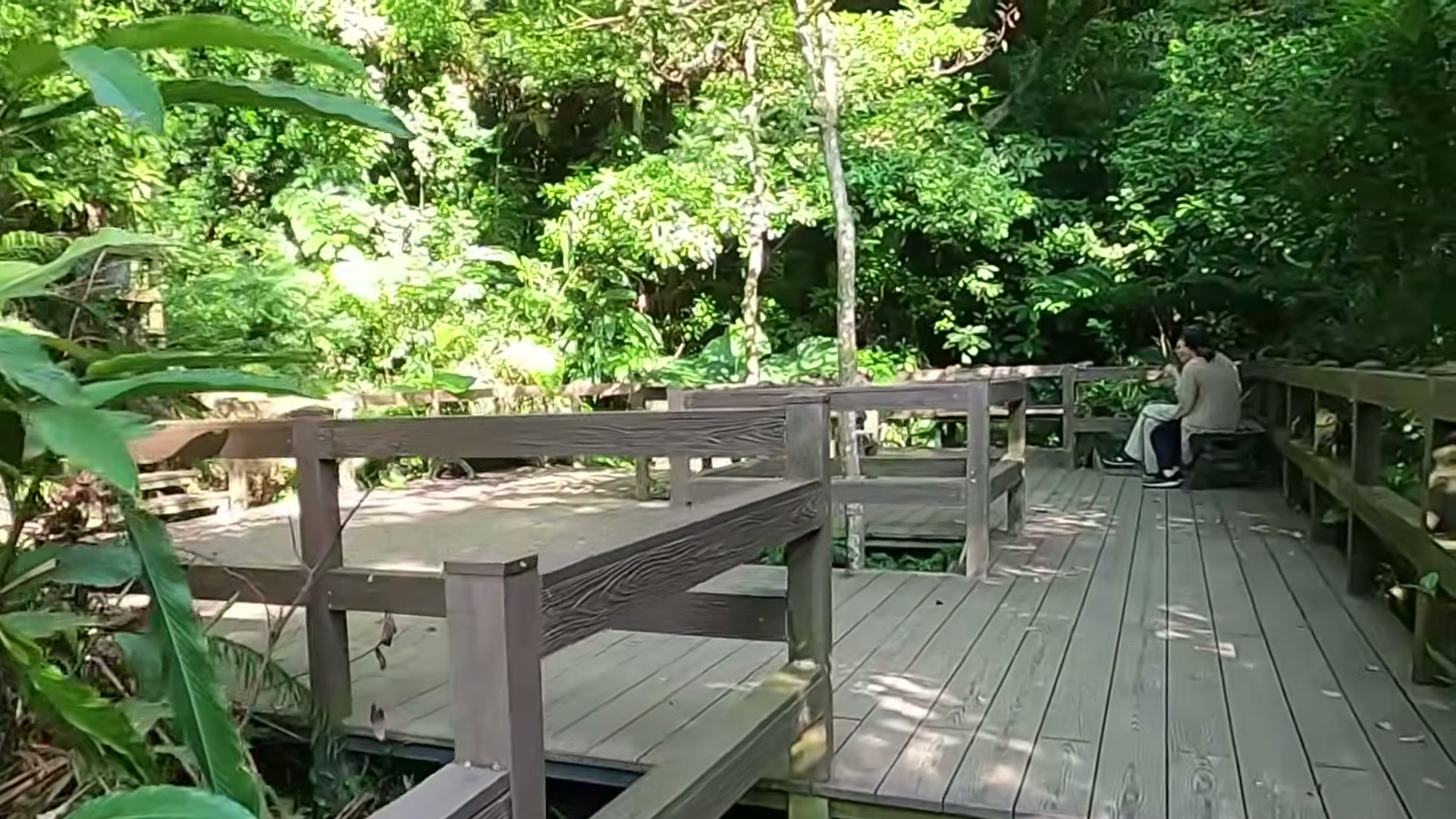
Back on a wider park path, wooden platforms, steps and gravel appear in turn. The closing view keeps a walker’s scale: shade covers the ground, while the entrance and residential streets remain close. Fuyang’s cultural history is also a change in who could enter and how the land is used.
Approach from MRT Linguang Station along Fuyang Street and plan a daylight walk using the entrance and junction signs. Choose a park path for your energy and remaining time, leaving enough time to return to Fuyang Street and the station. For an extension to Fuzhoushan, Lihe Park or longer hill routes, check the route and that day’s conditions separately, wear suitable footwear and allow additional time.
Article, image and music sources
Selected from Aiky’s walk uploaded on 3 October 2020. This is the upload date, not an independently verified filming day. Presenter passages and adjacent Fuzhoushan/Lihe Park scenes are excluded. Separate windows do not form continuous route guidance.
- Tourism Administration multimedia attraction record: Fuyang Eco Park, Taipei City data
- Taipei Parks: a visit to Fuyang Eco Park
- Taipei Pictorial, May 2024: explore national-defence heritage sites
- Aiky一點GO瘋旅行: original public walk
Music: 把時間留下 · AI-generated instrumental.