The British Consulate at Takow: From Red-Brick Arches to the Sea
90 seconds. English captions are part of the film. Optional Traditional Chinese subtitles are available in the player.
The film and five stills use Takao walker’s real-location walk. The creator states filming on 16 April 2022; the video was uploaded on 16 December 2022. The filming date was not independently established. These earlier hilltop-residence views do not report current maintenance, displays or access. The film uses an added music score.
Read the complete five-chapter article → · 繁體中文
Complete English captions and Traditional Chinese translation
00:00:00,000 --> 00:00:08,500
Above Kaohsiung's harbour,
red-brick arches draw you in.
高雄港上方,
紅磚拱廊引人走近。
00:00:08,500 --> 00:00:13,700
The former British consular residence
stands on the hillside.
昔日英國領事的官邸,
坐落在這片山坡上。
00:00:13,700 --> 00:00:23,700
Follow the long veranda
from one rounded arch to the next.
沿著長廊前行,
從一座圓拱走向下一座。
00:00:23,700 --> 00:00:31,700
Brick columns frame a covered passage,
with tiled floors underfoot.
磚柱圍出有遮蔭的通道,
腳下是鋪設的地磚。
00:00:31,700 --> 00:00:37,700
White shutters break up
the warm red-brick walls.
白色百葉窗,
在溫暖紅磚之間展開。
00:00:37,700 --> 00:00:44,700
The open veranda brings shade,
trees and fresh views together.
敞開的廊道,
把樹影與戶外景色帶到眼前。
00:00:44,700 --> 00:00:51,700
Inside, tall doors and windows
connect the rooms to the garden.
室內高挑的門窗,
連起房間與外面的庭園。
00:00:51,700 --> 00:00:57,700
Around the corner,
the house opens onto a terrace.
繞過屋角,
官邸向露臺打開。
00:00:57,700 --> 00:01:05,700
Below the trees, Kaohsiung's
working harbour comes into view.
樹梢之下,
仍在運作的高雄港漸漸展開。
00:01:05,700 --> 00:01:11,700
Back beside the house, paths lead
between brick and clipped hedges.
回到屋邊,
沿著紅磚與修整的綠籬慢走。
00:01:11,700 --> 00:01:14,500
Patterned brickwork
beneath the arches.
圓拱之下,
還有磚作排列的圖案。
00:01:14,500 --> 00:01:22,000
Turn towards the sea.
The hilltop setting is part of the visit.
把目光轉向海面。
這片山海位置,也是到訪的一部分。
00:01:22,000 --> 00:01:29,200
The British Consulate at Takow.
Come for the arches; linger for the view.
打狗英國領事館。
為拱廊而來,也為眼前景色多停一會。
Takao’s consular complex: a home above, harbour work below
The former British Consulate residence is a separate cultural visit after Shoushan.
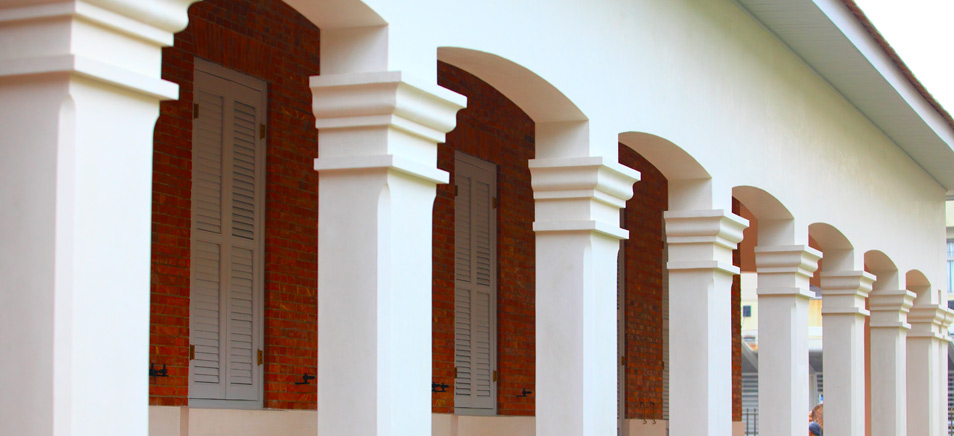
The former British Consulate residence is a separate cultural visit after Shoushan. Leave time for harbour-side travel and the visit; it is a different place from Hamasen Railway Culture Park. The surviving consular complex belongs to a later moment: 1879. The office stood near the waterfront and customs facilities, while the residence occupied the hillside above. Walking the open connecting path allows visitors to observe the difference in elevation and function between the office below and residence above. Look closely at the building materials as well as the arches. A brick preserved by Kaohsiung’s history museum came from Xiamen. The complex brings together British consular work, cross-strait materials and the labour needed to build and maintain a harbour establishment. Beyond the red brick, the complex contains imported joinery and connections not always visible to visitors. The heritage record states that doors, windows and roof frames were made in Shanghai and shipped to Taiwan; brick, tile and stone came from Xiamen, with workers from both places involved. The original use of durable yakal hardwood responded to harbour moisture and termites as well as appearance. At the residence, iron I-beams tie the inner and outer walls around the verandas and entrance, while brick half-cylinder vaults form part of the foundation. Wood, brick and iron worked together. These construction records explain features that may be concealed; they do not establish that every present component survives unreplaced. Returning to the visible verandas, and distinguishing the upper residence from the lower office, gives overseas design, material supply and skilled labour a more concrete form.
Visiting and return
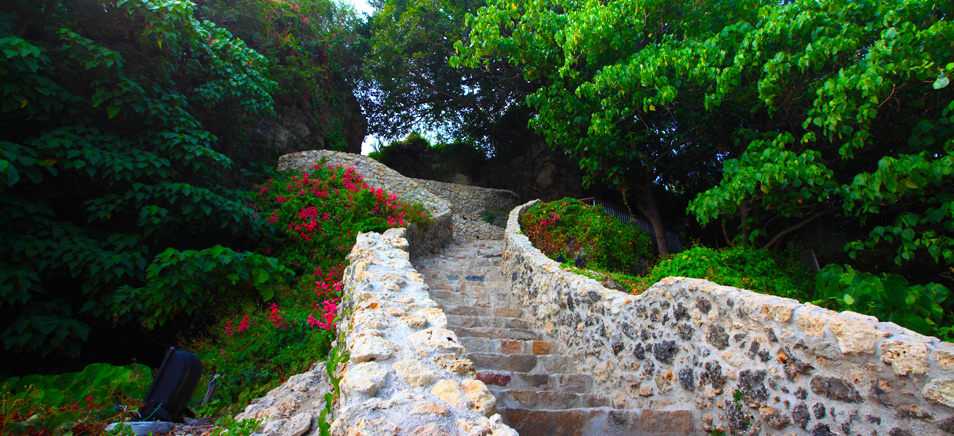
Arrange this as a separate visit and check the day’s opening arrangements and return transport. Location marker only, not a walking track; the visit is separate from the mountain route.
Hilltop residence, lower consular office and connecting historic path are distinct parts of the complex.
20 Lianhai Road, Gushan District, Kaohsiung
Monday, Tuesday, Thursday and Friday 10:00–19:00; weekends and national holidays 09:00–19:00. Last admission 18:30. Closed Wednesday except national holidays.
Allow separate time and effort for the hilltop and lower buildings. This visit is not part of the Shoushan trail mileage.
Look closer at the places in the film
Begin with the house above the port
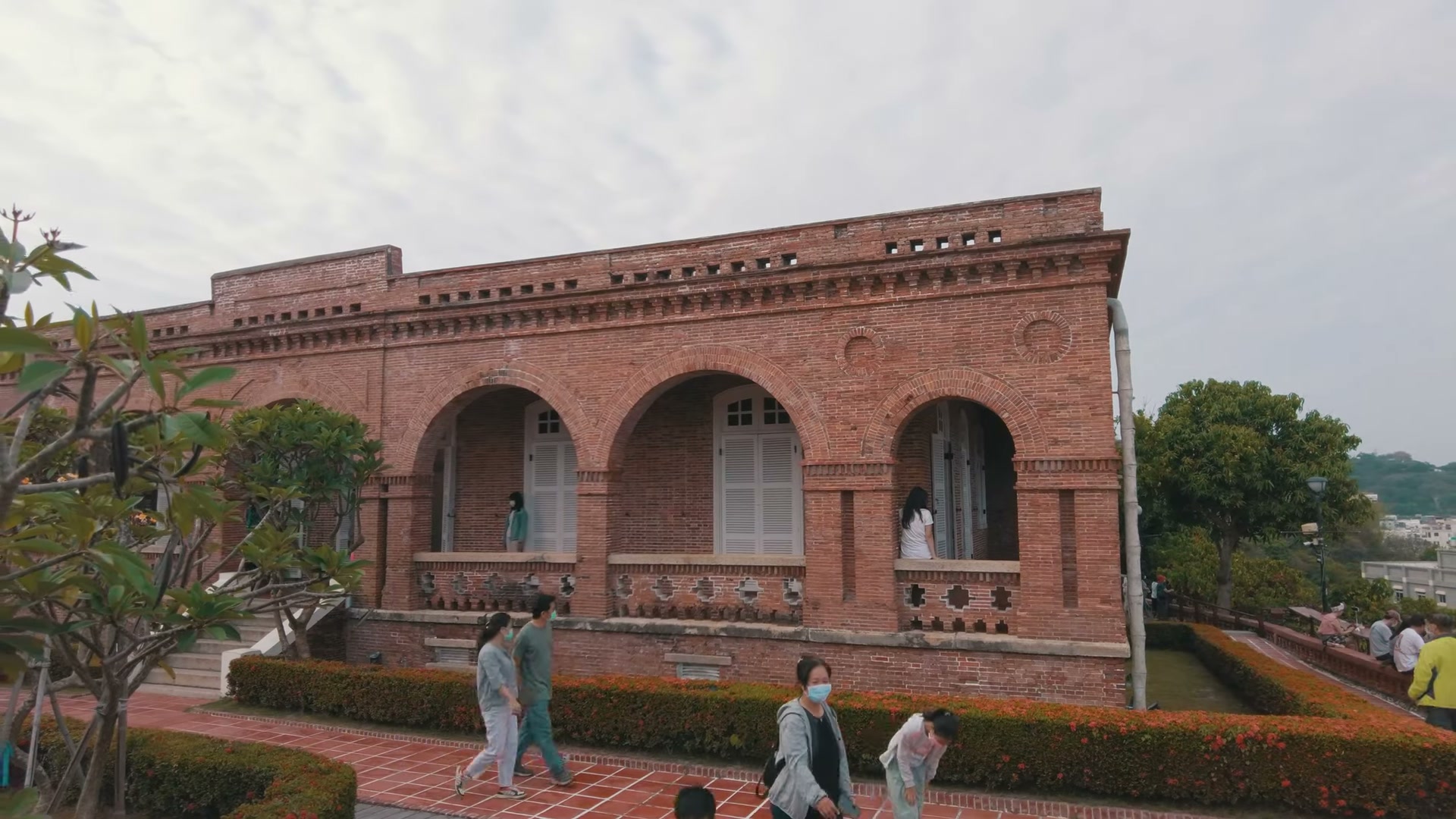
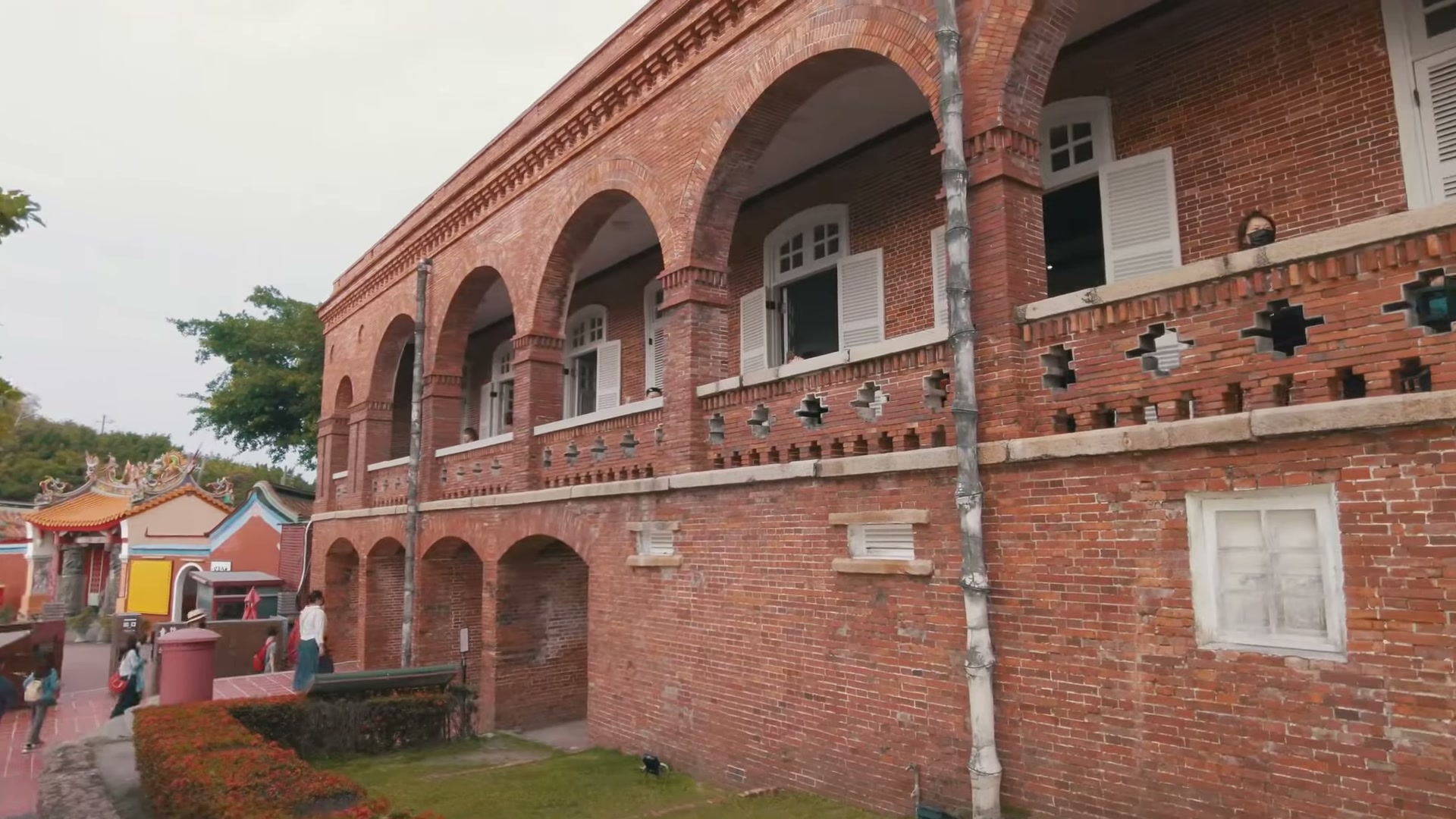
The red-brick residence sits on a hillside beside the harbour. Rounded arches and white doors and windows extend along its walls. Start far enough back to read a whole elevation and its roofline, then walk around the building. Rooms, verandas, gardens and the view begin to fit together.
The British Consulate at Takow cultural complex includes the upper residence, a lower office and a connecting historic path. They are separate parts of the site. This film concentrates on the hilltop residence. Kaohsiung’s official account dates the complex to 1879: the residence occupied the hill, while the office faced the harbour and customs facilities.
Step between the arches
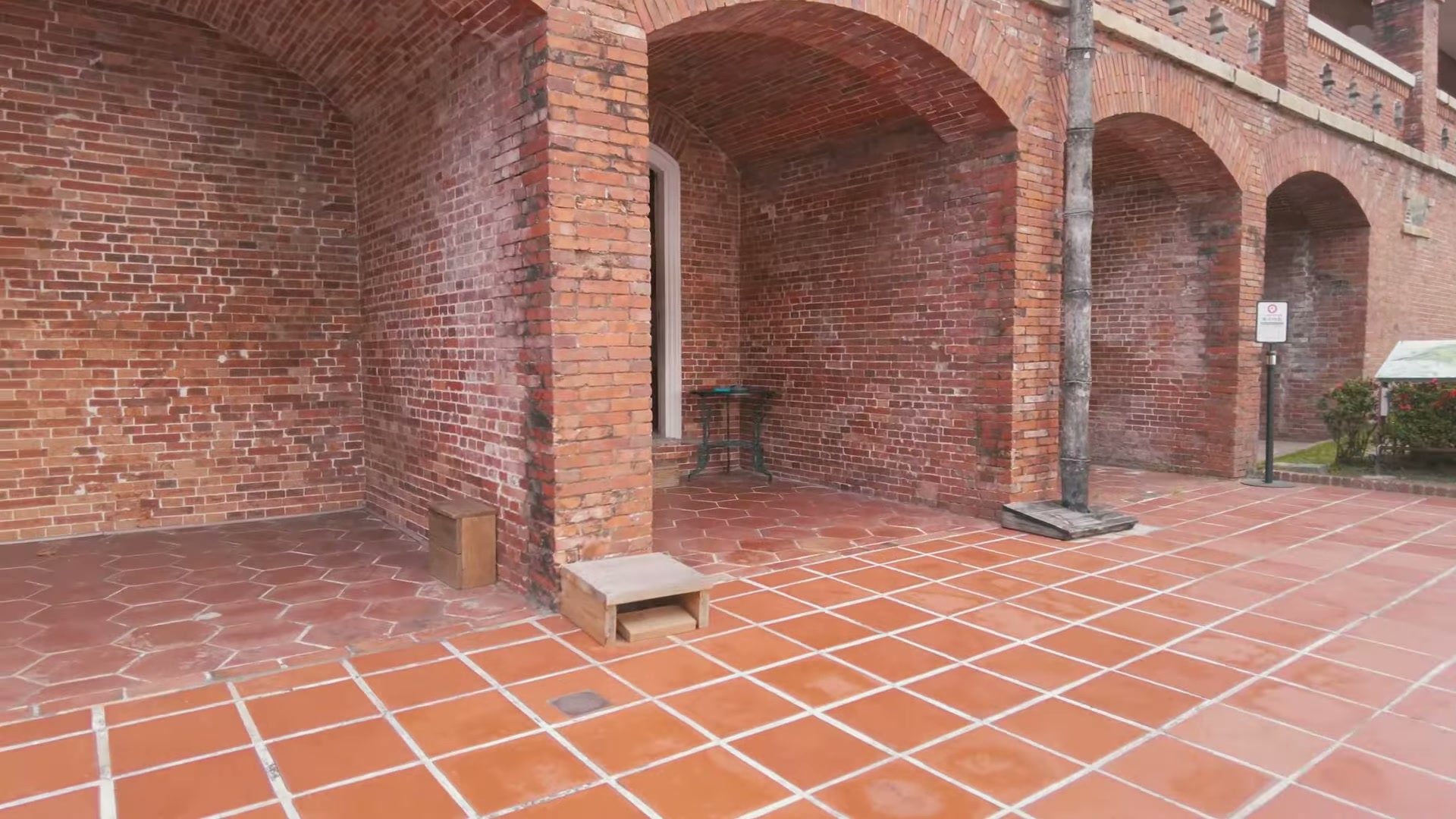
From outside, the repeated arches divide the long elevation into a clear rhythm. Under cover, brick columns, vaults, balustrades and floor tiles become close enough to read at a human scale. The attraction is more than a single camera angle: light and perspective change as you move from open ground into shade.
Compare the lower brick arches with the veranda above to see how the building meets the change in ground level. Look up, look down, then step back to the wall as a whole. Details become easier to understand within their setting. Follow the open visitor route and keep off historic walls and railings.
Doors and windows connect the rooms
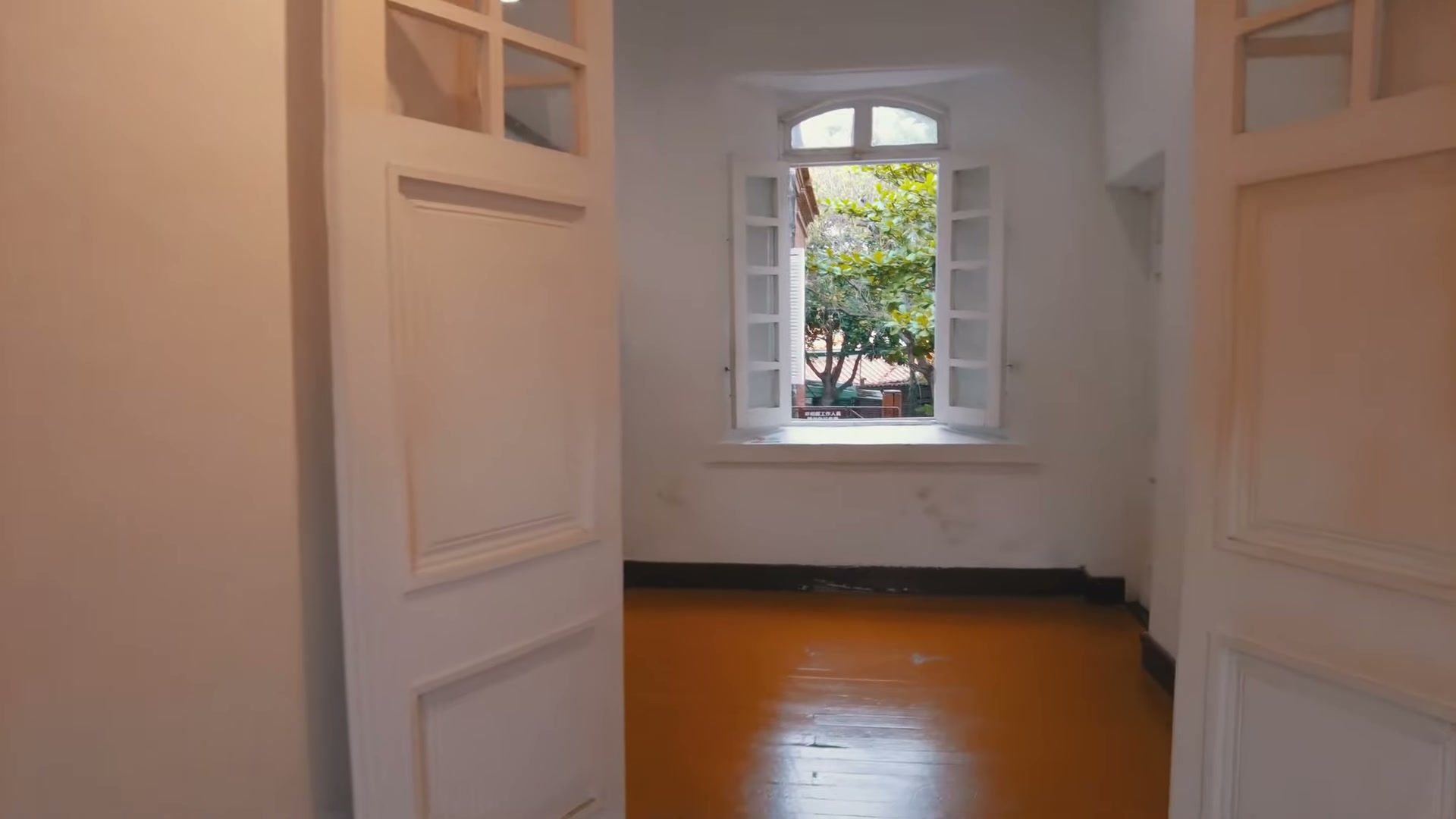
White shutters, door frames and tall windows create a changing pattern against the brick. Inside, open doors connect one room to another, while greenery enters the view through a window. Reading the depth of a room before approaching its details helps make the building memorable.
Displays and shop arrangements in earlier footage may differ from the day of your visit. Concentrate on spatial connections you can observe: where a door meets a veranda, which way a window opens, and how people move between room and garden. Check the day’s arrangements if a particular exhibition or indoor space is your reason for coming.
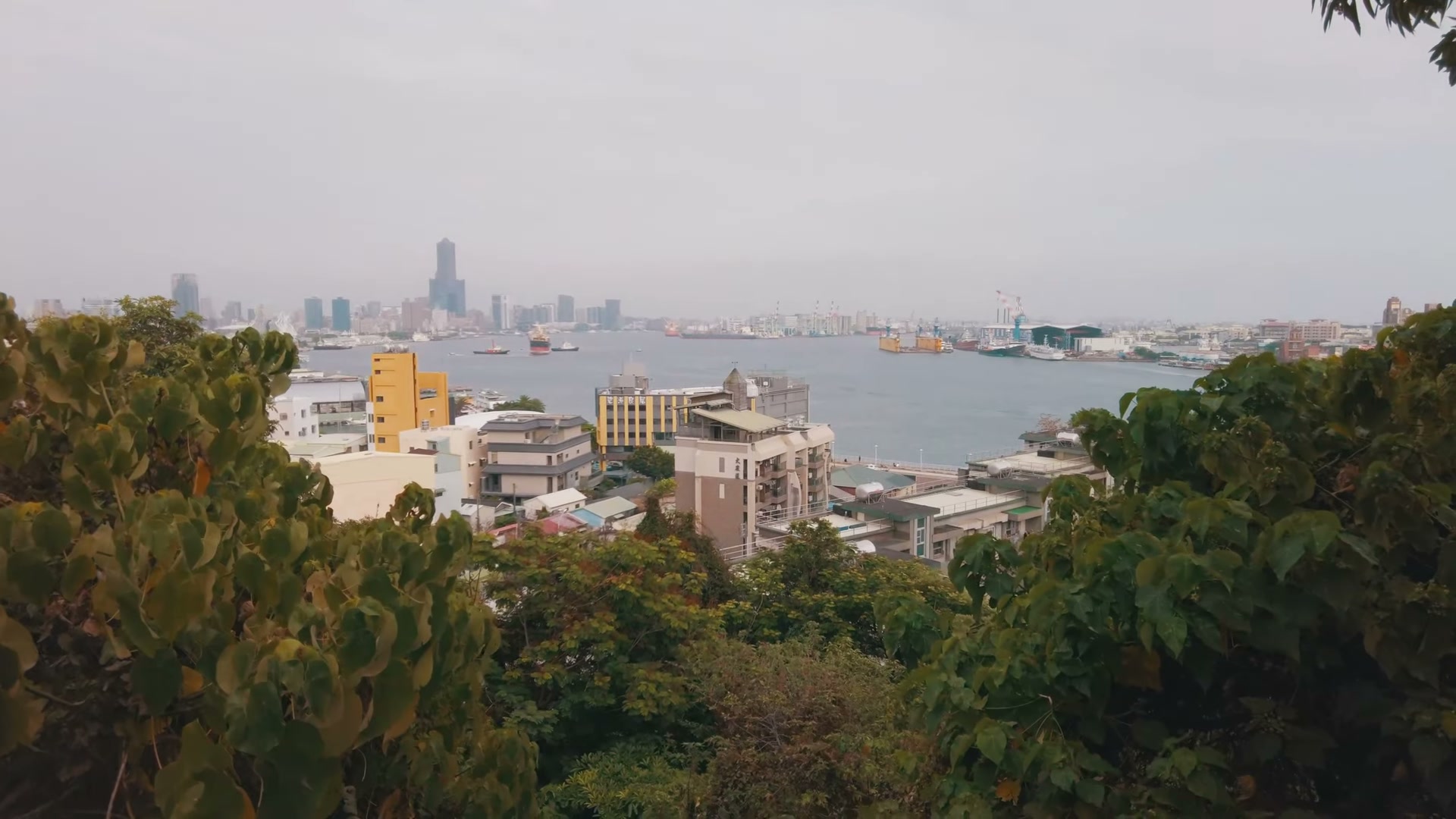
Place the harbour beside the house
Beyond the treetops, city blocks, harbour water and ships meet in the distance. This view explains why the residence rewards an unhurried visit. Look at the brickwork, then turn towards the sea, and the building’s location becomes tangible. The port also recalls the trading setting in which the consular complex worked.
Another direction brings the bay, roads, waterfront trees and hillside into separate layers. Weather and light change visibility. A visit need not depend on a sunset: daytime offers its own comparison between shade beneath the arches and light across the water. Leave room for others when stopping for photographs.
Leave time to return to the brickwork
Return to the residence’s long elevation. Arches, balustrades, white doors and garden now belong to one place, rather than separate attractive details. Walking, comparing and pausing are part of its appeal. Keep the building and its hilltop view together in the memory of the visit.
The hilltop residence is at 20 Lianhai Road, Gushan District, Kaohsiung. Allow additional time and effort if visiting the lower buildings as well. At this check, Kaohsiung Travel notes maintenance at the upper residence, with indoor operations continuing and an alternative visiting direction. Check the park’s latest notice and return transport before travelling. Enquiries: +886 7 5250100.
Film, article and image sources
The film and five stills use Takao walker’s real-location walk. The creator states filming on 16 April 2022; the video was uploaded on 16 December 2022. The filming date was not independently established. These earlier hilltop-residence views do not report current maintenance, displays or access. The film uses an added music score.
- kaohsiung Walk - Former British Consulate at Takao | 遊客景點 打狗英國領事館 | 4K
- 打狗英國領事館文化園區|高雄旅遊網
- Takao’s consular complex: a home above, harbour work below
1. Takao walker · 2022
2. Takao walker · 2022
3. Takao walker · 2022
4. Takao walker · 2022
5. Takao walker · 2022
Music: 把時間留下 (AI-generated instrumental).