Beimen: A Wooden Station in the City
90 seconds. English captions are part of the film. Optional Traditional Chinese subtitles are available in the player.
Footage was uploaded in March 2022, before later restoration. It does not guarantee today’s access, colours, businesses or train allocation. The historic building and operating station are separate visits; Alishan travel is additional.
Read the complete five-chapter article → · 繁體中文
Complete English captions and Traditional Chinese translation
00:00:00,000 --> 00:00:07,000
Beimen Station, Chiayi.
A timber doorway into the city.
嘉義北門驛。
一座木造車站,接向城市。
00:00:07,000 --> 00:00:14,000
A shaded forecourt
opens around the old station.
樹蔭下的前庭,
環繞著木造舊驛展開。
00:00:14,000 --> 00:00:21,000
Follow the low tiled roof
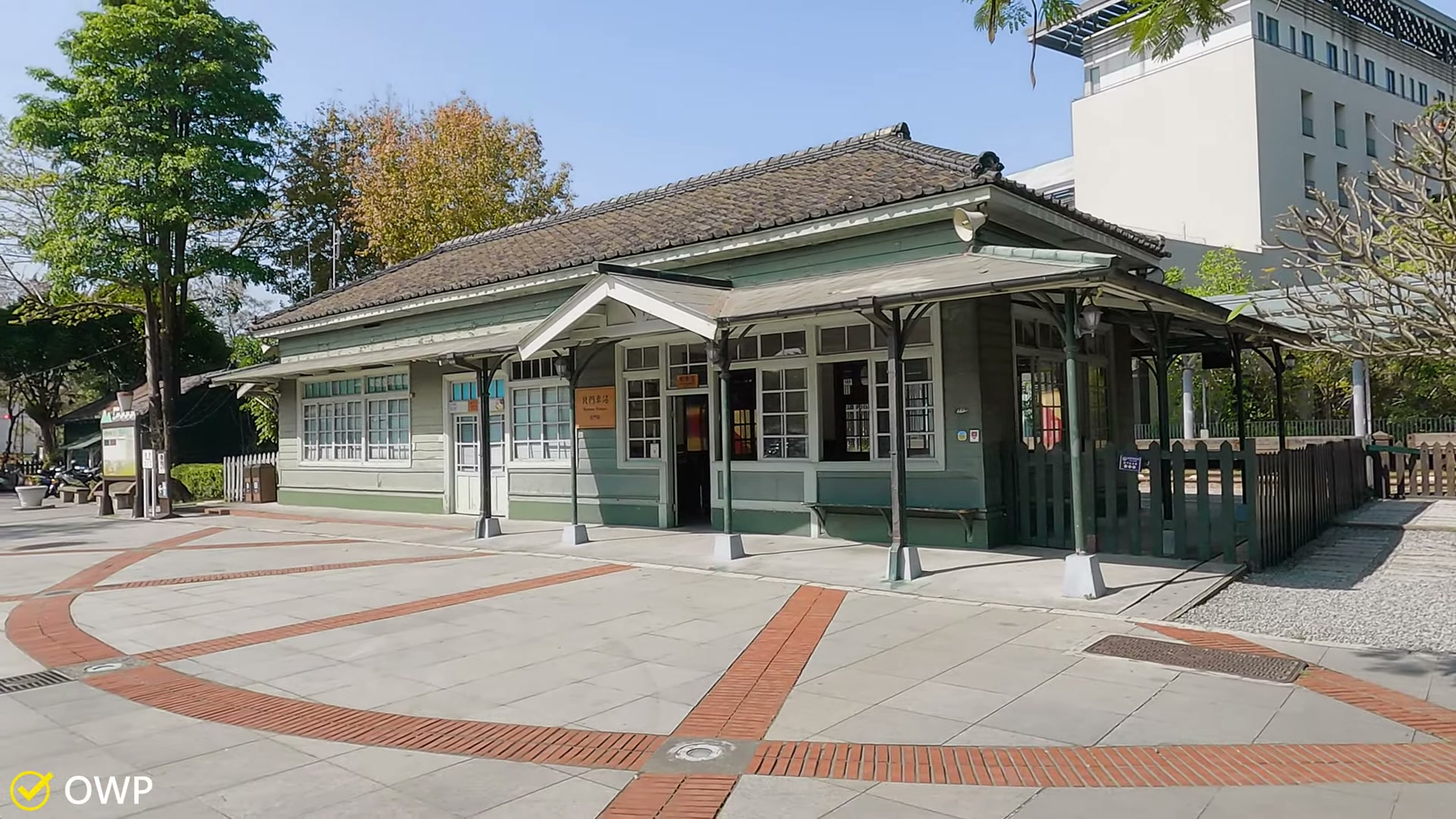
and pale-green timber walls.
沿著低矮瓦屋頂,
看淡綠色的木板牆。
00:00:21,000 --> 00:00:28,000
Come closer to the windows
and the sheltered entrance.
走近窗戶,
也走近有屋簷的入口。
00:00:28,000 --> 00:00:36,000
The waiting room opens
onto the world outside.
候車室的開口,
連著屋外的世界。
00:00:36,000 --> 00:00:45,000
Glass, timber and a small room:
the scale of a local station.
玻璃、木板與小小的房間,
呈現地方車站的尺度。
00:00:45,000 --> 00:00:54,000
Beyond the fence,
the railway remains in view.
圍欄另一邊,
鐵道仍在視野裡。
00:00:54,000 --> 00:01:00,000
Under the eaves,
posts mark a sheltered path.
屋簷之下,
柱子排出一條遮蔭的路。
00:01:00,000 --> 00:01:05,000
Walk the building’s edge,
from window to street.
沿著建築邊緣走,
從窗邊接回街道。
00:01:05,000 --> 00:01:14,000
The station meets
Chiayi’s everyday streets.
車站的邊緣,
接著嘉義的日常街道。
00:01:14,000 --> 00:01:22,000
A fence, planting and paths
shape its quieter side.
圍欄、植栽與通道,
構成車站較安靜的一側。
00:01:22,000 --> 00:01:30,000
Leave time for the old station.
Taiwan, Layer by Layer.
為木造舊驛留一點時間。
島嶼年輪。
Beimen: moving wood into the city needed more than a station
Beimen in Chiayi is a separate city visit from the Shuishan trail in Alishan.
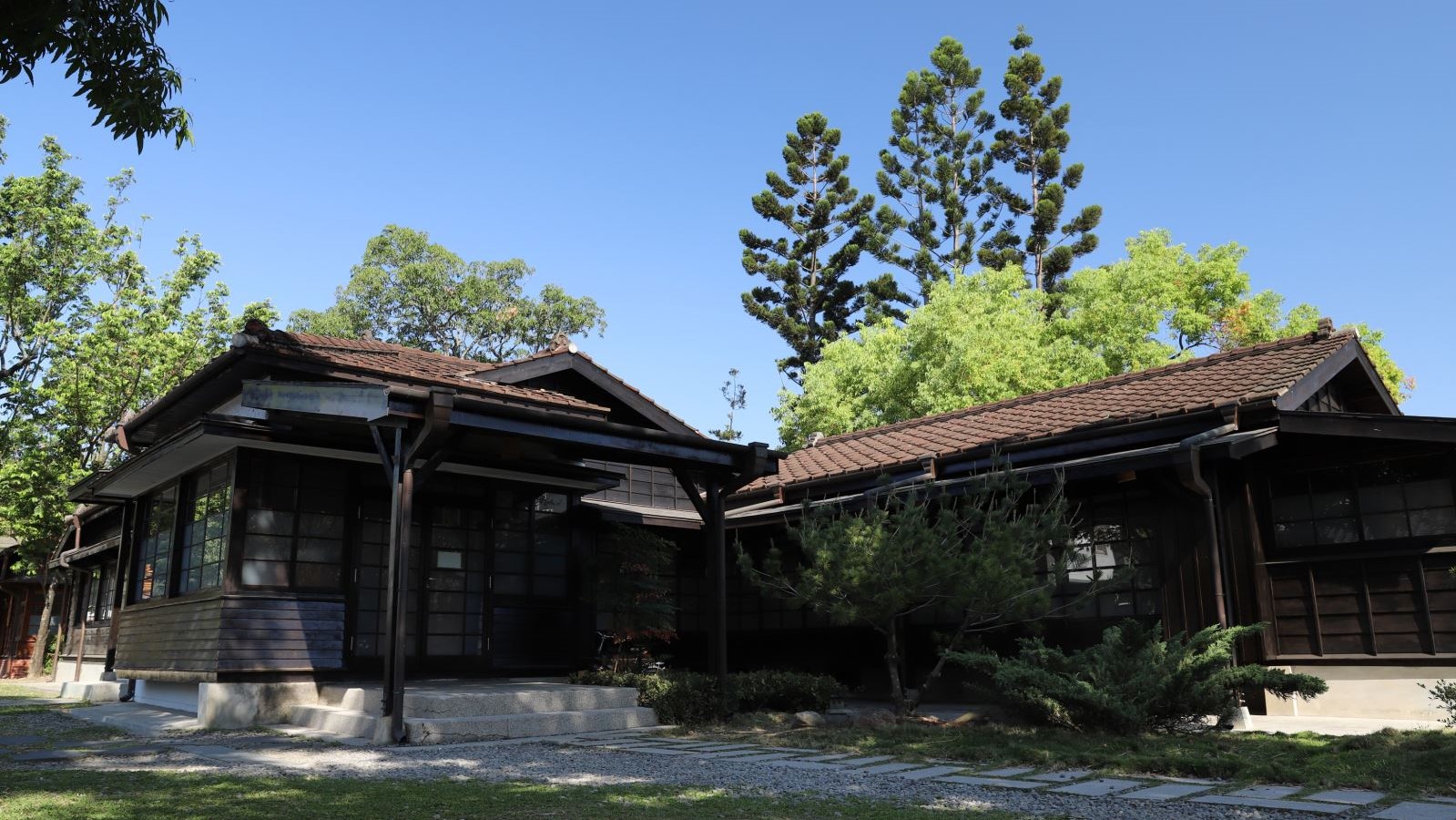
Beimen in Chiayi is a separate city visit from the Shuishan trail in Alishan. Look at the station and the spaces that supported forestry and railway work. Leave 1.5–2 hours for the cultural visit, with travel planned separately. Do not confuse Zhaoping Station with Beimen Station. Return to Chiayi’s Beimen district on a separate, unhurried morning. The railway landscape included more than a station: forestry offices, timber storage, workshops and housing supported the movement of wood from mountain to city. Walk between the station area and the surviving timber buildings, noticing the difference between places for transport, repair, administration and home. The forest journey continues here at street level. A rail line needed people who kept machinery running, handled materials and maintained buildings. Reading the district as a connected working landscape gives its wooden façades a life beyond their appearance. The station plan gives railway work a precise shape. Its heritage record places the ticket window near the entrance, while the baggage-consignment window faces the platform side; a wall separated the waiting room from the office. People buying tickets and staff handling luggage met different edges of the same working room. In the 1970s a new reinforced-concrete station took over, and the old building served dispatch, maintenance, unloading and staff needs. It later suffered a fire and was restored. The timber appearance seen today thus includes a history of repair as well as early railway use. If interior access is available, compare the windows with their different tasks; otherwise read the public exterior and keep away from operating tracks.
Visiting and return
Arrange this as a separate visit and check the day’s opening arrangements and return transport.
Historic wooden station; train boarding and railway operations are separate.
428 Gonghe Road, East District, Chiayi City
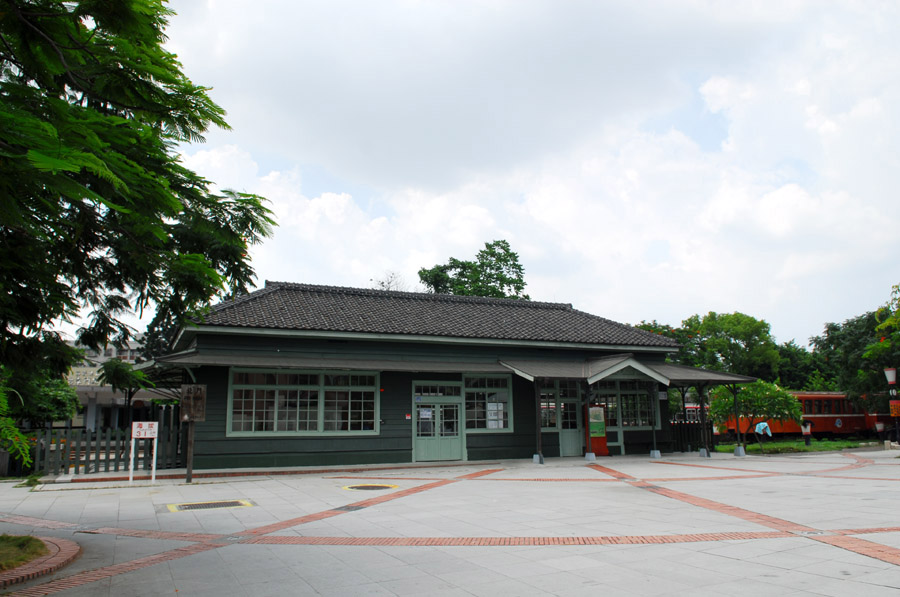
This visit is to the historic wooden station at 428 Gonghe Road. The operating Beimen railway station is listed separately at 306 Zhongxiao Road; its ticket-window hours do not establish access to the old building. Confirm interior access with the relevant manager, stay off tracks, and arrange any Alishan train journey separately.
Look closer at the places in the film
1. Place the station back in the city
At Beimen’s historic station in Chiayi, begin far enough away to see the roof, forecourt and surrounding streets together. Pale-green timber cladding, white window frames and a projecting entrance canopy distinguish the low station from taller neighbours. The film establishes the complete building before moving towards its doors and windows. A visit can follow the same sequence: understand its scale, then approach.
The formal article places Beimen within a larger working landscape. Forestry offices, timber storage, workshops and housing supported the movement of wood from Alishan into Chiayi. The railway authority’s account connects completion of the line in 1912 with the timber-storage and sawmill facilities completed in 1914. The small station can begin a reading of that city landscape. This film stays with the historic station and its immediate outdoor spaces; other sites need their own visits.
2. Different work met different windows
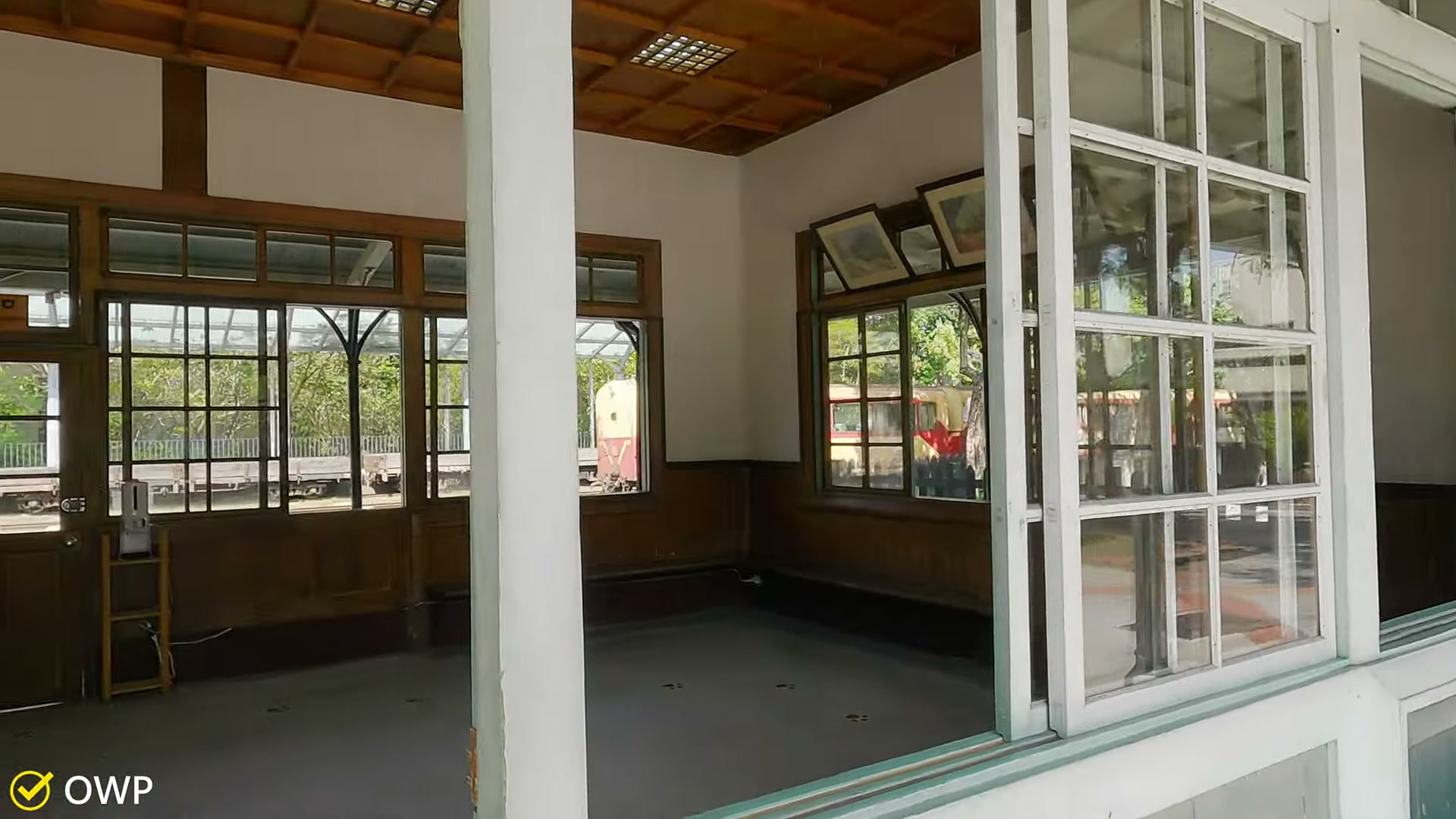
Open windows and the doorway reveal a waiting space, benches, wooden frames and light entering from the other side. A small room makes station life easier to imagine: waiting, asking questions, buying a ticket and office work needed places to meet. The film observes the room from outside. Its open door at the time of recording does not establish present-day interior access.
The formal article draws on the heritage record to distinguish a ticket window near the entrance from a baggage-consignment window on the platform side, with a wall between the waiting room and office. This helps visitors read location and division of work without arbitrarily naming every opening in the footage. If entry is available, compare the room with the on-site interpretation. Otherwise, its frames, sightlines and connections can still be observed from the public exterior.
3. Timber also carries a history of repair
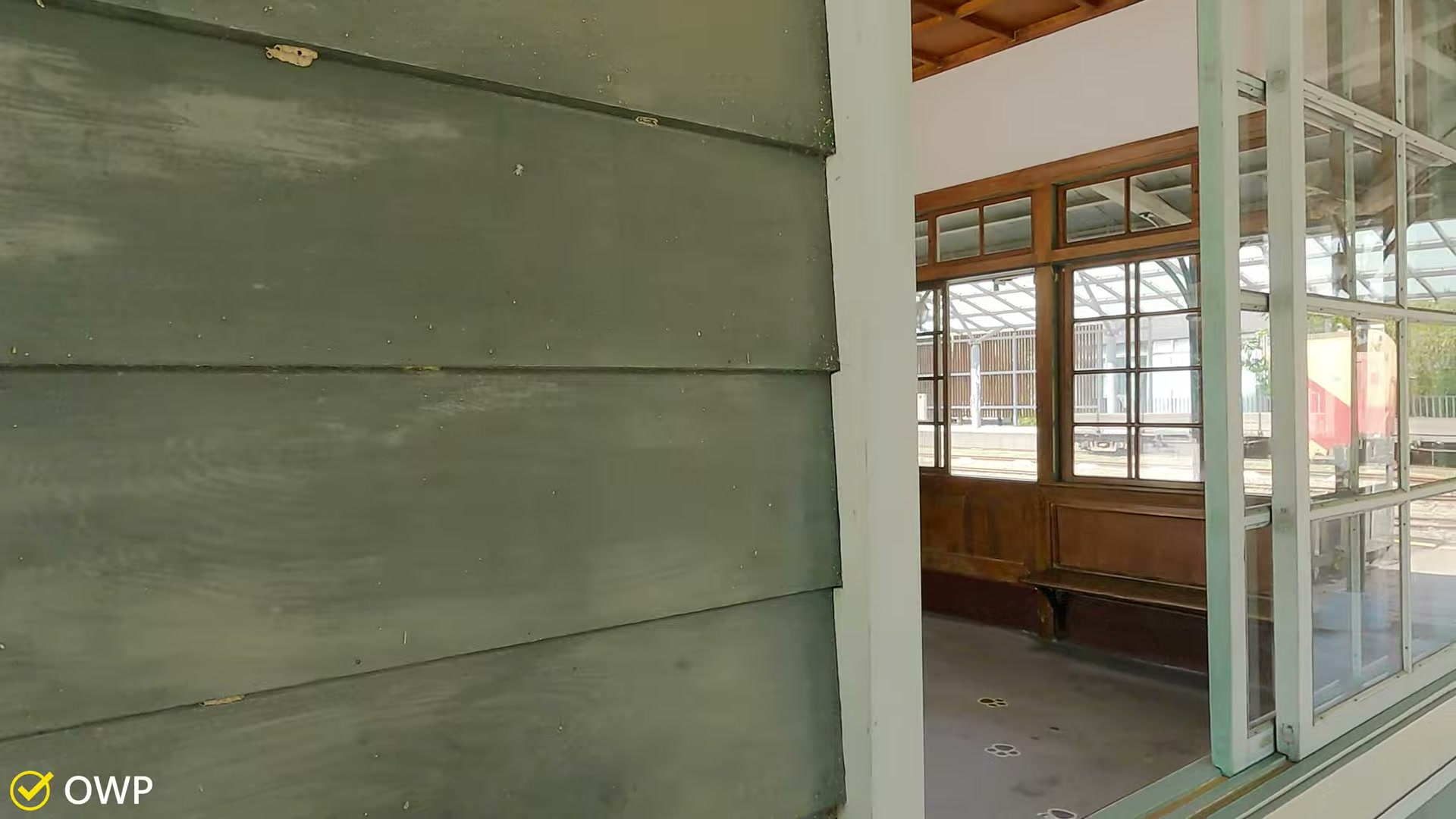
Close to the wall, the building becomes more than the general idea of an old house. Horizontal boards, white frames and posts under the eaves divide it into recognisable parts. No restoration crew appears in this film. The purpose is to read visible materials alongside documented repair history, rather than claim that the age of every piece of wood can be seen.
A 2023 railway-authority notice records fire damage in 1998, repair using red cypress and further work after the 1999 earthquake. Another restoration programme followed conditions affecting timber and paint. The source walk was uploaded on 20 March 2022, before that later work. Its windows, colours and uses belong to the recorded period. A preserved timber station need not be described as a building in which every component has survived unchanged from its first opening.
4. Read the railway from the visitor side
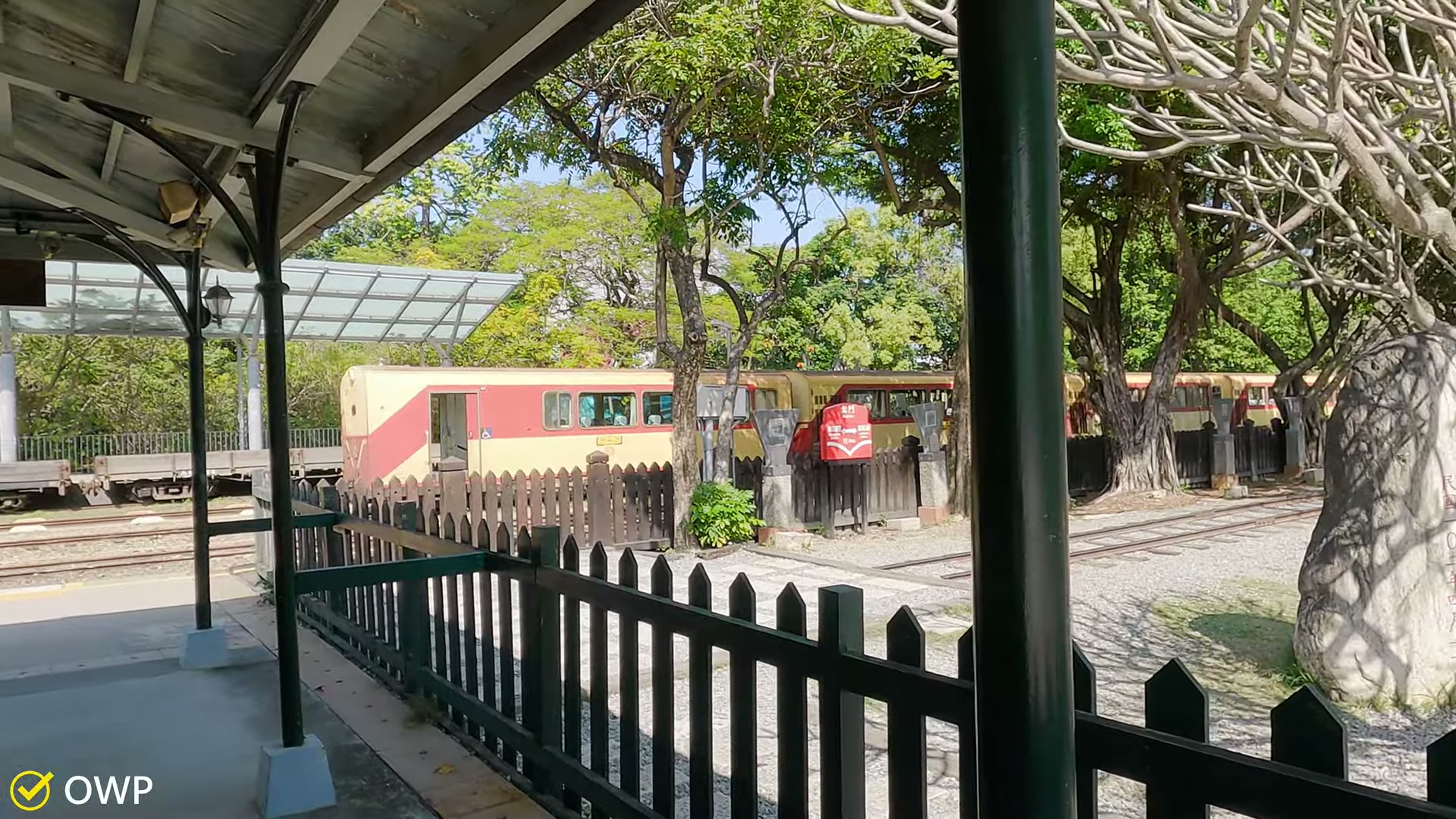
The view turns outward to bring the fence, rails and red rolling stock into the same frame. They reconnect the timber building with a railway landscape. The caption describes a vehicle in view; it does not turn a parked scene into an arrival, departure or shunting operation. Seeing the same vehicle during a future visit is not promised.
The historic station, today’s operating Beimen station, the depot and repair workshops are connected places with different purposes. The formal article distinguishes the timber heritage building at 428 Gonghe Road from the operating station at 306 Zhongxiao Road. Visiting an old building, boarding for the mountains and observing railway maintenance require separate arrangements. Public entrances and fences allow the relationship to be understood while remaining outside operational tracks.
5. Leave time for the forecourt and city
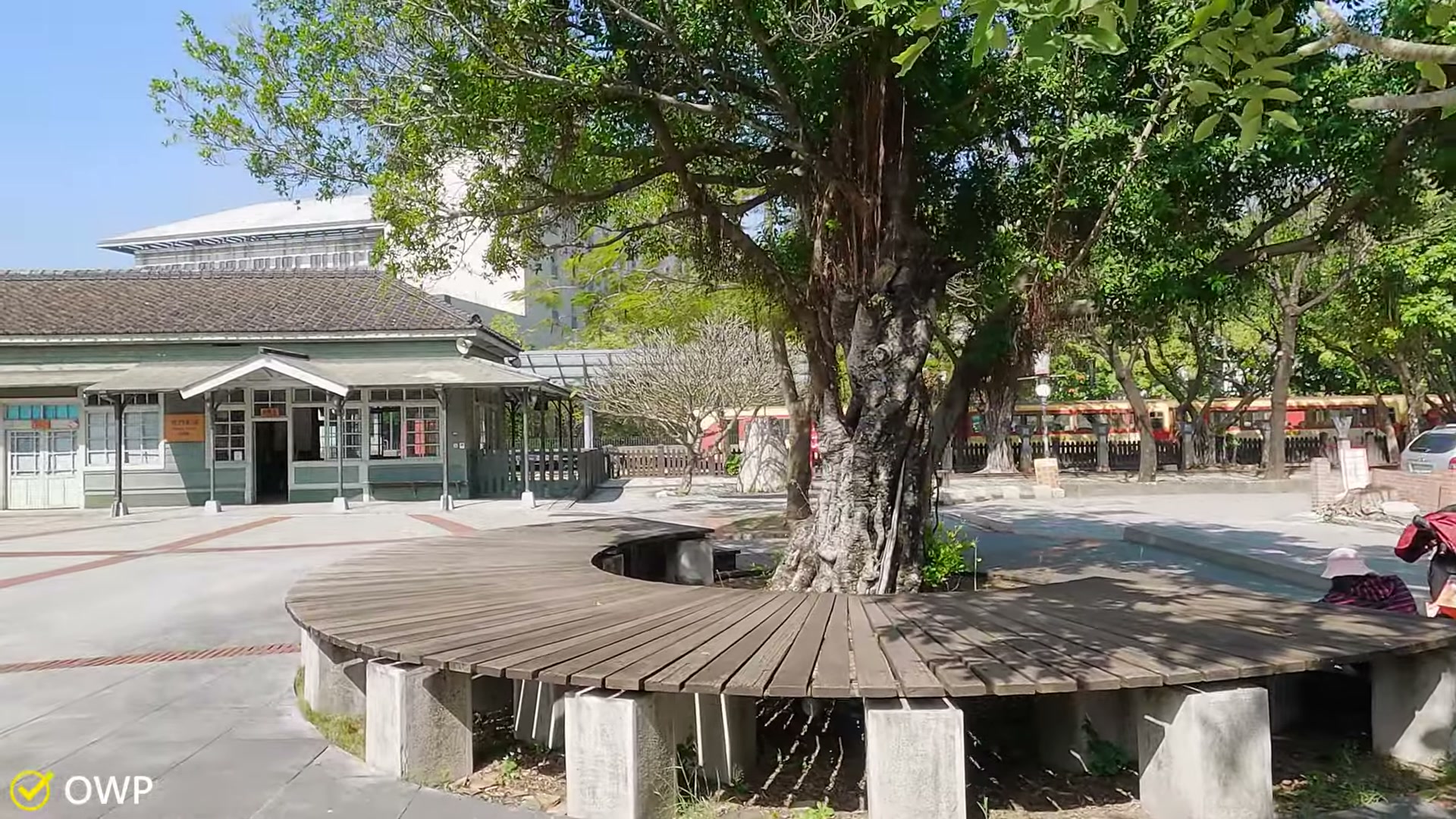
Beyond the eaves, paving, trees and a forecourt offer room to pause. The film does not use nearby Hinoki Village to fill time, or join Chiayi’s streets and Alishan’s forest into an imaginary continuous walk. After the facade, windows, railway edge and street boundary, the return to shade gives the station a readable front, side and setting.
The formal article suggests a separate allowance of around 1.5–2 hours for the Beimen cultural visit, with intercity travel and the mountain journey additional. Use 428 Gonghe Road to identify the historic timber station. For a train journey, confirm the operating Beimen station, current timetable and return service. Ticket-window hours do not establish when the old building can be entered. This film edits a walk uploaded in 2022; the exact filming date is independently unconfirmed and restoration has since taken place. Check the manager’s current notices before travelling.
Film, article and image sources
Footage was uploaded in March 2022, before later restoration. It does not guarantee today’s access, colours, businesses or train allocation. The historic building and operating station are separate visits; Alishan travel is additional.
- 島嶼年輪:北門驛正式中英原文
- 大叔散策Project:北門車站實走,2022-03-20上傳
- 文化部文化資產局:阿里山鐵路北門驛
- 林鐵及文資處:嘉義市林業文化景點導覽介紹
- 林鐵及文資處:2023年北門驛整修公告
- 觀光多媒體開放資料:北門驛
1. Source walking footage: https://www.youtube.com/watch?v=VNSmHc5gQDc · 2022
2. Source walking footage: https://www.youtube.com/watch?v=VNSmHc5gQDc · 2022
3. Source walking footage: https://www.youtube.com/watch?v=VNSmHc5gQDc · 2022
4. Source walking footage: https://www.youtube.com/watch?v=VNSmHc5gQDc · 2022
5. Source walking footage: https://www.youtube.com/watch?v=VNSmHc5gQDc · 2022
Music: 把時間留下 (AI-generated instrumental).