Cultural places · Shulin, New Taipei
Shanjia: From the Old Station into the Neighbourhood
Begin with the whole station, then move closer to its windows, displays and streets. A former coal-transport stop opens onto everyday life.
Shanjia: From the Old Station into the Neighbourhood
Begin with the whole station, then move closer to its windows, displays and streets. A former coal-transport stop opens onto everyday life.
90 seconds · English captions in the film; optional English and Traditional Chinese CC.
Film sources and complete bilingual captions
The source was uploaded by Taiwan Wanderer on 3 June 2023, with filming stated as 14 May 2023. It is a recorded visit, not a live view or a promise of current train times, displays or opening.
00:00:00,000 --> 00:00:03,000
Shanjia
New Taipei, Taiwan
山佳
新北,臺灣
00:00:03,000 --> 00:00:07,000
Start at the old station's entrance.
先從老站房的入口開始。
00:00:07,000 --> 00:00:13,000
Step inside, and slow your pace.
走進站房,把腳步放慢。
00:00:13,000 --> 00:00:18,000
Look up at the timber and ceiling.
抬頭,看看木構與天花板。
00:00:18,000 --> 00:00:23,000
A timetable recalls another way to travel.
一張時刻表,留下另一種旅行節奏。
00:00:23,000 --> 00:00:27,000
Light still moves through these windows.
光,仍從這些窗子穿過。
00:00:27,000 --> 00:00:33,000
A small model holds the whole station.
一座小模型,收進完整的車站。
00:00:33,000 --> 00:00:38,000
Drawers, stools and a place to wait.
抽屜、圓凳,還有等候的位置。
00:00:38,000 --> 00:00:43,000
Beyond the old walls,
journeys continue.
老牆之外,往返還在繼續。
00:00:43,000 --> 00:00:47,000
Today's trains share this setting.
今天的列車,也在這裡往返。
00:00:47,000 --> 00:00:52,000
Then take the public streets on foot.
接著,沿公共街道步行。
00:00:52,000 --> 00:00:57,000
Follow the path to the railway park.
沿路走進鐵道地景公園。
00:00:57,000 --> 00:01:03,000
Railway traces become part of a daily walk.
鐵道的痕跡,留在日常散步裡。
00:01:03,000 --> 00:01:08,000
A diesel shunter stands on display.
一台柴油調動機,留在這裡展示。
00:01:08,000 --> 00:01:12,000
A coal wagon recalls the town's working past.
一節煤車,讓人想起地方的勞動歷史。
00:01:12,000 --> 00:01:17,000
Look closely at the cab and metalwork.
靠近看看駕駛室與金屬構件。
00:01:17,000 --> 00:01:23,000
Make time for the neighbourhood around it.
也留點時間,看看周圍的街區。
00:01:23,000 --> 00:01:28,000
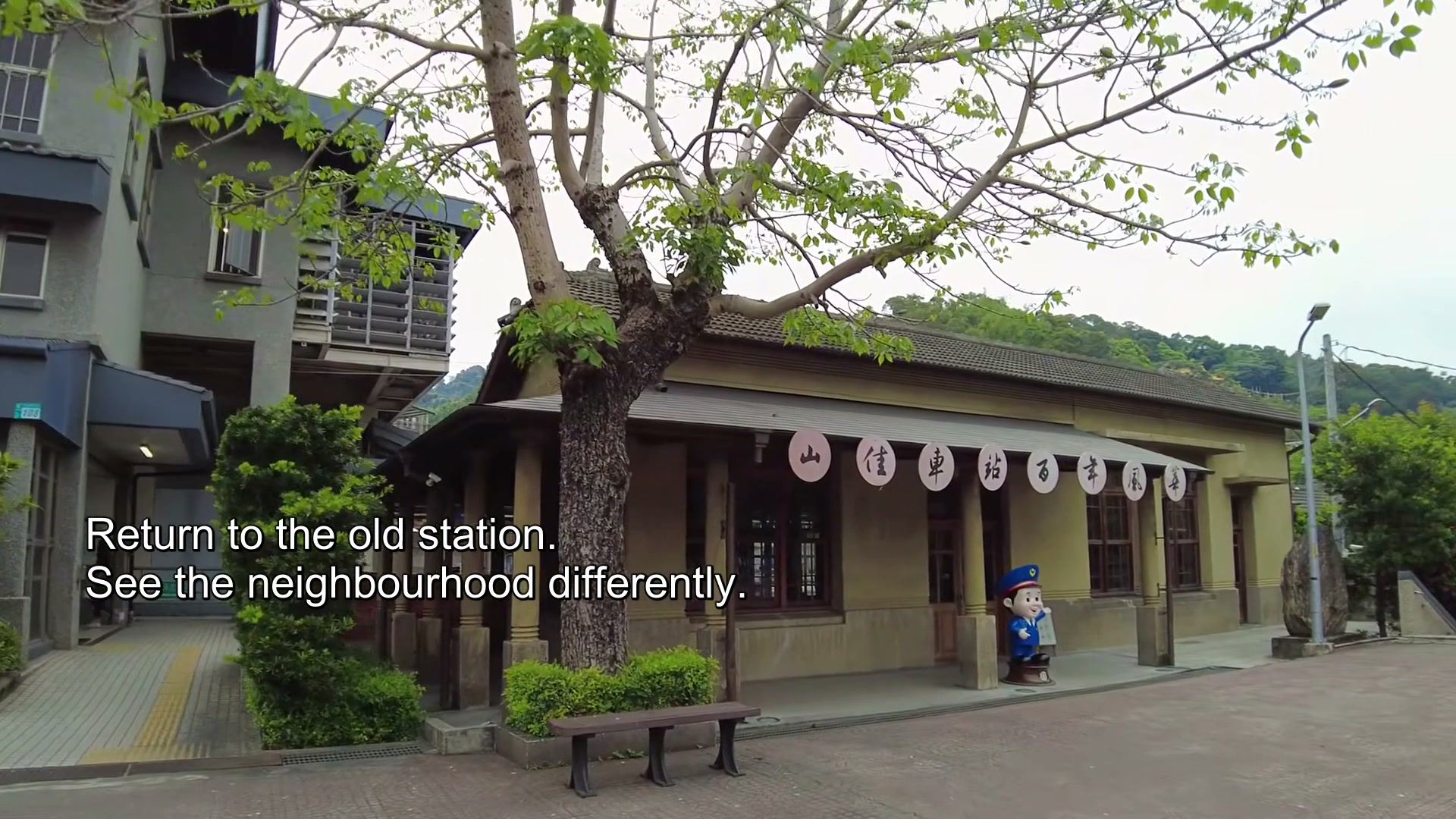
Return to the old station.
See the neighbourhood differently.
再看一次老站房。
用不同目光,認識周圍街區。
00:01:28,000 --> 00:01:30,000
Taiwan, Layer by Layer
島嶼年輪
1. Step back and see the whole old station
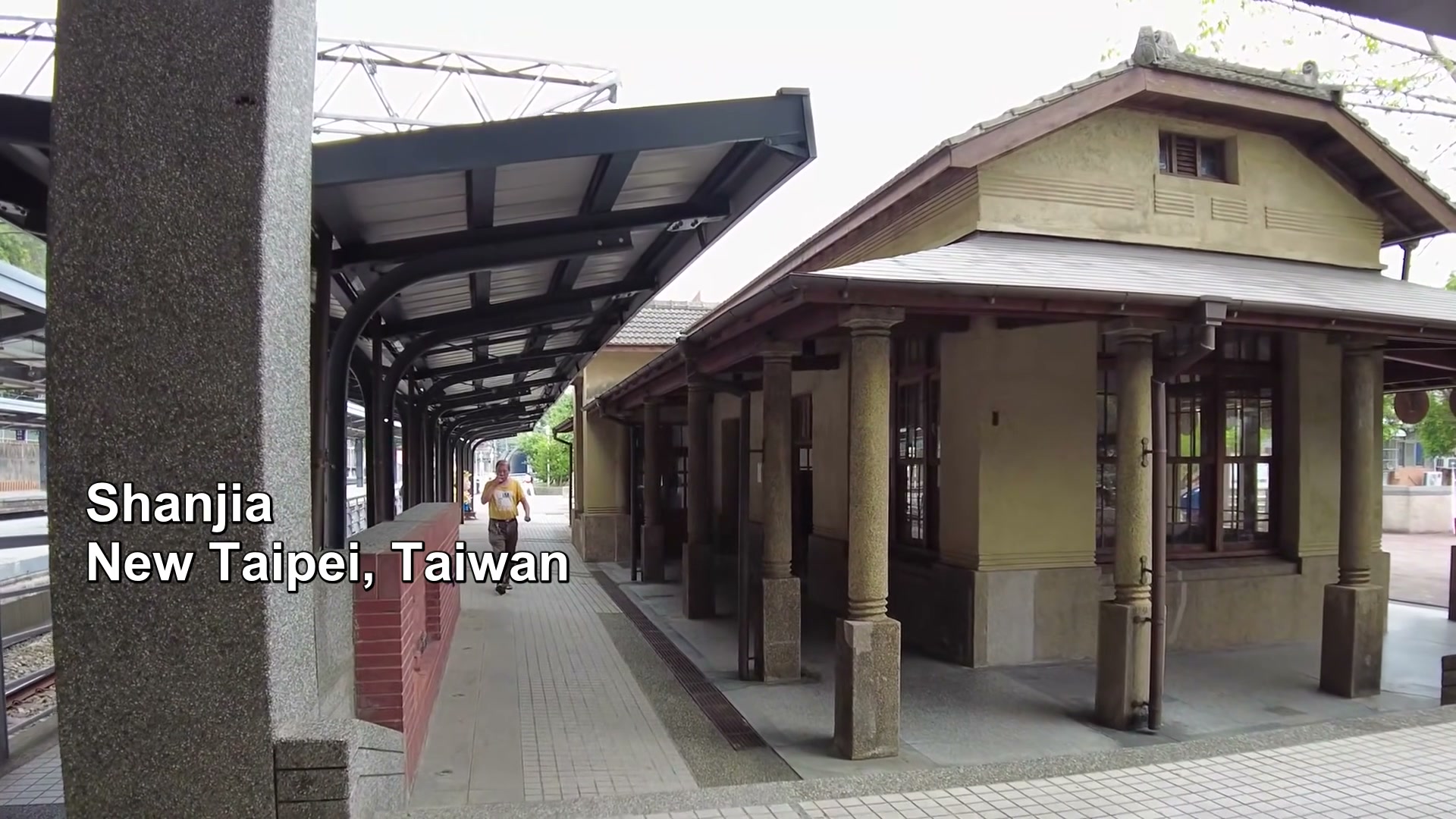
At Shanjia, pause before following the trains. Read the roof, entrance and walls as one building, then notice the newer station nearby. The preserved structure and present-day journeys share a neighbourhood.
New Taipei’s tourism office identifies the old station as a municipal monument, noting its Japanese and Western influences and washed-stone walls. Take in the roof and façade together, then let columns, frames and wall surfaces guide a closer look.
2. Look closer at the building
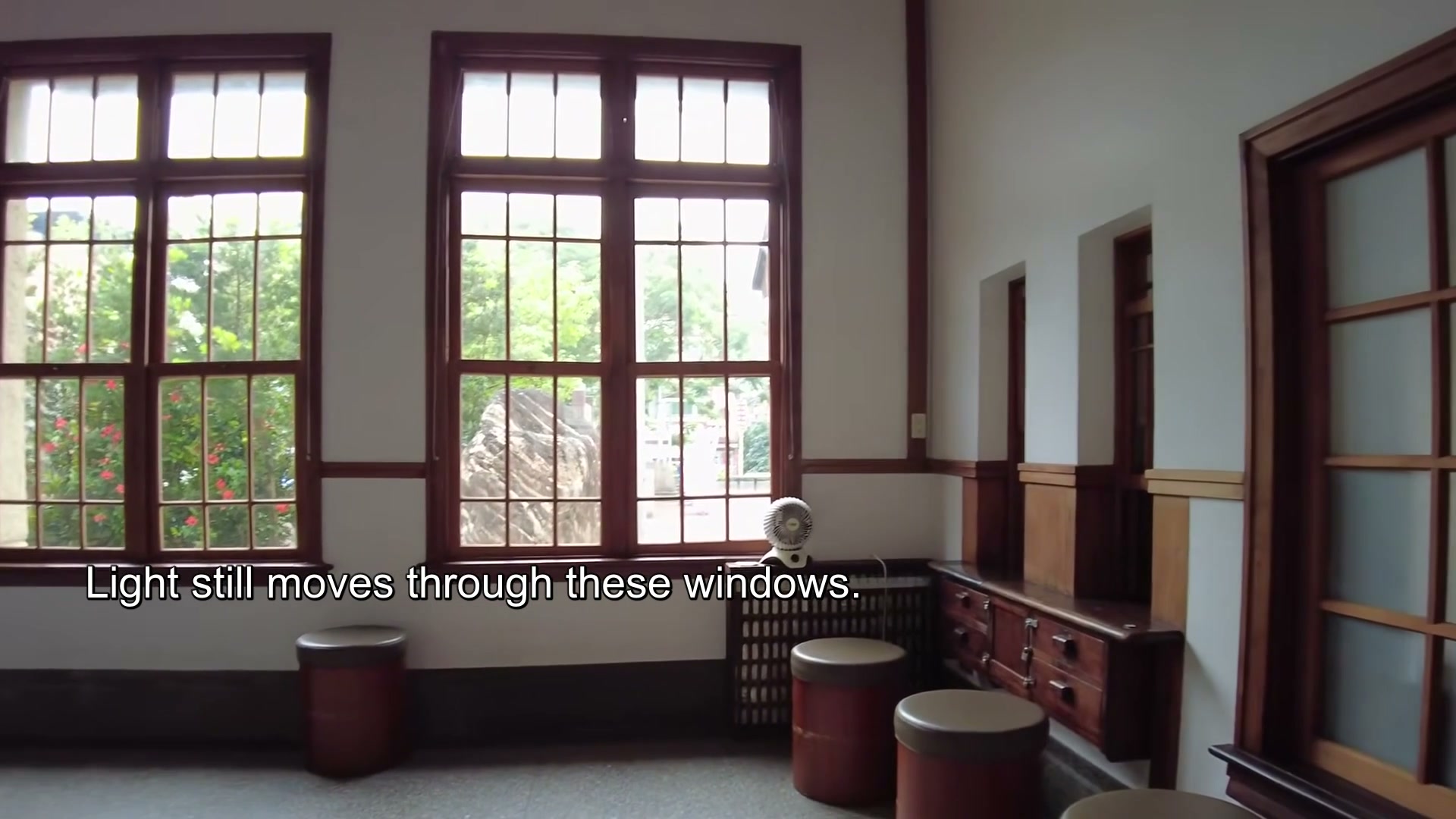
Move from the entrance to the frames and wall surfaces. Notice how materials meet and how daylight passes through the openings. A nostalgic backdrop becomes a place that rewards closer attention.
Heritage records connect the station’s development with local coal transport. Its doorways and waiting spaces bring that history back to the scale of everyday journeys. Read the materials and arrangement of the room as well as the dates attached to it.
3. Follow the displays into a larger railway story
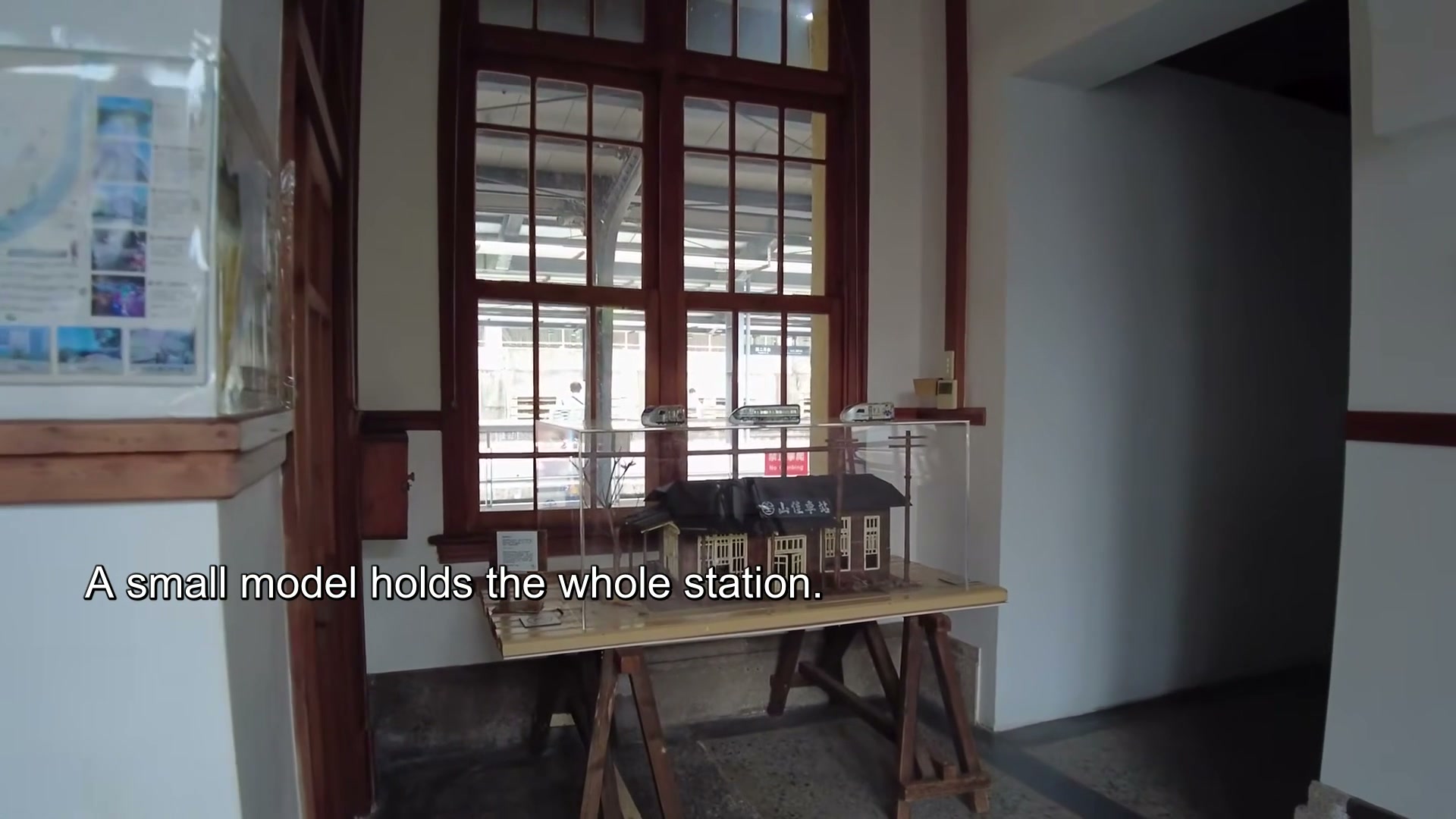
The old station’s displays offer more than an exterior view. The tourism office describes station and railway models, timetables and travel material: small objects that suggest the larger system of journeys around this place.
The film uses a recorded visit, so displays may have changed. Check arrangements for the heritage building separately from present-day train services.
4. Step into the streets beside the station
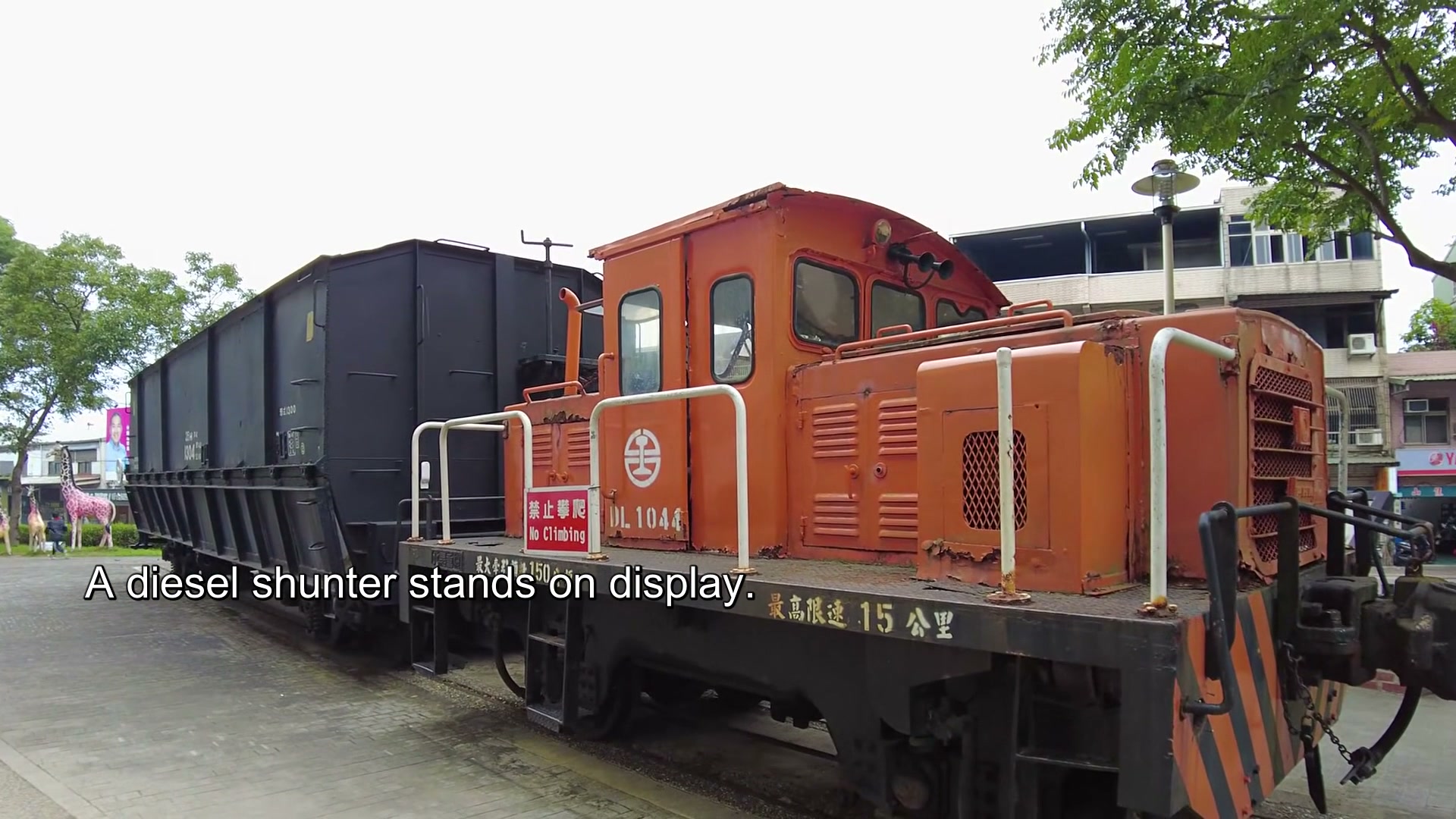
Continue beyond the heritage building along public streets. Shopfronts, railway traces and the locomotive display in the nearby landscape park turn a visit to one building into a neighbourhood walk.
Coal transport provides historical context, but this is not a working mine. The displayed diesel shunter and coal wagon have a different role from today’s train services. Stay on the public path, look at their metalwork and the streets around them, then continue the walk.
5. Return to the meeting of old and new
Look back at the old station after the windows, objects and streets have connected it with people’s movements. A small railway stop can invite attention to the everyday life around it.
Use this film as a beginning: see the whole place, move closer to particular objects, then continue through nearby public space. Leave time for both the heritage visit and the neighbourhood.
Article, image and music sources
The source was uploaded by Taiwan Wanderer on 3 June 2023, with filming stated as 14 May 2023. It is a recorded visit, not a live view or a promise of current train times, displays or opening.
- New Taipei Travel: Shanjia Station
- National Cultural Heritage Database: Shanjia Station
- New Taipei Travel: Heritage and the former mining town
- Taiwan Wanderer: Shanjia station and neighbourhood walk
Music: 跨海的一段路 · AI-generated instrumental.