Culture
Luoshan, from fields to a block of tofu
Begin with Luoshan’s homes and fields, then move closer to soybeans, steam and a wooden mould. A block of mud-volcano tofu opens a view of local knowledge at work.
Luoshan, from fields to a block of tofu
90 seconds. English captions are part of the film. Optional English and Traditional Chinese CC are available in the player.
The film focuses on Luoshan and uses one work already public in 2020. Its filming date is unconfirmed; a 2021 portal production field is not treated as a filming date.
Complete English captions and Traditional Chinese translation
00:00:00,000 --> 00:00:07,000
Luoshan, Hualien.
A village known for mud-volcano tofu.
花蓮・羅山。
以泥火山豆腐聞名的聚落。
00:00:07,000 --> 00:00:18,800
Read the fields and homes
as one landscape.
把田野與家屋,
放在同一片風景裡看。
00:00:18,800 --> 00:00:24,000
Before tasting the tofu,
meet the place that makes it.
嚐豆腐以前,
先認識做出它的地方。
00:00:24,000 --> 00:00:29,900
Mud volcanoes are part
of this village landscape.
泥火山,
也是這座村落的風景。
00:00:29,900 --> 00:00:38,400
Soybeans, water, a grinder.
The work begins.
黃豆、水與磨豆機。
工作從這裡開始。
00:00:38,400 --> 00:00:44,600
Inside the working room,
fire and steam take over.
走進工作空間,
接著是火與蒸氣。
00:00:44,600 --> 00:00:49,400
Stirring calls for attention.
Watch the pan change.
攪動需要留心。
看鍋裡慢慢發生的變化。
00:00:49,400 --> 00:00:57,800
Local mud-volcano brine
helps the soy milk form curds.
當地的泥火山滷水,
讓豆漿凝成豆花。
00:00:57,800 --> 00:01:03,400
Gather the curds
into a cloth-lined mould.
把豆花舀進
鋪好布的木模。
00:01:03,400 --> 00:01:11,200
Press. Unwrap.
A block holds its shape.
壓實,再揭開布。
一方豆腐有了形狀。
00:01:11,200 --> 00:01:17,300
A careful cut
brings the work to the table.
一刀一刀切開,
讓這份工作走向餐桌。
00:01:17,300 --> 00:01:26,600
Beyond the table,
the fields are still being tended.
餐桌以外,
田裡的工作也還在繼續。
00:01:26,600 --> 00:01:30,000
Archival footage published in 2020.
Taiwan, Layer by Layer.
2020年已公開的歷史影像。
島嶼年輪。
1. Begin with the village, before the table
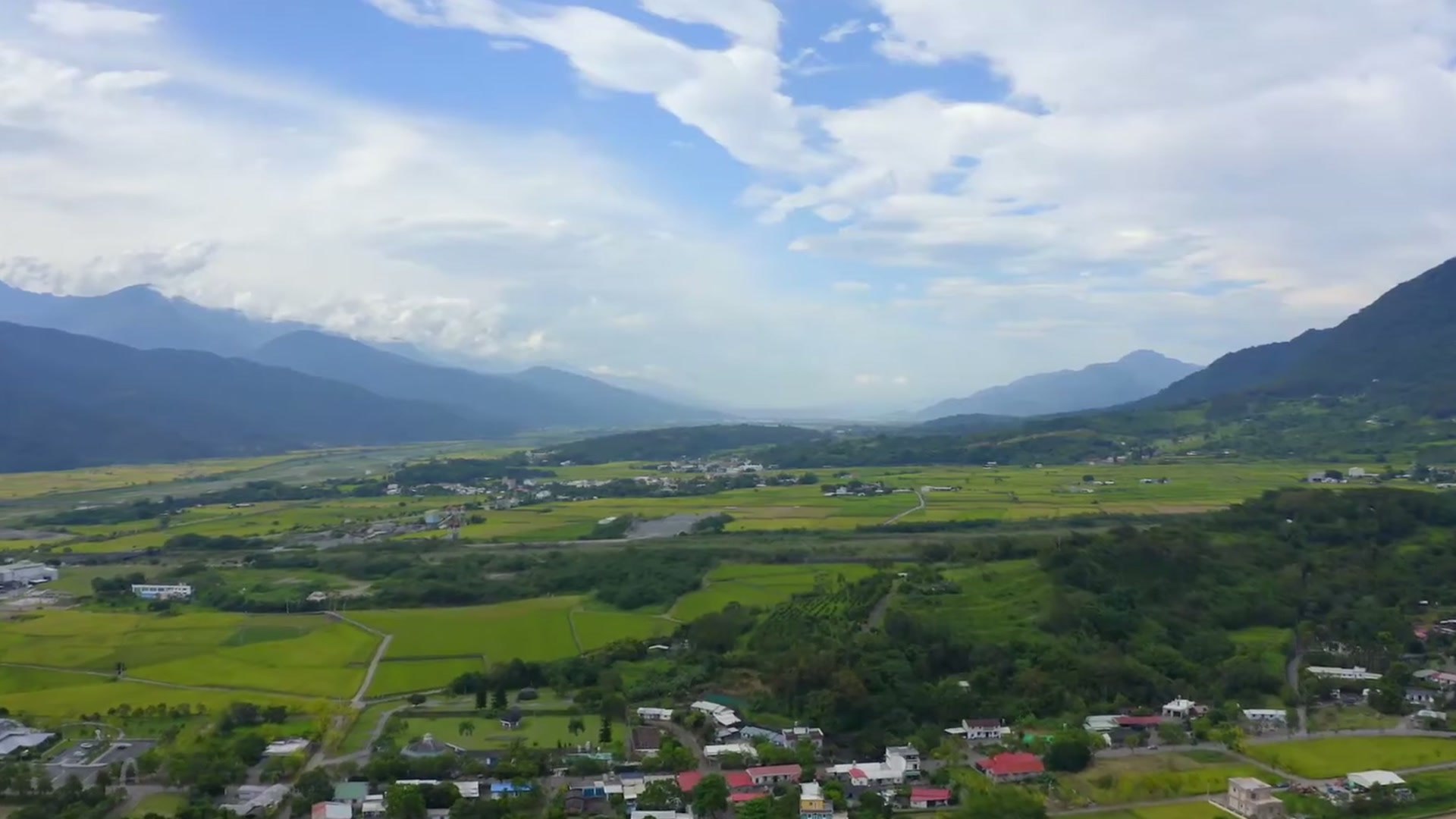
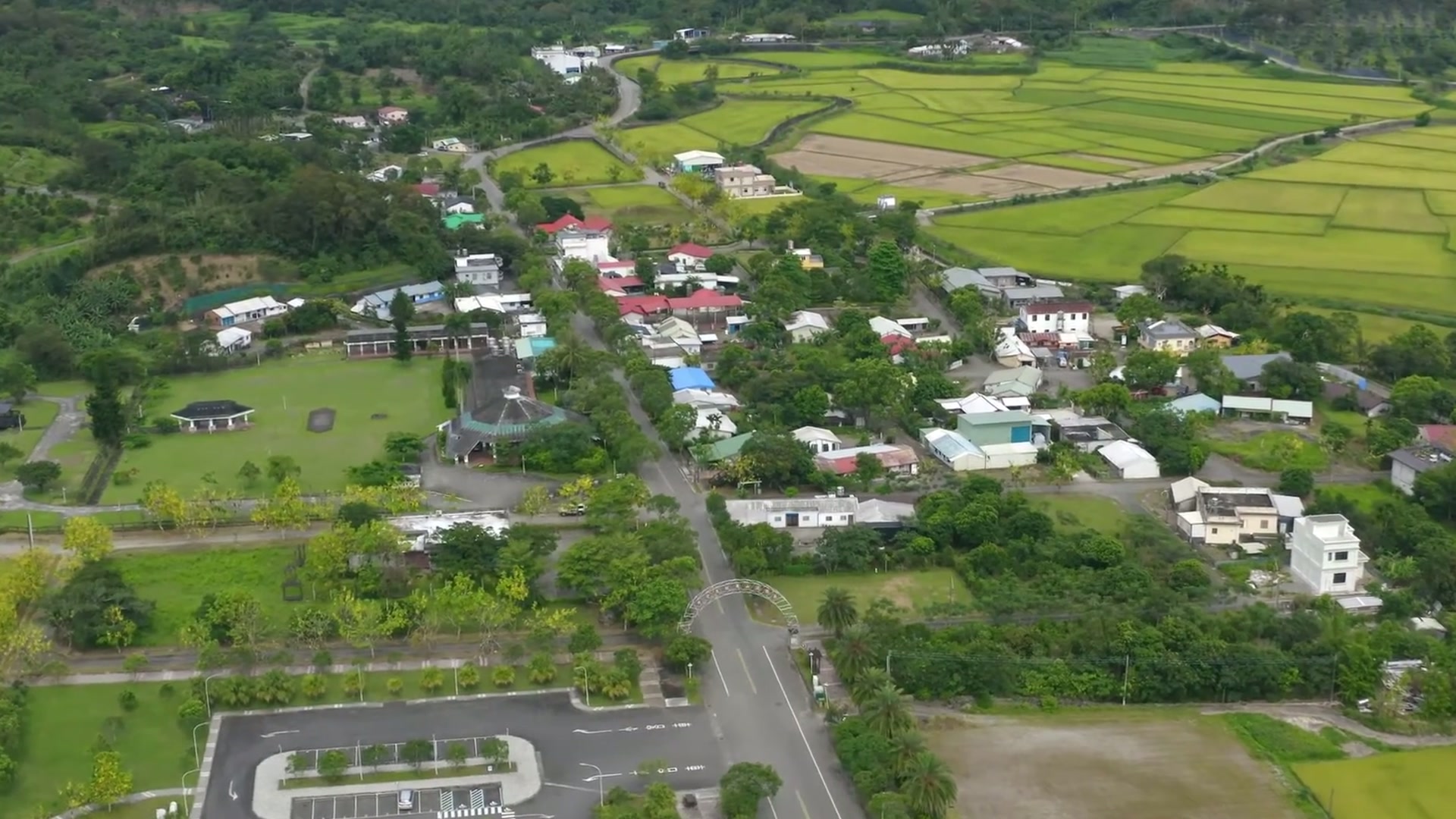
Seen from above, Luoshan’s houses remain close to cultivated land. Roads, rice fields, garden plots and homes meet beneath the mountains of the East Rift Valley. Keep this whole view in mind before looking closely at a block of tofu. It is more than a dish to order: it offers a way to notice how a farming village uses materials, organises work and welcomes visitors. The film begins with the place and its people before moving to the food.
Luoshan is in Fuli Township, Hualien, where cultivated land meets a mud-volcano landscape. Give the village time: notice the relationship between homes and fields, then book a farm experience to go closer. If Changbin’s coast is also on your itinerary, plan its transport and time separately. Across the Coastal Range, the two places have different farming lives; they need not be squeezed into the same walk.
2. From bubbling mud to a change in the pan
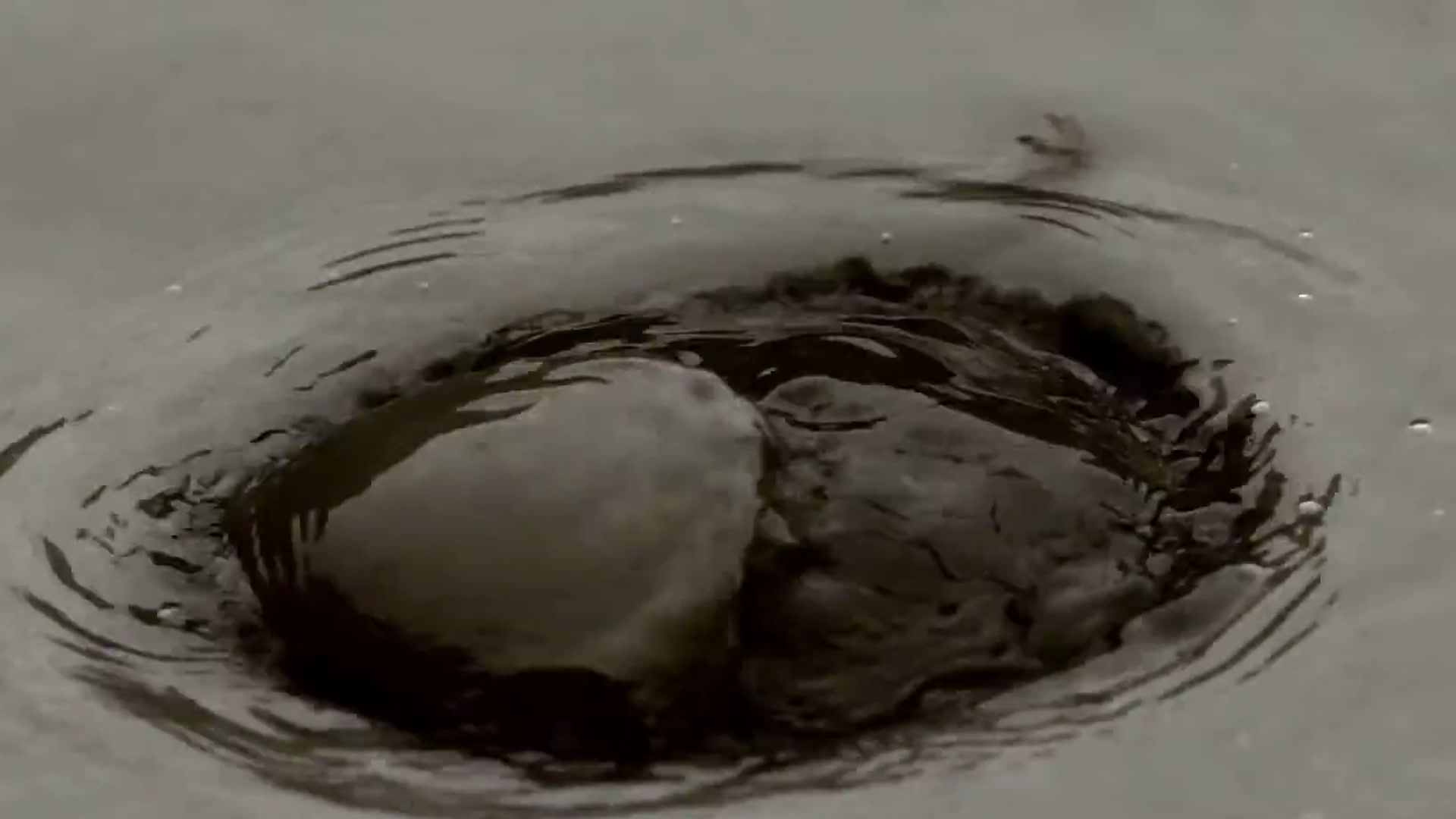
Luoshan’s mud-volcano landscape gives this tofu a particular local connection. Official agricultural tourism information describes mud-volcano brine as a coagulant: it helps soy milk form curds before moulding and pressing. This means brine prepared for the process, not raw mud poured straight into food. Nor is the tofu cooked by lava or volcanic heat.
The film moves from bubbling mud to a working room. This is an editorial connection between landscape and skill, rather than a continuous scientific demonstration. The original does not clearly show the complete addition of brine. The caption therefore explains the documented relationship without identifying an unverified pour as that step. During an experience, ask the staff to explain preparation and handling.
3. Enter the working room and follow the soybeans
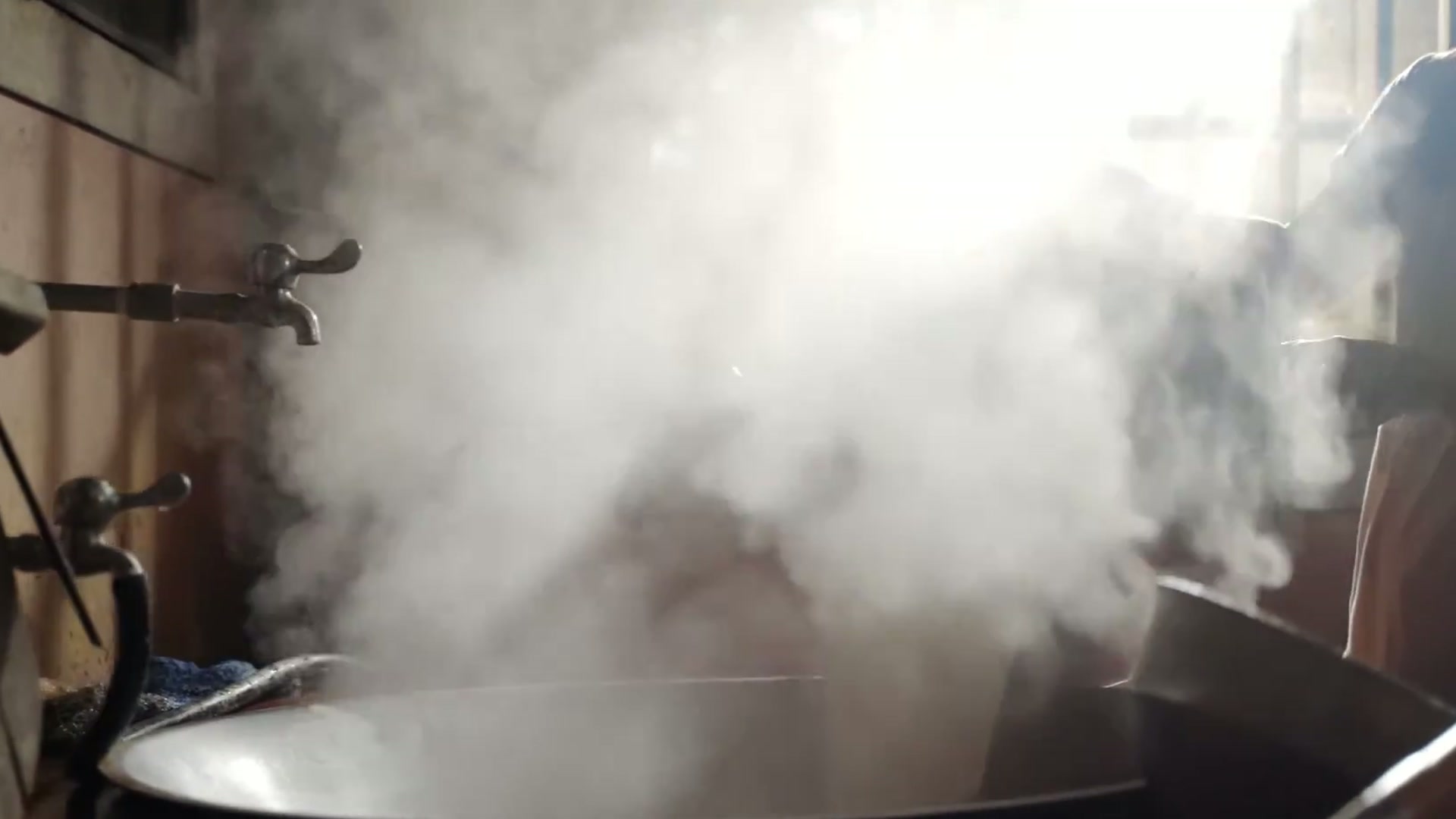
Water runs over soybeans, an electric grinder works, and pale soy milk flows into a container. Fire, steam and a person stirring follow. First locate the equipment, pan and worker; then notice the hands attending to the material. This reveals more of the craft than looking only at its finished form. The film shows electric grinding and does not relabel it as stone grinding.
A farm experience can also introduce a stone grinder, letting visitors feel the effort once required at home. Working production may use electrical equipment alongside that knowledge. Neither tool is inherently more cultural: together they show a practice adapting to life. Ask about the beans, heating and filtering, and how the person at work judges when to move to the next stage.
4. Give loose curds a form
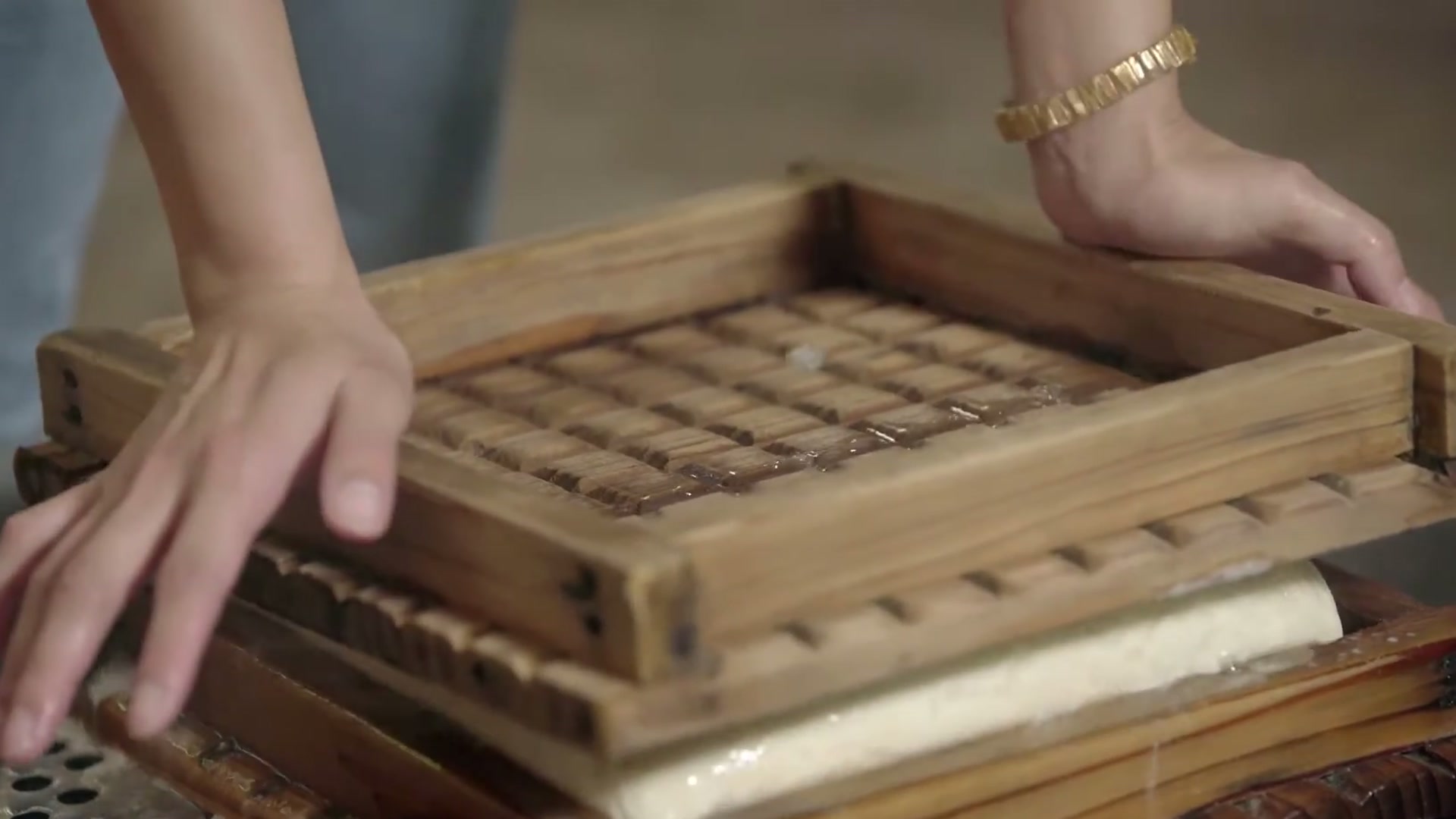
Once curds appear, the tools and gestures change. They are ladled into a cloth-lined wooden mould. Cloth gathers the material and a board presses it, letting liquid leave as the form settles. Unwrapping and cutting are not sudden endings; they are results of the preceding work. Visible steps give the word “handmade” something concrete.
In the agricultural tourism account, farm operator Lin Shu-ping recalls tofu as household work when transport and supplies were difficult. Convenience later reduced home production. Community work in the 1990s brought elders’ memories into farm experiences. Passing a practice on requires someone who remembers the materials and can explain and demonstrate them.
5. Book first, then leave time for the place
To turn the film into a visit, begin with a booking enquiry to Luoshan Nature Experience Farm. Official listings give 58, Neighbourhood 12, Luoshan Village, Fuli Township, Hualien, and 03-8821352. Confirm activities, group size, opening days and fees directly. Arrange transport from Fuli Station and the return journey separately. This edited portrait is not continuous walking navigation from the station.
The film uses one village promotional work already published on 17 June 2020; its exact filming date has not been confirmed. The tourism media portal separately lists a production field dated 23 June 2021, which is not treated as the filming date. The archive preserves a relationship between fields, work and homes, while today’s business and site conditions require a fresh check. Follow farm and mud-volcano observation instructions, stay out of private fields, and ask before approaching workers or equipment.
Film, article and image sources
The film focuses on Luoshan and uses one work already public in 2020. Its filming date is unconfirmed; a 2021 portal production field is not treated as a filming date.
- 島嶼年輪:縱谷與海岸,把農作知識繼續用下去(既有中英文母文)
- 觀光多媒體資料庫:吃斷層的豆腐─泥火山.羅山篇
- len99311:吃斷層的豆腐,說明標示定向智匯整合行銷有限公司企劃製作,2020年6月17日公開
- 特色農業旅遊場域認證:羅山大自然體驗農家(家庭技藝、凝固材料與製作工序)
- 農業部農村發展及水土保持署:羅山休閒農業區
- 農業部農村發展及水土保持署:羅山大自然(預約與地址)
- 花蓮縣政府:羅山風景區(地景與參訪環境)
1. Produced by the East Rift Valley National Scenic Area Headquarters, Tourism Administration. One work already public in2020; the2021portal production field is not a filming date. · exact filming date unverified
2. Produced by the East Rift Valley National Scenic Area Headquarters, Tourism Administration. One work already public in2020; the2021portal production field is not a filming date. · exact filming date unverified
3. Produced by the East Rift Valley National Scenic Area Headquarters, Tourism Administration. One work already public in2020; the2021portal production field is not a filming date. · exact filming date unverified
4. Produced by the East Rift Valley National Scenic Area Headquarters, Tourism Administration. One work already public in2020; the2021portal production field is not a filming date. · exact filming date unverified
5. Produced by the East Rift Valley National Scenic Area Headquarters, Tourism Administration. One work already public in2020; the2021portal production field is not a filming date. · exact filming date unverified
Music: 把時間留下 (AI-generated instrumental).