Events
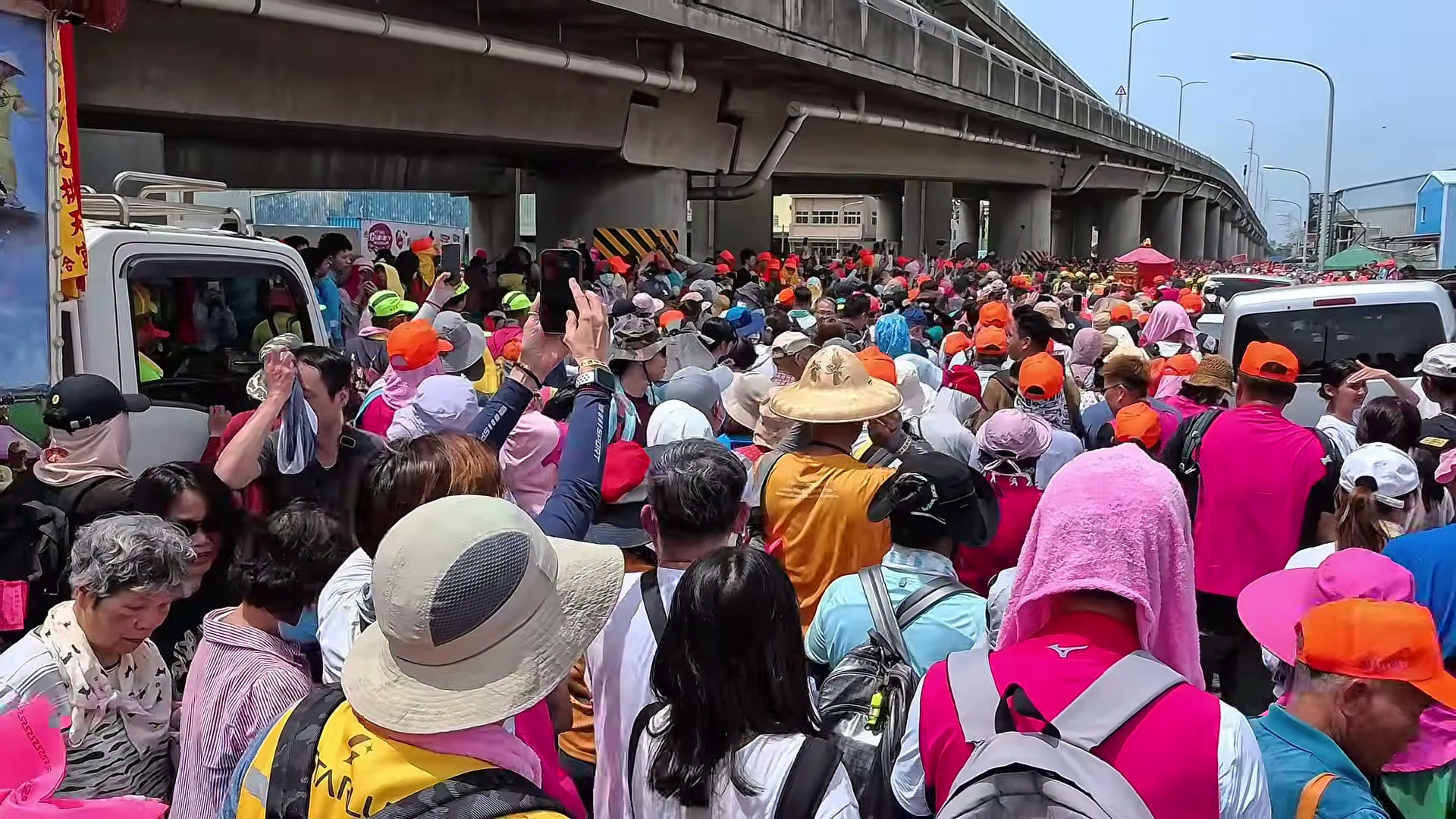
Baishatun Mazu Pilgrimage: Walking Together
Follow poles, shoulders and people beside the road through a selection from the Baishatun pilgrimage’s return journey.
Baishatun Mazu Pilgrimage: Walking Together
90 seconds. English captions are part of the film. Optional English and Traditional Chinese CC are available in the player.
Selected from Nan Taipingyang-PNG’s record labelled 9 May 2025, following the Baishatun and Shanbian Mazu pilgrimage north from Changhua towards Qingshui, Taichung. Uploaded 8 June 2025; the filming day is not independently confirmed. These are archival return-journey selections, not a complete itinerary, a homecoming rite at Gongtian Temple, a current route or a future-event announcement. A daylight establishing view precedes selections around first light; the montage is not continuous coverage. Canopy colour is not used to identify individual deities. Instrumental music replaces location sound.
Complete English captions and Traditional Chinese translation
00:00:00,000 --> 00:00:05,000
Baishatun Mazu Pilgrimage
Walking Together
白沙屯進香
跟著隊伍走一段
00:00:05,000 --> 00:00:12,000
Streets fill with people
around the palanquin.
神轎周圍,
街道上聚滿了人。
00:00:12,000 --> 00:00:18,000
A palanquin,
carried shoulder to shoulder.
一頂神轎,
由肩膀共同承擔。
00:00:18,000 --> 00:00:23,000
Orange hats fill
the waking streets.
橘色帽子,
出現在甦醒的街道。
00:00:23,000 --> 00:00:27,000
The city opens out
towards roadside greenery.
從城市街道,
走向路旁的綠意。
00:00:27,000 --> 00:00:33,000
A long journey,
seen one step at a time.
一段長路,
從每一步慢慢看。
00:00:33,000 --> 00:00:40,000
Leave a corridor
for the palanquin to pass.
留出一道空間,
讓神轎與轎班通過。
00:00:40,000 --> 00:00:46,000
Watch the poles,
and the hands that steady them.
看長桿,
也看扶穩它的雙手。
00:00:46,000 --> 00:00:52,000
Bearers find a shared pace
beneath the elevated road.
高架道路下,
轎班配合著彼此的步伐。
00:00:52,000 --> 00:00:58,000
Decorated vehicles share
the same narrow road.
裝飾過的車輛,
也在這條窄路之中。
00:00:58,000 --> 00:01:05,000
A pause in the crowd.
A moment to look around.
在人群中停一下,
看看身邊的人。
00:01:05,000 --> 00:01:11,000
Some pause.
Others wait for space to open.
有人暫停,
有人等著空間慢慢打開。
00:01:11,000 --> 00:01:17,000
Gold thread, red cloth,
and a bright canopy.
金色繡線、紅布,
還有明亮的轎頂。
00:01:17,000 --> 00:01:24,000
The route is not fixed.
Follow current temple guidance.
路線並不固定,
依當屆廟方公告與現場引導。
00:01:24,000 --> 00:01:27,000
Archival return-journey views
歷年回鑾途中的紀錄
00:01:27,000 --> 00:01:30,000
Taiwan, Layer by Layer
From story to place
島嶼年輪
從故事認識臺灣,再走進現場
First, see the people on the road
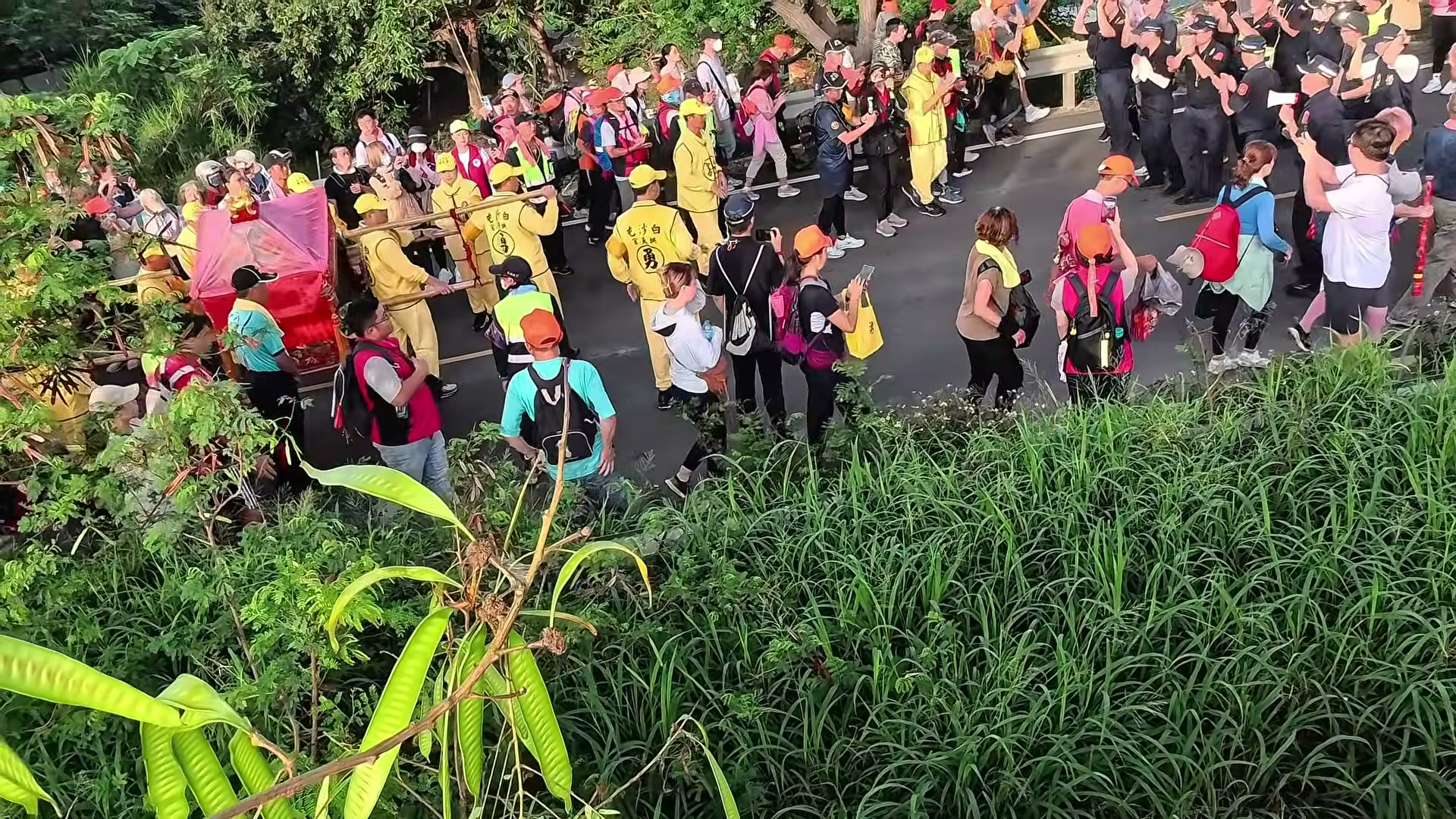
A palanquin and a group of walkers pass below a green slope. At street level, orange hats, backpacks, carrying poles and people waiting beside the road bring that scale close. These ninety seconds follow a selection of shared moments, rather than claim to contain the whole pilgrimage.
Nan Taipingyang-PNG labels the original as a return-journey record dated 9 May 2025 from Changhua towards Qingshui, Taichung. It was uploaded on 8 June 2025. The filming day is the creator’s label, not an independently verified date. A daylight establishing view leads into other selections, rather than continuous coverage.
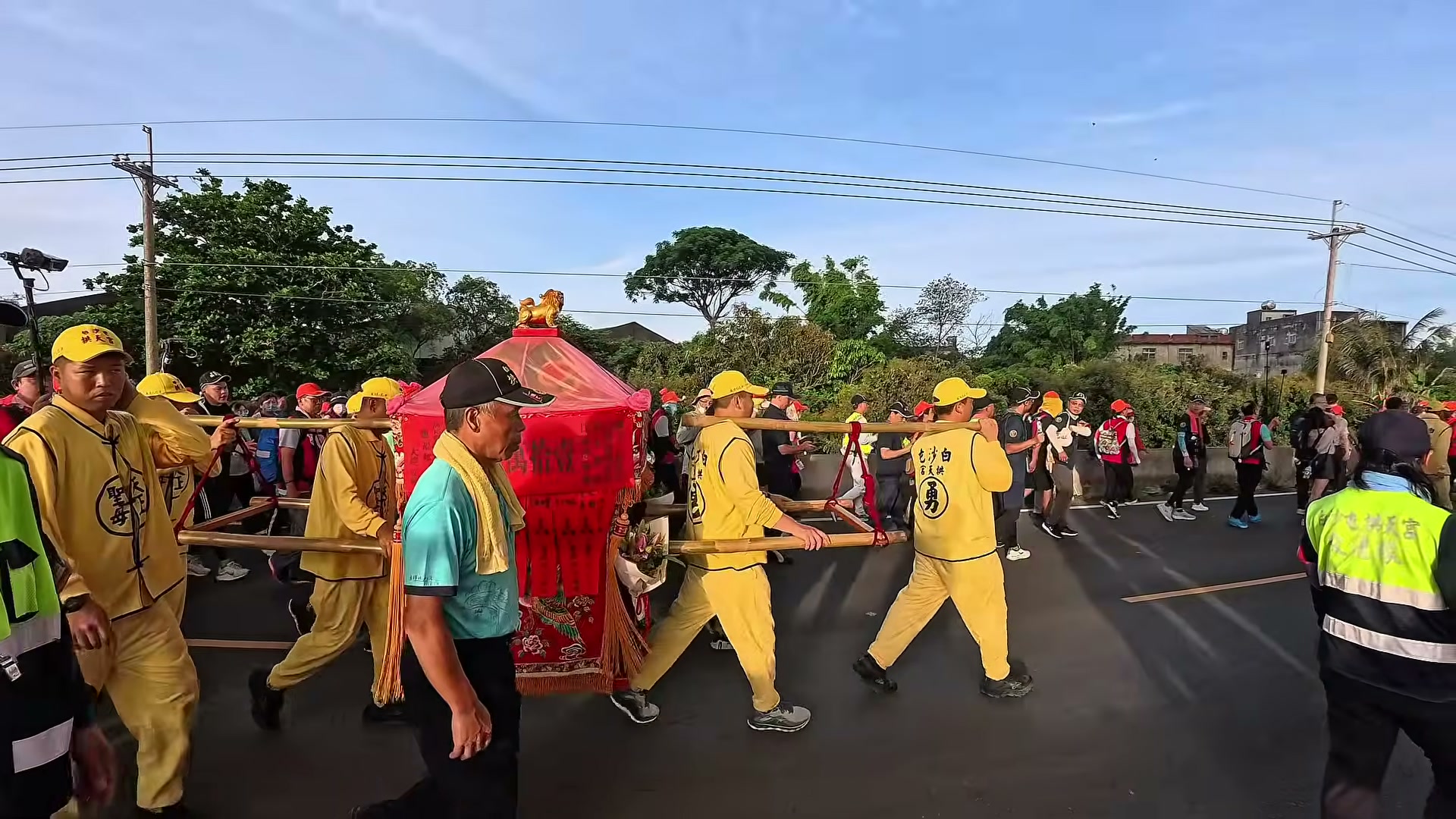
Look along the poles to see a shared weight
Closer to the palanquin, poles, shoulders and steadying hands become clear. Bearers and people around them make room to pass. From the side, carrying, waiting and yielding are easier to notice than from directly in front.
The Ministry of the Interior’s cultural account describes the tradition of Baishatun and Shanbian Mazu sharing a palanquin on the pilgrimage to Beigang. This edit does not identify deities in individual shots by canopy colour, or label a decorated vehicle as the incense carrier. Observers should leave a corridor for bearers and stewards.
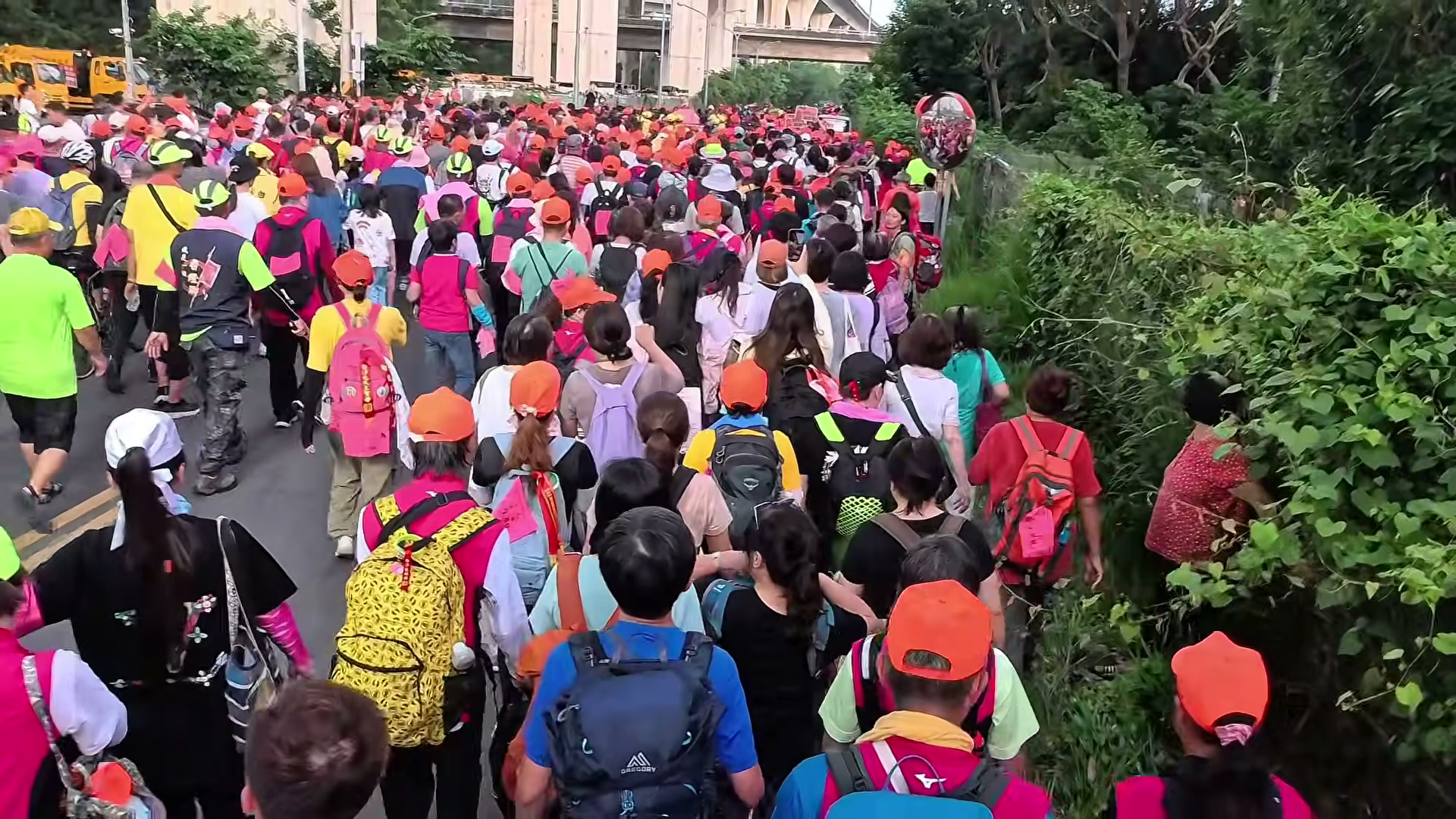
Streets and green edges belong to the journey
Roofs, trees, an elevated road and walking lines share the picture. Shops, vehicles and junctions remain part of the setting. Those changes help the viewer follow a stretch of travel, rather than a sequence of close-ups of the same object.
Temple guidance explains that roadside routing and stops are not a pre-set visitor itinerary. Footage from 2025 cannot establish the present route, a future meeting point or guaranteed access. For an announced pilgrimage, consult official position and traffic updates, follow local stewards and plan a suitable way to leave the walking group and return.
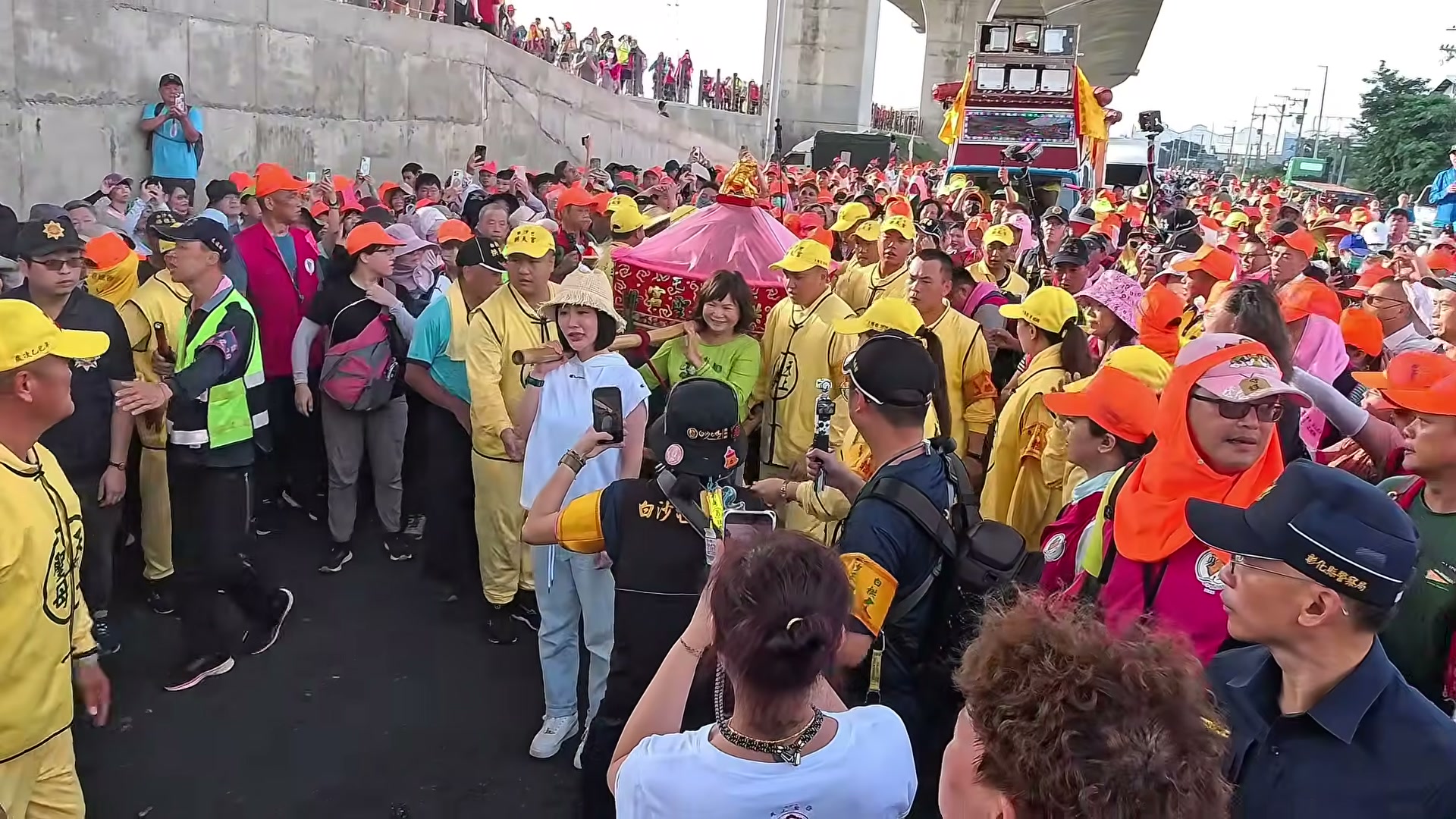
Notice a pause within the crowd
Some people advance, others pause beside the palanquin or wait for an opening. Keeping those different rhythms avoids turning everyone into an uninterrupted marching line. Shared carrying and yielding are visible; food distribution, tea service and the incense rite are not substituted with unrelated shots.
Instrumental music replaces the source sound. Visible drums, loudspeakers and crowd movements should not be mistaken for location audio. Keep your distance when photographing a procession, and do not block it for a close view. Ask before making an individual participant the subject of a portrait.
The edit ends while the road continues
The closing view returns to people spread along the street. The procession continues beyond the edit. This is not arrival at Gongtian Temple, the opening of the incense burner, a village circuit or the completion of the pilgrimage. The existing article offers more context for the incense carrier, local records and the purpose of carrying incense home.
The 2026 pilgrimage ran from 12 to 20 April and had ended by this production date. A future edition’s dates and route must not be inferred from that schedule. On ordinary days, visitors can approach Gongtian Temple in Tongxiao on foot from Baishatun railway station, subject to current temple arrangements.
Film, article and image sources
Selected from Nan Taipingyang-PNG’s record labelled 9 May 2025, following the Baishatun and Shanbian Mazu pilgrimage north from Changhua towards Qingshui, Taichung. Uploaded 8 June 2025; the filming day is not independently confirmed. These are archival return-journey selections, not a complete itinerary, a homecoming rite at Gongtian Temple, a current route or a future-event announcement. A daylight establishing view precedes selections around first light; the montage is not continuous coverage. Canopy colour is not used to identify individual deities. Instrumental music replaces location sound.
1. 南太平洋-PNG · source-labelled 2025
2. 南太平洋-PNG · source-labelled 2025
3. 南太平洋-PNG · source-labelled 2025
4. 南太平洋-PNG · source-labelled 2025
5. 南太平洋-PNG · source-labelled 2025
Music: 跨海的一段路 (AI-generated instrumental).