Culture
Baishihu: Paths Through a Farming Village
Walk from Baishihu’s valley into village paths, visitor spaces, pond edges and growing plots.
Baishihu: Paths Through a Farming Village
90 seconds. English captions are part of the film. Optional Traditional Chinese subtitles are available in the player.
The footage was uploaded in February 2026; its filming date is unconfirmed. Follow public paths through farming and visitor spaces. Fruit picking, farm work and cooking are not shown, and the cafe seating cover is not a growing greenhouse. Confirm current access separately with each farm and path operator.
Complete English captions and Traditional Chinese translation
00:00:00,000 --> 00:00:06,000
Baishihu, in Taipei’s hills.
Farms and village paths.
白石湖,台北山間的
田園與聚落小路。
00:00:06,000 --> 00:00:12,000
Cross into a rural neighbourhood,
close to the city.
走過橋,進入
靠近城市的田園聚落。
00:00:12,000 --> 00:00:18,000
Look across the slopes.
Growing spaces follow the terrain.
望向山坡,
栽培空間順著地勢安排。
00:00:18,000 --> 00:00:24,000
Buildings and places to rest
share the village lanes.
建築與休憩空間,
共同接上聚落的道路。
00:00:24,000 --> 00:00:32,000
A place to sit,
then a path through the village.
可以坐下停留,
也有繼續穿過聚落的路。
00:00:32,000 --> 00:00:39,000
Stay with the walking path.
Leave planted ground undisturbed.
沿著步行小路走,
讓栽植的土地保持完整。
00:00:39,000 --> 00:00:46,000
Stone paths pass between
planted slopes and garden edges.
石板小路穿過
栽植坡地與庭園邊界。
00:00:46,000 --> 00:00:53,000
Water, paths and homes
share the same small valley.
水、路徑與房舍,
共處在同一座小山谷。
00:00:53,000 --> 00:01:00,000
A short lane brings
the settlement closer.
沿著一段小巷,
走近聚落的生活空間。
00:01:00,000 --> 00:01:06,000
At Tongxin Pond,
water and planting meet.
在同心池,
水面與植栽彼此相接。
00:01:06,000 --> 00:01:13,000
A place to pause,
beside the path through the village.
穿過聚落的小路旁,
也有可以停留的地方。
00:01:13,000 --> 00:01:23,000
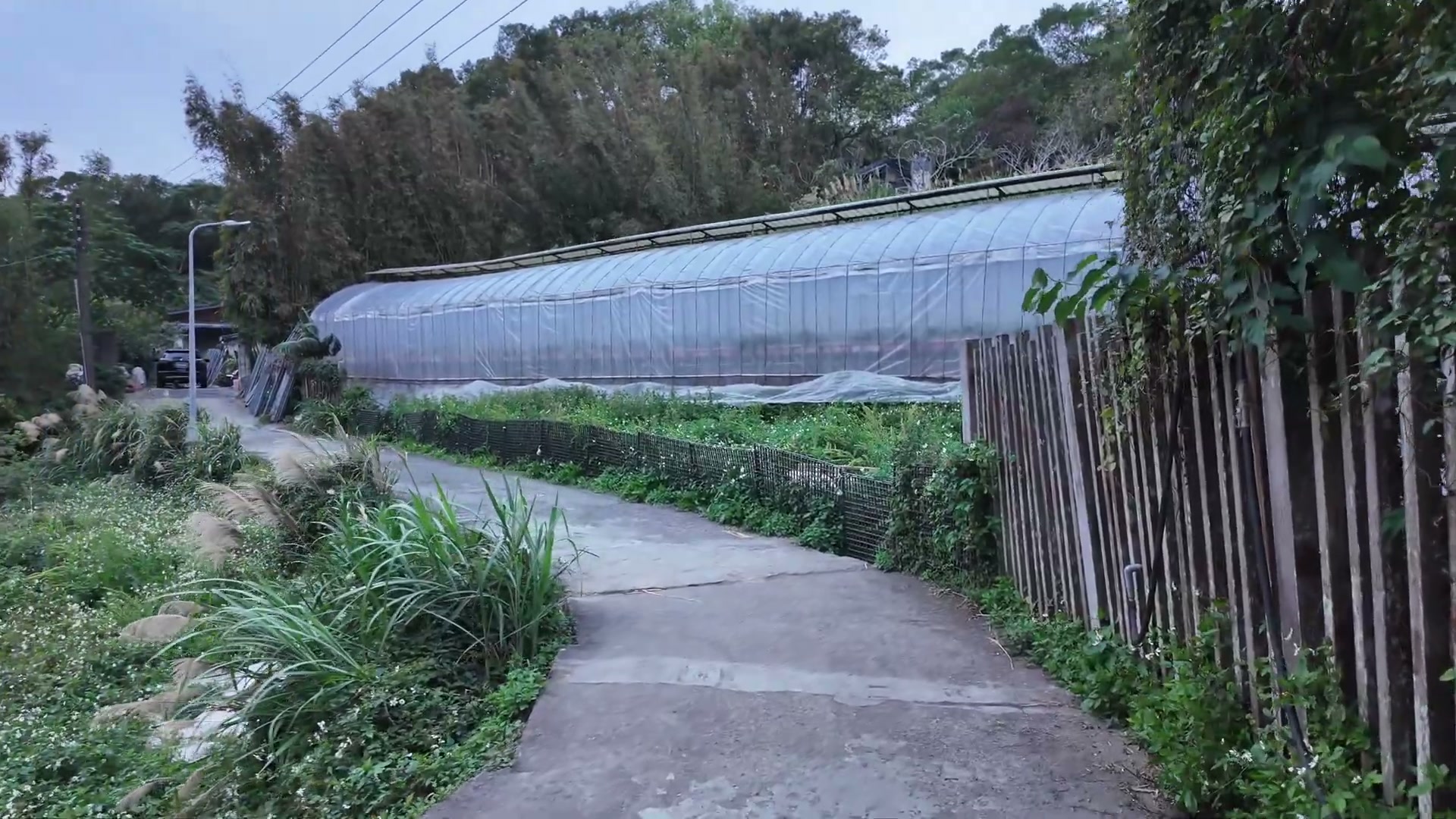
Growing plots and greenhouses
remain part of the neighbourhood.
栽培區與溫室,
仍是聚落環境的一部分。
00:01:23,000 --> 00:01:30,000
Walk slowly. Look back at the land.
Taiwan, Layer by Layer.
慢慢走,再回望這片土地。
島嶼年輪。
1. Begin with the whole valley
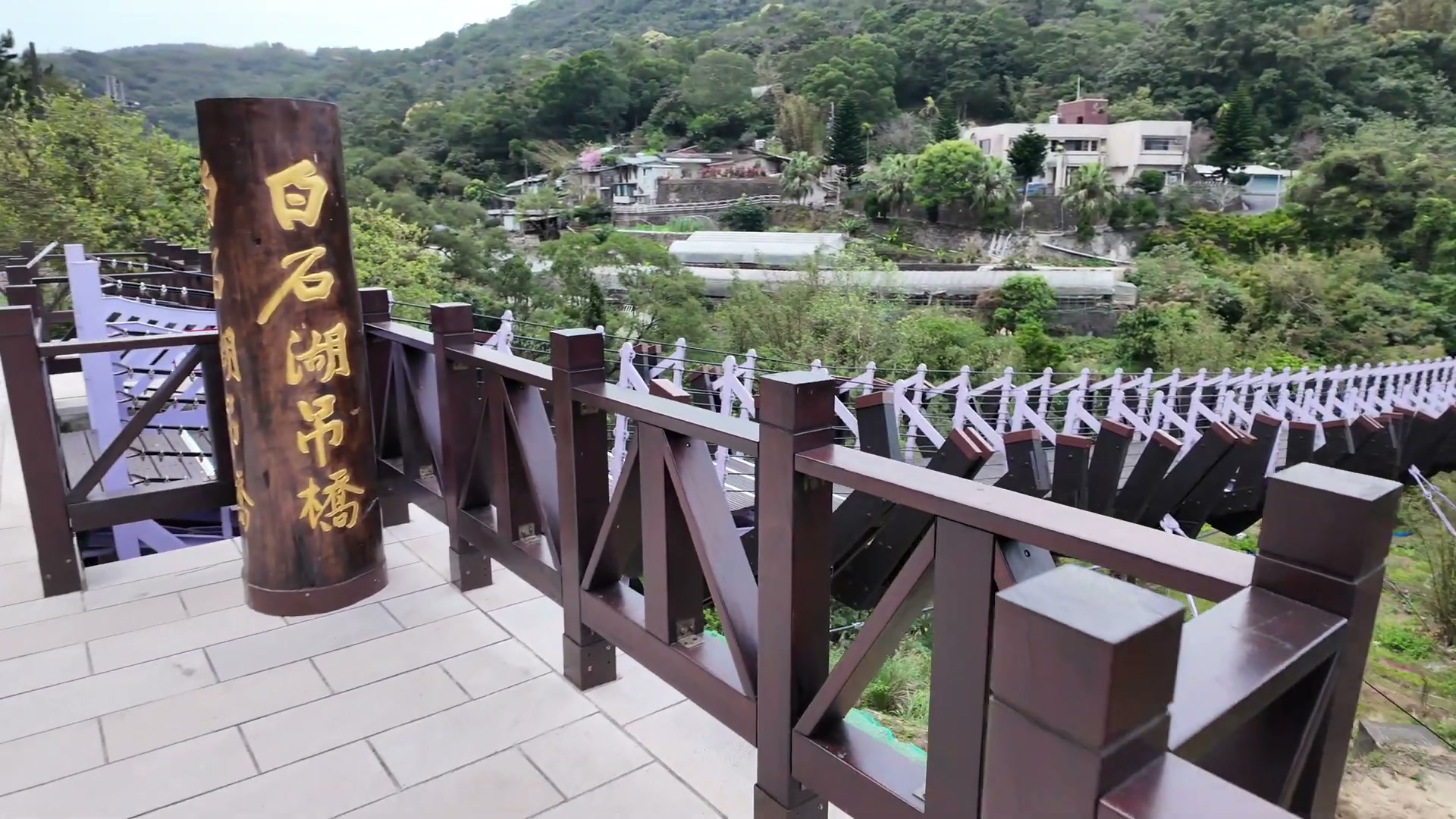
Baishihu lies in the hills of Taipei’s Neihu District. The formal article asks how fields beside a city keep producing. First place the crossing, slopes, buildings and growing structures in one view. Then enter the smaller paths with a sense of where they belong. The film establishes the bridge and settlement across the valley; nearby Bishan Temple is outside its focus.
This is not a tour of a large lake named Baishihu. Taiwan’s agricultural travel portal introduces the valley, white sandstone and recreational farming district. The crossing begins a visit to farms, local paths and visitor spaces. Walking and stops beyond it need their own time.
2. Farming and welcoming visitors share a place
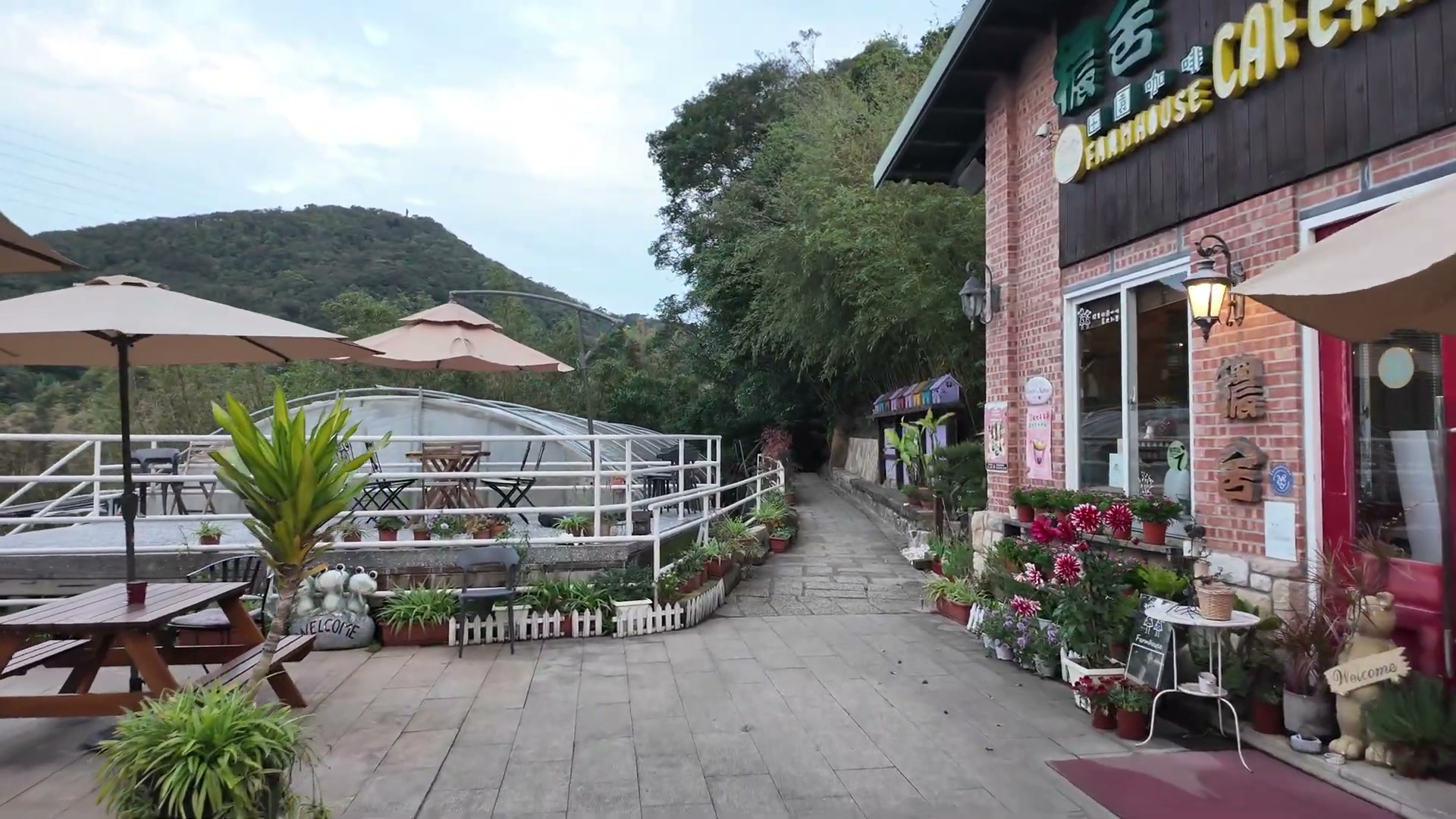
The original article places food production and welcoming visitors in the same district. Outdoor tables, entrances and nearby passages offer places to walk and pause. They help visitors read the countryside as a lived setting. A transparent shelter containing tables is described as visitor space, rather than assumed to be a working greenhouse from its shape.
The agricultural travel portal lists farms, strawberries and rural experiences, with individual contact arrangements. The film does not show fruit picking, cooking or farm work. Garden and cafe views do not stand in for those activities. To take part, select a named operator and confirm current crops, booking and reception arrangements.
3. Small paths reveal the boundaries of rural life
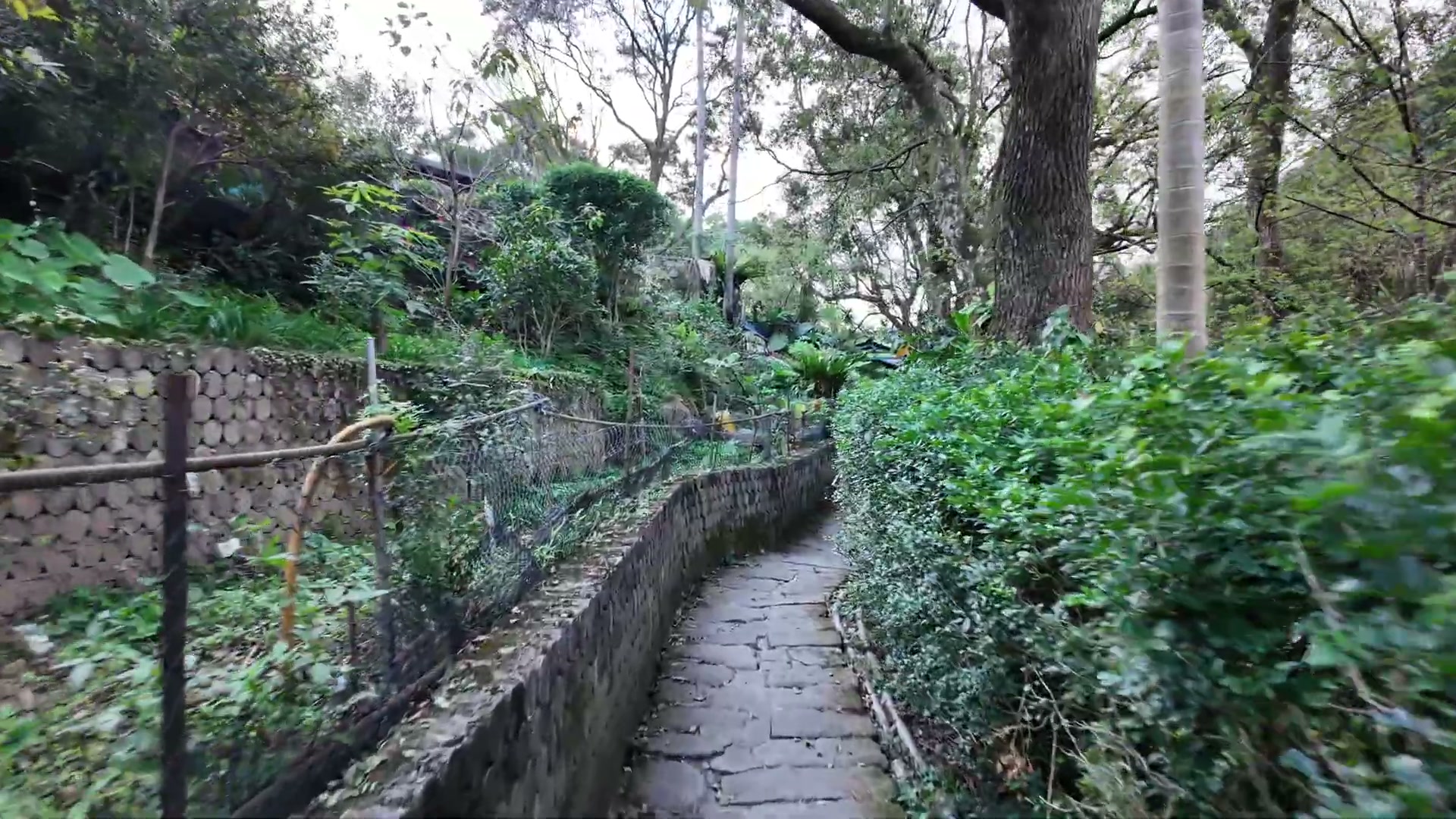
Stone paving brings railings, retaining walls, planting and changes in ground level closer. Look at the passage together with the land on either side. Visiting does not mean entering every plot: paths provide circulation while the surrounding land keeps its own uses and operators.
The formal article treats Baishihu as a separate cultural extension of a hill outing. Farm visits and return travel are not added to ridge mileage. Choose a short stretch, observe buildings and growing spaces, pause, then plan the return. Check access for the crossing, paths and chosen operator. The film edits a recorded visit; it is not complete route navigation.
4. Water carries a history of land use
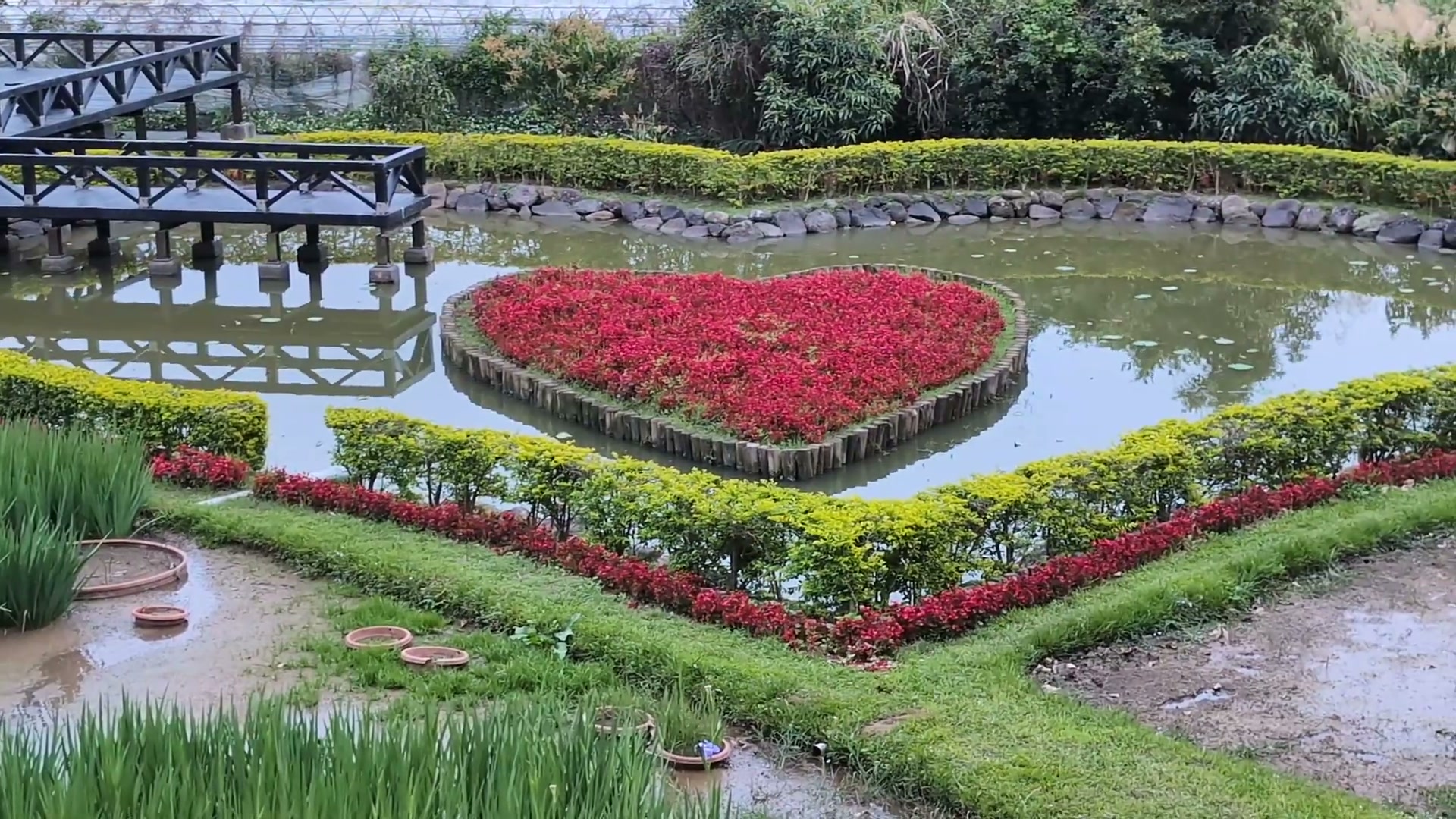
Tongxin Pond’s water, heart-shaped planting and surrounding paths add a place to pause within the rural setting. The district’s own account describes its reshaping from a neglected spring into a double-heart wetland. The film describes visible water and planting; it does not establish which plot is irrigated from the pond.
The complete original article also retains a 2022 city account of difficult early water access, residents digging ponds and use of the Dapitou water system. This connects the landscape with storage, fallow land and later restoration choices. The lilies and paddy-restoration programme in that account belong to their particular period, rather than proving current flowering or farm work.
5. Return to growing plots and village lanes
Back on the village lane, covered growing structures and planted ground return to view. Begin with the valley, move through gardens, small passages and the pond, then look back at a settlement where agriculture still has a place. Crop varieties, grower identities and harvest conditions are unconfirmed. The reason to visit is to observe food-growing land, recreation and homes close to the city.
The formal article advises selecting a farm or public place first. Each operator has separate opening and booking arrangements; the district has no single visitor schedule. Its published transport guidance lists S2 and the S2 shuttle towards Bishanyan and Bishankou. Confirm the stop, service and return for the place you choose. The city records the bridge reopening after renewal on 10 November 2025; that does not replace travel-day notices.
The source was uploaded on 27 February 2026; its exact filming day is independently unconfirmed. Planting, businesses and scenery belong to that recorded visit. Confirm meals, fruit picking and activities with the operator, leaving enough time for both the visit and the place’s own rhythm.
Film, article and image sources
The footage was uploaded in February 2026; its filming date is unconfirmed. Follow public paths through farming and visitor spaces. Fruit picking, farm work and cooking are not shown, and the cafe seating cover is not a growing greenhouse. Confirm current access separately with each farm and path operator.
- 島嶼年輪:白石湖:靠近城市的田,怎麼繼續生產?(正式雙語原文)
- Taiwan Wanderer:白石湖實走,2026-02-27上傳
- 農業易遊網:白石湖休閒農業區
- 白石湖休閒農業區:農園、體驗與到訪資訊
- 白石湖休閒農業區:同心池
- 臺北市政府:白石湖吊橋於2025-11-10更新後開放
1. Source walking footage: https://www.youtube.com/watch?v=x3ebFgXUHCc · 2026
2. Source walking footage: https://www.youtube.com/watch?v=x3ebFgXUHCc · 2026
3. Source walking footage: https://www.youtube.com/watch?v=x3ebFgXUHCc · 2026
4. Source walking footage: https://www.youtube.com/watch?v=x3ebFgXUHCc · 2026
5. Source walking footage: https://www.youtube.com/watch?v=x3ebFgXUHCc · 2026
Music: 把時間留下 (AI-generated instrumental).