Culture
Ren’ai Market: Keelung, One Aisle at a Time
From the corner building to fresh-food aisles, upstairs seats and small shops: a market walk through everyday Keelung.
Ren’ai Market: Keelung, One Aisle at a Time
90 seconds. English captions are part of the film. Optional Traditional Chinese subtitles are available in the player.
The film and five images use a public walk uploaded on 19 May 2026, with the same date shown in the source; the filming day has not been independently confirmed. The footage is not a guarantee of conditions in November 2026. It covers the neighbouring Ren’ai–Bo’ai market complex, distinct from Miaokou, and does not promise individual stall hours.
Complete English captions and Traditional Chinese translation
00:00:00,000 --> 00:00:07,000
Keelung’s everyday life
begins at the market.
基隆的日常生活,
從市場開始。
00:00:07,000 --> 00:00:13,000
Enter Ren’ai Market,
with Bo’ai Market next door.
走進仁愛市場,
旁邊就是博愛市場。
00:00:13,000 --> 00:00:20,000
Downstairs, the shopping list
sets the pace.
一樓的節奏,
跟著採買清單走。
00:00:20,000 --> 00:00:26,000
Vendors make room
for work and passing customers.
攤商在有限的空間裡,
一邊工作,一邊招呼來客。
00:00:26,000 --> 00:00:33,000
Follow the escalator
into another layer of the city.
沿著電扶梯,
走進城市的另一層日常。
00:00:33,000 --> 00:00:41,000
Upstairs, a meal can be
part of an ordinary day.
來到樓上,一頓飯
也是平常生活的一部分。
00:00:41,000 --> 00:00:48,000
Walk the aisle first.
Then choose where to stop.
先沿著通道走一圈,
再決定在哪裡停留。
00:00:48,000 --> 00:00:55,000
Small shops keep
other daily routines close.
小店相鄰,
日常所需也在身邊。
00:00:55,000 --> 00:01:02,000
Clothes, meals and errands
share a narrow passage.
衣物、餐食與生活瑣事,
共用一條不寬的通道。
00:01:02,000 --> 00:01:08,000
A few seats turn a counter
into a place to pause.
幾張座位,讓櫃台旁
成為能歇一會兒的地方。
00:01:08,000 --> 00:01:14,000
Watch the rhythm:
prepare, serve, sit and move on.
看看這裡的節奏:
備餐、招呼、坐下,再出發。
00:01:14,000 --> 00:01:21,000
Take the route back down.
The city is waiting outside.
沿著路線下樓,
外面仍是流動的城市。
00:01:21,000 --> 00:01:26,000
Leave time for one market,
and a slower look at Keelung.
留時間給一座市場,
也留時間慢慢看基隆。
00:01:26,000 --> 00:01:30,000
Taiwan, Layer by Layer.
Keelung, one aisle at a time.
島嶼年輪。
沿著一條條攤道,認識基隆。
1. Begin with the whole building
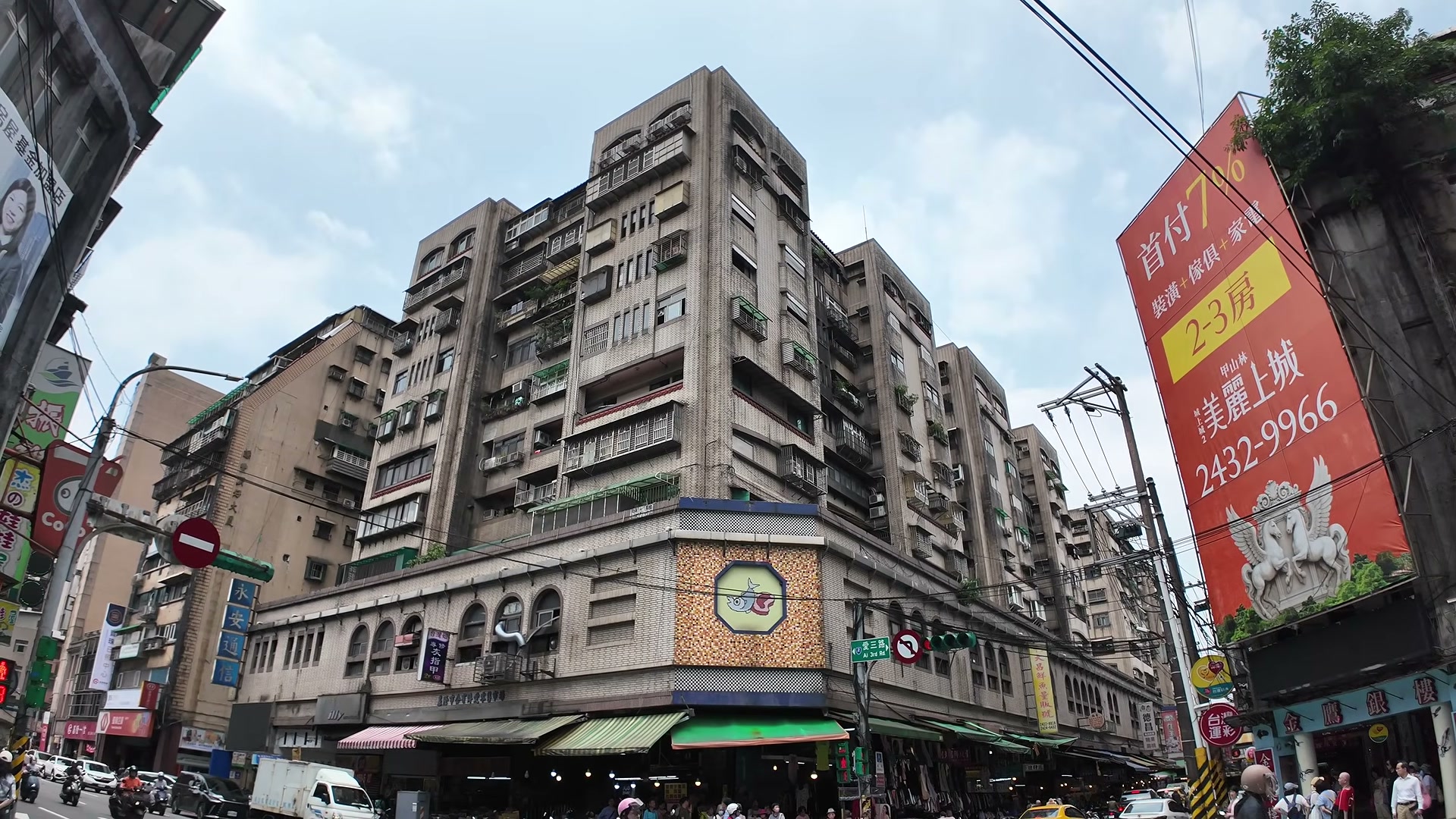
At the corner near Ai 3rd Road and Ren 4th Road, the market belongs to a larger urban building and a busy street. Begin with the facade, arcade and entrances. The interior then makes sense as part of Keelung, rather than a collection of disconnected food counters.
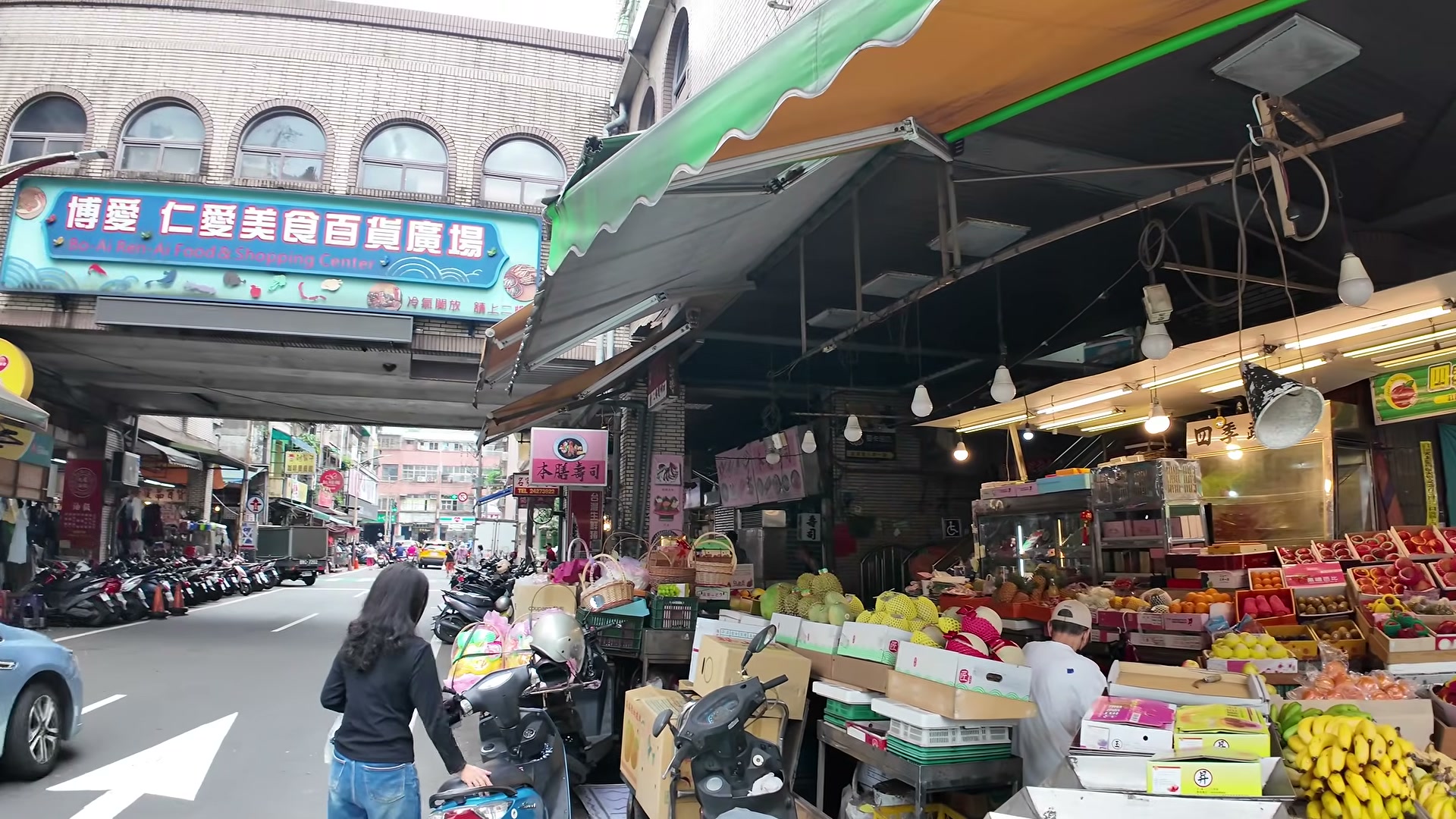
The Ren’ai District Office introduces Ren’ai and Bo’ai together as traditional markets in the city centre. This film visits the neighbouring market complex and its surrounding street. The closing view shows the overhead connection labelled with both names. The companion follows the formal cultural-place entry for Ren’ai Market; it does not treat Bo’ai as a hall inside Ren’ai.
2. Follow the ground-floor shopping rhythm
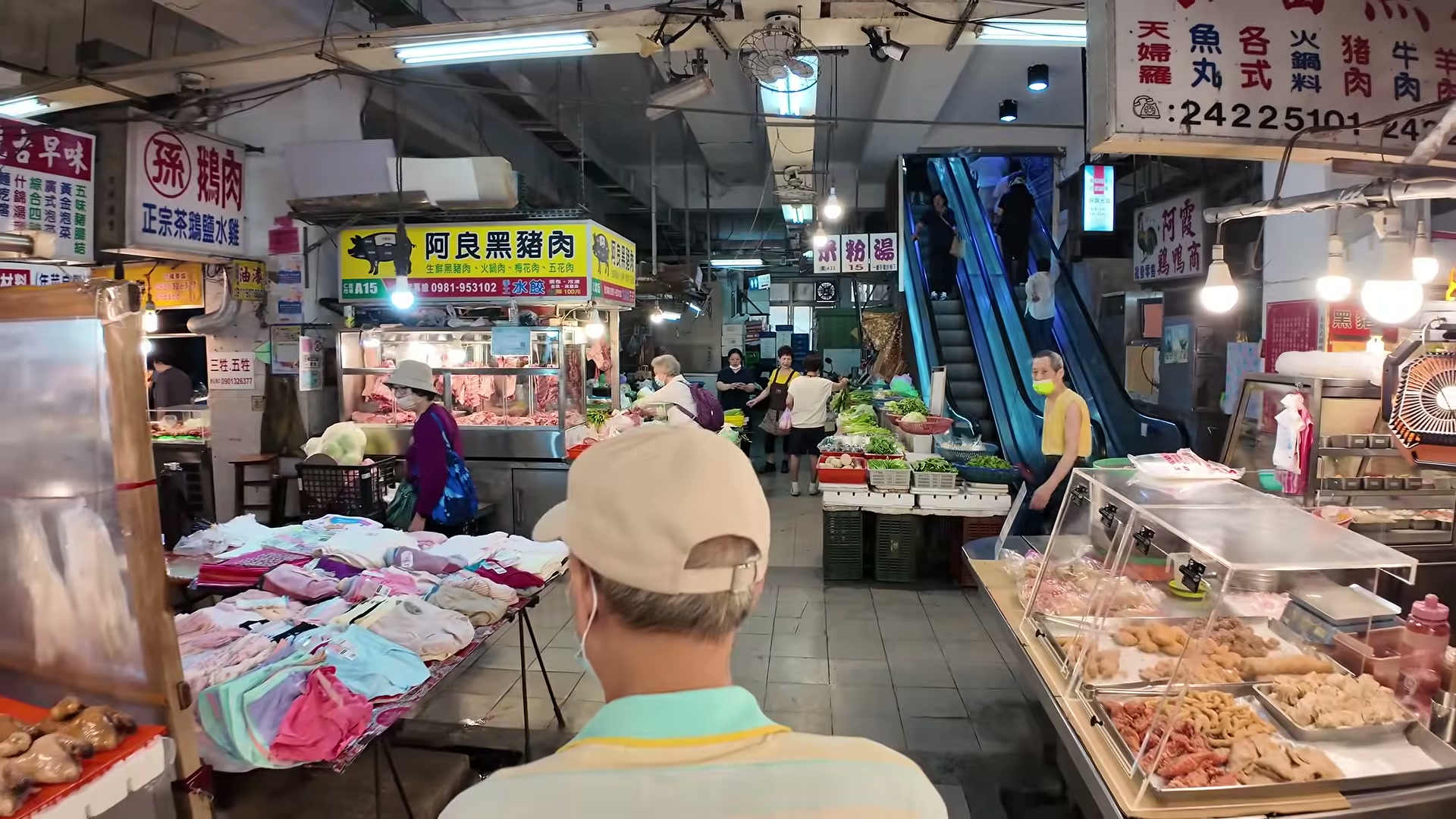
The official market description places fresh produce, fish, meat and everyday supplies on the ground floor. The film moves from the fresh-food aisle to a street-side cooked-food stall, keeping the counter, workers and customers in view. A dish is only one part of the scene; movement between people keeps the market working.
The original article locates harbour-city life in residents shopping and vendors preparing meals. Notice how people pass, how a worker keeps supplies within reach, and how customers pause and leave. On a visit, keep the aisle clear and give working vendors room.
3. Upstairs, meals share a working aisle
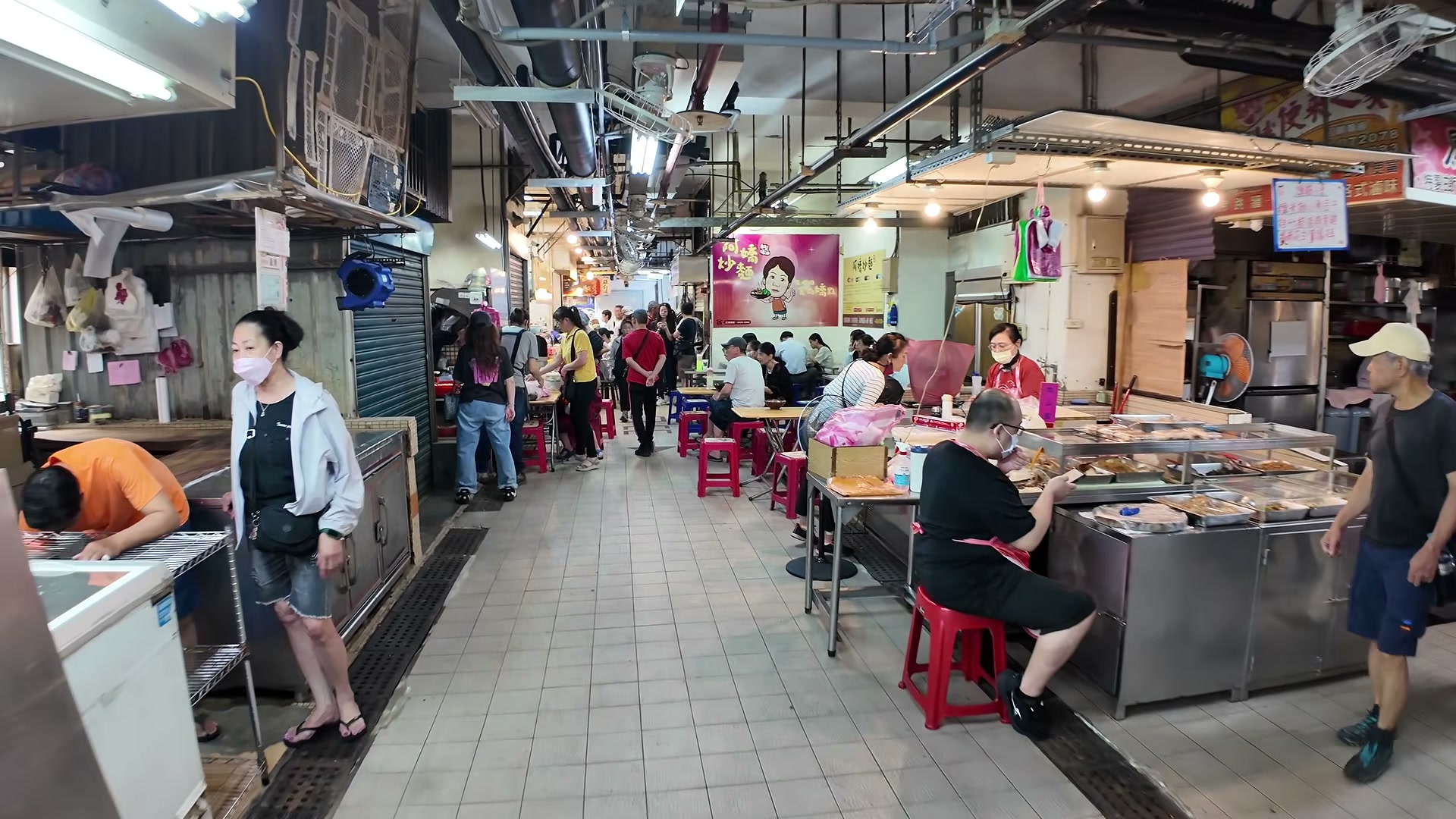
The district office describes the second floor primarily as a dining area. The film keeps the aisle in view, with counters, stools, work areas and people passing. Some visitors are eating; others are simply on their way through. Different purposes occupy the same narrow route.
Walk through once before deciding whether to take food away or sit down. This is the original article’s suggestion and a useful reason to visit: watch how the market is used before choosing a place in it. This companion does not promise the current availability, menu or hours of any individual stall shown.
4. Beyond the lunch counter
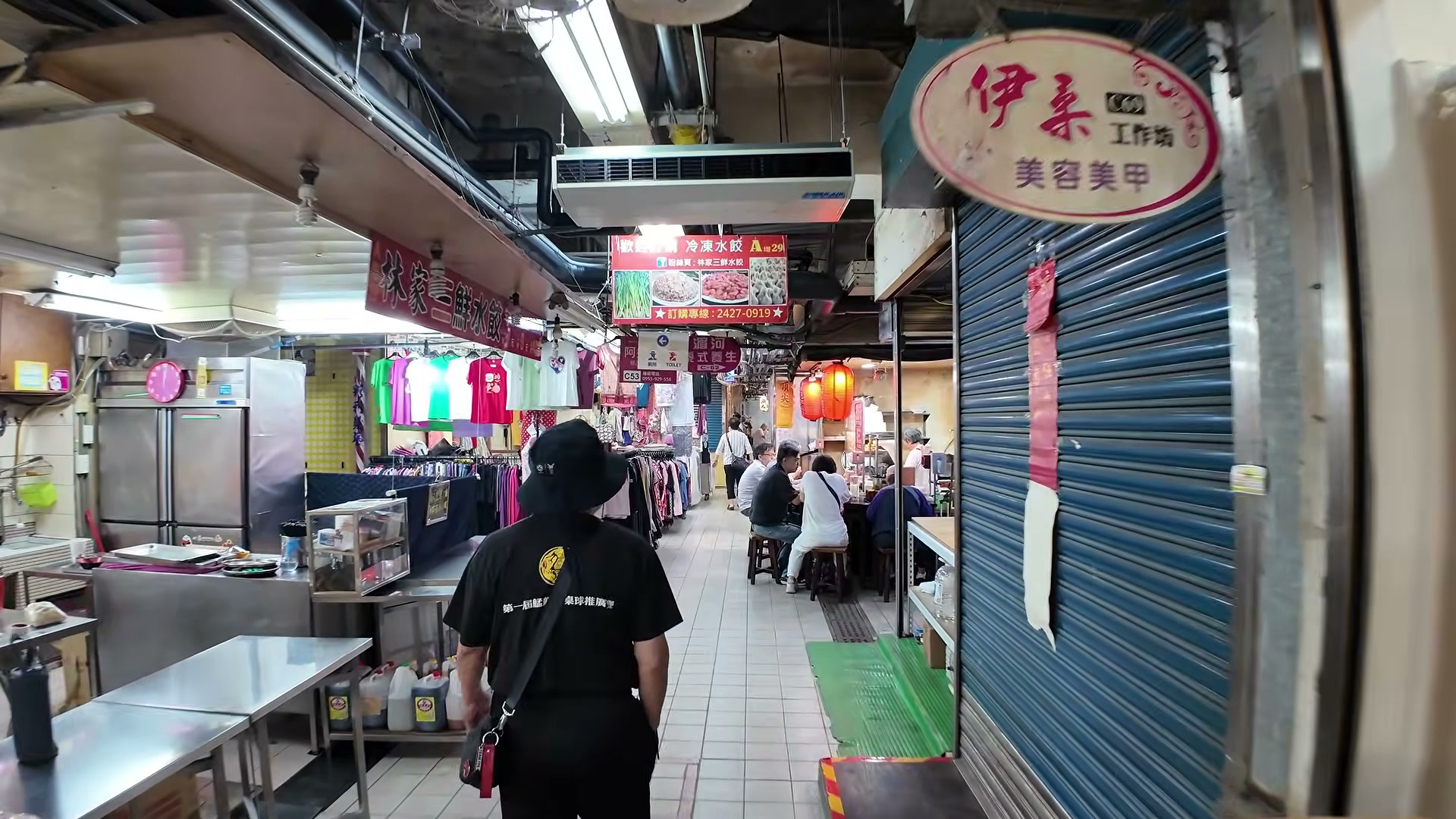
Clothes and small service shops appear along the route. They show that the market also accommodates ordinary errands. Wider views keep each shop, passage and working position together, rather than making a stranger’s face stand for the whole market.
A few seats beside a counter create a small place to pause. Watch how preparation and service fit within arm’s reach, and how customers sit, stand and rejoin the aisle. These observations describe the selected source footage; they are not a claim about every stall or every day.
5. Return to the street, with time for one place
Back downstairs, fruit stalls, scooters and the overhead connection place the market within the city again. The ending looks back at a space rather than adding another must-eat list. A meal, an errand or a short rest can each become a way to meet Keelung.
The formal entry presents this as a cultural stop after Hongdanshan, requiring a separate walk or bus connection through town. It is not on the hill trail. Individual stall hours differ and need checking. Allow separately for walking, buses and waiting on the way to Keelung Station.
The market and Miaokou are different places. Choose one for this visit, leave room to look around, and let the rest after a hike have its own pace.
Film, article and image sources
The film and five images use a public walk uploaded on 19 May 2026, with the same date shown in the source; the filming day has not been independently confirmed. The footage is not a guarantee of conditions in November 2026. It covers the neighbouring Ren’ai–Bo’ai market complex, distinct from Miaokou, and does not promise individual stall hours.
1. Taiwan Wanderer 台灣亂流散步 · 2026
2. Taiwan Wanderer 台灣亂流散步 · 2026
3. Taiwan Wanderer 台灣亂流散步 · 2026
4. Taiwan Wanderer 台灣亂流散步 · 2026
5. Taiwan Wanderer 台灣亂流散步 · 2026
Music: 跨海的一段路 (AI-generated instrumental).