Culture
Nangang Tea Hills: From Tea Tools to a Hillside View
Walk through the tea centre, bamboo trays and machines, then towards a reading room, balcony and woodland steps at Taipei’s green edge.
Nangang Tea Hills: Looking Out from the Tea Centre
90 seconds. English captions are part of the film. Optional Traditional Chinese subtitles are available in the player.
The film and five stills use real-location footage published by Veggie Hiker on 12 April 2023. The exact filming day is unconfirmed. Equipment, activities and trail access may change. The music is an added score.
Complete English captions and Traditional Chinese translation
00:00:00,000 --> 00:00:08,900
Nangang’s tea-making centre.
A different side of Taipei.
南港茶葉製造示範場。
看見臺北的另一面。
00:00:08,900 --> 00:00:15,900
High ceilings and shared tables
open a place to linger.
挑高屋頂與共用茶桌,
留下一處可以慢下來的空間。
00:00:15,900 --> 00:00:23,200
Bamboo trays hold tea leaves,
revealing the work behind a cup.
竹篩裡的茶葉,
讓一杯茶背後的工作變得可見。
00:00:23,200 --> 00:00:35,200
Rollers, dryers and metal drums:
look closely at the tools of tea.
揉茶機、乾燥設備與金屬滾筒:
走近看看製茶的工具。
00:00:35,200 --> 00:00:40,200
A full-size drum brings
the scale of the work into view.
站在完整機具旁,
看見製茶工作實際的尺度。
00:00:40,200 --> 00:00:46,200
Above the hall, warm timber
connects two levels.
大廳上方的木構架,
把兩層空間連在一起。
00:00:46,200 --> 00:00:51,700
A reading room keeps
tea knowledge within reach.
走進閱讀室,
讓茶的知識貼近日常。
00:00:51,700 --> 00:00:56,200
A bench by the window.
The hills are close again.
窗邊一張長凳,
山景又回到眼前。
00:00:56,200 --> 00:01:00,200
Step onto the balcony
and look beyond the railing.
走到陽台,
把目光放到欄杆以外。
00:01:00,200 --> 00:01:10,000
Look back across the open hall.
Tea is also a reason to gather.
回望開闊的大廳。
茶,也讓人有了相聚的理由。
00:01:10,000 --> 00:01:20,000
Nearby, a separate woodland walk
follows steps beneath the trees.
附近另有林間步徑,
沿著樹蔭下的階梯慢走。
00:01:20,000 --> 00:01:30,000
Nangang, Taipei.
Take time to see beyond the city.
臺北・南港。
留一點時間,看見城市以外。
A hillside changes the picture of Nangang
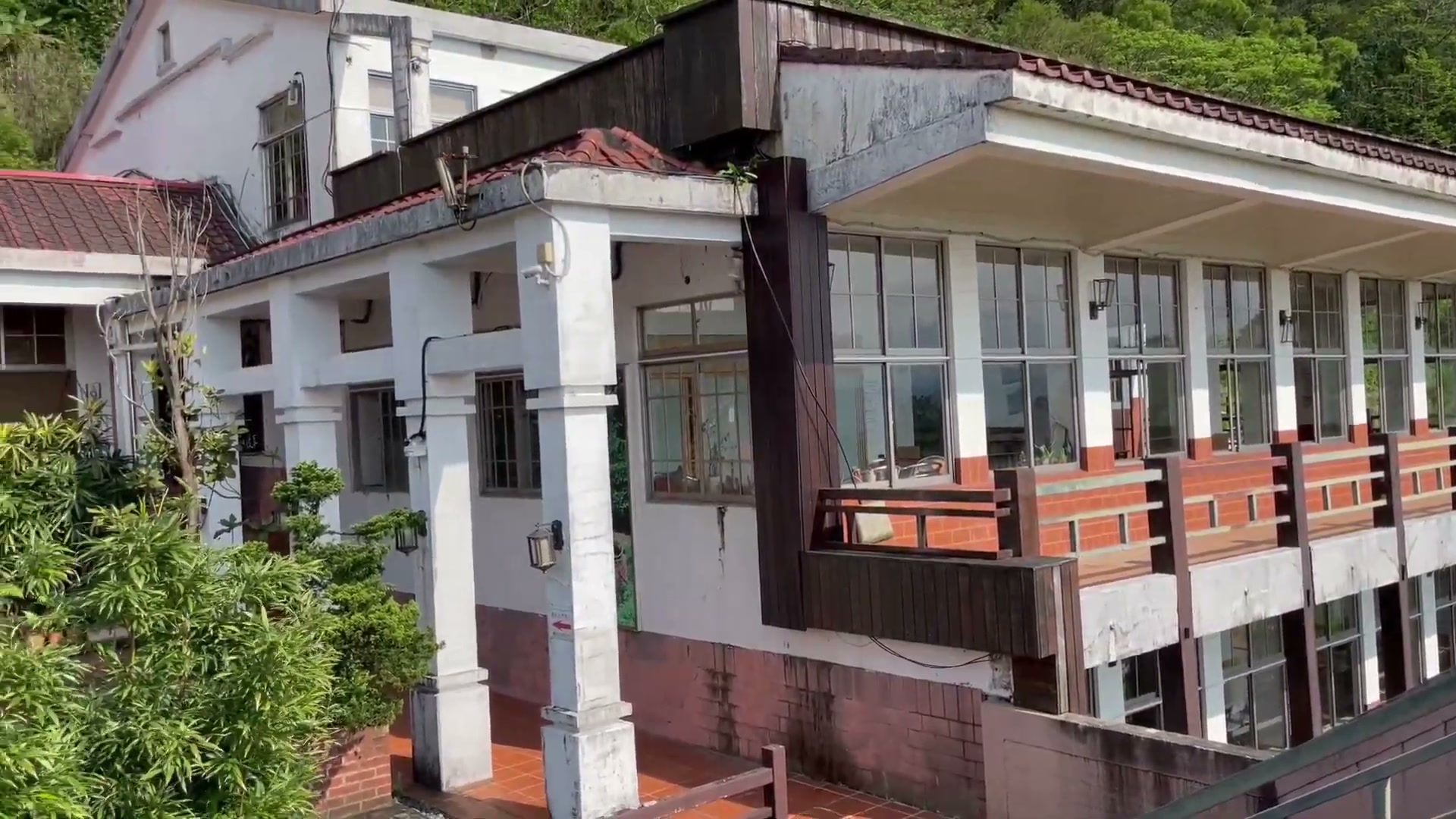
A white building sits against the hillside, its long windows and railings opening towards the green slopes. Seeing the building within that setting changes the picture of Nangang beyond its stations and exhibition halls. This is the Nangang Tea Processing Demonstration Center, a starting point for exploring the Jiuzhuang tea hills.
Taipei’s cultural account connects Nangang’s baozhong tea tradition with migrant tea makers from Anxi. Their skills included recognising leaves and controlling their preparation. The hillside is a place of work as well as a view. Begin with the setting before looking at the finished cup.
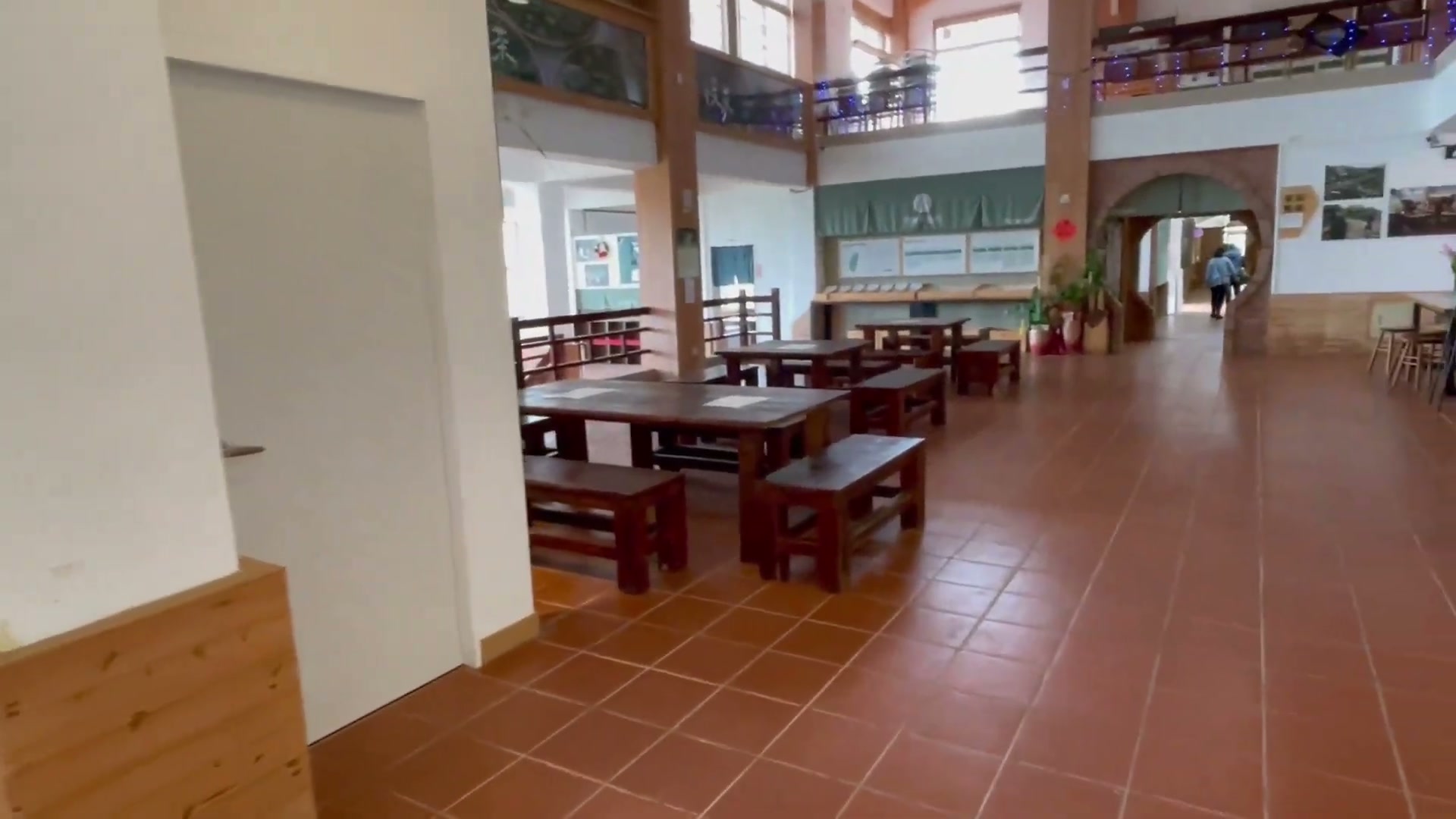
Shared tables make room to stay
Inside, the tall hall places wooden tables and an upper gallery in one field of view. Space around the tables allows people to sit and talk. A hillside industry has gained a place to receive visitors. Keeping the room visible around its furniture helps explain how people might use it.
The city describes the centre as a place for tea education, tasting and rest. Farmer-led explanations, tea service and practical activities depend on arrangements. An empty table in an archive film does not promise the same service on every visit. Confirm the day’s programme if an activity is the reason for travelling.
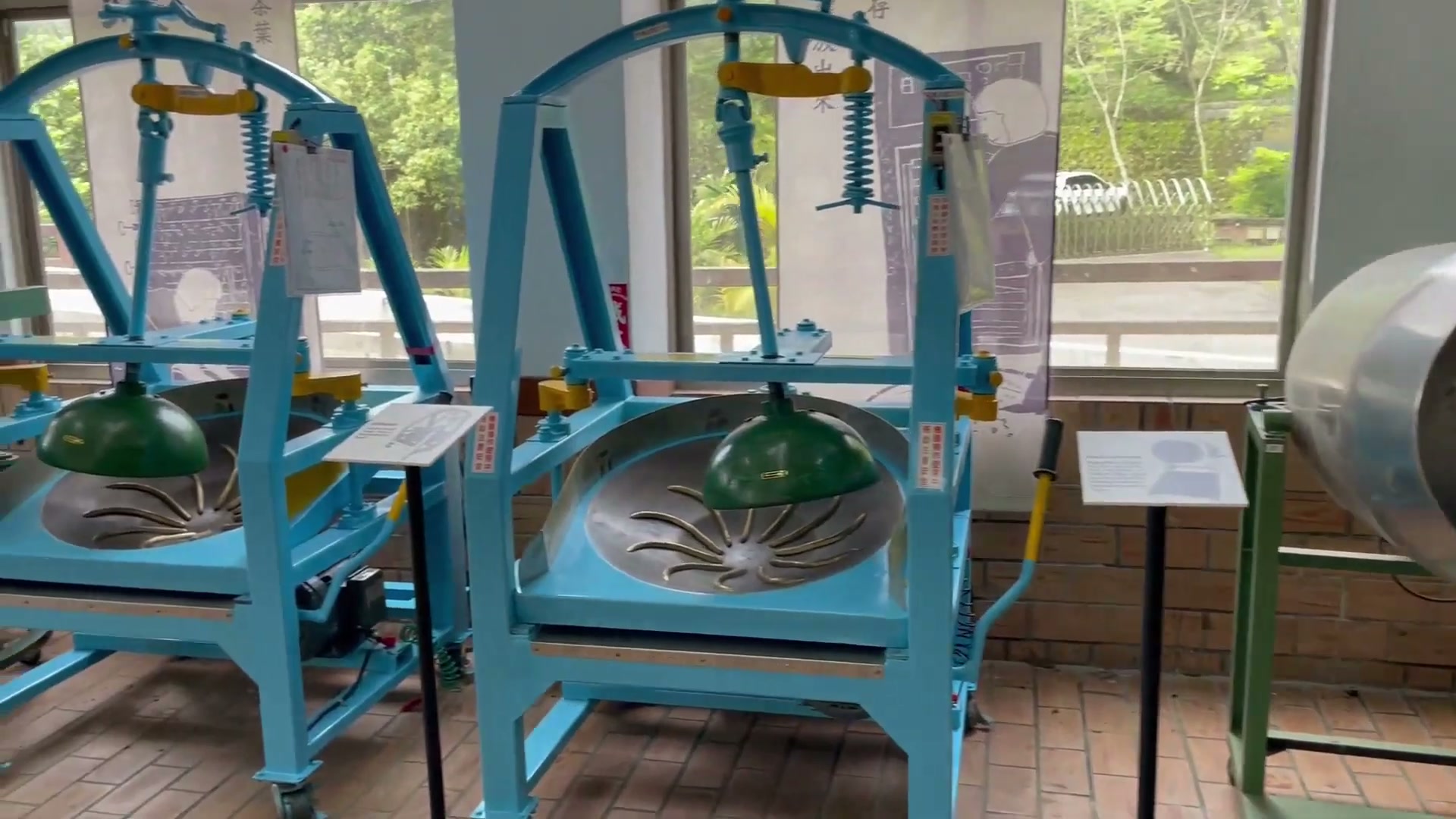
Trays and machines reveal the work
Bamboo trays stand in tall racks, with leaves visible on some surfaces. Green equipment, blue frames and round metal drums follow. Look at each whole machine, then at the room it occupies. The scale helps turn an abstract idea of tea making into a sequence of physical tasks.
These archive views show equipment and space without claiming that the machines are running or that today’s arrangement is identical. The city lists tea machinery, interpretation and cultural learning among the centre’s features. A visit offers an opportunity to ask how the work changes the leaves, rather than treating the finished flavour as something that simply appears.
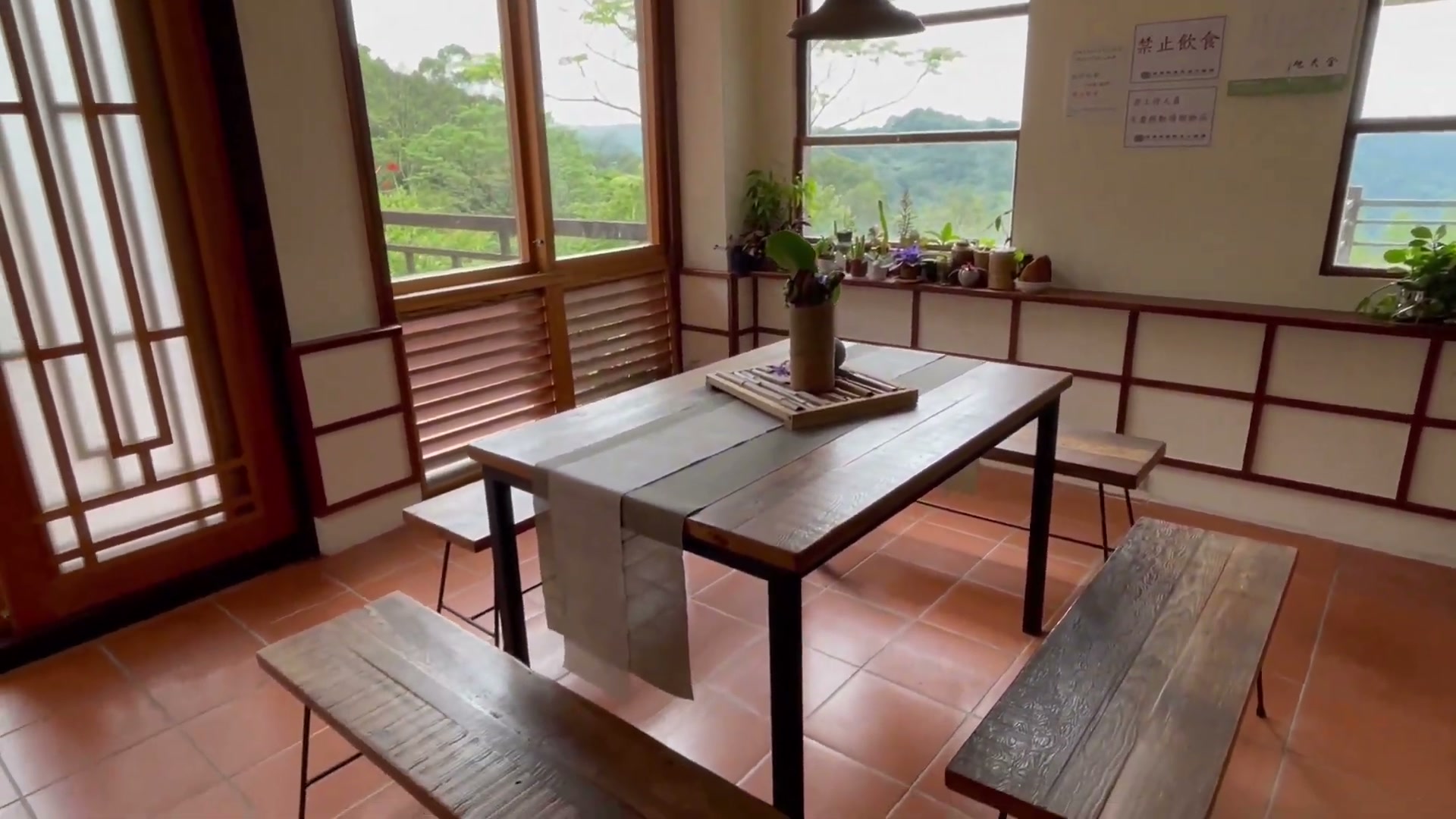
From the shelves to the view
Back in the reading room, shelves, wooden tables and large windows connect with one another. A few steps bring the outdoor railing and trees into the doorway. Learning about tea can also happen through a book or a quiet pause beside the window.
Looking back from the balcony explains how the long windows connect the interior with the hillside. The upper gallery reveals the relationship between the two floors. There is no need to collect every room as a photograph. A place that holds the building and landscape together may stay in the memory longer. Follow the areas open to visitors on the day.
Return outside, with time for a separate walk
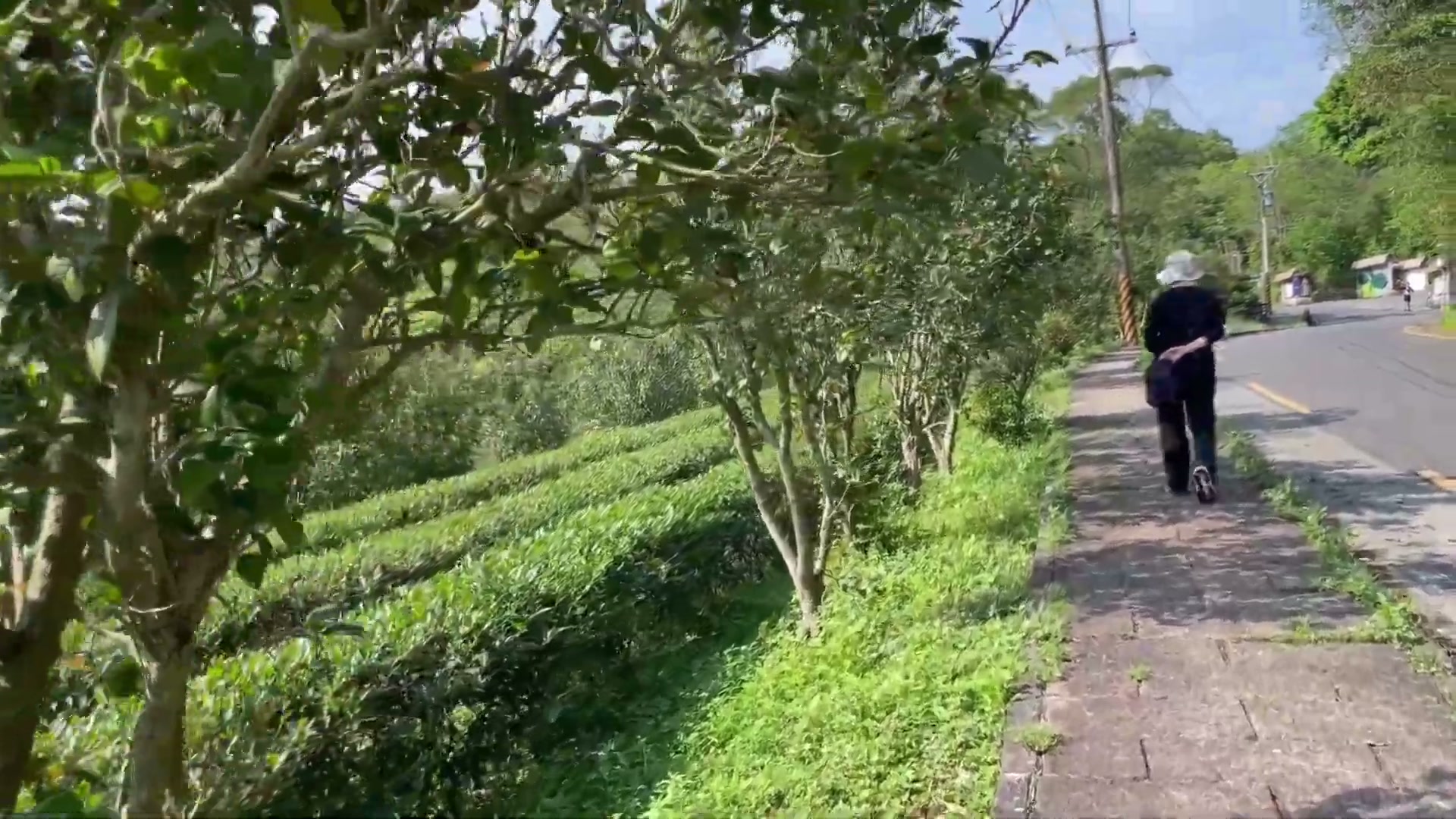
Tea rows follow the slope beside the road as a walker passes along its edge. Beyond the demonstration centre, land remains in use. Stay on public routes when looking at the gardens. The working rows and private farm spaces are not open extensions of the visitor building.
A woodland walk can be planned separately nearby. The film’s stair sequence comes from the creator’s 2023 visit to the Guihua Suspension Bridge waterside trail. It is not presented as the newly improved 2026 ring trail or as proof of current access. Returning to the centre’s viewpoint brings the entrance road and ridges into view again, connecting the tea industry with everyday life at the city’s edge.
Film, article and image sources
The film and five stills use real-location footage published by Veggie Hiker on 12 April 2023. The exact filming day is unconfirmed. Equipment, activities and trail access may change. The music is an added score.
- 南港茶葉製造示範場內部完整介紹 (二次到訪)I 走桂花步道主線&親水步道&探訪桂花吊橋環狀路線
- https://recreational-agriculture.gov.taipei/cp.aspx?n=66D6125B148FEF86&s=5E86D9D764F0E601
- https://miniculturaltrips.gov.taipei/News_Content.aspx?n=0DA7E7A7A1EA5C19&s=6055A4895EE0AE04&sms=337199328131CB54
- https://ngdo.gov.taipei/cp.aspx?n=48CC28C5D8A056E2
1. Veggie Hiker · recording year unstated
2. Veggie Hiker · recording year unstated
3. Veggie Hiker · recording year unstated
4. Veggie Hiker · recording year unstated
5. Veggie Hiker · recording year unstated
Music: 把時間留下 (AI-generated instrumental).