Culture
Yongchunpi: Reading the City from the Water’s Edge
Begin with urban water, then follow a pond-side platform, retained barracks and a wooded path into a more attentive way of seeing.
Yongchunpi: Water at the City's Edge
90 seconds. English captions are part of the film. Optional Traditional Chinese subtitles are available in the player.
Views come from Taiwan吃GoGo’s real-location video published 1 August 2026. They do not guarantee present access conditions. Music is an added score, not location sound.
Complete English captions and Traditional Chinese translation
00:00:00,000 --> 00:00:04,000
Yongchunpi Wetland
永春陂生態濕地公園
00:00:04,000 --> 00:00:08,000
In Xinyi, the city meets a wetland.
在信義區,城市與濕地相遇。
00:00:08,000 --> 00:00:14,000
Follow the path towards
the floating leaves.
沿著步道,走近浮葉鋪展的水面。
00:00:14,000 --> 00:00:21,000
Pause on the pond-side platform.
Look across before looking down.
在池邊平台停一停;先看整片水域,再看腳邊。
00:00:21,000 --> 00:00:27,000
At water level, leaves and stems
break up the surface.
靠近水面,葉片與莖稈把水域分成細小空間。
00:00:27,000 --> 00:00:34,000
A wetland is more than open water:
its edges hold shelter, too.
濕地不只有開闊水面,水邊也留著躲藏的空間。
00:00:34,000 --> 00:00:41,000
Restoration zones are protected.
Stay on marked public paths.
復育區有參訪界線,請沿標示的公共步道行走。
00:00:41,000 --> 00:00:48,000
This ground was once a military camp.
這片土地,曾經是一座營區。
00:00:48,000 --> 00:00:56,000
Three former barracks were retained
for guidance, learning and volunteer work.
三棟舊營舍留下來,供導覽、環教與志工工作使用。
00:00:56,000 --> 00:01:03,000
The buildings connect the park
to environmental education.
留下的建築,讓公園也成為環境教育的場域。
00:01:03,000 --> 00:01:10,000
Follow the rail-lined path
along the wooded edge.
沿著有護欄的步道,走過林木邊緣。
00:01:10,000 --> 00:01:17,000
Look back through the trees:
water and city appear together.
透過樹木回望,水地與城市又出現在一起。
00:01:17,000 --> 00:01:23,000
Give plants space. Leave wildlife
undisturbed.
留些空間給植物,也讓野生動物不受打擾。
00:01:23,000 --> 00:01:30,000
Take a slower look.
Leave the water's edge as you found it.
慢慢看;離開時,讓水邊保有原來的樣子。
Find the water between homes and hills
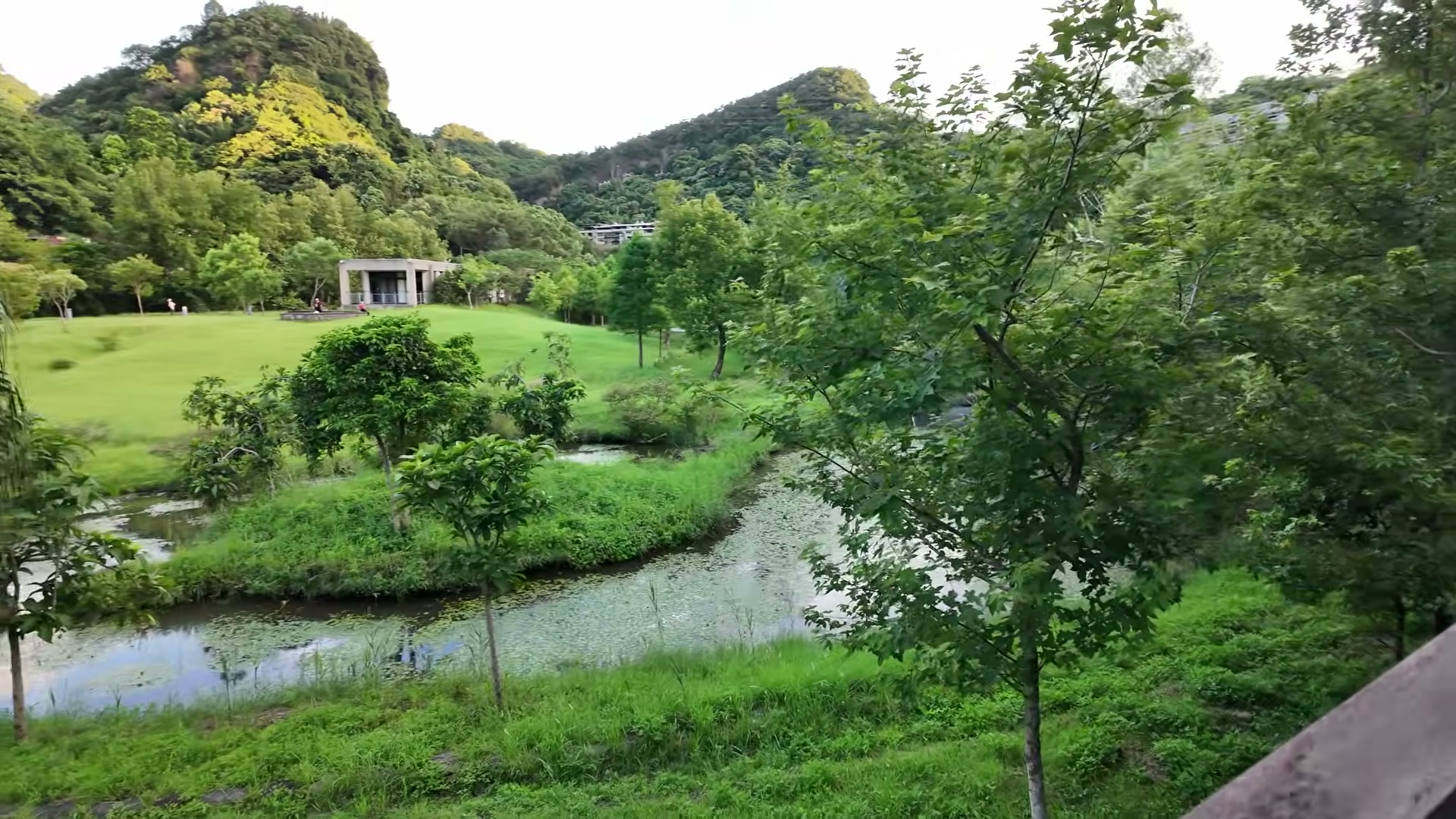
At the foot of the hills in Xinyi, homes remain close while water slows the walk. Yongchunpi is an urban wetland: paths, grass slopes, ponds and neighbouring buildings belong to the same view. Begin with the whole landscape, then locate the wooded line of the Four Beasts hills.
The roughly four-hectare site was formerly a military camp. It became a wetland park and formally opened in 2020. The water and green space reflect a change in how this urban ground is used. Keeping the homes in the picture helps explain why that change matters.
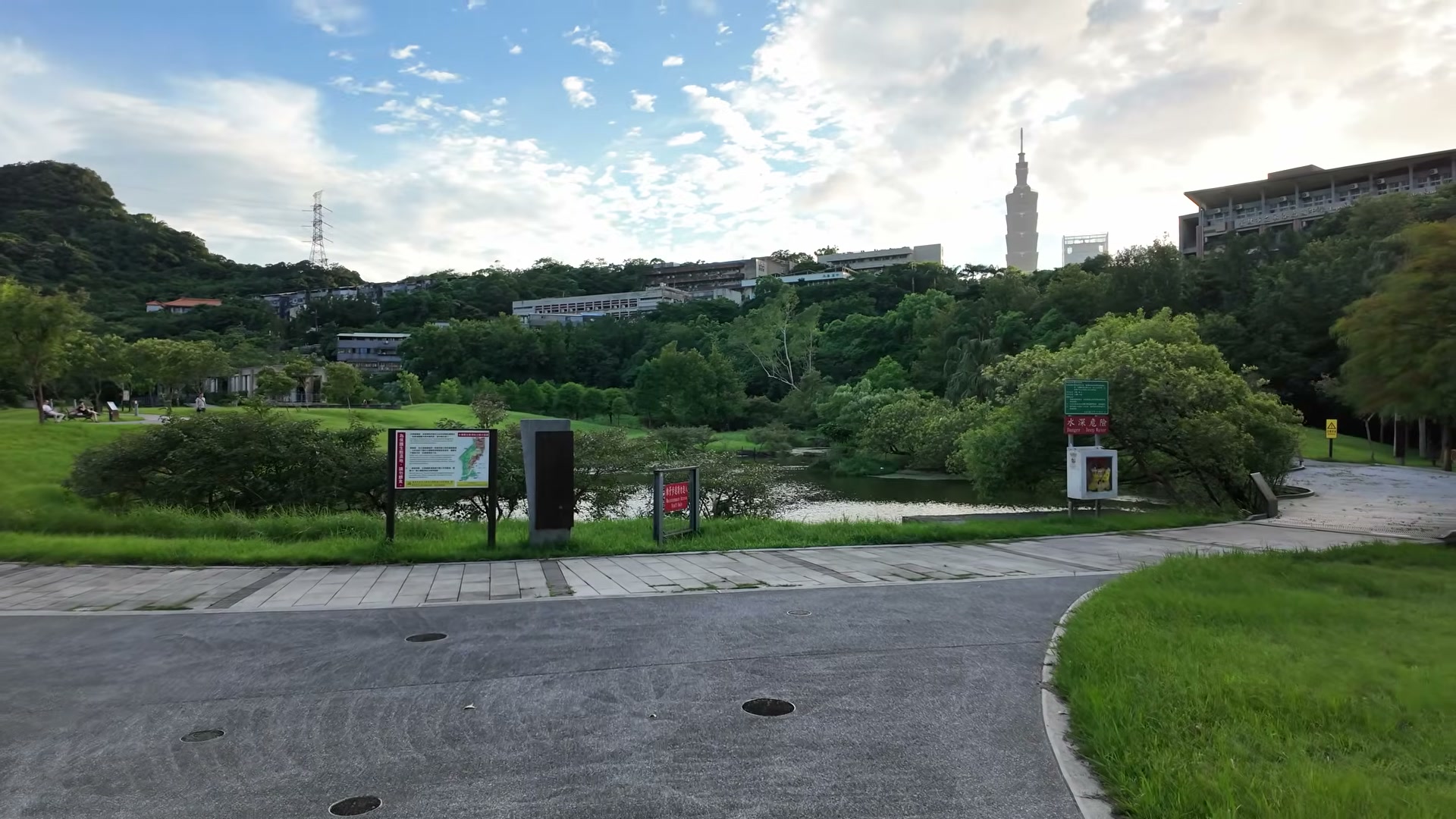
Pause on the platform and let details appear
The pond-side platform gives visitors somewhere to pause while leaving the water its space. Look across first, then notice floating leaves, upright stems and dense planting along the bank. Open water and planted edges offer different kinds of space; a slower look reveals the contrast.
Habitat restoration does not turn every bank into a visitor route. Stay on public paths and observation areas, and follow the signs that mark restoration zones. Keep out of the water and planted areas, and stay within the platform. Wildlife encounters remain a possibility, rather than a promise.
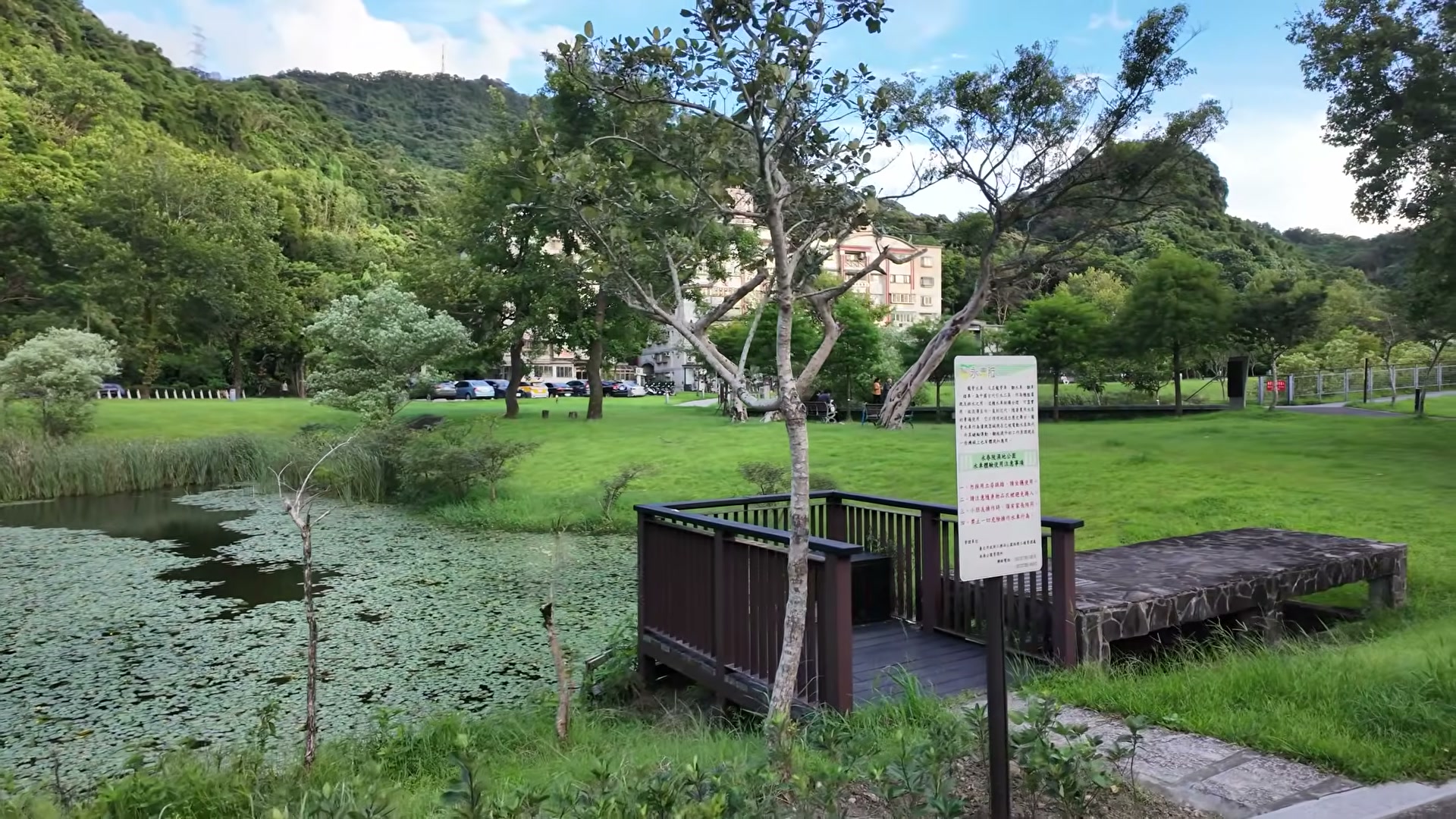
Retained barracks keep an earlier use visible
Away from the pond, long low buildings come into view. The path passes walls, windows and sheltered edges, with planting close beside them. The change from camp to park becomes visible in the buildings that remain, rather than staying only a line in the site’s history.
The city’s project record describes three retained barracks adapted for visitor guidance, multipurpose use and volunteer offices. Earlier structures now sit beside new water and paths. The film shows their exteriors; it does not establish unrestricted access to every room.
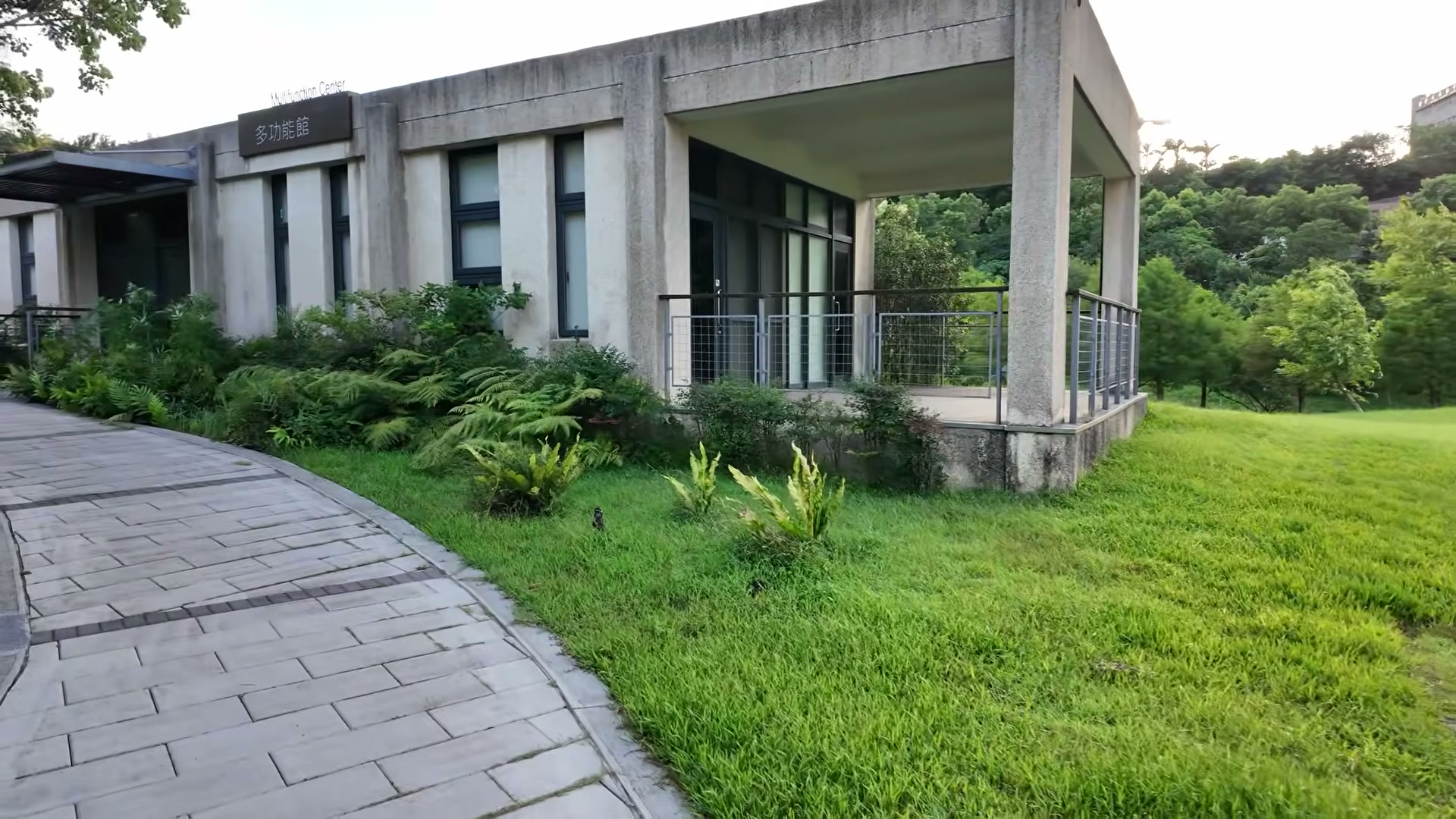
Environmental learning needs everyday care
The buildings give environmental education a place within the park. Guidance, learning and maintenance need working space as well as green space. A window or sheltered walkway can prompt another question: who continues to care for the wetland after the landscape has been created?
City records describe collaboration with civic groups, volunteers and neighbouring schools, including habitat work and removal of introduced species. A visit can begin with small habits: read signs, keep a respectful distance, leave water installations alone and do not feed wildlife. Check current organiser notices separately for classes or indoor access.
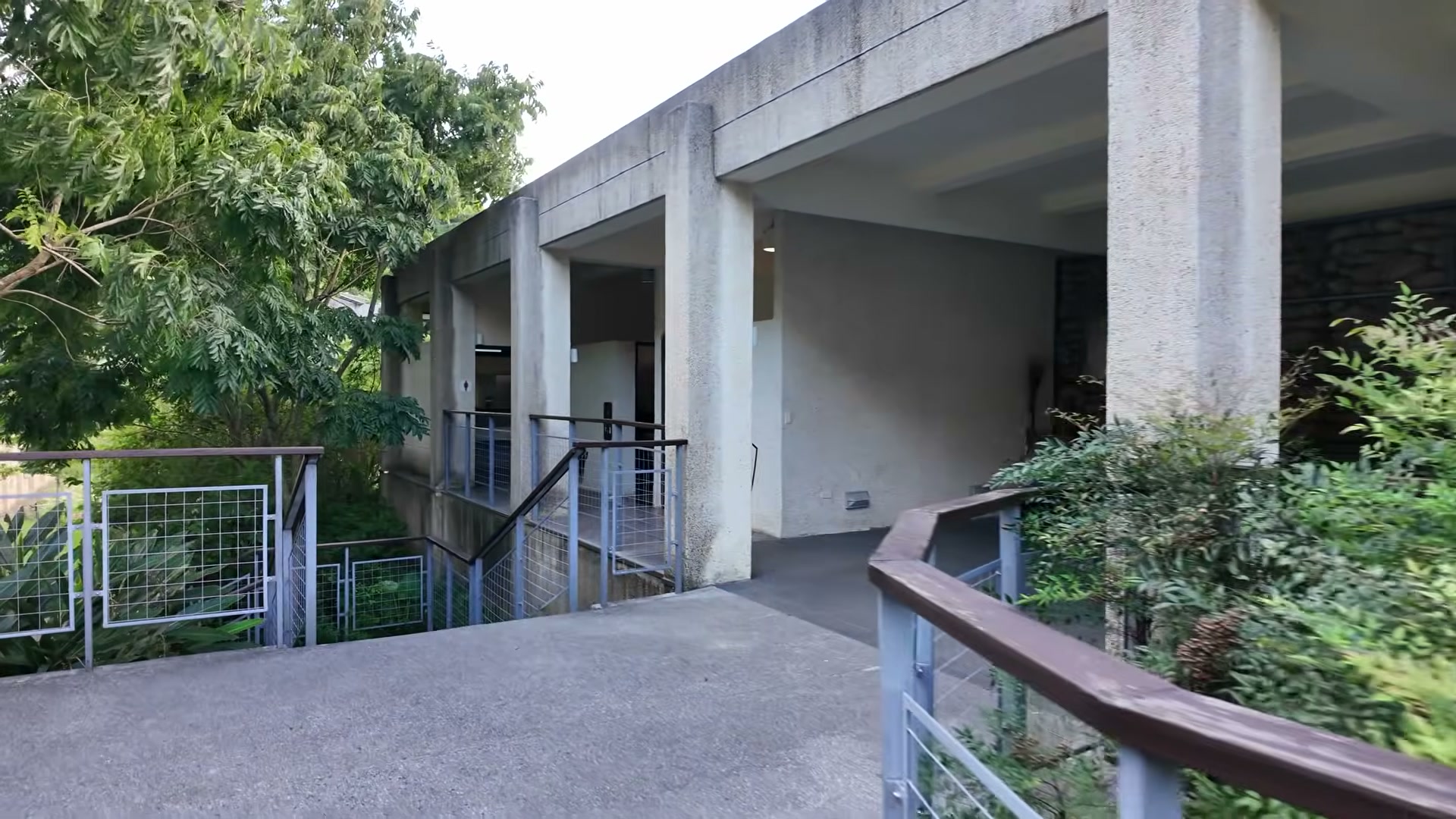
Look back from the trees and carry the habit home
Along the rail-lined wooded edge, leaves briefly screen the park before water and buildings reappear. Pause where you will not obstruct the path. Notice how trees frame the wetland and the nearby city, then return along the public route.
Take one simple habit away: see the whole before moving closer. Recognise the space for people and the space left for water and other life. Then notice a leaf, a planted edge or an older building still in use. A visit need not end with a wildlife photograph; it can leave you looking more carefully at urban ground.
Film, article and image sources
Views come from Taiwan吃GoGo’s real-location video published 1 August 2026. They do not guarantee present access conditions. Music is an added score, not location sound.
- 永春陂生態濕地公園步行影像/台灣小散步 Taiwan吃GoGo
- https://www.geo.gov.taipei/News_Content.aspx?n=C8437AEC6330AE7C&s=8CD1BADF9307B683&sms=B831ADCA9D9ED4FC
- https://pkl.gov.taipei/News_Content.aspx?n=F7B317BFB7E69BEC&s=9A27847F23404B3C&sms=47D2B47B3DA0736F
- https://media.taiwan.net.tw/en-us/portal/travel/details/attraction_379000000a_002262
1. Taiwan吃GoGo / 台灣小散步 · recording year unstated
2. Taiwan吃GoGo / 台灣小散步 · recording year unstated
3. Taiwan吃GoGo / 台灣小散步 · recording year unstated
4. Taiwan吃GoGo / 台灣小散步 · recording year unstated
5. Taiwan吃GoGo / 台灣小散步 · recording year unstated
Music: 把時間留下 (AI-generated instrumental).