Qigu Salt Mountain: Read the Work Behind the White Hill
A white mound makes an easy photograph at Qigu. Separating salt-making, storage, transport and later tourism reveals more of the industrial life that shaped Tainan’s coast.
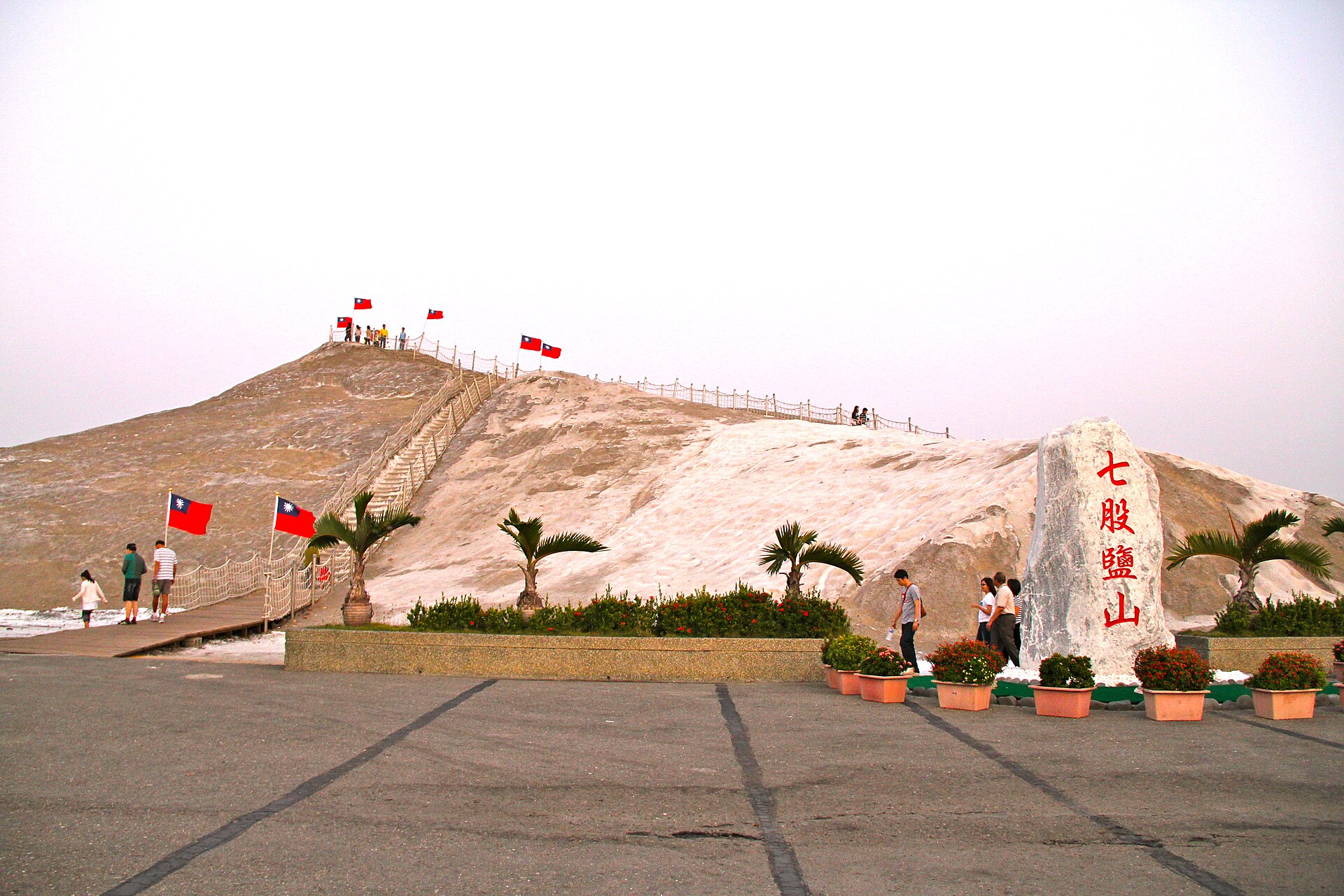
Image information

Historical photographic record, not a guarantee of current displays or access. Source image unchanged.
A salt mountain is not an entire salt works
The mound is a recognisable storage landscape; it does not mean every stage of solar salt production took place on its slopes. Qigu’s salt field ended solar production in 2002 and developed a tourism role. Visitors can now use the site to understand an industry, without describing tourists on the steps as evidence of salt workers still producing there.
An everyday substance requires organised work
Obtaining salt from seawater involves water management, time and weather, followed by collection, storage and movement. Use the mound to begin a question: once the salt was gathered, where did it go next? Calling the view snow-white can obscure the relationship between an everyday substance, industrial and agricultural uses, and local labour. The scale is more informative when considered as work rather than scenery alone.
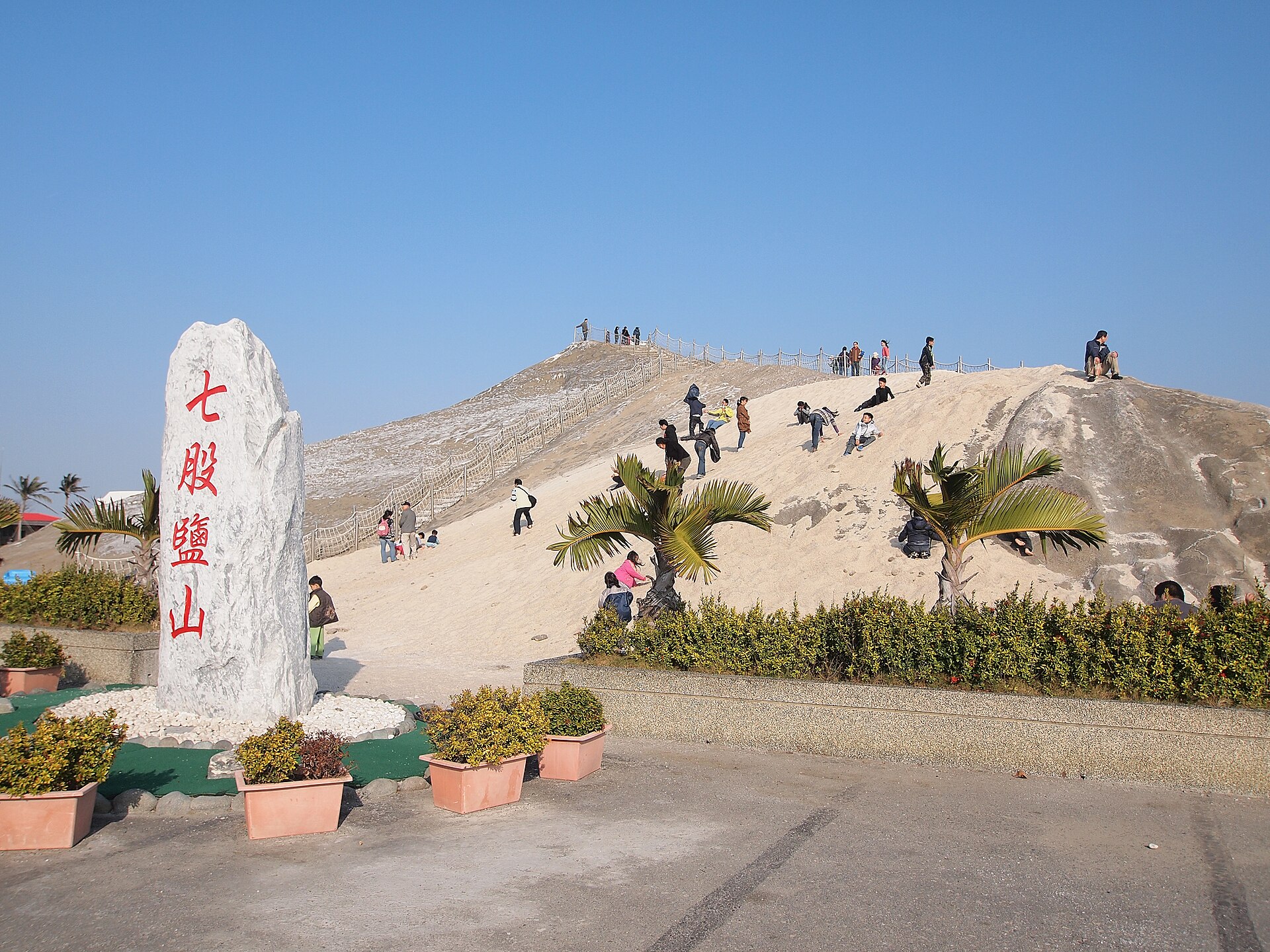
Image information

Historical photographic record, not a guarantee of current displays or access. Source image unchanged.
A production site becomes a visitor site
Taiyen has connected industrial history with leisure uses. This does not mean every earlier job or structure survives unchanged; it lets visitors consider how a place chooses to present its past. The photographs record the mound as a tourism environment, with steps, landscaping and visitors. Facilities and programmes change, so older images are not proof that every pictured route is open today.
Understanding the coast does not require reaching the top
Start with the interpretation and observe the mound’s scale from ground level. Climbing is an optional activity governed by the day’s access conditions, not a prerequisite for learning the history. In strong wind, rain or slippery conditions, a safe ground-level visit can still be worthwhile. A photograph is not a reason to cross a closure barrier.
Before you go
Arrival and return
Choose Qigu Salt Mountain in Yancheng Village, Qigu, Tainan. Taiyen lists a connection at Jiali to Blue 20 towards Qingkunshen via the salt district, alighting at Qigu Salt Mountain. Check the day’s route and return service. Other salt attractions have different stops; do not leave return transport until closing time.
Seasonal hours and charges
Taiyen lists 09:00–18:00 for March–October and 08:30–17:30 for November–February. Lunar New Year’s Eve, typhoon closures and special notices may change access. Confirm admission/vehicle charges separately from DIY bookings; ordinary entry does not automatically include an activity.
Time and safety
Allow 60–90 minutes, with drinking water, sun protection and walking shoes. Follow signs governing the steps, supervise children and do not collect or taste salt from the ground or enter neighbouring waters.