Lin Family Garden: How a Family’s Business Became a Landscape
Rooms for books and guests sit beside pools and framed views in Banqiao. Following their different uses turns a garden visit into a reading of family life, wealth and social relationships in Qing-period Taiwan.
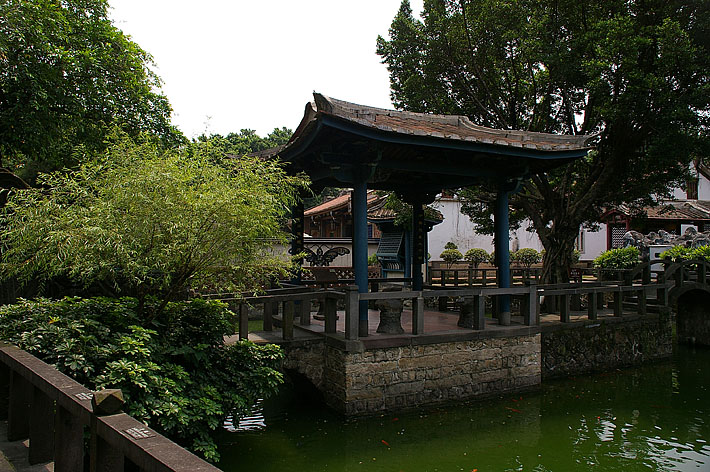
Image information

Historical photographic record, not a guarantee of current displays or access. Source image unchanged.
A garden and a residence are different spaces
The Lin Family Mansion and Garden brings together landscaped grounds and residential buildings. These are different kinds of space, with different visiting arrangements. Begin by checking which areas are accessible that day. Then follow how a path moves between rooms for receiving guests, studying and living. Treating every doorway as an invitation to enter would miss the boundaries that helped organise this family’s life.
Read wealth through the uses of rooms
The family developed its resources through trade between Taiwan and Fujian before building on a large scale in Banqiao. The garden gives that broad commercial history a physical setting. The Jigushuwu library points to collecting and reading; Dingjingtang relates to gatherings and hospitality. Looking at these uses offers a practical question: how did money become education, social influence and a built presence in a Taiwanese town?
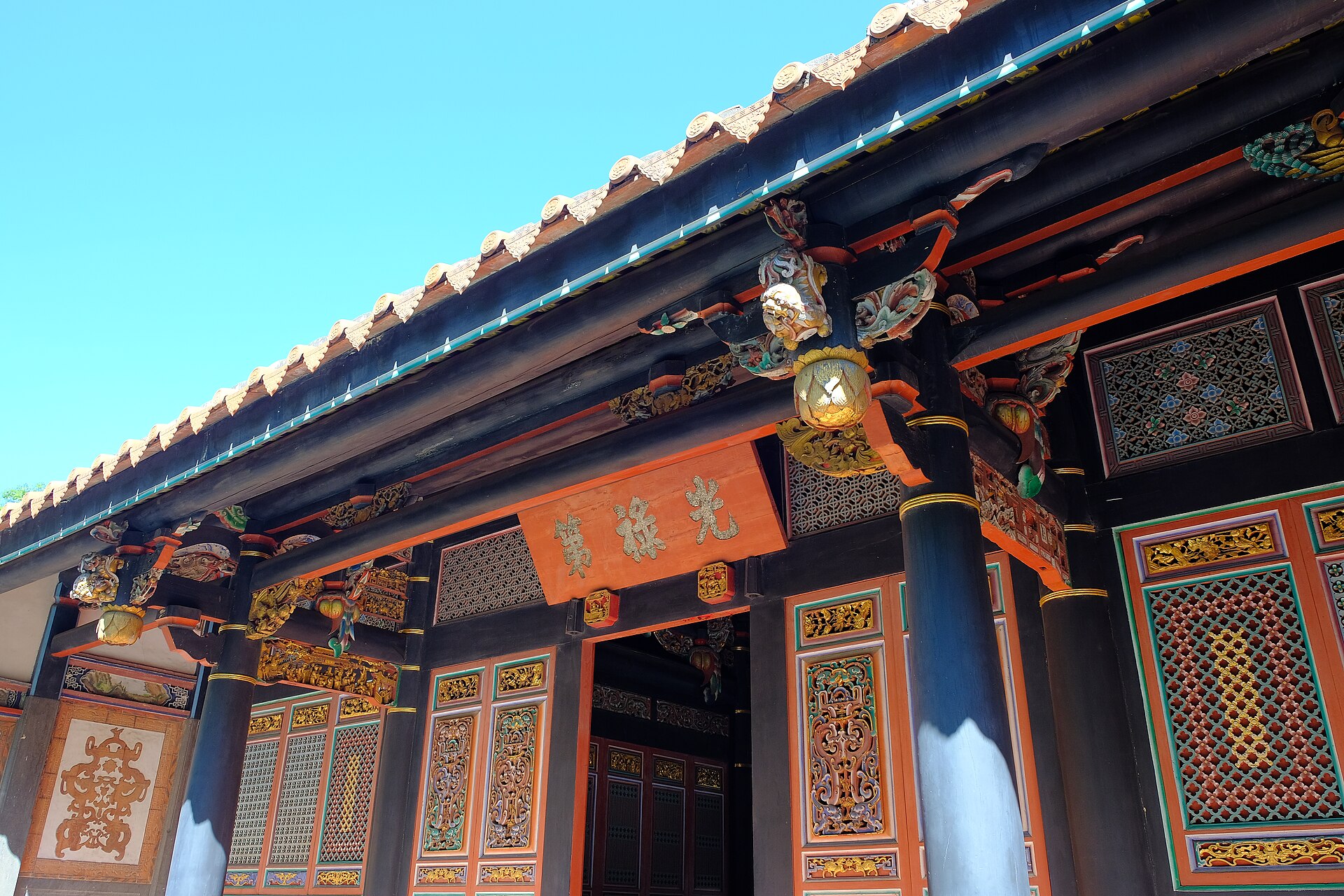
Image information

Historical photographic record, not a guarantee of current displays or access. Source image unchanged.
Let a pool change your viewpoint
Laiqing Pavilion, Yuebo Waterside Pavilion and the buildings around the pools organise different views. Choose one place beside the water, identify the roofs and openings opposite, then compare them from another permitted path. This is a way to read the garden today, rather than a claim to recreate a particular historical banquet. The photographs record the garden and residential architecture at different dates; they do not guarantee access to every pictured position.
Conservation is part of the story
The place visitors see has been conserved and repaired. It is not an untouched fragment of family life. Maintenance can also change how a room or path is used. Before leaving, look beyond the elaborate decoration to thresholds, corners and passageways. Consider how they direct movement and how a former family environment now accommodates many visitors. Keeping to the marked route is part of caring for that shared space.
Before you go
Arrival and return
Go to No. 9 Ximen Street, Banqiao, New Taipei. The city cultural bureau describes an approach from Fuzhong MRT Exit 1 via Fuzhong Road and Wenchang Street. Return the same way for onward MRT travel. Banqiao railway/HSR station is another interchange, not an entrance beside the garden.
Opening and admission
Regular hours are 09:00–17:00. The first Monday of each month is normally closed, with holiday exceptions; Lunar New Year and temporary closures also apply. The garden announced full reopening after phase-two works in June 2026. Check its current notice and admission arrangements before leaving.
Time and access
Allow 60–90 minutes as a planning suggestion. Entry to the three-courtyard residence follows the day’s guided arrangements; a garden ticket does not mean unrestricted access to every residential room. Watch thresholds and wet surfaces, and do not climb or sit on historic fabric.