Culture
Peinan: Beneath the Quiet Landscape
From the stone pillar, archaeological remains and house displays, return to the lawn, shade and Taitung landscape.
Peinan: Beneath the Quiet Landscape
90 seconds. English captions are part of the film. Optional Traditional Chinese subtitles are available in the player.
Archive views from the National Museum of Prehistory film distributed by NCLibTV. The source page does not state the recording year. These scenes do not confirm current access or facility conditions.
Read the complete five-chapter article → · 繁體中文
Complete English captions and Traditional Chinese translation
00:00:00,000 --> 00:00:05,000
Peinan Site Park
Look beneath the landscape.
卑南遺址公園
走近地景,也看見地景之下。
00:00:05,000 --> 00:00:12,000
In Taitung, a quiet green park
holds a much older story.
在臺東,一座安靜的綠地,
留著更久遠的故事。
00:00:12,000 --> 00:00:20,900
The prehistoric settlement is not gone.
Parts of it remain beneath your feet.
史前聚落並沒有完全消失。
部分遺留,仍在腳下的土地裡。
00:00:20,900 --> 00:00:28,400
At the archaeological site,
follow the deck and look closely.
走進考古現場,
沿著參觀步道,靠近看清楚。
00:00:28,400 --> 00:00:33,400
Step inside the exhibition hall.
Let the objects lead you back outside.
走進展示廳,
再帶著器物的線索,回到戶外。
00:00:33,400 --> 00:00:42,900
Stone remains and museum displays
reveal different layers of the same land.
石構遺留與館內展示,
讓同一片土地的不同層次浮現。
00:00:42,900 --> 00:00:55,400
Nearby, explore traditional Puyuma
house and youth-house displays.
在園內,認識卑南族傳統家屋
與高架少年會所的展示。
00:00:55,400 --> 00:01:05,800
Ancient archaeology and living Puyuma
culture each have their own story.
史前考古與仍在延續的卑南族文化,
各自有需要理解的故事。
00:01:05,800 --> 00:01:11,800
Slow down beneath the trees.
Notice the life around the site.
在樹下放慢腳步,
也留意遺址周圍的生命。
00:01:11,800 --> 00:01:19,200
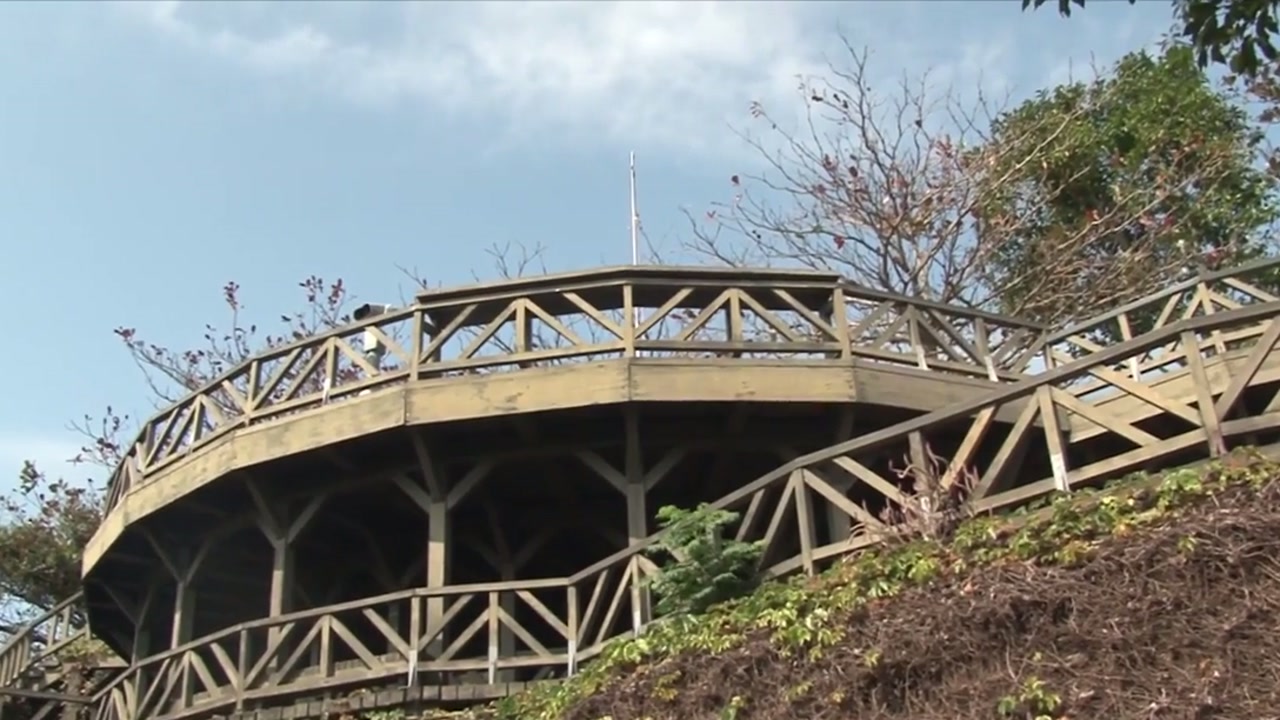
Look out from the viewing platform.
Place the park in its wider landscape.
從瞭望臺向外看,
把公園放回更大的地景裡。
00:01:19,200 --> 00:01:26,200
Return to the lawn with a new question:
what else is the land holding?
回到草地時,多帶一個問題:
這片土地,還保留著什麼?
00:01:26,200 --> 00:01:30,000
Peinan Site Park, Taitung
Read the story. Then walk the ground.
臺東・卑南遺址公園
讀過故事,再走進現場。
Start with the lawn, then look beneath it
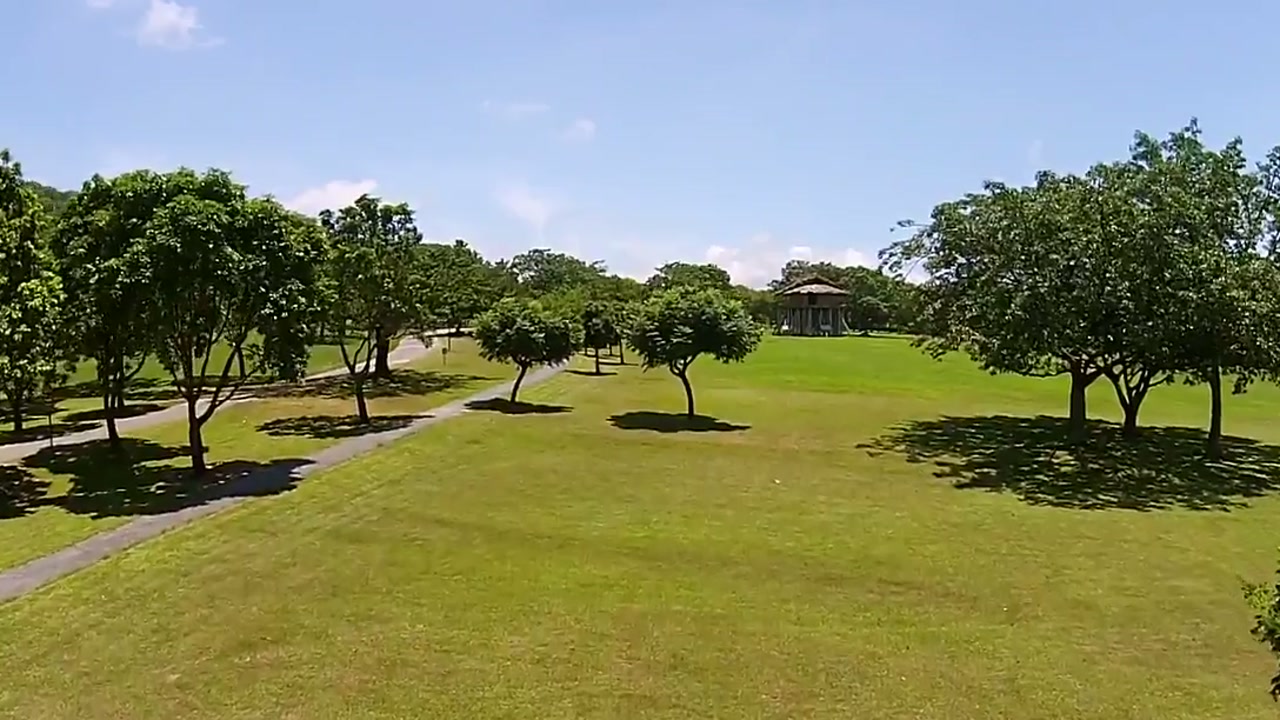
The park first appears as open grass, tree shadows and distant hills. The film puts the Moon-shaped Stone Pillar beside that broad view. This is a place for a walk, but also a landscape holding traces of a prehistoric settlement. Begin by recognising the setting, then ask what remains out of sight.
Move between two distances. From afar, paths and house displays organise the green space. Closer views reveal surfaces and archaeological evidence. This ninety-second film proposes a way to look; it is not a continuous navigation route or a guarantee that every recorded facility is currently accessible.
From the pillar to the archaeological site
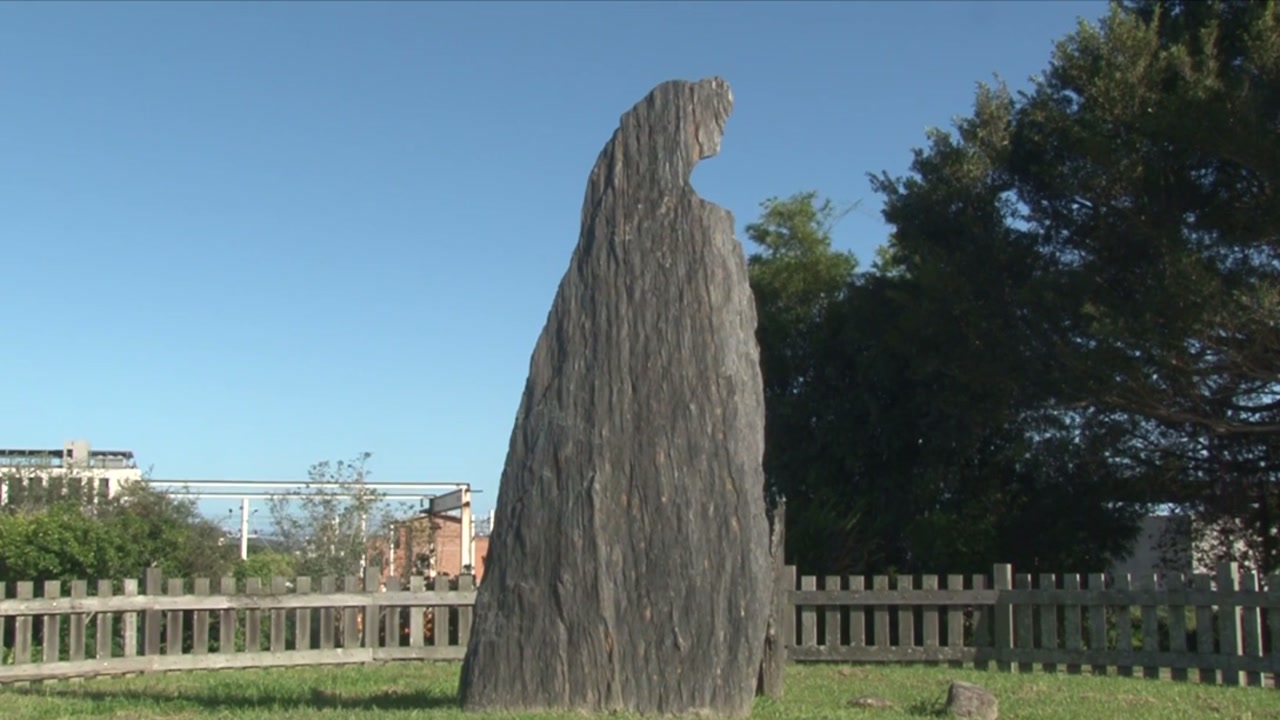
The Moon-shaped Stone Pillar is a defining landmark, still standing at the site. Its outline invites questions. Keep the visible object, archaeological interpretation and Puyuma oral tradition distinct; an evocative story does not prove a single original function. Look at the slate surface, the opening and its position in the land.
At the archaeological site, attention shifts downwards. Remains make sense through their positions and relationships, not simply as isolated objects. The museum describes the excavation area begun in late 1996 as serving both research and public viewing. Follow the designated route and leave protected remains and materials untouched.
Take the exhibition back outside
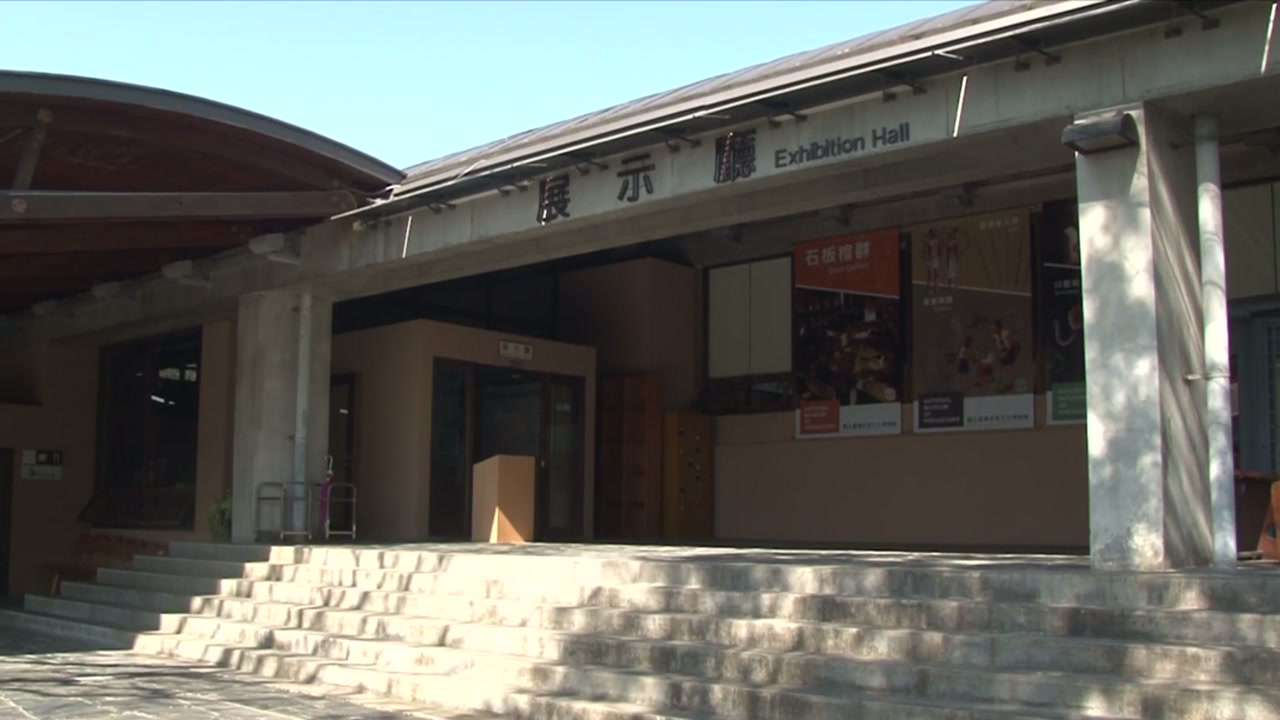
The exhibition offers another scale of attention. After the broad outdoor view, ceramics, models and interpretation encourage closer questions. What can an object tell us? How might its material, context and traces of use help us think about past lives? A few brief film shots introduce this approach without reducing an entire culture to a row of objects.
Return outdoors with those questions. This edit stays within the park material in the introduction film; it excludes the separate Kangle main-museum building shown at the source film’s end. Peinan Site Park and the National Museum of Prehistory at Kangle are distinct destinations. Check their locations and visitor information separately.
Read the houses without merging the histories
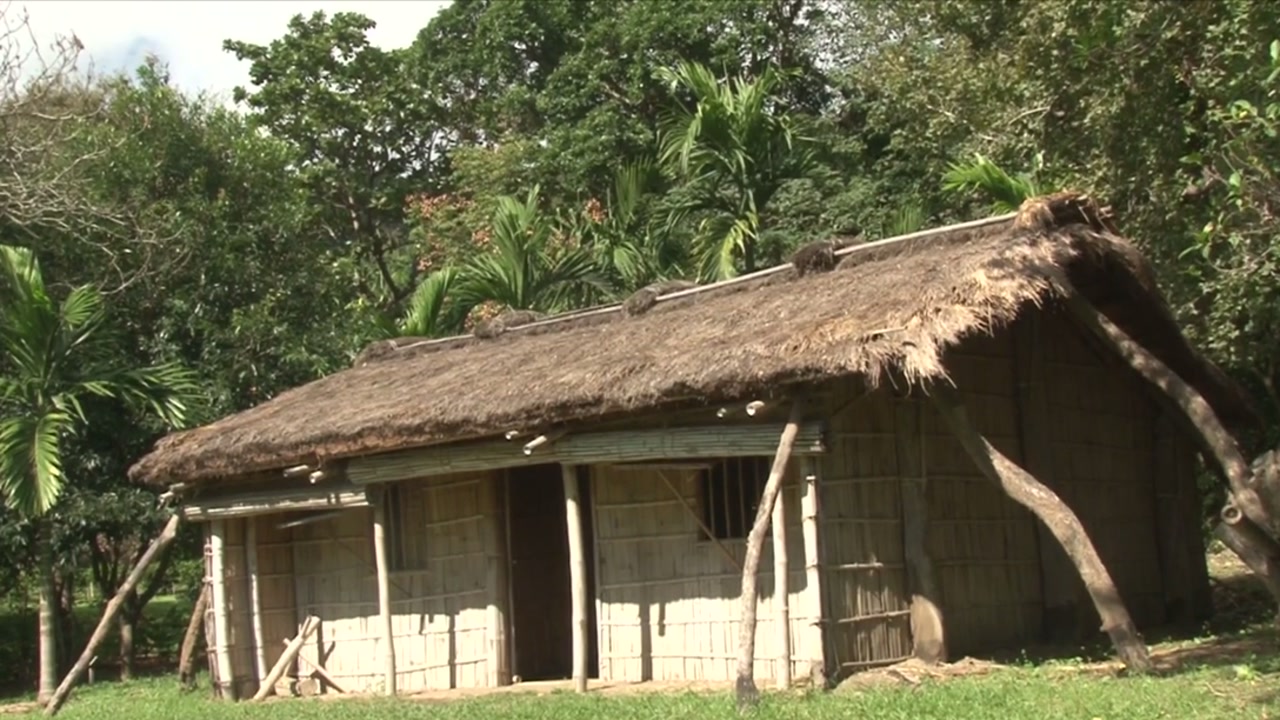
Traditional Puyuma house and youth-house displays make roofs, supports and raised spaces visible at close range. Look at the whole form, then the bamboo and timber beneath it. Instead of using a building only as a photograph’s backdrop, ask who used such spaces and what shared life required of them. Follow the on-site interpretation.
Keep an important distinction: the archaeological term “Peinan Culture” and present-day Puyuma culture are not interchangeable. The museum’s learning material states that direct transmission between them has not been demonstrated. Holding that distinction allows a visit to respect both archaeological research and continuing Indigenous life, without inventing a simple ancestral line.
Allow time for the trees and for current information
Grass and shade are not empty intervals between archaeological stops. The film returns from remains to trees and a viewing platform, bringing attention back to light, shade and the pace of walking. The park is also an environmental education venue. Choose a place to pause and reconsider the pillar and ground you have just seen.
These photographs are frames from the museum film publicly distributed by NCLibTV. Its recording year is not stated, so they are treated as archive views. The Environment Ministry venue record lists Tuesday–Sunday, 09:00–17:00; check the museum’s latest notices for closures, access, exhibitions and tours before travelling. Respect barriers and designated paths on site.
Film, article and image sources
Archive views from the National Museum of Prehistory film distributed by NCLibTV. The source page does not state the recording year. These scenes do not confirm current access or facility conditions.
- Peinan Site Park introduction film
- The stone pillar and Puyuma oral tradition
- Excavation areas and the archaeological site
- Neolithic archaeology: Peinan Culture
- Environmental education venue record: Peinan Site Park
- Peinan Site Park tourism open data
1. National Museum of Prehistory / NCLibTV, National Central Library. · recording year unstated · 12.2s
2. National Museum of Prehistory / NCLibTV, National Central Library. · recording year unstated · 136.8s
3. National Museum of Prehistory / NCLibTV, National Central Library. · recording year unstated · 144.1s
4. National Museum of Prehistory / NCLibTV, National Central Library. · recording year unstated · 179.5s
5. National Museum of Prehistory / NCLibTV, National Central Library. · recording year unstated · 272.2s
Music only. The soundtrack reuses an existing AI-generated instrumental.