A new teacher needed a stove. A Taiwanese worker’s help brings Tianmu’s international connections back to everyday work.
Donald Michael Bishop’s account of working in Taipei from 1987 to 1991 includes a family routine: looking for a street cart on Sunday mornings, eating steamed buns and drinking warm soy milk. They lived in an old house on Yangmingshan, where firewood arrived for the fireplace in autumn.
His employment at the American Institute in Taiwan belonged to international affairs. The breakfast and the firewood belonged to making a home. His recollection is one family’s experience after the era of US military residence, not a portrait of every American household.
Distance
3 stops
Time
1.5–2 hours · neighbourhood only
Terrain
Easy streets with crossings; full trail is a separate stair climb
Connection
Washington, D.C. × Taipei
Tianmu White House · exterior
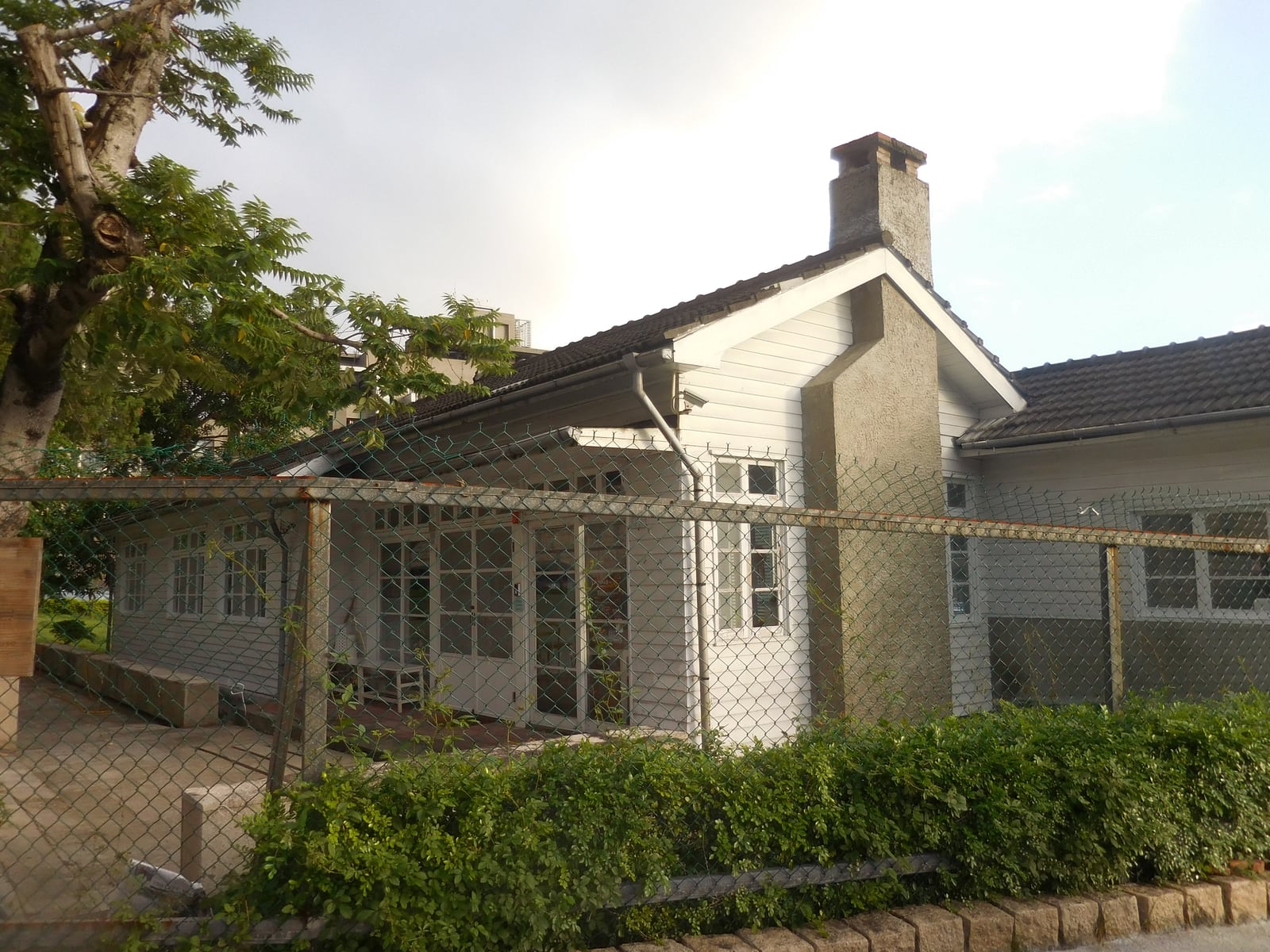
Built in 1953, Tianmu White House gives Cold War international life the familiar form of a home. From public space, look at the white walls, dark roof, doors, windows and garden, then compare them with later buildings nearby. Height and distance from the street reveal different arrangements of residential space. An overseas posting also required housing, shopping and roads for daily journeys. The house brings those needs into today’s streetscape. Focus on how it faces the garden and how its entrance meets the street, then continue to Tianmu Park to consider public space beyond the home. Keep the entrance clear and respect people using the site when taking photographs. Follow public roads to the next stop and use pedestrian crossings.
Notice the entrance, roof and relationship to the street.
Travel reminder: this is the start; Tianmu Park is next. Check this page’s transport information before setting out. Allow separate time for travel.
Tianmu Park
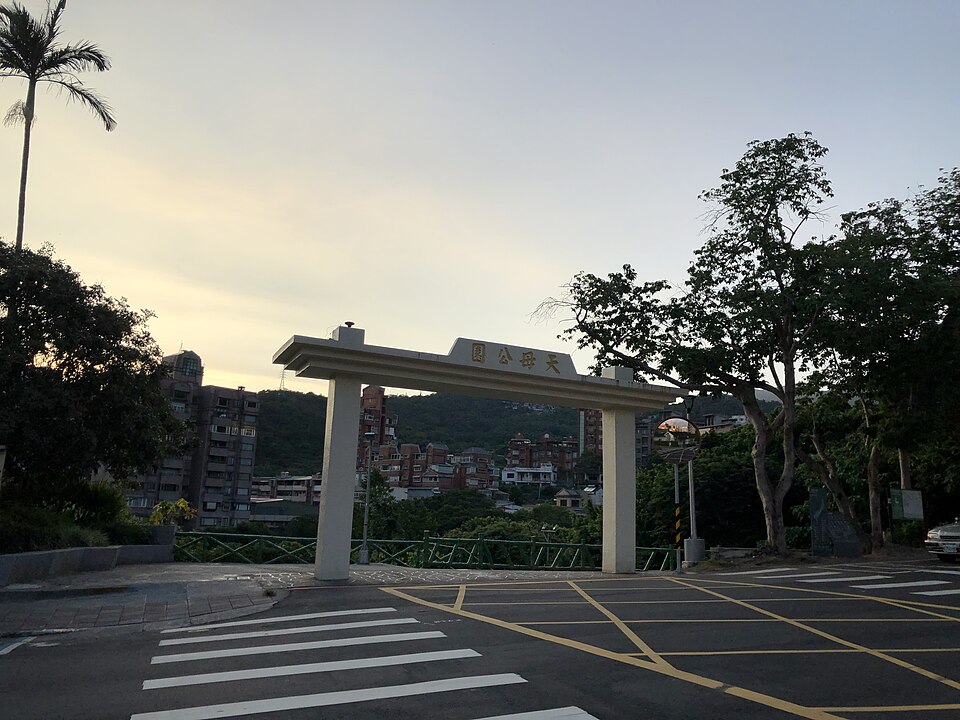
Tianmu Park extends the residential story into life outdoors. Paths, shade, benches and gathering places show how a neighbourhood needs public space for walking, meeting and resting as well as houses. Foreign residents brought different everyday needs to Tianmu, while nearby businesses and streets developed through years of interaction. Residents and visitors share the park today. Observe how the public space connects nearby homes and roads, rather than assigning every tree or shop a Cold War history. From here, the walk continues towards the lower entrance of Tianmu Historic Trail, where level streets meet steps. Stand clear of the main path when checking your map and identify the direction towards Lane 232 before leaving.
Compare open public space with residential boundaries.
Travel reminder: you have come from Tianmu White House; the lower entrance of Tianmu Historic Trail is next. Check this page’s transport information and allow separate time for travel.
Tianmu Historic Trail · lower entrance
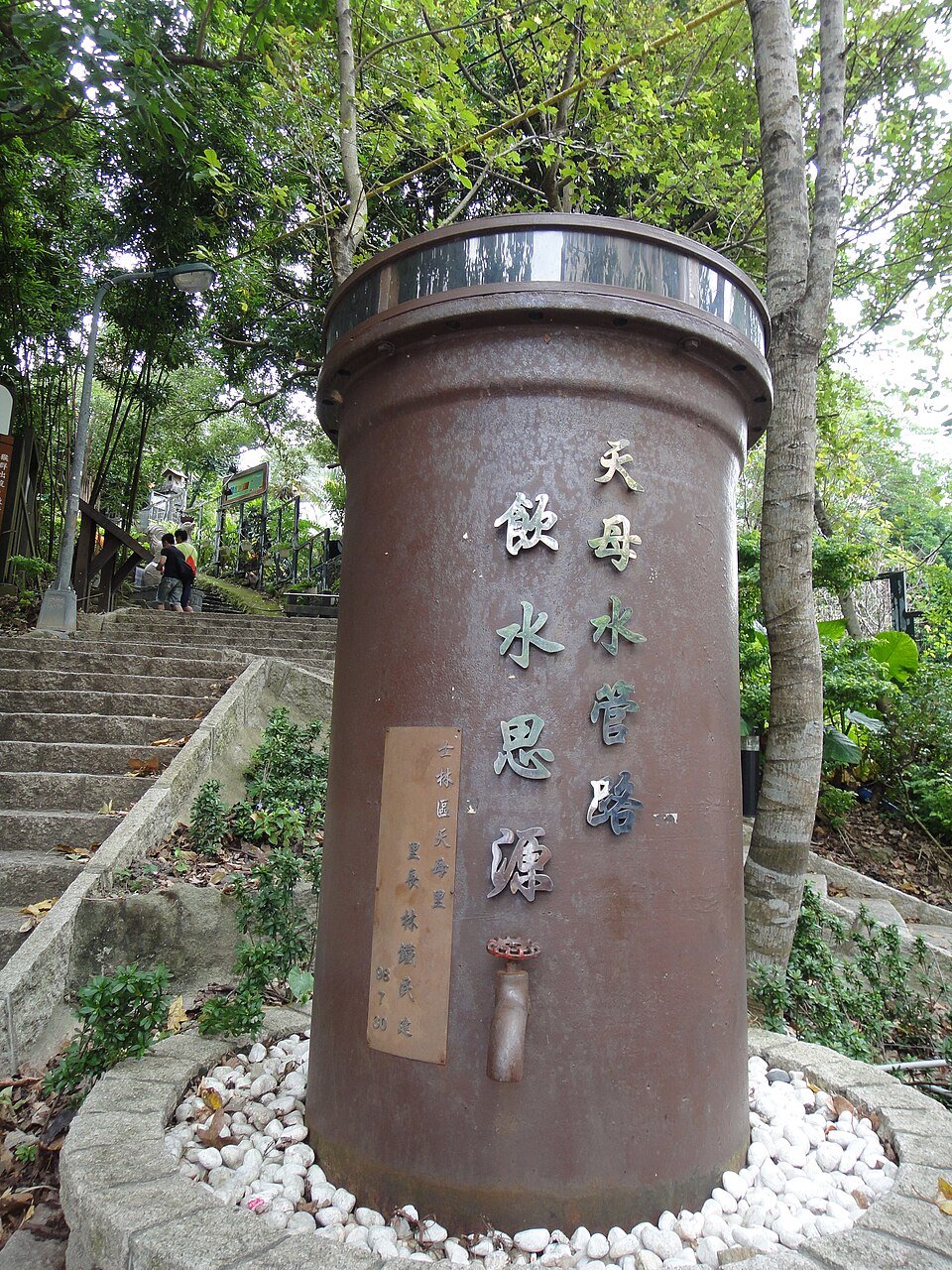
At Lane 232, the street meets stone steps climbing into the hills. Find the official trail sign and notice how steps, roadside facilities and shade change the way you move. The level neighbourhood walk gives way here to sustained climbing. The trail has its own story of water infrastructure and hillside life, but this 1.5–2-hour cultural walk ends at the lower entrance. Choose a separate hiking itinerary if you want to continue, and check its upper exit and return transport first. Keep public space clear for people going up or down the trail. To finish the cultural walk, check street-level transport towards Shipai MRT, including the bus direction and stop. The summit is part of a separate outing.
Find the trail sign and confirm return transport before deciding to climb.
Travel reminder: the cultural walk ends here. Check your route towards Shipai MRT from a safe place and watch your footing.
Getting there and back
Take the MRT to Shipai, then check a current bus connection or taxi to Tianmu White House. Finish at the lower trail entrance; use the return link for travel back to Shipai. Bus/MRT travel is extra. The walk does not include the full trail.
Allow 20–30 minutes between stops and 60–90 minutes for pauses. View White House from public space unless an opening is confirmed. Do not enter private residences. For the full trail, consult the official trail guide: the water-pipe section is about 2.6 km, with a long stair climb. Bring water, check weather and avoid feeding monkeys.
When Richard Arnold arrived at Taipei American School from the United States in 1970, the school had run out of stoves for newly recruited teachers. Mr. Yang, who managed transportation and drivers, told him he would find one. A later school account remembers their friendship through this ordinary problem.
Mr. Yang also drove for Arnold’s student outings and attended English classes after work. Arranging transport, caring for premises and helping newcomers settle were part of the work that kept an international school running. The account preserves a Taiwanese worker’s actions within a story of Americans coming to Taiwan.
The school moved to Tianmu in 1989; the stove story belongs to an earlier campus. Tianmu and nearby Shanzihou also retain memories of housing for US military personnel and families during the Cold War. Tianmu’s White House, completed in 1953, has black roof tiles, white walls and a fireplace; Taiwanese materials and local construction helped make this American-style domestic space.
From public streets, notice the relationship between houses, gardens and the neighbourhood. Then connect the buildings with the people who kept daily life running. Washington offers a way into Cold War policy, not a shared hometown for all residents. A historic school or private home is not automatically open to visitors.
The garden is part of what was protected
The 2005 monument designation protects more than the White House’s pale walls. Its reasons specifically include the intact garden and the site’s relationship with Tianmu Park, alongside black tiles, weatherboards, a fireplace and exposed stonework. The historical value lies in a residential arrangement as well as in a façade. From the public street, compare the distance from house to boundary with the denser buildings nearby.
Those features combine American and Japanese architectural influences in the heritage description. “American housing” therefore does not mean every material or construction practice came from one country. Nor does it identify the White House as the home of a person named in another school memoir. The building record and those family accounts illuminate different parts of Tianmu’s past.