A market on an Osaka platform leads to an older history of making and ordering railway vehicles in Taipei.
North Gate · Beimen
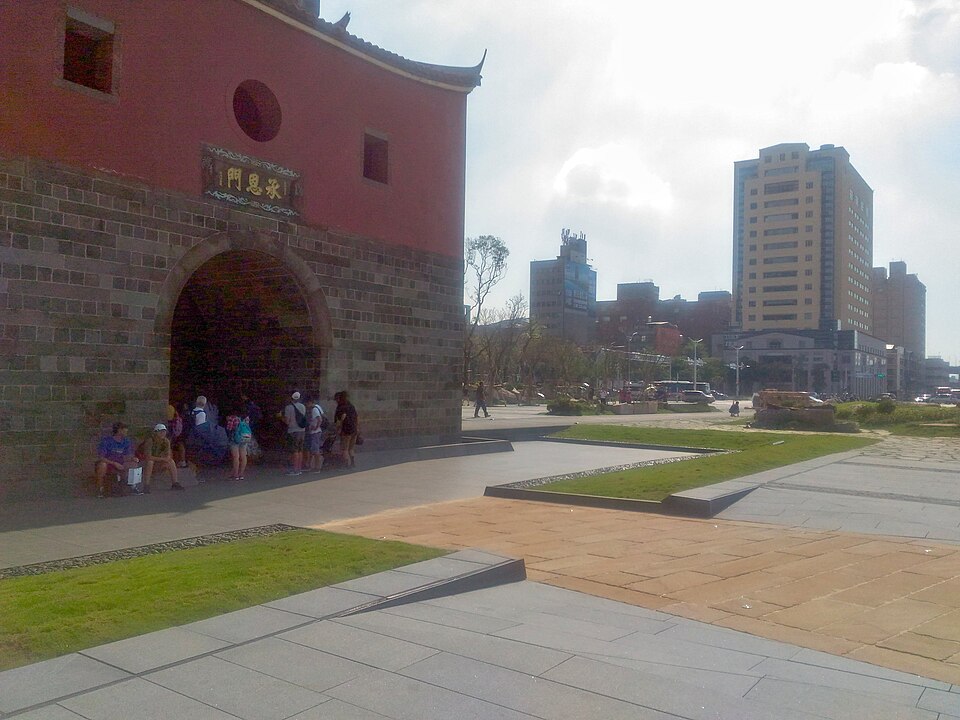
Chengen Gate, also known as North Gate, marks an older boundary of Taipei. The nearby MRT entrance connects it with today’s transport network. From public space, look at the gate’s brickwork, arch and surrounding roads, then towards Railway Department Park. The different periods of the city become visible in the landscape. The gate marked entry and exit; railways moved people and goods farther away according to timetables. Both changed how people arrived, left and organised daily life. Look beyond the gate’s front and notice pedestrians heading towards the station: the historic building remains part of a working city. Continue on public pavements towards Railway Department Park, obey crossing signals, and stay out of the road when photographing the gate. Remember the Beimen MRT entrance for your return.
Locate the old gate and MRT entrance while keeping pedestrian routes clear.
Travel reminder: this is the start; Railway Department Park is next. Follow signs and public walking routes. Allow additional time for travel and waiting.
Railway Department Park
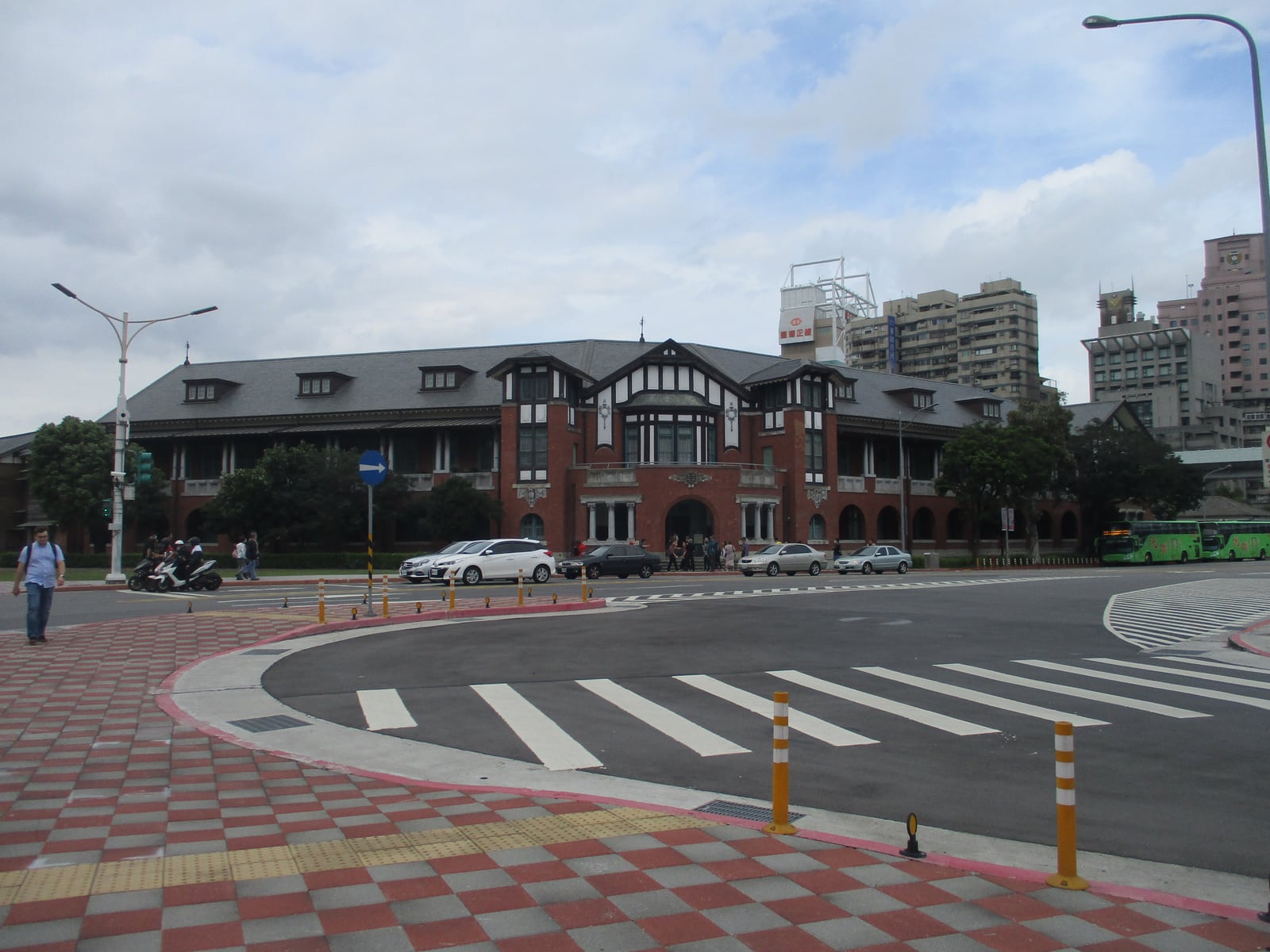
At Railway Department Park, the story turns from stations and trains to offices, planning and management. The former headquarters became a museum in 2020. Its displays make transport arrangements and technical work from different periods visible. Look at the entrances and room layout, then spend time with a display about vehicles, routes or railway work. Railways connected freight, working hours and urban development as well as travel. Taipei Workshop made freight wagons and also placed orders with manufacturers in Osaka and Nagoya, bringing overseas technology into local transport. Allow most of your visit here for the exhibitions and check which rooms are open. The next stop views Taipei Workshop from outside. Confirm the public route and direction; working areas without visitor access are outside this visit.
Choose an exhibit about operations and connect it with a journey you have taken.
Travel reminder: you have come from North Gate; Taipei Workshop’s exterior is next. Check the map and signs, and watch your footing.
Taipei Workshop · exterior
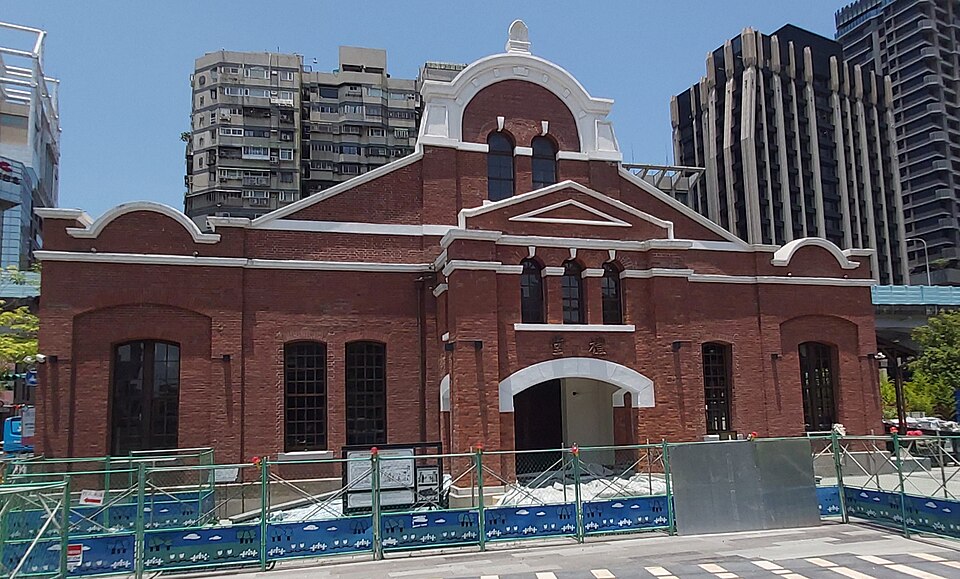
This stop concerns Taipei Workshop beside Beimen. From public space, compare its walls and windows with the railway offices at the previous stop. The workshop served vehicle repair, then became a railway assembly hall after the war: one building held different kinds of work and gathering. During MRT construction, the brick monument was moved 30 metres southeast and returned in 2012. Preservation required a way for new transport construction and an existing building to coexist. From an authorised public position, compare the building with roads and MRT entrances and consider how moving a structure differs from demolishing and rebuilding it. This history does not establish present indoor access, and an old planned completion date is not an opening notice. Follow current barriers and signs rather than entering work areas to inspect details. The three-stop cultural walk ends around Beimen, with a return along public roads to Beimen MRT. Allow time for the museum, crossings and the walk back.
From public space, compare the workshop, roads and MRT entrances. Distinguish a restored building from the areas currently open, without crossing barriers.
Travel reminder: this is the last stop. Use this page’s start and return information to head towards Beimen MRT; allow additional time for transfers and waiting.
Getting there and back
Take the Songshan–Xindian MRT line to Beimen. Visit the North Gate and Railway Department Park, then view Taipei Workshop from public space. Walk back to Beimen. MRT travel is extra.
Reserve 20–30 minutes of local walking and 90–120 minutes for the museum and pauses. Confirm the museum’s current opening and ticket arrangements through its official site. On closure days, this is an exterior walk only. Do not enter railway operating areas. Xiangshan is a separate journey.
A railway building’s second working life
Near Taipei’s North Gate, the Railway Department complex once helped run the railway. Its octagonal building, engineering room and wartime command centre give different forms to administrative, technical and wartime uses. It passed from the Japanese colonial department to the postwar railway authority and eventually became a museum.
At Kyoto’s Shichijō Bridge, the present railings have changed, while the official history still names its earlier designers. Shibata (柴田畦作) designed the bridge structure; Moriyama Matsunosuke and others worked on its architectural appearance. Moriyama’s name also leads to a railway office near Taipei’s North Gate: the main Railway Department building completed in 1920, and the compound’s octagonal building.
The Taipei office administered railways, and its fabric also used material from Taiwan: brick below, timber above, with substantial use of Alishan cypress. Moving from the Kyoto bridge to this building opens a question beyond appearance. A colonial administrative centre also prompts us to ask how timber, transport and work were drawn into the same system.
Making the building usable again involved another body of work. Restoration from 2014 to 2016 was designed and supervised by architect 張義震’s practice and carried out by contractor 慶洋營造, with technical exchanges involving Japanese specialists and craftspeople. Displays about repair keep methods and site evidence visible, making room for work beyond the original designer.
Taiwanese architects and craftspeople participated in restoration; the opening record includes craftspeople Dong Tianyi and Su Qingliang. Turning workplaces into museum spaces preserved buildings and the skills used to recognise and repair their fabric. A room becomes a way to read the work that supported the railway.
A later connection links Osaka and Taipei. In 2025, Kintetsu announced plans for a Taipei-themed train and a Taiwan market marking a friendship agreement’s anniversary. The designs were intended to introduce Taipei’s food and city imagery to passengers. These contemporary plans belong to a different period from colonial railway administration; current services and events require current operating information.
At North Gate, follow the spaces of railway work and their restoration. Osaka’s train campaign belongs to a later story about how cities present themselves. Keeping their dates separate lets both connections remain clear. Use the existing field guide for building functions and the full story for the wider relationship.