Current visiting notice: The Dadaocheng Visitor Center at 44 Section 1, Dihua Street announces closure for maintenance from October 28 to November 15, 2026, with bookings suspended during that period. Do not schedule its indoor displays or costume experience then.
Follow the river into the streets that connected Taipei to overseas markets. Four stops turn a trade story into places you can explore on foot.
Plan the tea-house visit
Sin Hong Choon Tea Museum (新芳春茶行), the final stop, is at 309 Minsheng West Road. Taipei Travel lists Wednesday–Sunday, 10:00–18:00, closed Monday and Tuesday. Confirm any guided visit or tea activity separately; English guiding and walk-in activity places are not confirmed. If the interior is closed, keep the outdoor walk and finish at Shuanglian MRT.
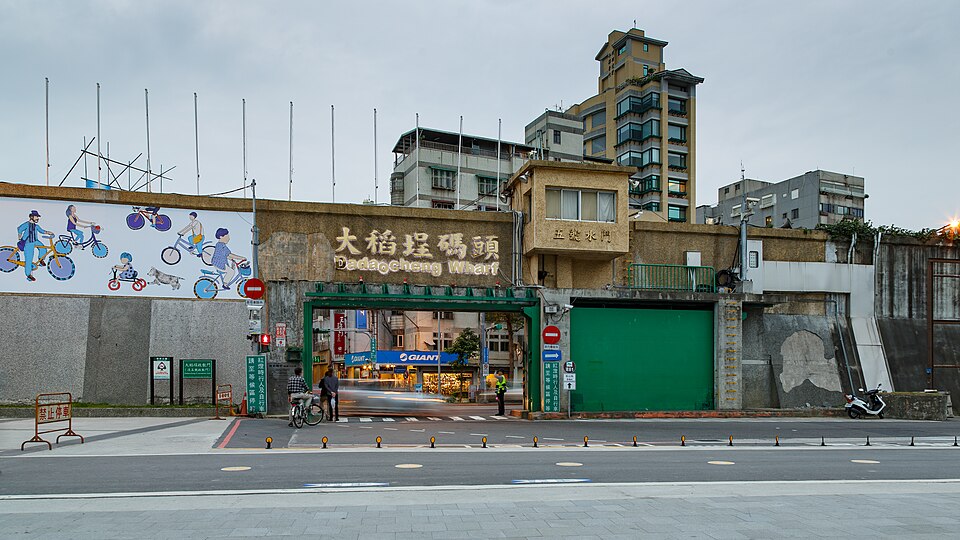
At Dadaocheng Wharf, the view opens from rows of shophouses onto the Tamsui River. The river once carried goods, people and news into and out of the city. Stand where you can see the riverside access gate and compare the two sides of the embankment: streets, shops and everyday life inside; open water and riverside paths outside. One entrance connects these different faces of Taipei. Pause here and locate the opposite bank, bridges and water in relation to one another. The river on your map becomes a place whose width you can see. Back in the streets, the long shophouses, merchandise and people help connect the waterfront with business. Today’s recreational riverfront offers a starting point for exploring that working history.
Find the riverside access gate, then notice how the waterfront connects to the streets.
Travel reminder: this is the start of the walk; allow separate time to get here. Next is Xia-Hai City God Temple. Check the map and signs before leaving to confirm your walking direction.
Taipei Xia-Hai City God Temple
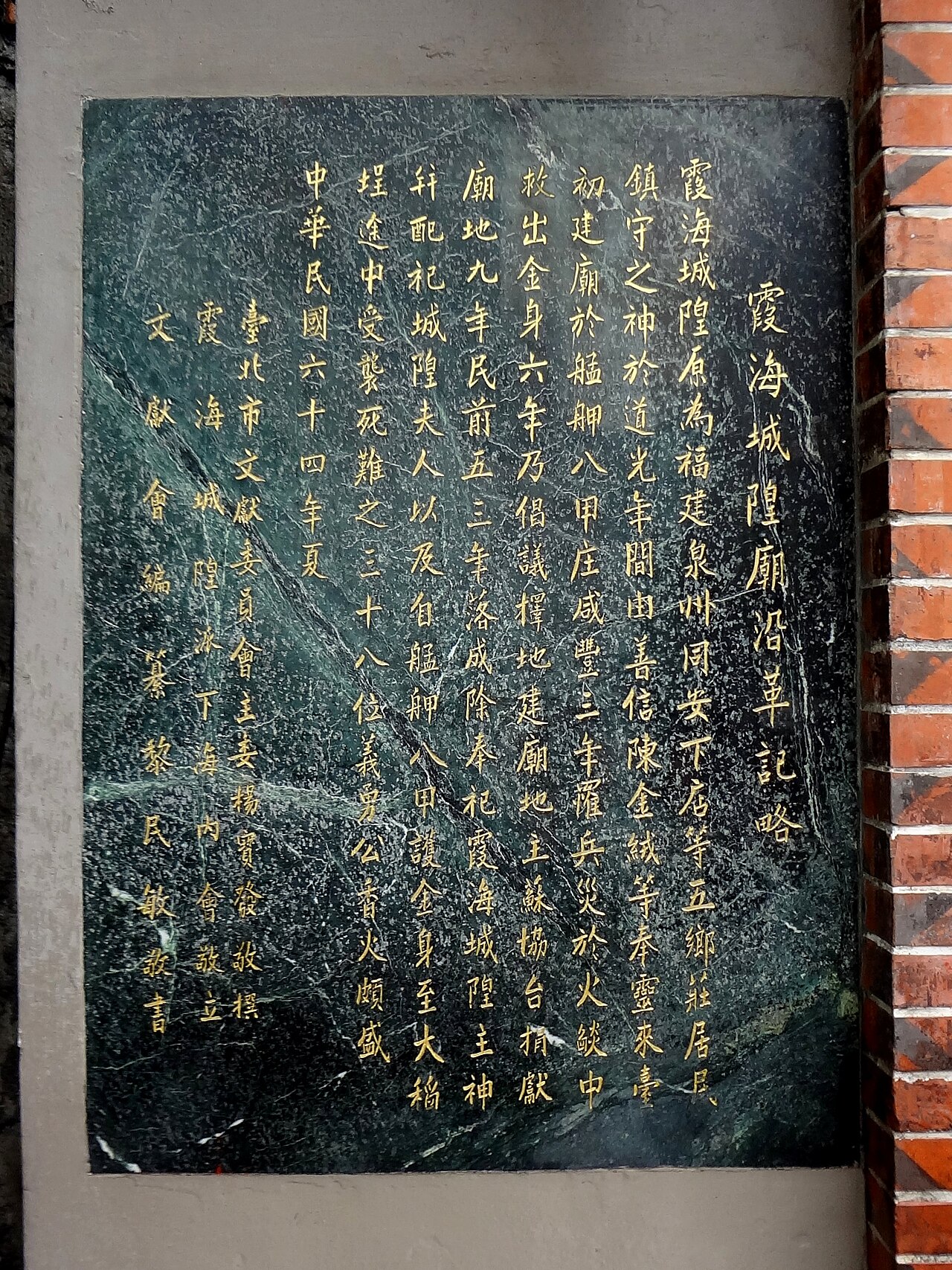
At the temple entrance on Dihua Street, watch how worshippers pass the shops and enter the space of incense and offerings. Dadaocheng grew through migration and shared belief as well as shipping and tea trading. Xia-Hai City God Temple is connected with settlers from Tong’an; it offered a place to pray, gather and meet beyond the business of buying and selling. Its small forecourt sits close to markets, shops and the street. Everyday life continues across the threshold. As you look at the roof and entrance decorations, also notice the openings of neighbouring shopfronts: worship and commerce share this stretch of street. The temple remains in use. Observe from public areas, keep worship and entrance routes clear, and choose a place to pause without blocking anyone.
Watch how worship and everyday street life meet at the temple entrance.
Travel reminder: you have come from Dadaocheng Wharf; Yongle Market is next. Follow signs and public walking routes.
Dihua Street: storefronts, work and open doors
Street and premises
Dihua Street Section 1 is a district of shops, homes and heritage premises, rather than one enclosed attraction. Choose the business or building you want to enter and use its own address.
A street listing is not shop hours
Taipei Travel lists the street area as open 24 hours. That does not establish opening times for shops, markets, temples or exhibitions; an evening exterior walk and an indoor visit are different plans.
Visitor-centre closure
The Dadaocheng Visitor Center at 44 Section 1, Dihua Street announces closure for maintenance from October 28 to November 15, 2026, with bookings suspended during that period. Do not schedule its indoor displays or costume experience then.
Read a shophouse from outside
Compare the covered arcade and decorated street-facing facade. The official account describes long, narrow shophouses with sales at the front and former production or storage behind; a facade does not mean the rear rooms are open to visitors.
Keep the existing four-stop walk
The Dadaocheng guide starts at the wharf, visits Xia-Hai City God Temple and Yongle Market, and ends at Xinfangchun Tea House. Its 3–4-hour allowance includes visits; arrival and return travel are additional.
A bookshop is a separate stop
The existing story about a publisher returning to Dihua Street leads to the bookshop at No. 129. Use that story for a single-shop visit; its reading time and event arrangements do not describe every shop on Dihua Street.
Visiting information checked: 2026-10-28; not a live status report.
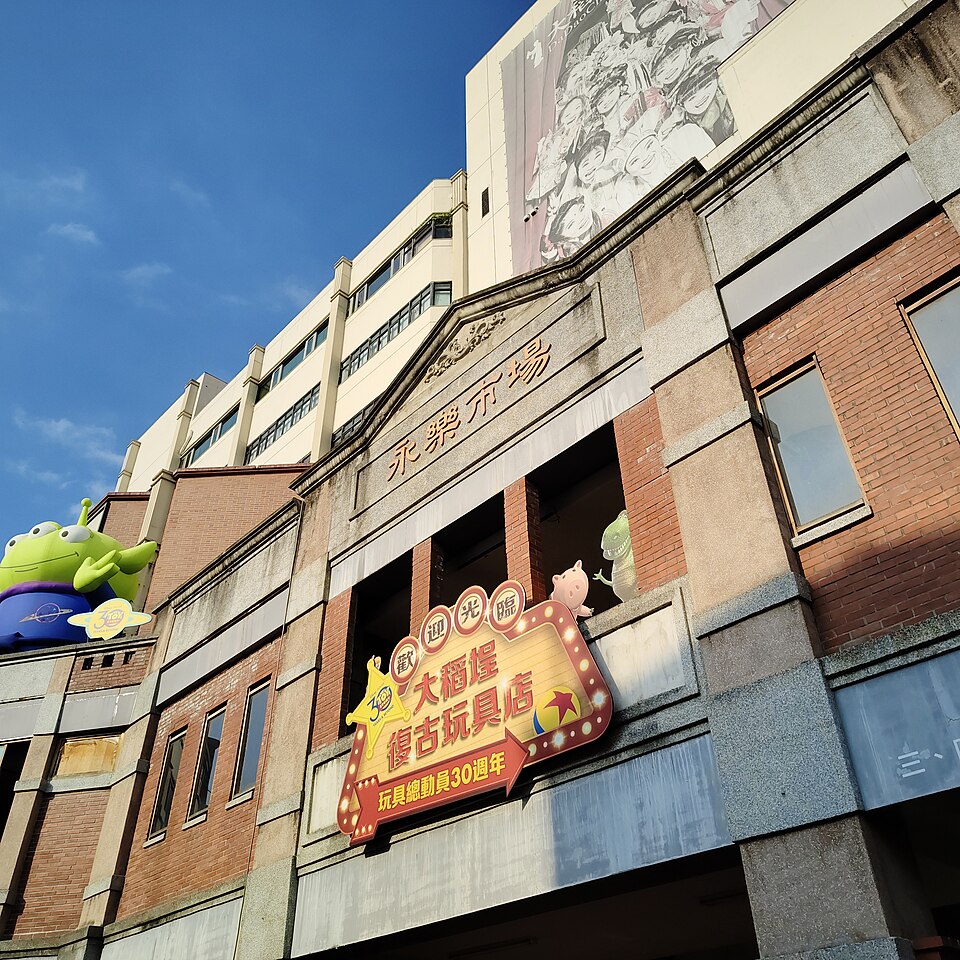
Yongle Market takes Dadaocheng’s story from tea to textiles. At the stalls, rolls of colour reveal a division of work that turns materials into clothes, curtains and household goods. Fabric selection, cutting, sewing and accessories each require specialist skills. Sellers and customers discuss size, texture and intended use. Stacked fabrics, samples and worktables give those skills a visible form. The district’s prosperity also depended on supplying residents and other businesses, alongside overseas exports. Look at how fabric is displayed and how shop space accommodates conversation and work. The market’s layout serves both trading and making.
Compare a fabric seller with a tailoring service. What work happens before a garment is finished?
Travel reminder: you have come from Xia-Hai City God Temple; Xinfangchun Tea House is next. Check signs and open public passages before continuing, and follow the walking routes available on site.
Xinfangchun Tea House
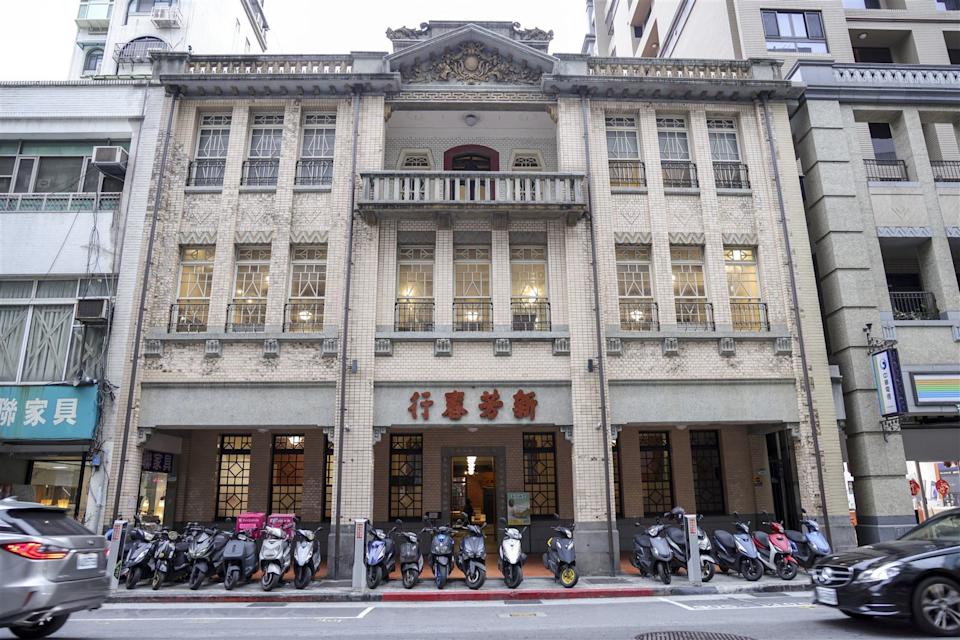
Inside Xinfangchun Tea House, distinguish processing, storage and domestic rooms. Tea trading required stock, but also people sorting leaves by hand. In a 2019 interview, reporter Chang Szu-hu recorded collector Yang Lung-ho’s metal and paper tokens associated with Xinfangchun, alongside wooden ones from Wenyu Tea House. The account describes tokens accumulating a tea sorter’s work and serving as evidence when wages were settled. A small object makes labour visible within an overseas trade that did not preserve every worker’s name. The report describes collections and displays at that time; it does not guarantee that the same token is on view today, or establish one universal payment scale for all tea firms. Use the current exhibition to look for tokens or other work tools and relate them to processing, storage and home. Ask which task each supported. The mixed-use building completed in 1934 also retained the Wang family’s domestic life beside its tea business. Reconnect the riverside, market and tea house before arranging the return towards Shuanglian MRT, allowing additional time for indoor viewing and the walk back.
Use that day’s displays to identify a named work object and its purpose, relating it to processing, storage and domestic space. If no token is displayed, do not treat a historical report as the current exhibit list.
Travel reminder: the walk ends here. Check the map before heading towards Shuanglian MRT for your return journey.
Getting there and back
Meet at Dadaocheng Wharf, inside the riverside gate. Use the start-transport link to choose your MRT and walking approach. Walk from the river to Xia-Hai City God Temple, Yongle Market and Xinfangchun Tea House, then head towards Shuanglian MRT. The 3–4 hour visit budget excludes the approach and the final walk to the MRT. If the floodgate is closed, do not cross it: start from the public streets by the temple and omit the wharf.
Allow 3–4 hours for walking, four visits, food and pauses. This is an editorial planning allowance, not a timed walk. Xinfangchun’s published opening is Wednesday–Sunday, 10:00–18:00; confirm current notices before travel. On closed days, the indoor exhibition is unavailable.
A tea business with a home inside
Entering Xinfangchun from Dadaocheng’s streets, consider how a home and a business shared a building. Completed in 1934, the tea firm was also the Wang family’s residence. Here, the tea trade has a domestic scale: a building had to accommodate work and a household.
Wang Lianhe came to Taiwan from Anxi in Fujian with his father. The family established this home and business in Taipei and later donated the historic property to the city. A private place became a public setting for tea culture, retaining traces of the family’s working and domestic life.
On a visit, follow the building’s domestic and working uses and notice what remains after a private property becomes a public place. This chapter belongs to the Wang family’s migration, business and donation. The wider overseas trade of Dadaocheng includes other merchants’ paths.
Kwik Djoen Eng, or Guo Chunyang, linked a Dadaocheng tea business with Java; early Taiwanese tea travelled through Xiamen to Semarang. In a later period, after 1949, Singaporean merchants sought tea from Taiwan and elsewhere for local processing and blending. These separate businesses connected the district with different markets, while Xinfangchun preserves one family’s place within it.