
Annual event
Yimin Festival: a meal that connects communities across fifteen years
Cooking, taking turns with offerings and welcoming ritual flags bring the festival into households long before the main ceremony.
Yimin Festival: Water Lanterns to the River
90 seconds. English captions are part of the film. Optional Traditional Chinese subtitles are available in the player.
Archival festival footage uploaded by the creator in 2025: water-lantern preparation, rite, descent and release. Not live 2026 coverage or a complete rite. Excludes the source’s 9 September lantern-pole and 11 September ceremony sections. A separate instrumental score replaces location sound. No programme title, full-screen card or synthetic scene is added.
Read the complete five-chapter article → · 繁體中文
Complete English captions and Traditional Chinese translation
00:00:00,000 --> 00:00:05,000
Yimin Festival
Water Lanterns to the River
義民祭
跟著水燈走向鳳山溪
00:00:05,000 --> 00:00:10,000
Paper roofs, bamboo rafts,
and careful hands.
紙屋、竹筏,
還有細心整理的雙手。
00:00:10,000 --> 00:00:15,000
From the temple forecourt,
the lanterns begin their journey.
從廟埕啟程,
水燈開始往溪邊移動。
00:00:15,000 --> 00:00:20,000
Under the shelter,
the lanterns wait.
棚下,
水燈暫時等候。
00:00:20,000 --> 00:00:24,000
Before release,
a rite is held beside them.
放流以前,
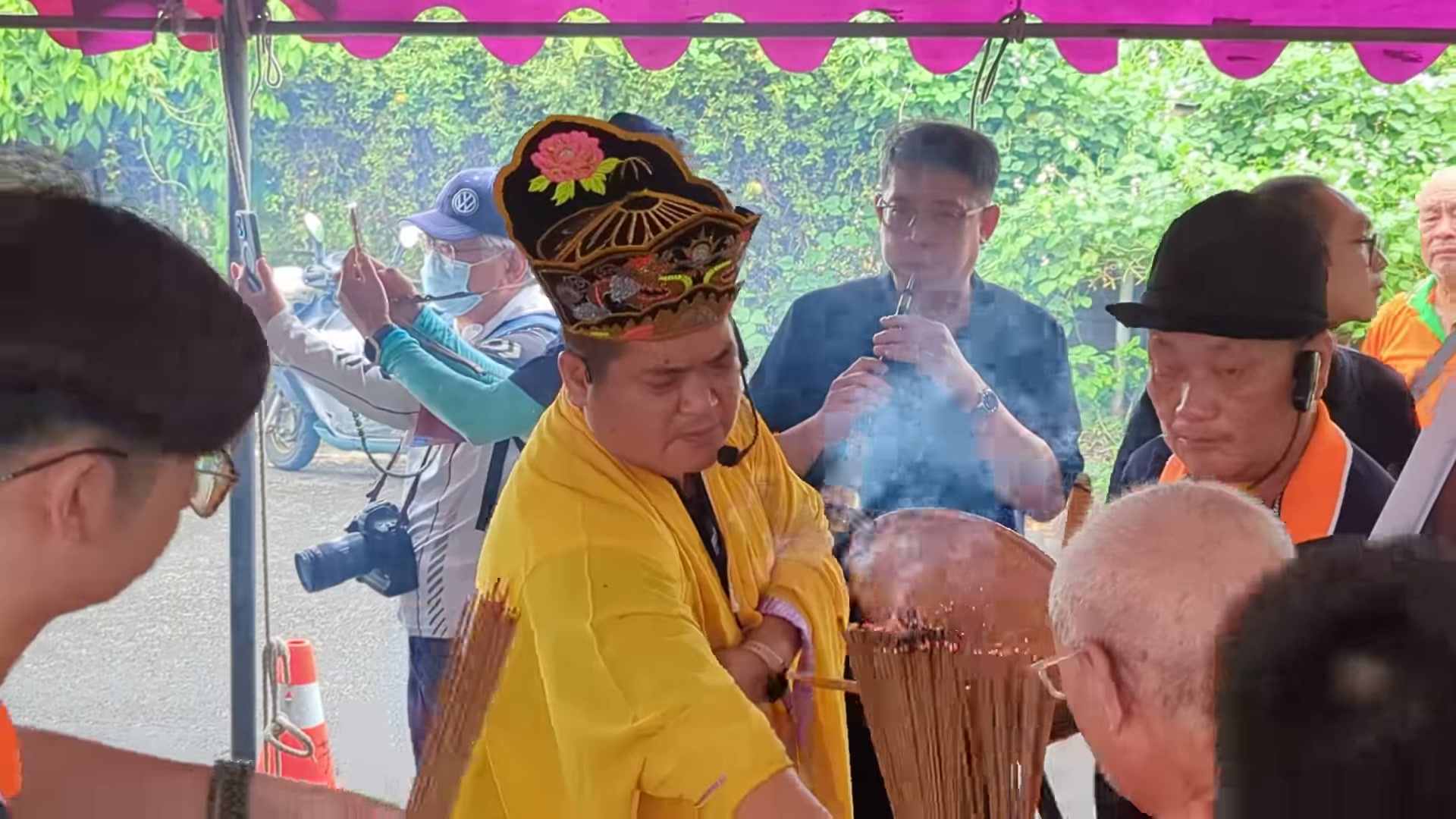
先在水燈旁進行科儀。
00:00:24,000 --> 00:00:29,000
In this rite, lanterns invite
wandering spirits by water.
在這項科儀中,
水燈招引水路孤魂。
00:00:29,000 --> 00:00:34,000
People join their hands
before the journey continues.
眾人合掌,
再接續下一段路。
00:00:34,000 --> 00:00:38,000
The river lies below
the road and embankment.
道路與堤岸下方,
便是流動的溪水。
00:00:38,000 --> 00:00:43,000
Leave these steps clear
for the carrying team.
把階梯留給
正在搬運的隊伍。
00:00:43,000 --> 00:00:48,000
Now the lanterns
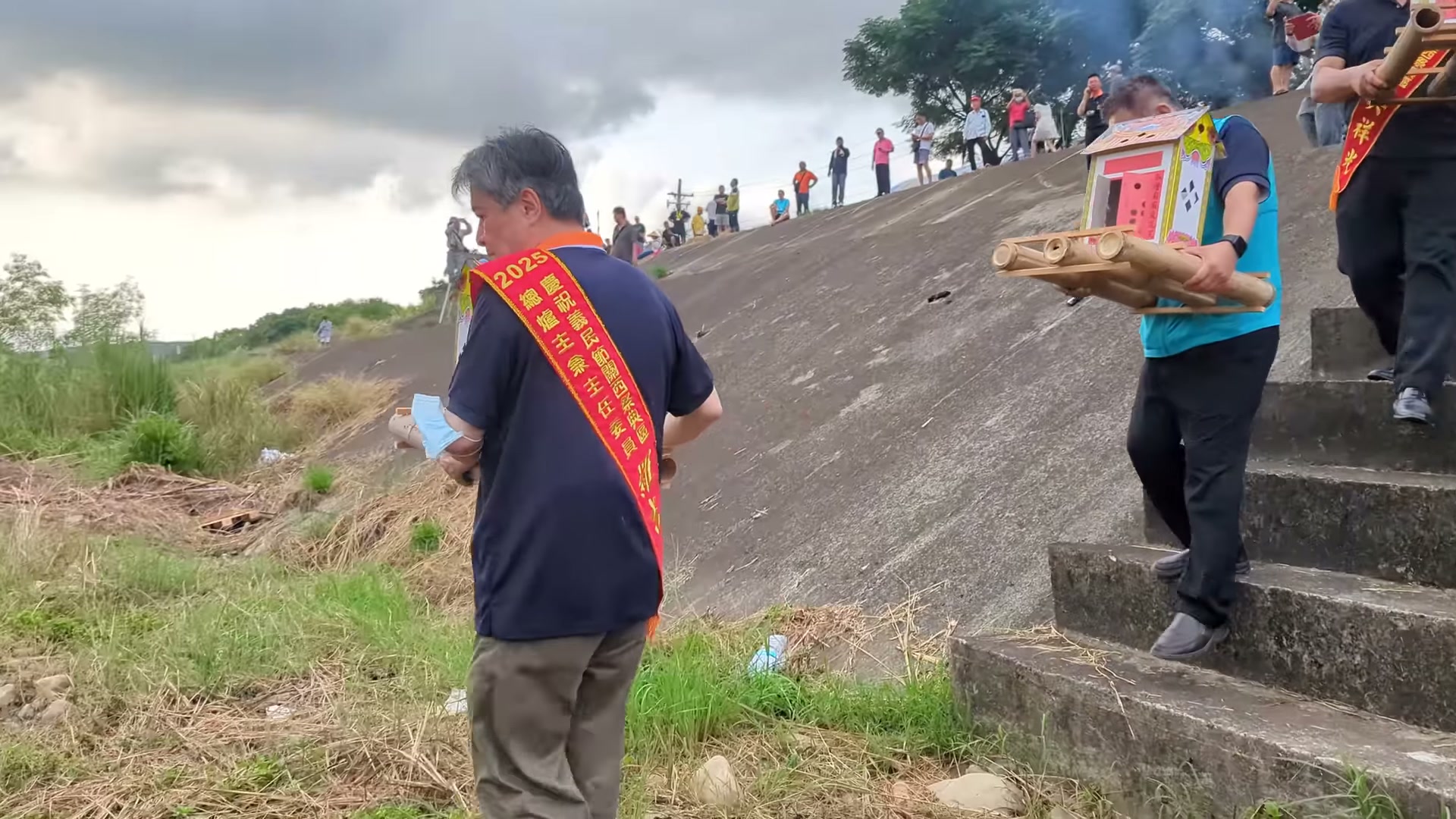
are carried down to the water.
水燈接著
被帶往水邊。
00:00:48,000 --> 00:00:55,500
Step by step,
several hands share the weight.
一步一步,
由幾雙手分擔重量。
00:00:55,500 --> 00:01:00,500
At the river’s edge,
each lantern is carefully lowered.
到了溪邊,
再小心將水燈放低。
00:01:00,500 --> 00:01:05,000
Another raft
passes from hand to hand.
另一座竹筏,
在雙手之間交接。
00:01:05,000 --> 00:01:10,000
Paper and bamboo
meet the flowing water.
紙屋與竹筏,
一起接觸溪流。
00:01:10,000 --> 00:01:15,000
A long pole guides the raft
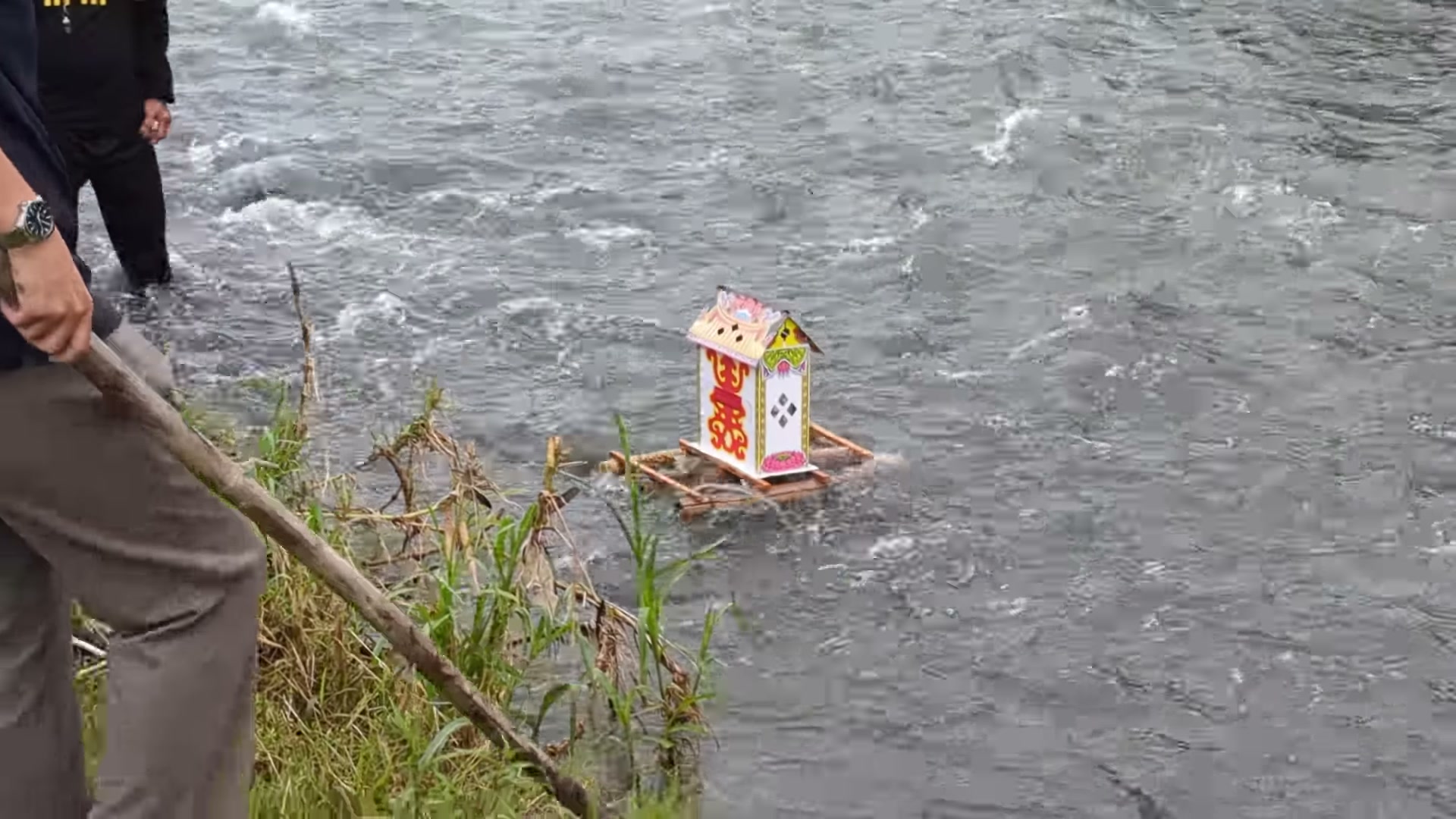
away from the bank.
用長竿引導,
讓竹筏離開岸邊。
00:01:15,000 --> 00:01:22,000
Then the current
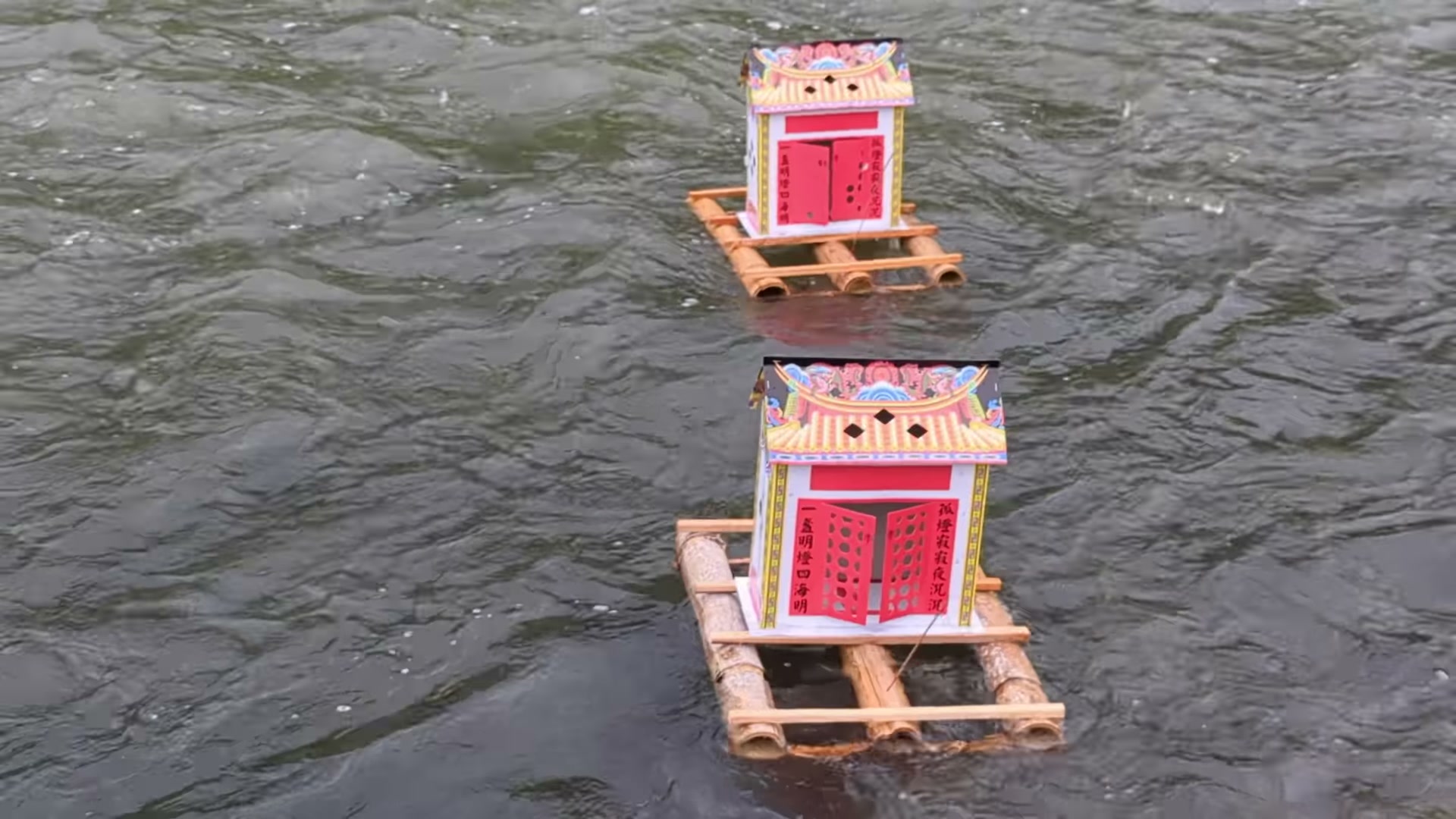
carries the lanterns onward.
接著由水流,
帶著水燈繼續向前。
00:01:22,000 --> 00:01:27,000
Xinpu, Hsinchu
2025 festival record
新竹新埔
2025年祭典紀錄
00:01:27,000 --> 00:01:30,000
Taiwan, Layer by Layer
From story to place
島嶼年輪
從故事認識臺灣,再走進現場
The main rite falls on lunar month seven, day twenty: 1 September in 2026, hosted by the Damaopu alliance. This 2026 main rite has ended.
Xinpu’s Baozhongting Yimin Temple is the ritual centre; meal offerings and welcoming rites also take place in the hosting communities.
A nine o’clock rite begins in the kitchen at seven
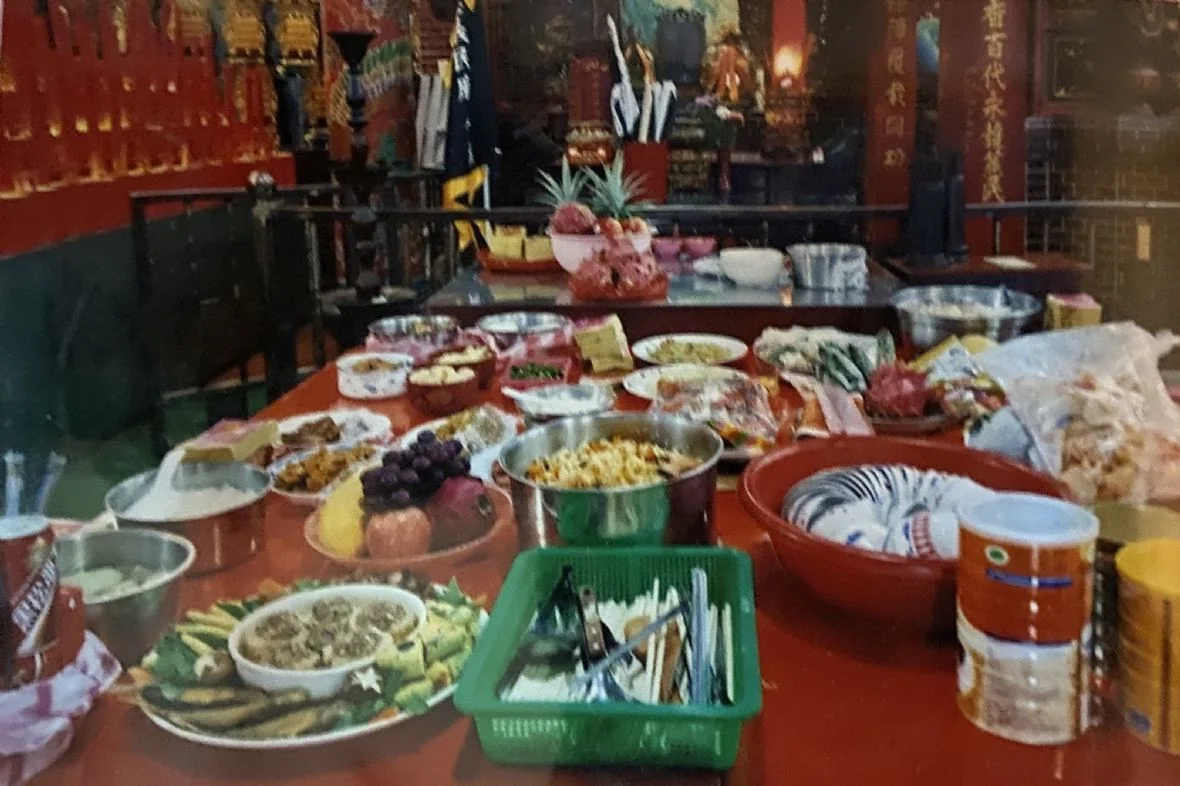
When Xinbei, Luming, Zhaomen and Jupu took their turn in 2011, a Xinpu coffee-growing household began preparing two weeks ahead. The ninety-year-old father-in-law said his son would take charge, yet kept reminding his daughter-in-law about dishes and procedure. Cooking began at seven for a nine o’clock offering. Taking over meant learning more than how to arrange food: the elder’s instructions carried a family’s way of belonging to its community.
Their offering included rice, five dishes and soup, with bowls and chopsticks. Neighbours brought their own cooking and carried it home after worship. Meal offerings connect kitchens with the ritual space through visible contributions of labour, ingredients and time. The grand main ceremony rests on many smaller meals that must still be ready when their turn comes.
Meal offerings care for Yimin; someone also has to care for the people bringing them. The heritage account links sweet rice porridge to the burden once borne by worshippers transporting offerings and waiting at the temple. The organisers cooked rice with brown sugar to feed worshippers and visitors. Its purpose differs from the family meal on the altar: one receives people, while the other is offered to Yimin. Reading them separately reveals another task of the festival—helping participants eat and get through a long day. The porridge records a practical response to their needs, beyond being a seasonal snack.
A carrying pole passes to the next generation
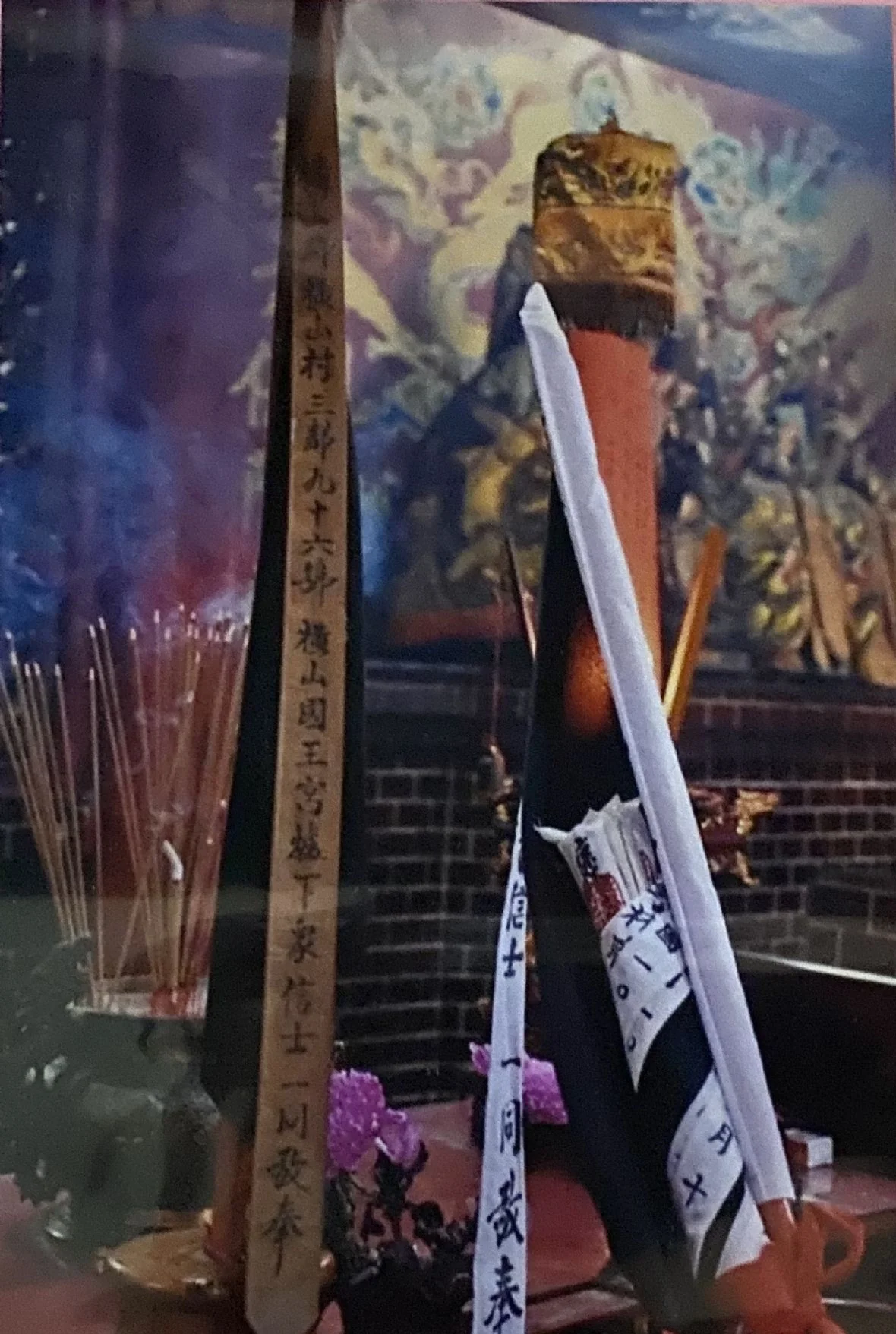
Hengshan resident Hsiao Kuei-lung, born in 1930, still carried a meal pole on his shoulders in 2019. Speaking two years later, he described handing physically demanding work to children and grandchildren. That year’s Jiuxionglin alliance included Qionglin, Zhudong, Hengshan, Jianshi and Wufeng. After ritual flags arrived at local temples, neighbourhoods supplied meals on assigned days. Continuity depended on distributing responsibility across a month, rather than asking everyone to do the same task at once.
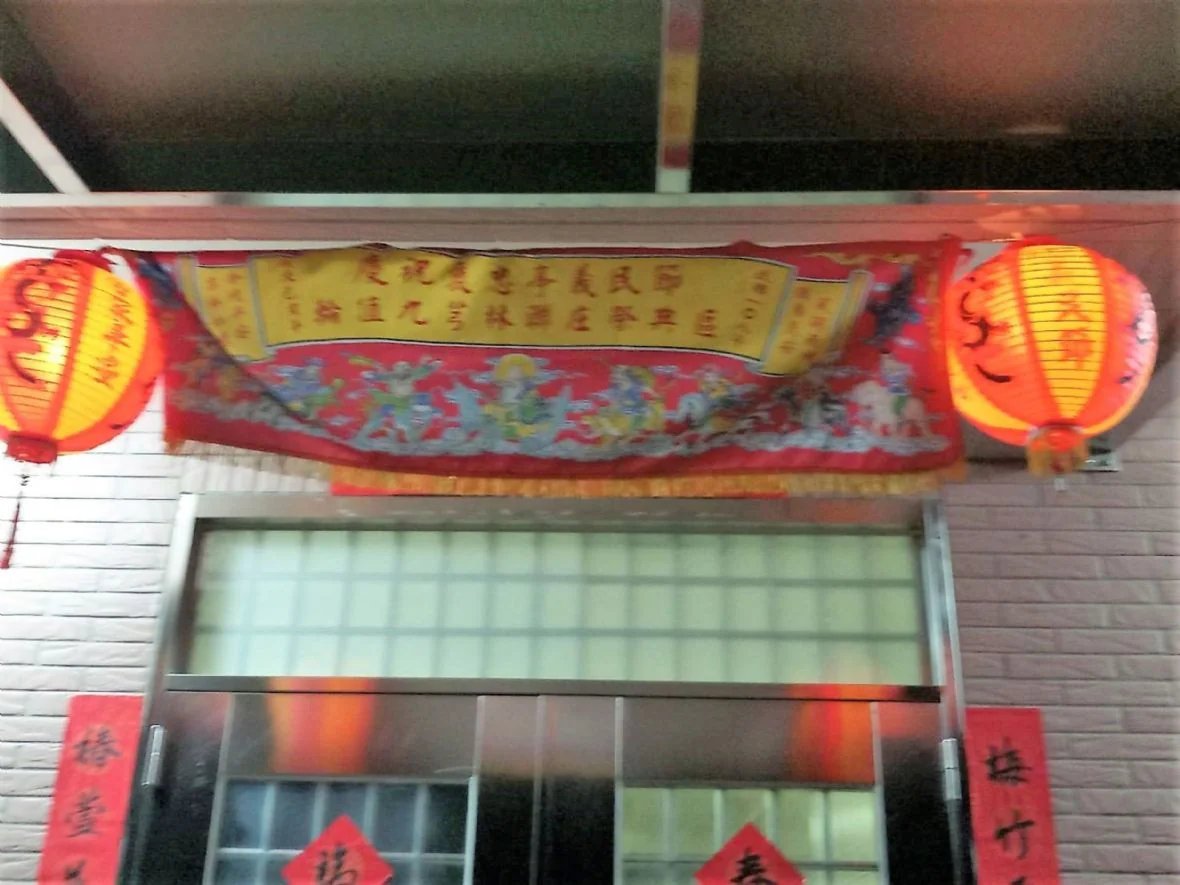
Fifteen alliances take turns, so a community commonly waits fifteen years before hosting again. A child who carried bowls last time may be cooking at the next turn; peace lanterns and decorative banners mark the year on family doors. Tombs behind Yimin Temple sustain remembrance of people who died in Qing-period conflicts, while neighbourhood work gives that remembrance responsibilities that still need successors.
There is also an object that can formally pass between hosts: the seal. The heritage record places the handover of the festival district’s seal after the morning Three Offerings rite. This differs in scale from passing a meal pole to one’s children. A household continues its labour, while another alliance formally receives responsibility for organising the next festival. At a handover, the useful question extends beyond the names of those standing in front: who will convene people, coordinate offerings and prepare the rites next? A fifteen-year rotation works because responsibility is taken up every year, in a different place.
The flag goes out; river water comes back
In the heritage record, welcoming Yimin begins at the main temple with flowers, fruit, wine and a prayer led by the chief and deputy furnace hosts. Local meal-offering temples then carry black command flags home in a sedan or vehicle and install them there. This explains why the meals appear at more than one place: the ritual presence is received in the hosting area before neighbourhoods begin their turns. The kitchen-to-altar journey belongs to a larger movement outward from Xinpu.
A later rite brings another material back. The recorded water-lantern ceremony includes filling a bottle with Fengshan Stream water, labelling it ‘river water’ and placing it on the offering table before the lantern pole at Yimin Temple. In belief, water lanterns invite unclaimed spirits ashore for offerings. The bottle gives that journey between river and temple a tangible continuation: a viewer can follow the lamp toward the stream, then understand why the altar also receives something from it.
The paper constructions around the temple are not arranged at random for spectacle. The recorded altar preparation installs Dashiye, the Hanlin and Tonggui spirit shelters, with additional pavilions, altars and paper mountains inside. Their names mark different forms of ritual reception. Households offer food to Yimin as to relatives; the universal offering also receives spirits without descendants to care for them. The paper structures give those recipients an assigned place. Identify the objects and their rites before treating the temple interior and forecourt as freely accessible display space. The arrangement may also vary with that year’s ritual practice.
The end of the main ceremony does not mean that all the work is finished. In the recorded departure of Dashiye, the figure and associated structures move to the forecourt before universal offerings, farewells and the closing of the ritual ground. The hosting district has its own ceremonial duties. The 2026 notice likewise lists the main ceremony and handover on 1 September separately from the return of Yimin’s sacred presence on 3 September. After the most prominent moment, the guests received through ritual must still be respectfully sent off. One ceremony or the busiest photograph cannot stand for the whole festival.
A new host brings new ways to take part
Damaopu hosted in 2026. Welcoming rites on 1 August began the meal-offering period, followed by the main ceremony at Yimin Temple at ten in the morning on 1 September. Water lanterns were released by Fengshan Stream beside Baozhong Bridge on 31 August. Flags, meals, paper lanterns and the river distribute the festival’s work across several places and dates.
That year the Da Bang Ni ensemble brought local figures including Wu Zhuoliu and Wu Zaixi into its school production, beginning at Sanhe Elementary School in Longtan in June. A classroom performance and a family’s meal pole offer different entrances to local memory. Both give children a way to connect nearby history with the work their families continue to share.
Look closer
Look at carrying poles, tableware and community names to see how households take turns.
Connect the tombs behind the temple with the contemporary ceremonial space in front.
Visiting information
- Timing
- Main rite on lunar 7/20; 1 September 2026 at 10:00. Welcoming, meal offerings and lantern rites span roughly the surrounding month. The listed 2026 main rite, welcoming and lantern events have ended. For a 2027 visit, check that edition’s dates, locations and participation arrangements separately; the calendar recorded here is for the completed 2026 rites.
- Venue
- Baozhongting Yimin Temple, 360 Yimin Road, Section 3, Xinpu, Hsinchu County. Hosting communities have additional meal-offering sites.
- Stay and participation
- Allow about one to two hours for the temple, or half a day for a main rite or lantern release. Watching a public ceremony differs from joining a community’s meal-offering duties.
- Arrival and return
- Take a TRA train to Zhubei and continue by local transport to the temple. Return via Zhubei Station. Arrange a pickup back to the station before attending an evening lantern release at Fengshan Stream.
Look closer at the places in the film
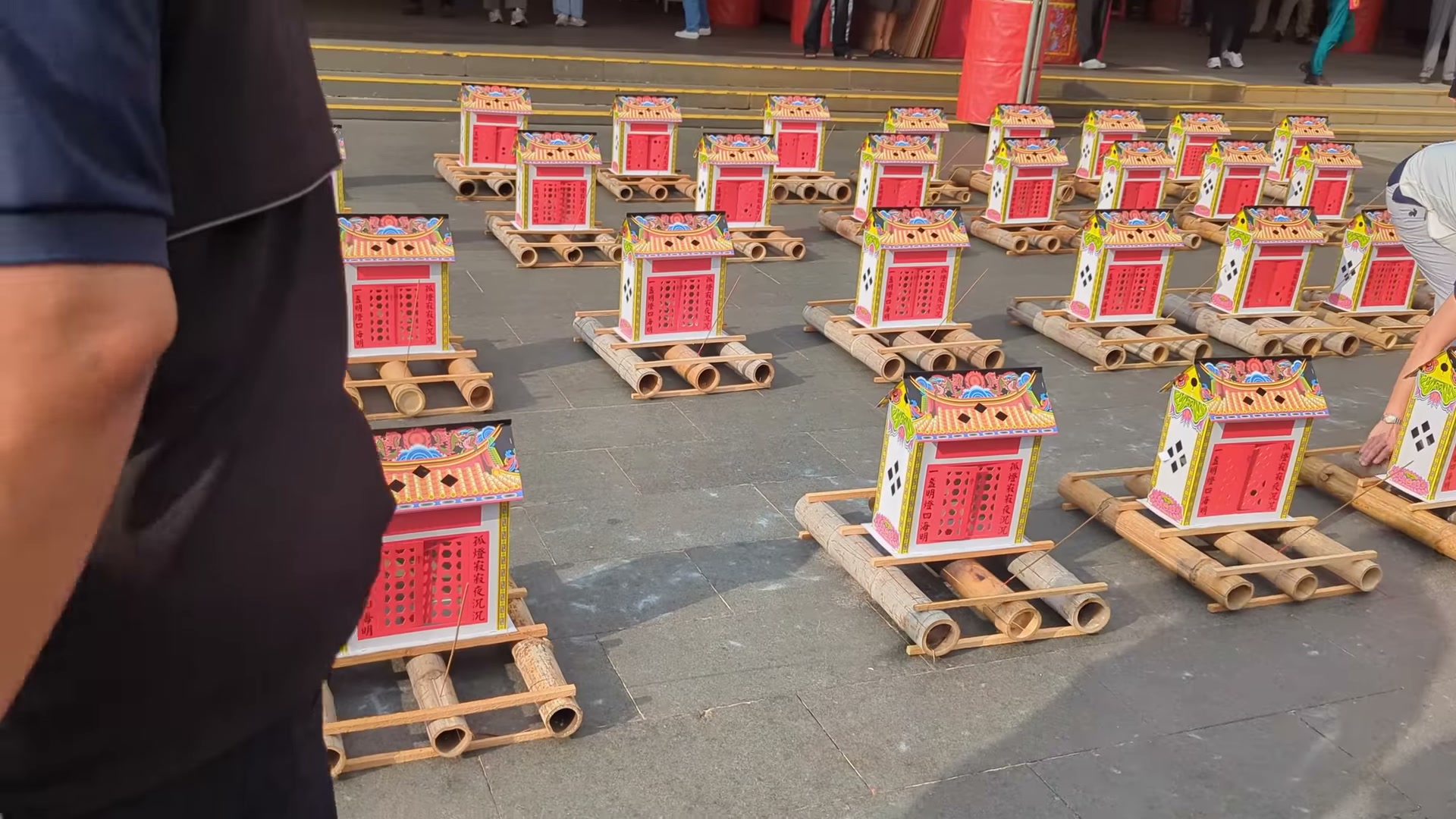
Begin with a row of water lanterns
Colourful paper structures stand on bamboo rafts. The opening lets you see the lanterns as whole objects before looking at the people arranging them. Follow the lanterns through the film: waiting becomes work shared among many hands.
The Yimin Festival at Baozhongting Temple in Xinpu is organised by rotating community groups. The fifteen-year cycle refers to each group’s turn, not to a festival held only once every fifteen years. This edit focuses on water lanterns in 2025; it does not claim to show every meal offering or rite.
Pause for the rite
At the riverbank, the edit pauses with the officiant, offering table and people joining their hands. The paper structures remain visible. They connect the rite to the carrying that follows. A separate instrumental score replaces the original location sound.
Official festival information places water-lantern release alongside meal offerings and other Ghost Month rites. The 2026 notice locates the release by Baozhong Bridge on the Fengshan River and describes inviting wandering spirits by water. These are ritual water lanterns, rather than wish lanterns or lanterns released into the sky.
The steps to the river
The embankment steps link the road above with the water below. Watch the carriers descend: the size of the lantern, the position of their hands and their footing enter the same frame. This is a working passage, not an open stage for visitors.
The film omits waiting and longer stretches of travel. It is not a complete route to follow. At an event, stay in the designated viewing area and leave the steps clear. Do not enter the river work area for a photograph or treat archival footage as current access guidance.
From hands to the water
At the water, carrying becomes a coordinated handover. People steady the paper structure, receive the raft and guide it with a long pole. Bamboo that first looked like a base now carries the lantern. The action explains the object more clearly than decoration alone.
The footage shows lowering and guiding, rather than every lantern or the complete rite. This film is not an instruction to make or release your own lantern. Watch how the participants work together while leaving their working space clear.
Let the river close this passage
A lantern leaves the bank. Paper structure and bamboo raft drift together, while the work continues beside the river. The film ends with that completed action, without adding the next day’s temple ceremony as though ninety seconds covered the whole festival. The opening row now has a journey you can recognise.
The creator uploaded the source on 11 September 2025 and labels the water-lantern section 10 September; the official 2025 schedule lists the same release date. The 2026 edition had different dates and its August–September events are already past. Check the temple and culture bureau for a future edition; no 2027 date is confirmed here.
Film, article and image sources
Archival festival footage uploaded by the creator in 2025: water-lantern preparation, rite, descent and release. Not live 2026 coverage or a complete rite. Excludes the source’s 9 September lantern-pole and 11 September ceremony sections. A separate instrumental score replaces location sound. No programme title, full-screen card or synthetic scene is added.
1. 新竹池上-慢活旅遊足跡 · 2025
2. 新竹池上-慢活旅遊足跡 · 2025
3. 新竹池上-慢活旅遊足跡 · 2025
4. 新竹池上-慢活旅遊足跡 · 2025
5. 新竹池上-慢活旅遊足跡 · 2025
Music: 跨海的一段路 (AI-generated instrumental).