
Cultural story · Food and local life
Xinpu Persimmon Festival: what happens between the harvest and the drying rack
Drying, shaping and dyeing connect autumn fruit to family businesses, visitors and the working landscape of Hankeng.
The 10–11 October 2026 festival at 239 Yangxin Road, Section 1 has ended.
The festival venue and Hankeng’s individual persimmon farms are separate stops.
The drying season follows the fruit and weather; the festival weekend is selected each year.
A family business opens its yard
At Jinhan in Hankeng, Liu Hsing-wu brought experience from selling photocopiers back into his family’s persimmon business. The change was not simply a new sign at the gate. Explaining the work, receiving visitors and developing a recognisable name gave the farm ways to meet people beyond the wholesale transaction. The yard became a place where the product could be understood while it was still being made.
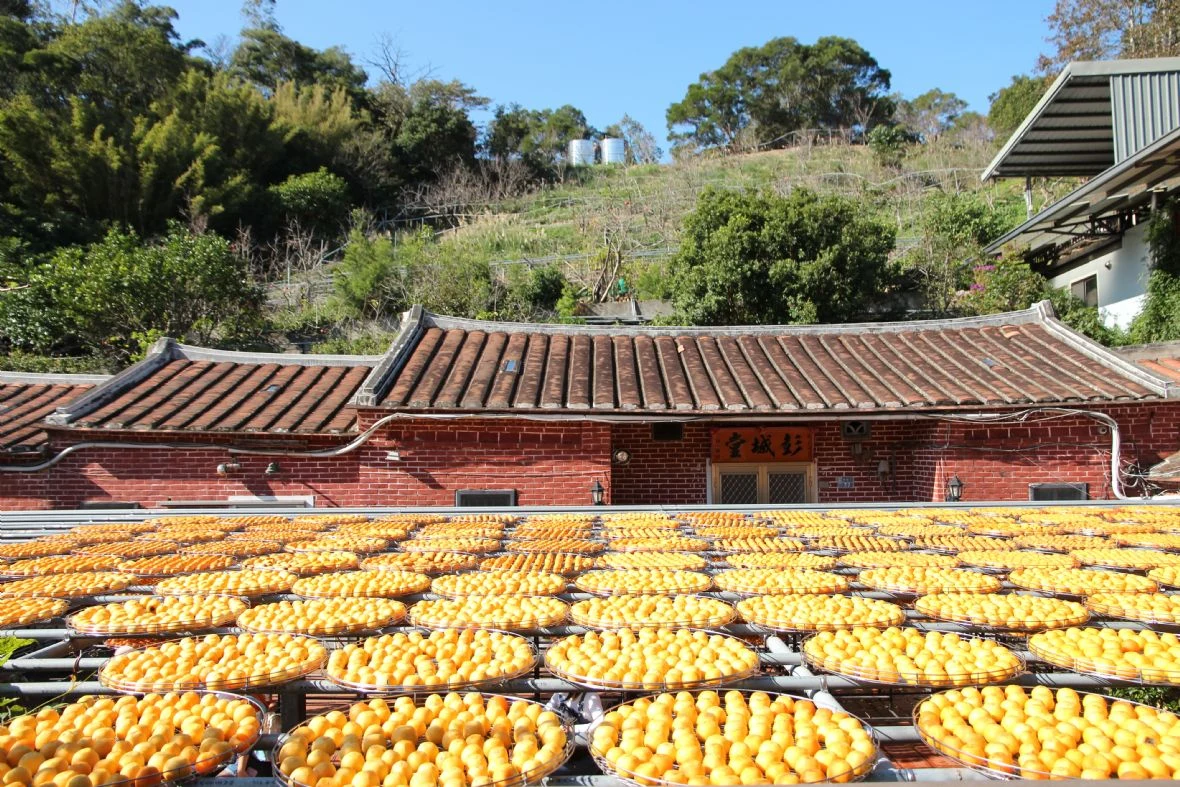
A visit to Xinpu can begin with that relationship. Trays of peeled fruit are visually striking, but their changing colour and texture also mark decisions about drying and shaping. Liu explained his preference for a softer finished persimmon and described pressing the fruit after it had dried for several days. Taste is being made through a sequence of judgements; it is not already fixed when the fruit arrives from the orchard.
Photographs show a moment; drying takes a season
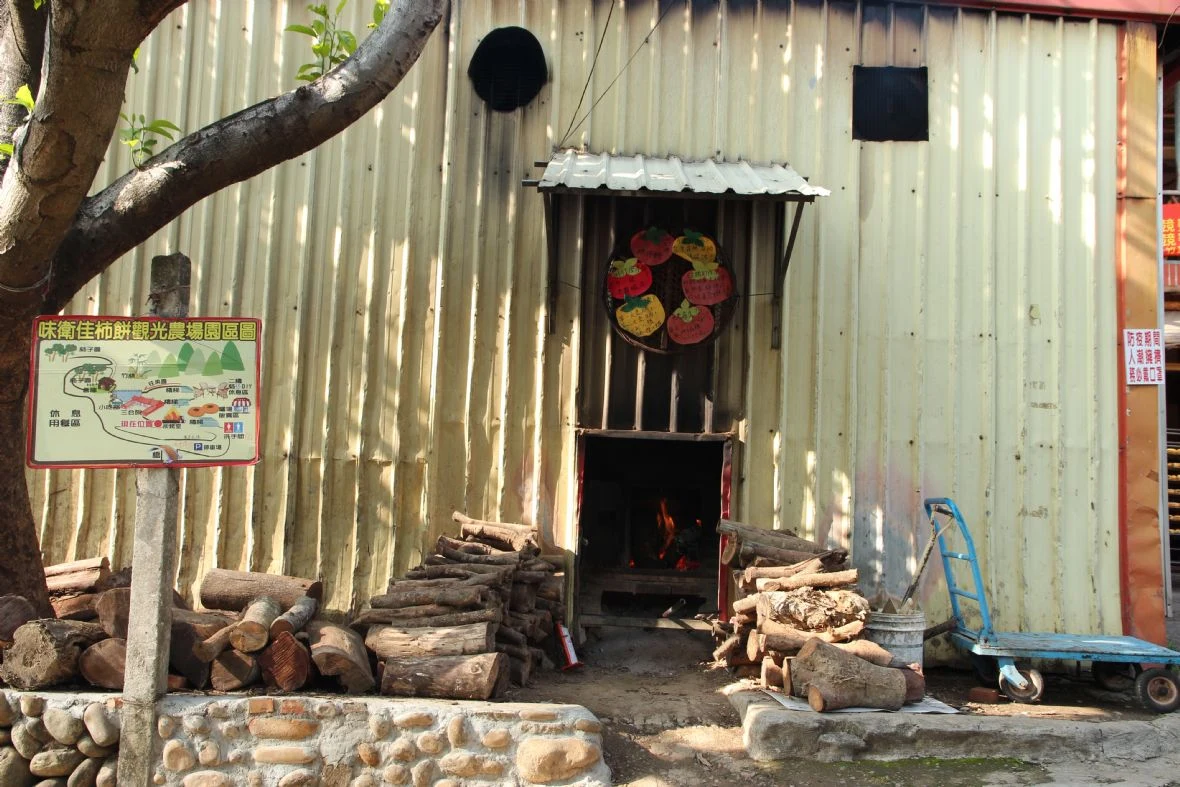
Xinpu’s autumn wind has made its drying yards famous, and Weiweijia’s Lü Yi-cheng helped bring those yards to visitors’ attention through photography. The scene now attracts people who arrive for the golden circles as well as the food. A recent visitor’s account of Weiweijia moves between outdoor trays and the curing area, showing how much of a farm lies outside the familiar postcard view.
The choices become clearer in a study based on interviews conducted in 2021. It records that Jinhan’s Liu Hsing-wu invested in a dehumidifying room, using a longer drying process alongside direct sales. Elsewhere in Hankeng, Ho Sung-yuan of Long Persimmon House described a mechanised process that omitted turning and hand-shaping and extended drying instead. These were different households’ decisions about labour, texture and how to sell their fruit, rather than one standard method used throughout the village.
Those interviews describe work at that time, not an inventory of the machines operating today. At a farm, asking which step the current batch has reached is more useful than assuming that every outdoor tray represents the complete process. A rainy-day absence of fruit on the racks may change what can be photographed; it does not by itself show whether work inside has stopped.
Different producers combine outdoor drying, heat and dehumidification in different ways. The useful question at a farm is how this batch is being handled today. A rack is part of food production: keep access clear, ask before entering work areas and leave the fruit where the maker placed it. The time spent listening to one explanation can make a later purchase more specific—softer or firmer, a different drying stage, a texture the family has chosen to pursue.
The peel finds another life
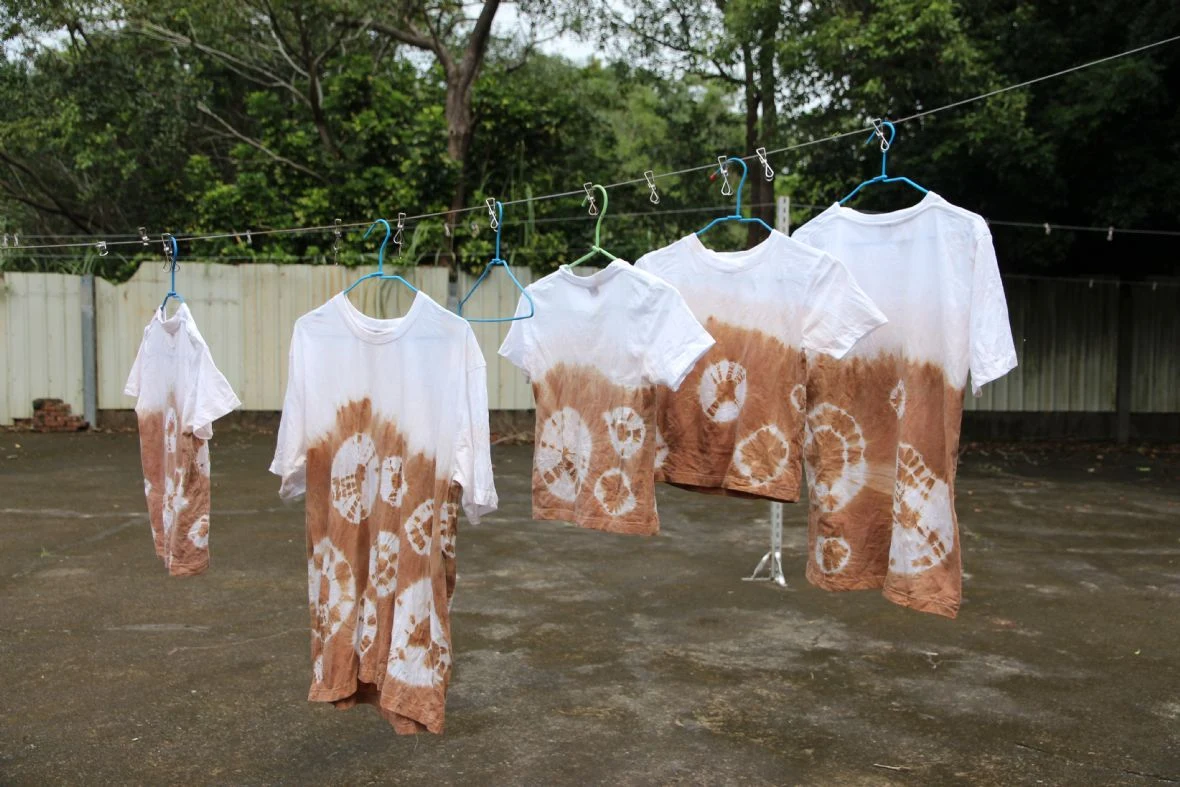
The persimmon’s journey does not end with the edible fruit. Xinpu’s persimmon-dye work uses material from the industry to colour cloth. The working objects are different from those on a drying rack: fabric, binding tools and dyed garments translate an agricultural season into something that can be worn. Placing these practices beside each other reveals how one crop can support more than one form of local knowledge.
The annual festival gathers some of that seasonal attention into a particular weekend. In 2026, Xinpu Farmers’ Association scheduled the festival for 10–11 October at a venue on Yangxin Road. That edition has ended; a visit to a Hankeng producer remains a separate arrangement. Allow time for the transfer rather than treating every photograph labelled Xinpu as a view of one fairground; the connections become clearer when each workplace keeps its own address and rhythm.
Look closer
Compare the fruit’s colour and shape across trays without touching it.
Ask a producer about the texture they aim for and the stage you are seeing.
Visiting information
- 2026 dates and venue
- 10–11 October 2026; this edition has ended. Venue: 239 Yangxin Road, Section 1, Xinpu Township, Hsinchu County.
- Date rule
- An autumn agricultural event with dates announced annually; farm drying schedules also depend on production and weather.
- Farm visits
- The festival venue is separate from the farms. For Jinhan, the Hakka Affairs Council’s visitor listing gives No. 501, Section 1, Hankeng Road and telephone 03-5892680, with regular hours of 09:00–17:00; that listing was updated in June 2025. Confirm the day’s reception and any workshop directly before travelling. Outdoor drying depends on weather, and demonstrations do not grant access to food-production areas.
- Travel and return
- Arrive at Zhubei railway station and arrange a taxi to Yangxin Road Section 1, No. 239. If continuing to the Hankeng drying yards, give the driver the selected farm’s address and arrange the pickup back to the station before leaving.