
Annual ritual
Xingang’s Lantern Festival procession: a town reads the signs
Printed notices, sedan bearers and a theatre ritual turn Mazu’s annual procession into a record of how Xingang works together.
Xingang’s Mazu Procession: Through Town and Village
90 seconds. English captions are part of the film. Optional Traditional Chinese subtitles are available in the player.
Selected from the association’s record of the seven-day 2025 Lantern Festival procession, uploaded on 18 February 2025. This edit spans daylight, night and different days; it is not a continuous single-day route or live 2026 coverage. A separate instrumental score replaces location sound. Small original source marks remain; no programme title, full-screen card or synthetic scene is added.
Read the complete five-chapter article → · 繁體中文
Complete English captions and Traditional Chinese translation
00:00:00,000 --> 00:00:05,000
Xingang’s Mazu Procession
Through Town and Village
新港元宵
跟著媽祖走過街庄
00:00:05,000 --> 00:00:10,000
In this 2025 pilgrimage,
the route reaches the doorstep.
在這趟2025年的遶境裡,
路線走到家門口。
00:00:10,000 --> 00:00:15,000
An offering table
turns a doorway into a welcome.
一張供桌,
讓門口成為迎接的地方。
00:00:15,000 --> 00:00:20,000
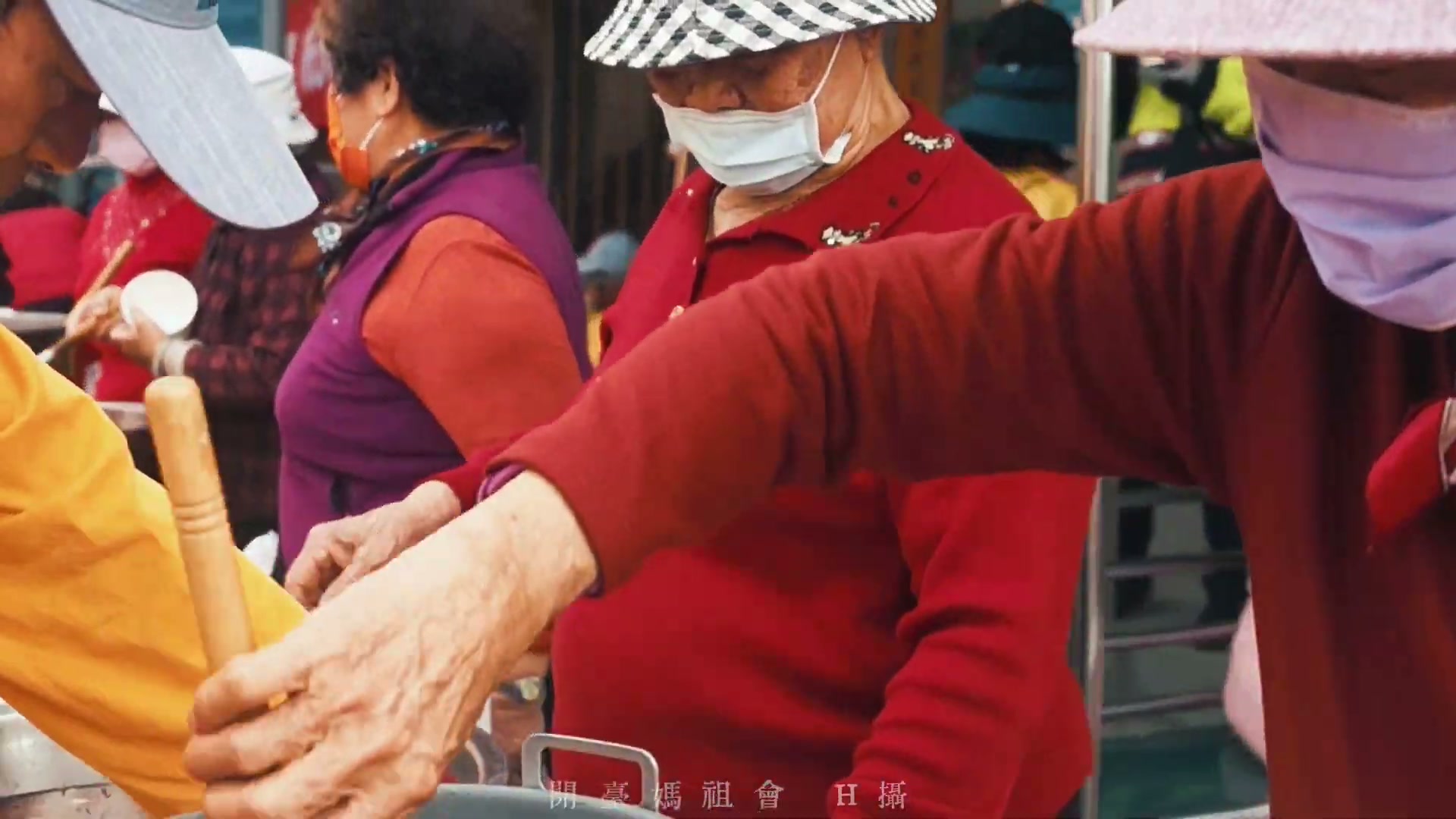
A small serving,
passed from hand to hand.
一份飲食,
在雙手之間傳遞。
00:00:20,000 --> 00:00:25,000
Refreshments, helping hands,
and a moment of prayer.
飲食、相助的雙手,
還有一刻祝禱。
00:00:25,000 --> 00:00:30,000
The palanquin moves
among the carrying team.
神轎在轎班
與同行的人之間移動。
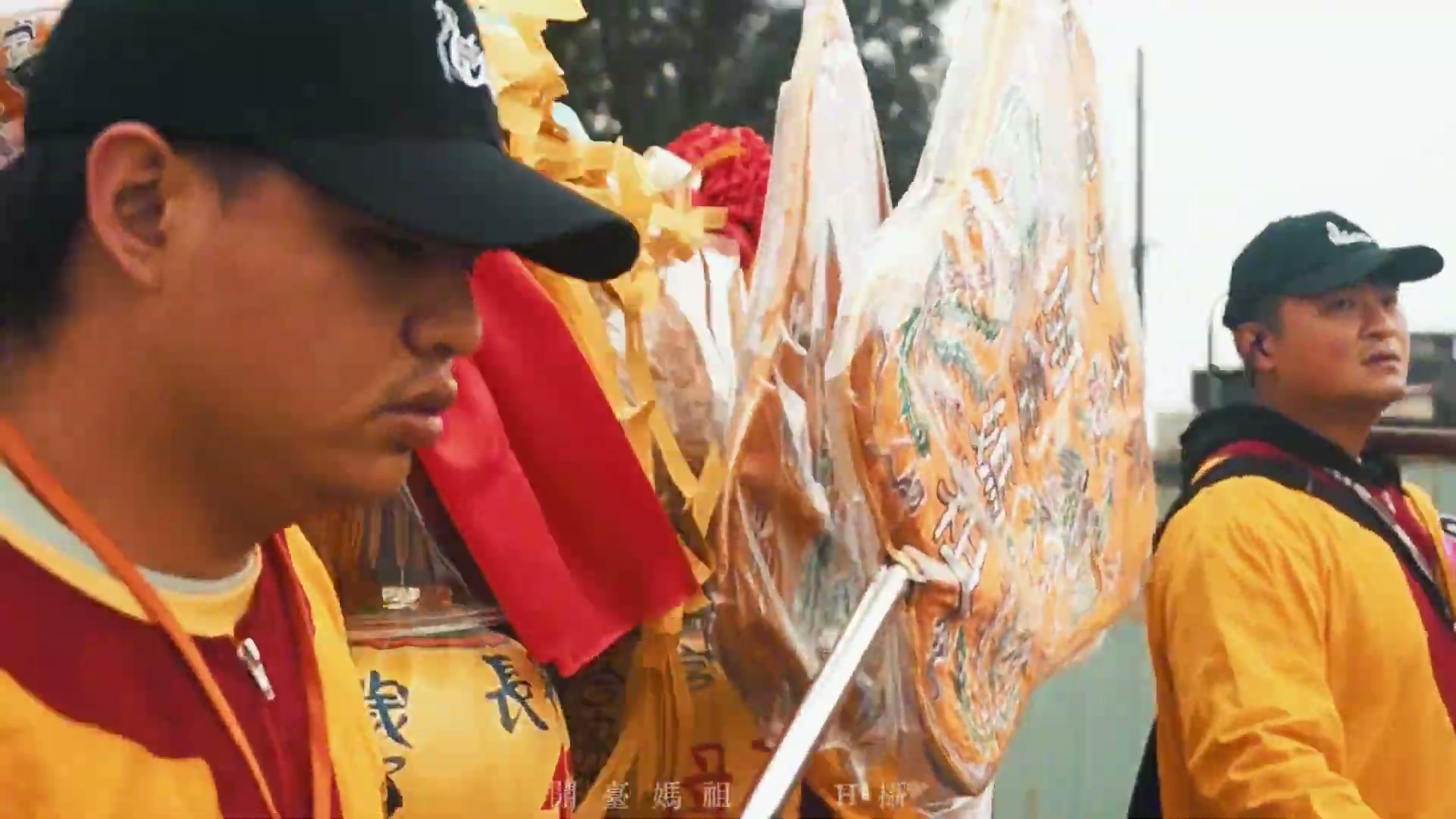
00:00:30,000 --> 00:00:35,000
Long poles and steady shoulders
keep the journey moving.
長轎桿與穩定的肩膀,
一起承接這段路。
00:00:35,000 --> 00:00:40,000
Beyond the main street,
the route crosses village roads.
離開大街,
隊伍也走過庄頭小路。
00:00:40,000 --> 00:00:45,000
Fields and houses
share the passing route.
田地與住家,
都在這條行經的路上。
00:00:45,000 --> 00:00:50,000
At each temple,
the pace changes again.
到了沿途宮廟,
腳步又有不同的節奏。
00:00:50,000 --> 00:00:55,000
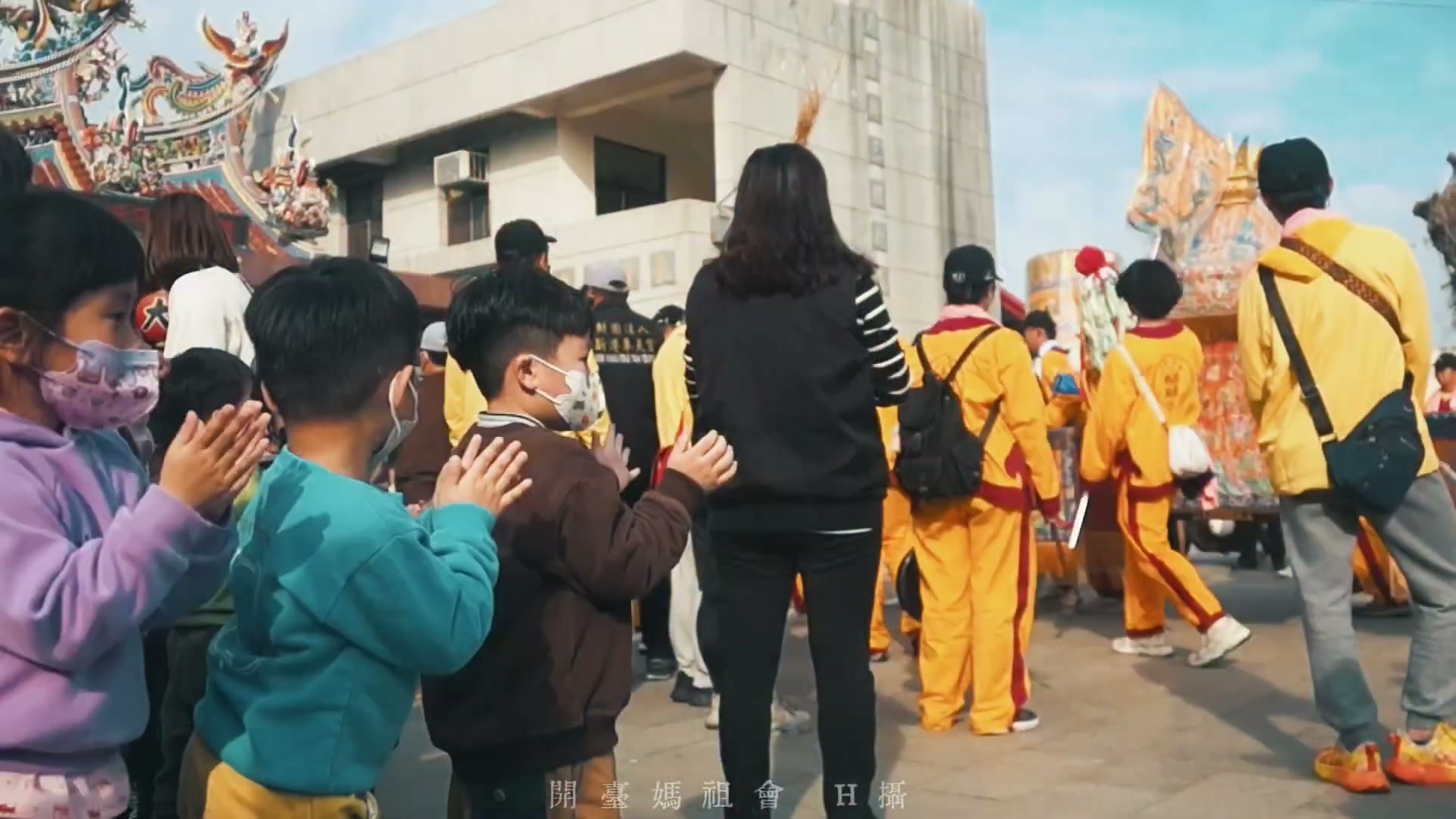
People make room
as the procession comes through.
隊伍通過時,
眾人彼此留出空間。
00:00:55,000 --> 00:01:00,000
Across seven days,
daylight gives way to night.
七天的行程裡,
白晝也接著夜色。
00:01:00,000 --> 00:01:05,000
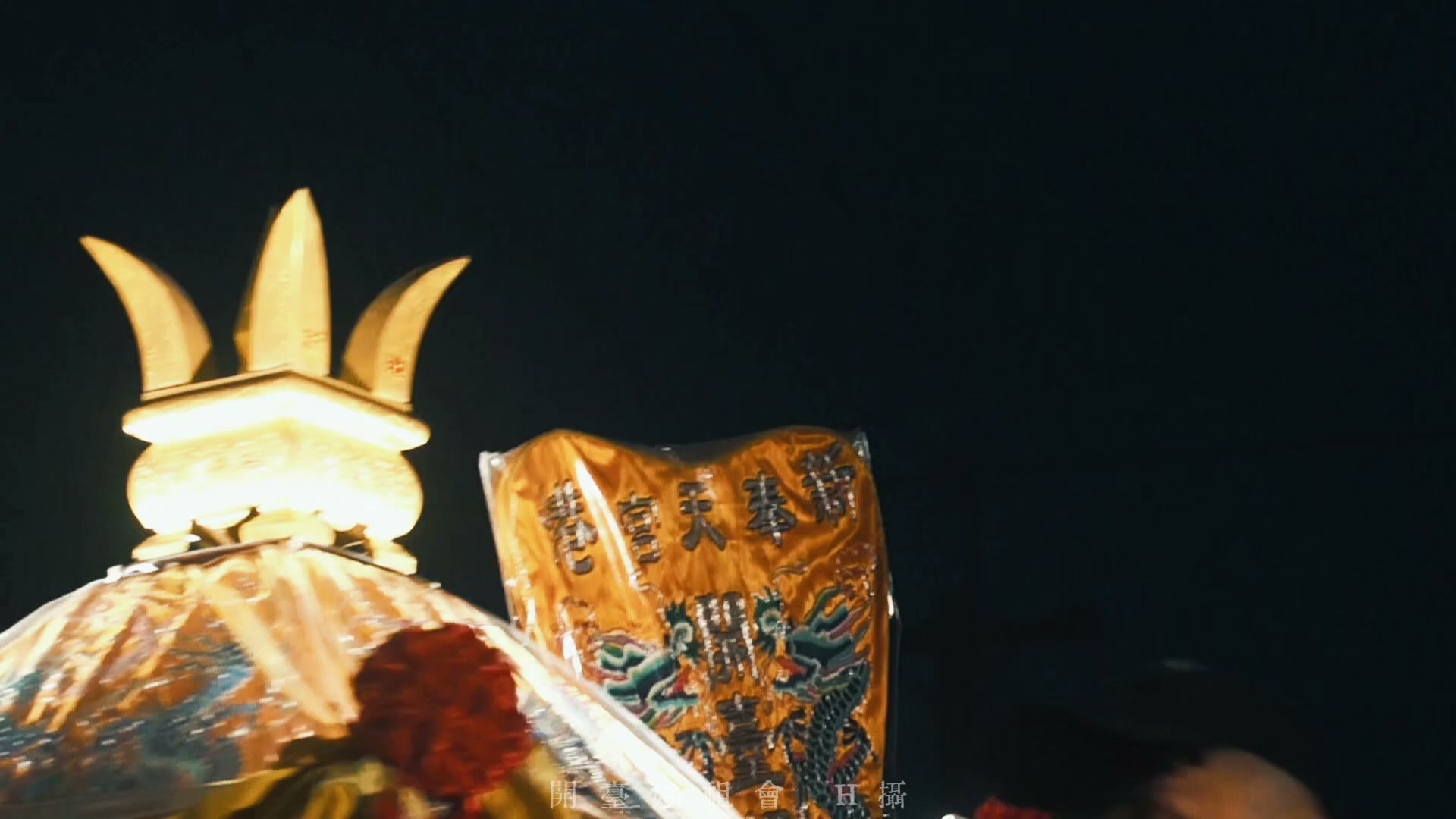
Under the lights,
colour returns to the darkness.
燈光亮起,
讓色彩在夜裡重新被看見。
00:01:05,000 --> 00:01:10,000
When night falls,
the rites continue.
夜幕降下,
科儀仍繼續進行。
00:01:10,000 --> 00:01:15,000
Then hands, poles and footsteps
carry the journey onward.
再由雙手、轎桿與腳步,
接續向前。
00:01:15,000 --> 00:01:20,000
Banners pass
through another waiting street.
旗幟走過,
又一條等候的街道。
00:01:20,000 --> 00:01:25,000
From one doorstep to the next,
welcome is shared.
從一戶門口到下一戶,
迎接也一路傳下去。
00:01:25,000 --> 00:01:27,000
Xingang, Chiayi
2025 festival record
嘉義新港
2025年祭典紀錄
00:01:27,000 --> 00:01:30,000
Taiwan, Layer by Layer
From story to place
島嶼年輪
從故事認識臺灣,再走進現場
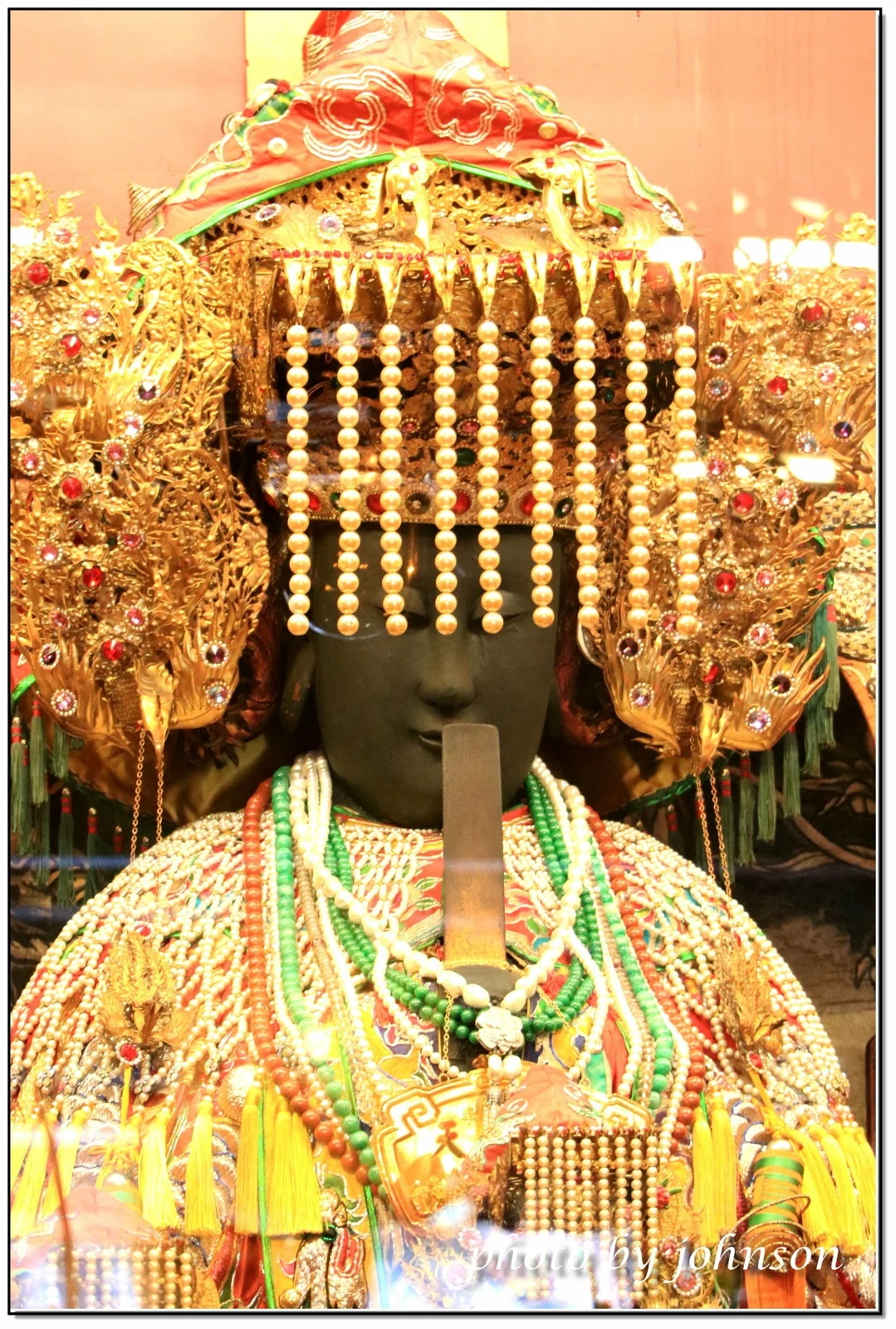
The annual street procession is on the fifteenth day of the first lunar month.
Notice papers, the dianxi ritual and the order of the groups reveal the town’s shared responsibilities.
Before the procession, a printed notice
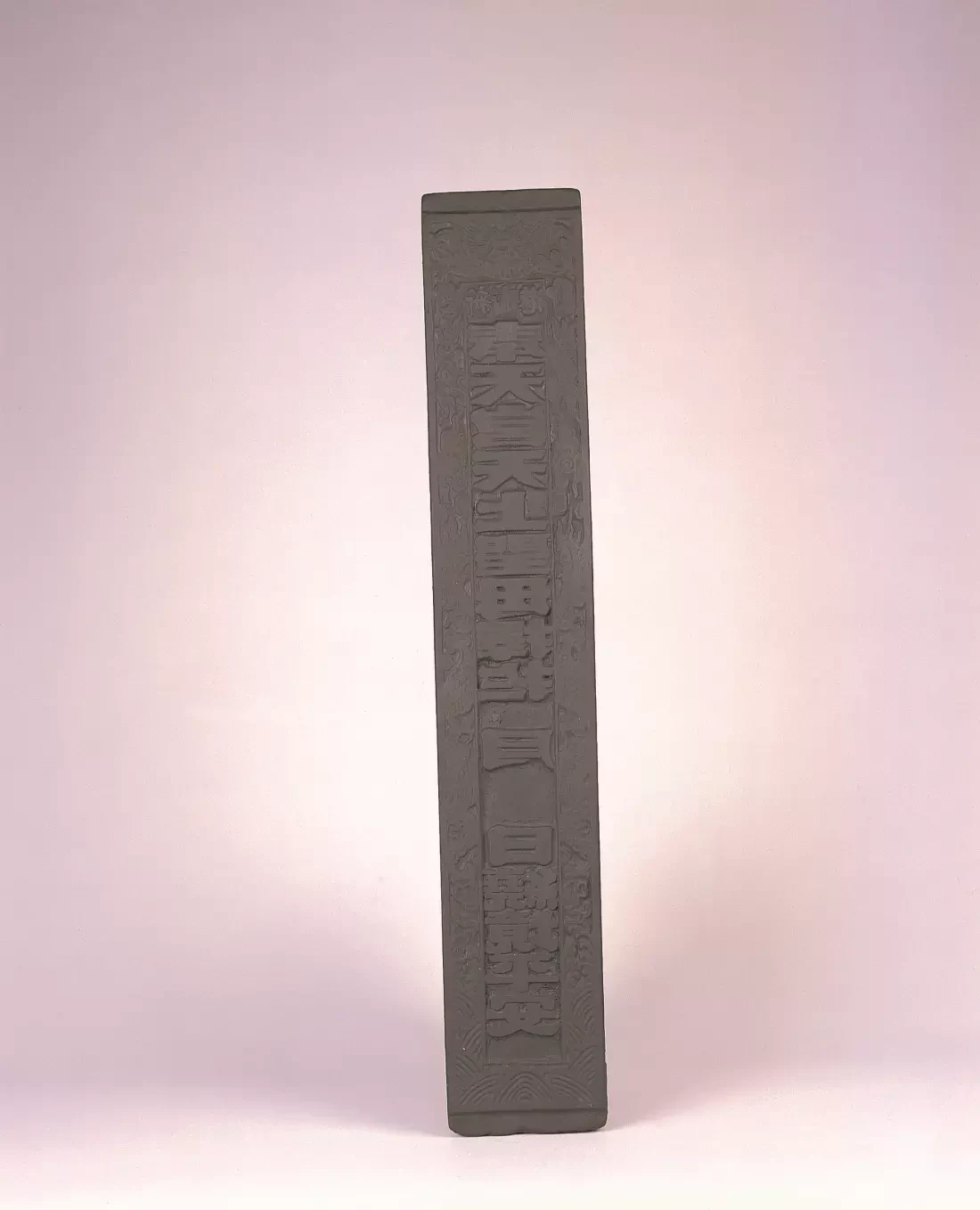
A narrow paper notice can prepare a street before the drums are heard. Fengtian Temple preserves a printing block for its procession notices, with spaces left for the month and day. The name Xin Nangang on the block carries an older place-name into an announcement that can be printed again for a new year. The object joins a fixed message of blessing to a date that changes with the lunar calendar.
The way the notice is pasted also carries information. An upright strip marks a place where Mazu will rest; a slanting one indicates passage and points in the direction of travel. The notices help households and temples prepare to receive the procession. On the festival day, ceremonial signal shots call the participating groups to assemble. The route is therefore communicated through paper, sound and people, well before the sedan reaches a doorway.
The old place-name survives on a much smaller object too. National Museum of Taiwan History collection 2004.007.0530 is a tin token measuring 3.2 by 4.4 centimetres. Raised characters on one side refer to Xinnangang, the Heavenly Holy Mother and incense; the other has a Buddha image and the place-name again. Unlike the large notice pasted on a street, the token condenses a temple's identity into something that could be carried.
Shouldering a memory of the town
Members of the local Mazu associations have ordinary jobs through the year and return as sedan bearers for the procession. On the fifteenth day of the first lunar month, the chairs are brought into the temple for preparation. The point where worship becomes movement is a practical one: people who know one another gather, arrange the equipment and take responsibility for the weight on their shoulders.
Before the main journey, members of the He lineage carry Mazu’s sedan to the theatre for the dianxi ritual. Local memory connects this role with the He family’s donation of land for the temple after settlers moved from flood-damaged Bengang. An act of giving is thus remembered through a recurring task. Later bearers take over, but the opening honours a particular relationship between the deity, a family and the ground beneath the temple.
Words permit departure; shoulders complete the return
Between the signal shots and the moving palanquins comes a spoken and written rite. The heritage account distinguishes a departure petition from the petition for return and protection. At departure the principal officiant reads the document and burns it in the incense burner, notifying the deities before the images are moved into their sedans. The procession therefore begins through successive permissions and transfers, rather than every group setting off as soon as it is ready.
The closing greeting has its own physical form. On returning to the temple, palanquins move back and forth in lijiao, extending the three advances and retreats of a respectful salutation. Local young people shoulder this demanding ending while whistles coordinate movement. The written petition and the final repeated approach bookend the outing: one announces departure, the other makes respect visible through a group’s controlled movement. The running space remains part of the rite, so watching belongs outside it.
A living procession, a temple that keeps its craft
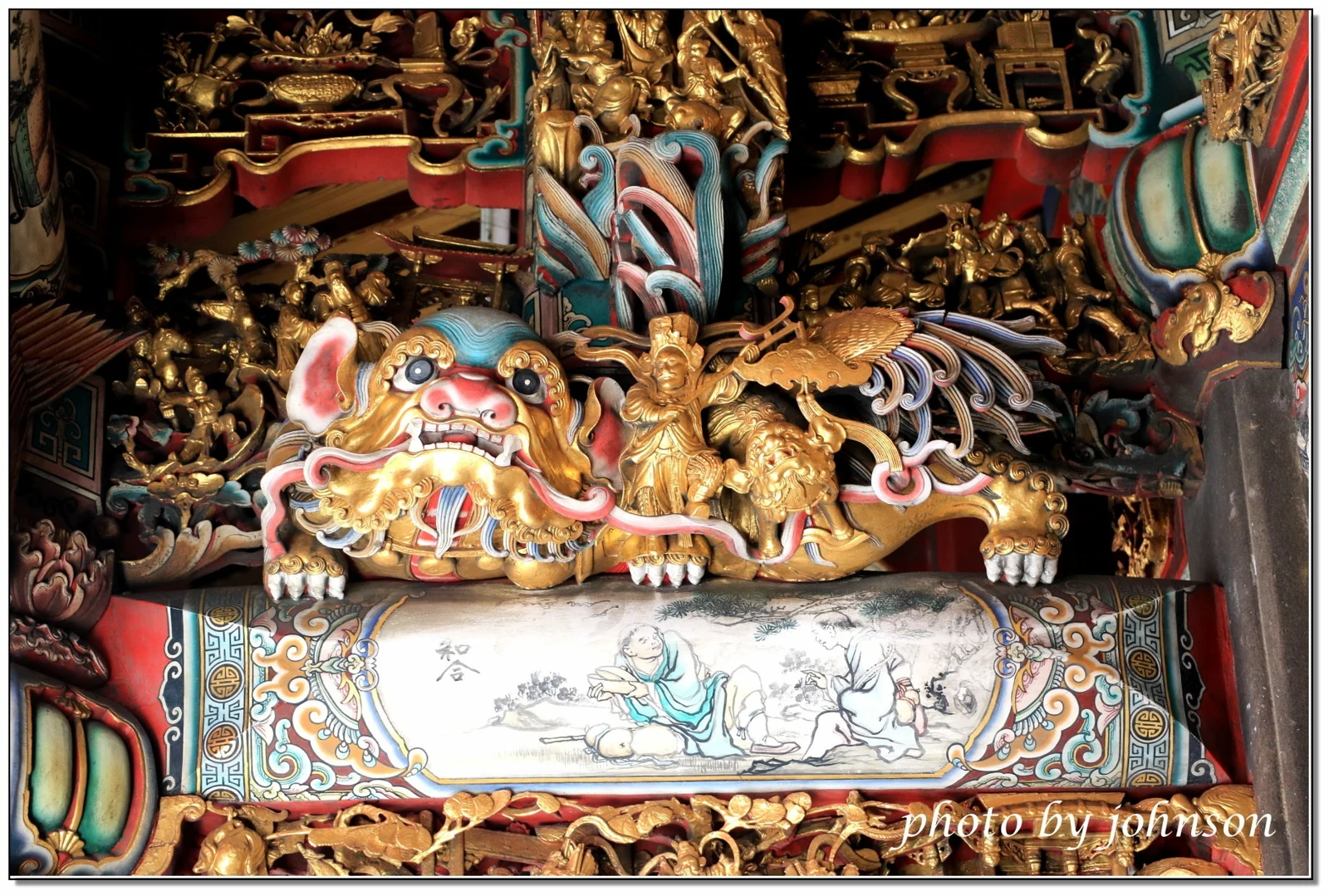
The procession continues to be arranged rather than simply repeated. For 3 March 2026, the temple restored an earlier order: its Tiger Generals and Prince troupe led the way, followed by the Kaitai Mazu sedan, the four street Mazu groups and other temple troupes. Xiantang’s earth-god firecracker rite and the Tiger General organisation remained towards the rear. Knowing that sequence gives the waiting crowd more to follow than the loudest moment.
After the street returns to its usual rhythm, Fengtian Temple offers another way to meet those generations. The rebuilding led by carpenter Wu Haitong from 1912 to 1917 left important work in the front halls and entrances. Painted and carved figures fill the beams above people who still come to pray. The festival mobilises the community outside; the building holds its accumulated workmanship inside. A return visit in daylight gives both parts room to be seen.
The museum calls it a pilgrimage token but carefully notes that it may have served like a protective amulet and need not have belonged to a particular pilgrimage. Its date is also unknown. That distinction matters: an object's name cannot supply an undocumented procession or owner. The digital collection is a useful way to compare its two faces before visiting Xingang; its presence in the catalogue does not mean it is on display at Fengtian Temple.
Look closer
Read the direction of the procession notices, then identify the groups as they arrive.
Leave the sedan’s turning space clear; look up at the entrance carvings during a quieter daytime visit.
Visiting information
- When
- The fifteenth day of the first lunar month; the 2026 procession was 3 March. Wider village tours have a separate schedule. The listed 2026 events have ended.
- Place
- Fengtian Temple, 53 Xinmin Road, Xingang Township, Chiayi County, and the surrounding streets.
- Transport
- From Chiayi railway station, take bus 7325 towards Beigang and get off in Xingang, then walk to the temple.
- Return
- For late-night return ceremonies, arrange local accommodation or a taxi pickup beyond the procession streets.
Look closer at the places in the film
Start with the whole procession
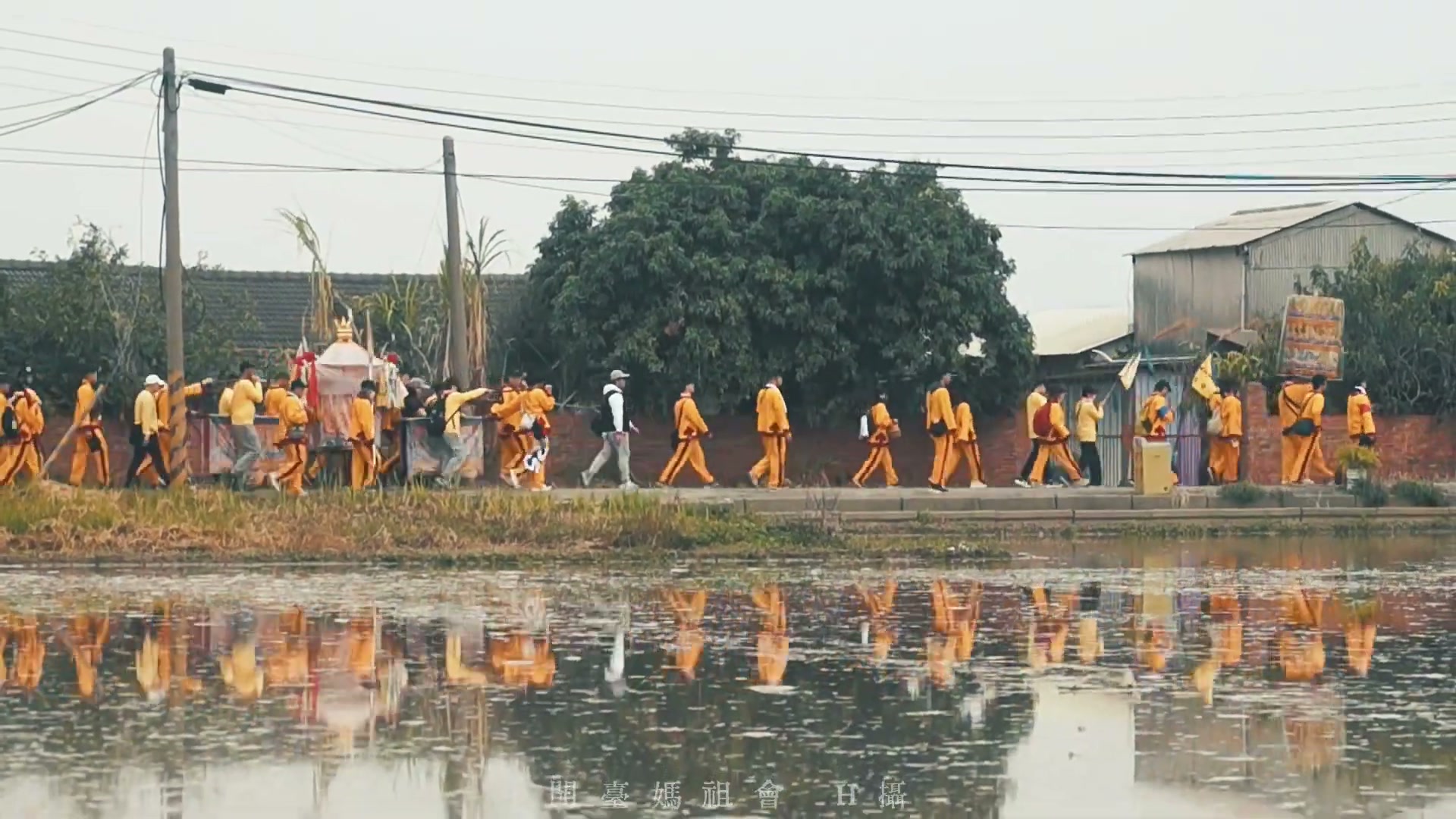
Beside a flooded field, a line of yellow clothing reveals the scale of the procession. Palanquins, banners and people travel beyond the temple forecourt, along roads between fields and homes. The film begins with this wider view before approaching doorways, hands and shoulders.
The footage comes from the association’s 2025 record of a seven-day Lantern Festival procession. Daylight, darkness and different neighbourhoods belong to a selection across those days. This is neither a continuous route to follow nor live 2026 coverage.
A welcome at the doorstep
Adults and children wait beside a roadside offering table. Elsewhere, small servings pass from hand to hand. The procession includes people who prepare refreshments, distribute them and help others participate. These visible actions explain neighbourhood involvement more clearly than calling the whole event a spectacle.
The Ministry of the Interior describes local preparations, including ritual notices and rites around the procession. The existing article begins with those notices. This film shows offering tables, refreshments and assistance; it does not pretend to include notice-posting footage that was not selected.
Follow the poles and shoulders
After seeing the palanquin among the carrying team, look at its poles, ropes, fabrics and the shoulders beneath it. Close detail reveals decoration; a wider view reveals the people carrying it. Object and movement become part of the same picture.
The film does not label every temple on the route as Fengtian Temple or assign names to unidentified deity images. Watch the pauses and passages without treating ninety seconds as the complete rite or a route map. Follow the guidance provided for the particular edition.
Let daylight and night remain different
At night, lighting brings out the palanquin’s colour. Collective bows and a drum interrupt the movement. These passages preserve another texture of a multi-day journey. They do not compress the entire event into one fictional day; the captions explicitly identify the seven-day edition.
Keep the annual tradition separate from the programme of a particular year. Ministry information describes the annual Lantern Festival custom; 2025 also included an expanded four-year procession. Accounts of other editions can have different durations. The separate instrumental score replaces location sound, so a visible drum is not a promise of original drum audio.
Close with the people along the way
People join their hands, bring children to wait, or receive help from companions. A closing group portrait gathers the moving figures into one frame. The edit ends with a shared journey, without inventing an unverified return-to-temple scene.
The source was uploaded on 18 February 2025 and that edition has ended. No unverified future date is announced here. Before visiting, check the temple’s current programme and leave the carrying route clear.
Film, article and image sources
Selected from the association’s record of the seven-day 2025 Lantern Festival procession, uploaded on 18 February 2025. This edit spans daylight, night and different days; it is not a continuous single-day route or live 2026 coverage. A separate instrumental score replaces location sound. Small original source marks remain; no programme title, full-screen card or synthetic scene is added.
- 新港奉天宮開臺媽祖會|2025元宵大型遶境紀錄(Hsin Yun攝)
- 內政部|新港奉天宮天上聖母元宵遶境
- 內政部|奉天宮與元宵遶境參訪
- 新港奉天宮|2025年2月6日遶境十八庄官方活動詳頁
- 島嶼年輪|新港元宵遶境
1. 嘉義縣新港奉天宮開臺媽祖會 / Hsin Yun · 2025
2. 嘉義縣新港奉天宮開臺媽祖會 / Hsin Yun · 2025
3. 嘉義縣新港奉天宮開臺媽祖會 / Hsin Yun · 2025
4. 嘉義縣新港奉天宮開臺媽祖會 / Hsin Yun · 2025
5. 嘉義縣新港奉天宮開臺媽祖會 / Hsin Yun · 2025
Music: 跨海的一段路 (AI-generated instrumental).