
Cultural story · Food and local life
Wulai cherry blossoms: spring on a road people call home
A waterfall, a changing sequence of blossoms and the roads linking Atayal communities reveal how a mountain season fits into everyday life.
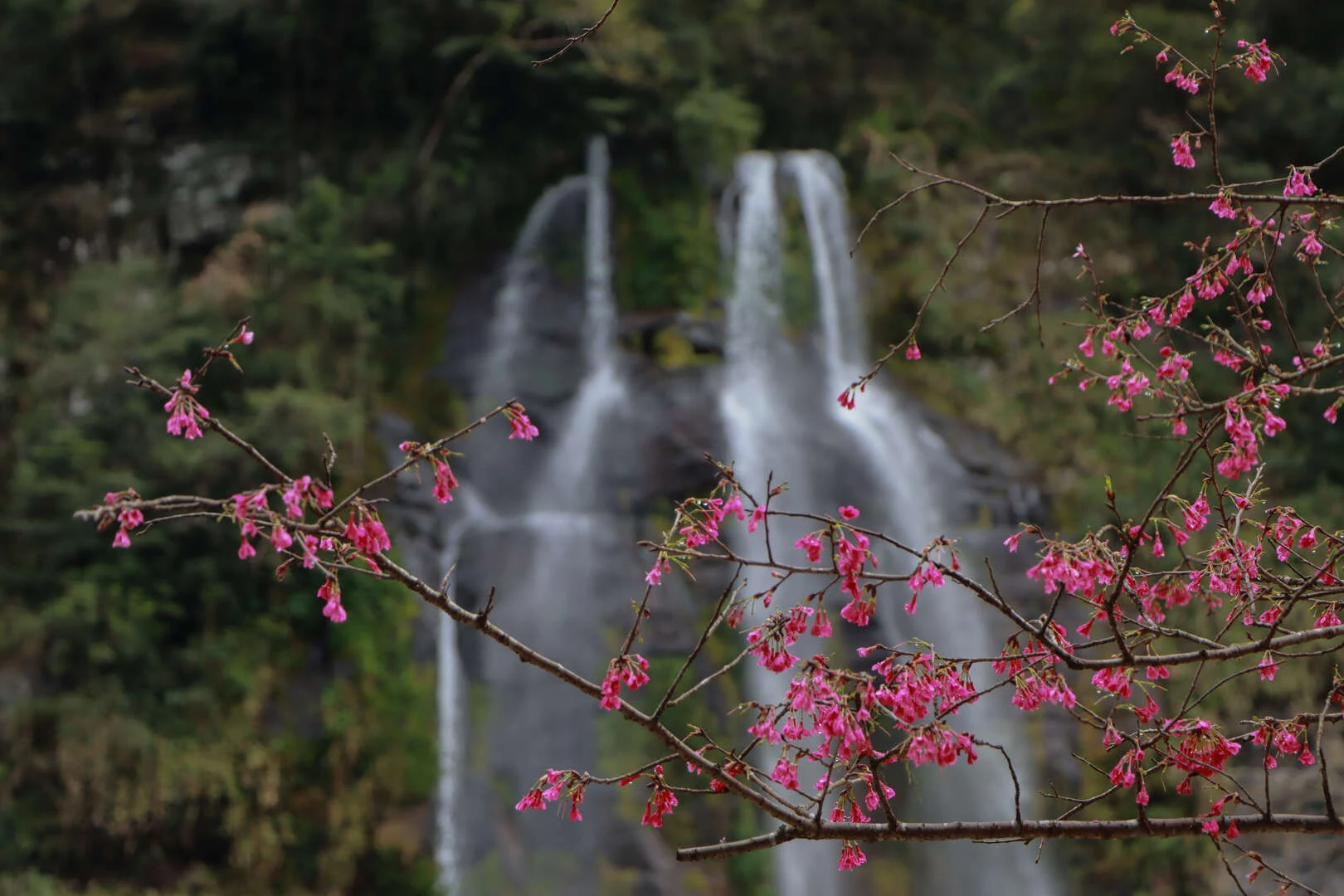
Seasonal flowering, not one fixed festival date.
Begin around Wulai Old Street and the waterfall; Fushan is a separate journey.
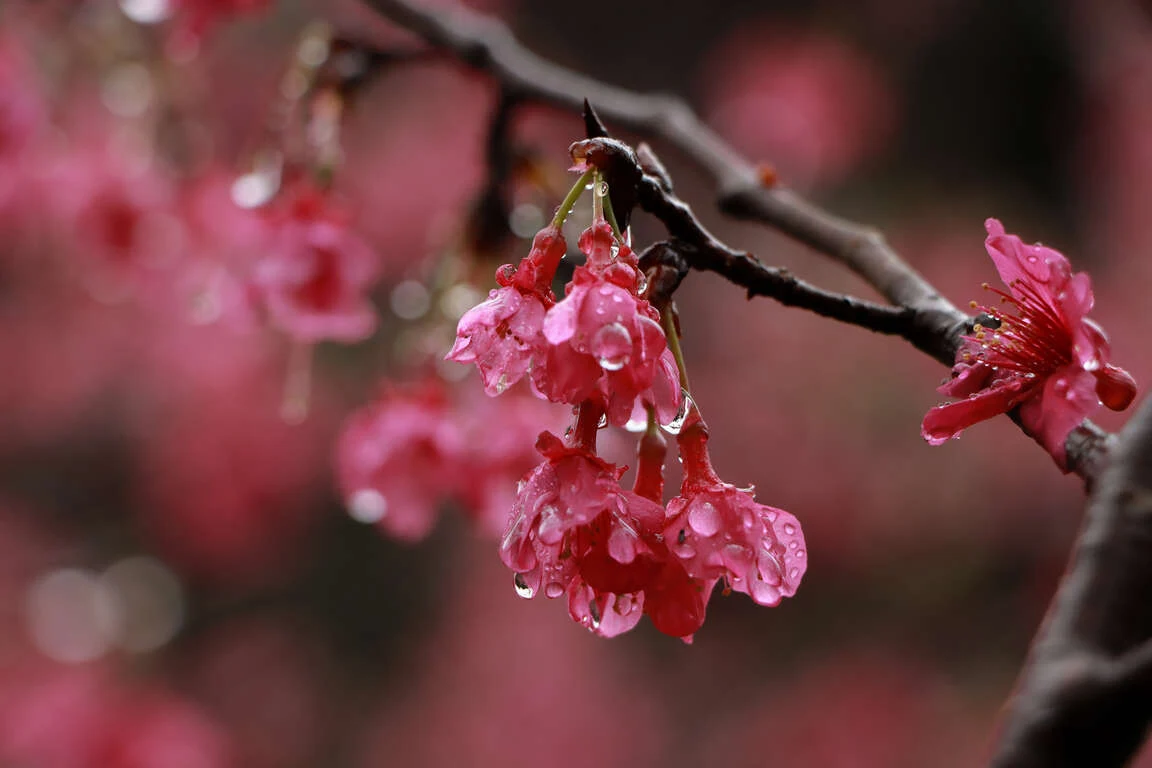
Mountain cherry, double-flowered cherry and Yoshino cherry bloom in succession.
A season seen against falling water
At Wulai, blossom photographs often place pink branches in front of a white waterfall. The contrast makes a small flower legible against a whole mountainside. Around Huanshan Road, the waterfall precinct and the cable-car area, trees occupy different corners of the valley rather than a single enclosed flower garden. Moving between them also means passing shops, transport facilities and the ordinary infrastructure of a mountain settlement.
The season has its own sequence. Deep-pink mountain cherry appears during winter and early spring; double-flowered varieties and Yoshino cherry extend the changes that follow. Wulai’s district tourism records describe this succession, including Yoshino blossoms in March. A photograph from one slope therefore cannot stand for every tree in the district. The pleasure lies in returning to a familiar landscape as its colours change.
The road beyond the photograph
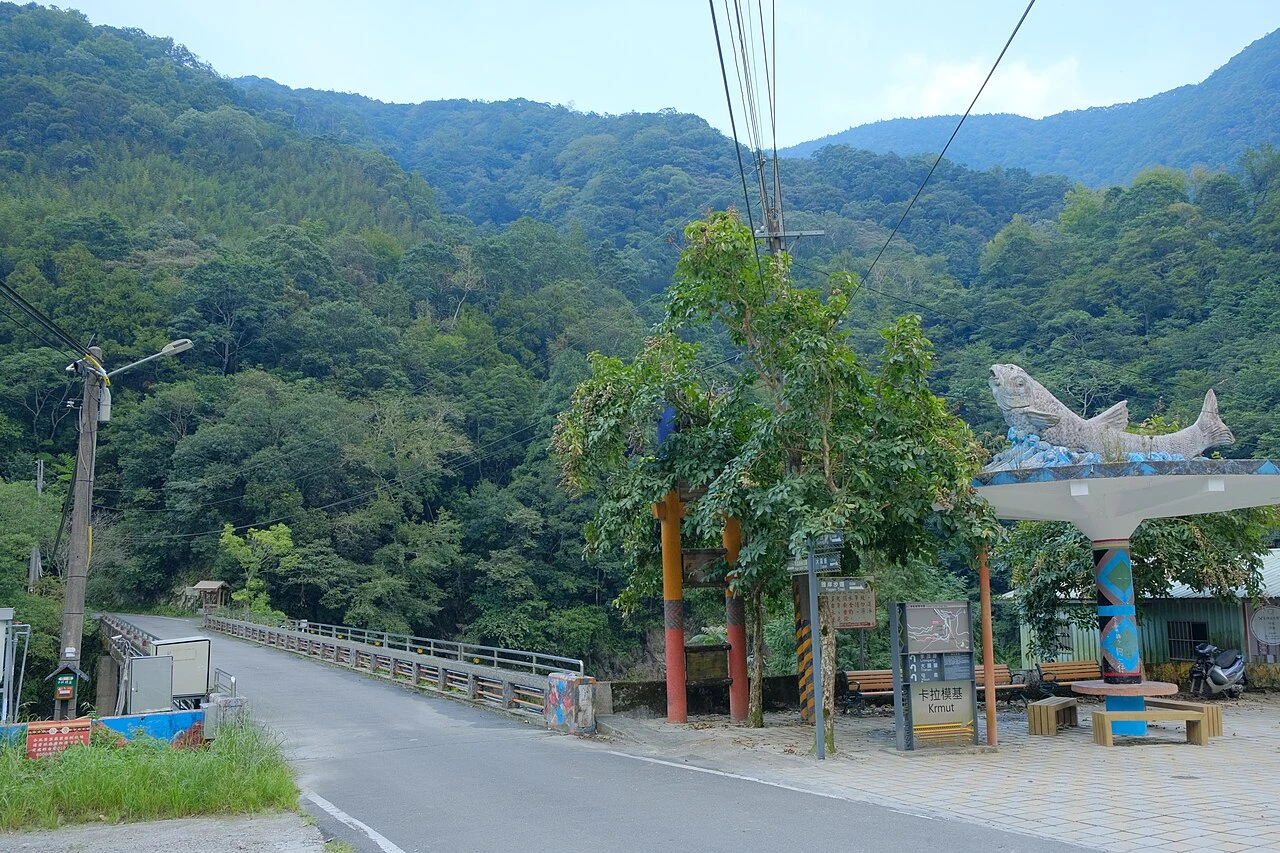
Farther into the mountains, the road at Karamuji in Fushan carries another part of this story. In 2019, New Taipei completed slope repairs after a rain-triggered collapse near the road’s 0.6-kilometre point. The work used rock bolts, protective netting, retaining structures and barriers. The same road served residents, agricultural transport, hikers and blossom visitors: a seasonal destination depended on a route that had to work throughout the year.
The then village head, Chen Chun-ying, described residents’ and visitors’ concerns about falling rocks. That local concern changes the meaning of a roadside blossom: the view is supported by maintenance, shared access and people making their way home. Fushan is not an extra stop beside the waterfall. Keeping the two journeys distinct gives both places their proper scale, without turning the whole district into one seemingly effortless walking circuit.
The railway operator’s history describes early vehicles with a wooden platform, four wheels and four upright bamboo poles. The front pair served passengers as handholds; the rear pair gave the worker something to push. Tool boxes and stools once became improvised seats for residents riding back with the timber vehicles. The short trip in a visitor’s itinerary thus follows a transport practice shaped first by materials and labour, rather than by blossom viewing.
Let the mountain town remain a town
For a first visit, the old-street and waterfall area offers a manageable starting point. The bus arrives at the settlement; the journey onward brings the river, slopes and transport history into view. The Wulai trolley is part of that landscape, with its tracks and small carriages giving the approach a different rhythm from a road trip. Cherry blossoms can be the reason to come, while the town remains more than their backdrop.
Leave time for a meal or the Atayal museum instead of stretching the trip across every blossom point. This connects a seasonal outing to the people, food and cultural work that continue after the flowers have fallen. A good visit leaves room on narrow paths, does not stop vehicles in the roadway for photographs and ends with an unhurried return to the bus terminal.
Mechanisation also happened in stages. The operator’s account of the 1974–77 model describes an engine hauling the cars uphill to the waterfall, while workers still controlled the brakes on the descent. A new engine did not instantly remove every human task. This is a historical vehicle description, not how today’s cars should be operated. Watching the track’s slope offers a way to understand that earlier work without entering the rails or confusing old equipment with the current service.
Look closer
Compare blossoms with the waterfall and the different elevations of the valley.
Notice the trolley tracks and how walking, traffic and local access share the approach.
Visiting information
- Season
- A seasonal blossom period, mainly winter to early spring; varieties flower in succession. No single 2027 festival date has been verified.
- Area
- Wulai Old Street and waterfall precinct. Plan Fushan separately.
- Getting there and back
- Take bus 849 from MRT Xindian to Wulai. Return to the Wulai terminal for the bus to Xindian; check that day’s services before heading farther uphill.
- Time
- Allow a half day for the old street and waterfall area; museum visits or Fushan require extra time.
- Access
- The trolley, cable car and hot-spring facilities have separate opening times and charges.