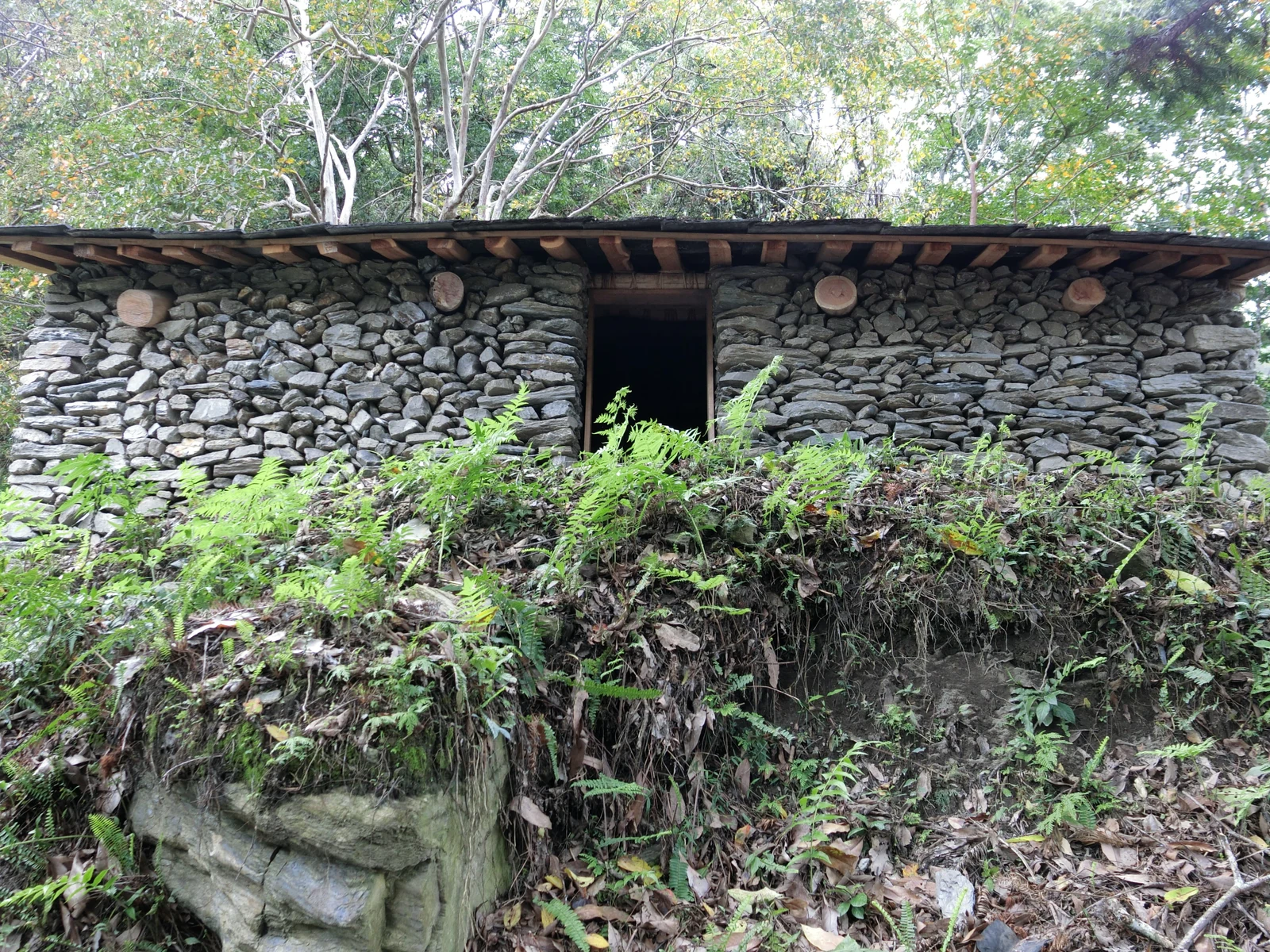
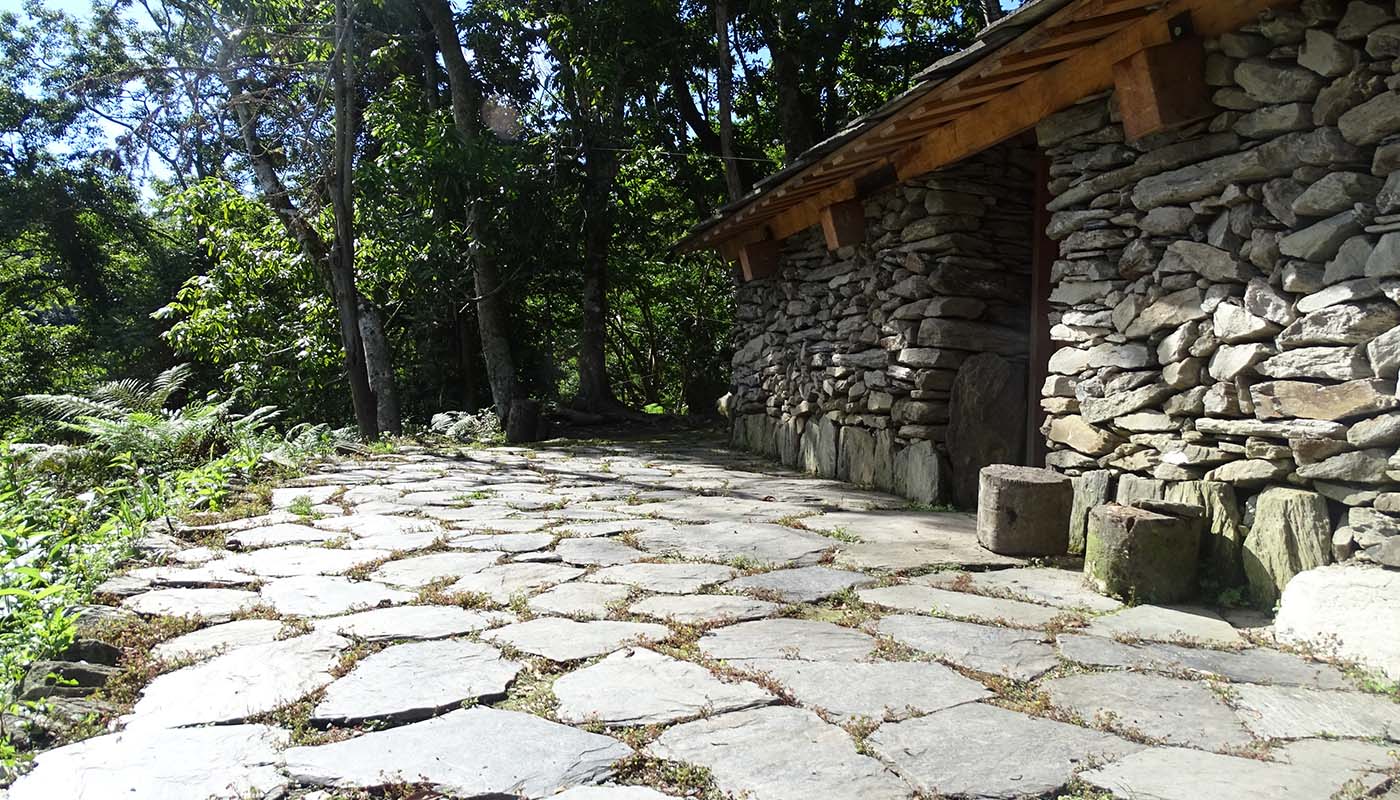
During work on the slate house at Jiaxin, crews stayed in the mountains for stretches of around ten days. The house had belonged to a particular clan, and clan members from several communities joined the work. Returning by the Walami Trail meant reconnecting with a family history altered by a colonial police road and relocation.
A rebuilt slate house brings clan members back to an ancestral settlement.
Distinguish the police platform from the house, and historical accounts from current access.
HISTORIC TRAILS · STORY LOCATIONS
Story map & stop guide
1 story locations · not a continuous walking route
Story map
Place the story before planning a visit. These locations are reading references, not a walking sequence.
Approximate locations · select a place to look closer
Stop guide
Select a location to view the map, then follow its story link. These are reading locations, not a walking sequence.
regional representative point from official cultural-landscape record; approximately 488-hectare designated landscape
The officially registered ancestral settlement landscape connects cultivated plots, work shelters and homes. This point is not a marker for leaving the trail to find a house.
In his field account, Xie Boyu describes accompanying Salizan, Qihong and students to the slate-house work at Jiaxin. Old stonework remained visible, but tree roots had damaged the structure. Members of the original clan, now living in communities including Zhuole, Zhongzheng and Gufeng, were among the workers.
The site needed places for food, sleeping and building materials, and crews stayed for roughly ten days at a time. Restoring the house depended on that repeated labour. The repaired building should be understood as work reconnecting people with an ancestral place, rather than as an untouched survival.
Who the road was built to serve
Walami is part of the eastern section of the Japanese-era Batongguan Traversing Road, distinct from the Qing road of 1875. Construction between 1919 and 1921 extended colonial access into Bunun territory, carrying supplies and sustaining police posts.
Bunun life did not begin with its construction. Zhao Congyi’s research preserves a 2005 oral account stressing that people already had their own paths and connecting conflict with the seizure of hunting guns. Gentle gradients and easier transport also served armed rule. Jiaxin’s heritage record dates collective relocation in the watershed to 1933–1934, changing what it meant to travel home.
A bridge with more than one date
Shanfeng No. 2 Bridge offers another way to read the route. Xie’s account distinguishes two bundles of supporting cables: one added in later repairs and another described as remaining from the Japanese period. A bridge has a history of maintenance, replacement and use as well as an initial construction date.
That description is evidence of historical layers, not an inspection of today’s structure. From an authorised viewing position, examine how towers, cables and anchors meet, and compare the interpretation on site. A shared bridge name does not make every component in a photograph an original.
The settlement below the police platform
Jiaxin refers to places that need to be distinguished: the former police-post platform beside the trail and the Bunun settlement below it. Xie describes the open outlook and retaining walls of the former, and the lower location of the slate houses. Reading both together brings the lives under surveillance back into view.
The same name may identify a police post in administrative records and a home among relatives in family memory. Work on the house gives the latter a visible location again. Jiaxin is more than a convenient platform where hikers stop.
Jiaxin’s life extended beyond the house. Its 2020 cultural-landscape registration records stone-built remains of dry-field cultivation, linking cultivated plots, work shelters and homes. Millet, sweet potatoes and maize belonged to Bunun mountain livelihoods. The registered area covers about 488 hectares: a lived landscape, rather than a single building to photograph. Within that setting, rebuilding a house also helps sustain knowledge of the relationship between home and land. The registration provides a way to read the place; it is not an invitation to leave the authorised trail in search of every recorded feature.
Keeping the house in a living story
A 2021 VERSE report by Lin Weijing follows Salizan to Jiaxin, where he addresses the ancestors in Bunun before explaining the house, customs, restrictions and migration history. His book Walking into the Slate House also records that work. Repair gives the building a form; telling its history maintains its relationships.
This offers a different reason to read Walami. Bridges and police remains reveal how colonial authority entered the mountains; houses and community accounts reconnect the route with lived experience. Understanding an ancestral place starts with listening to those entitled to tell its stories and respecting the boundaries they explain.
Look closer
The Jiaxin ancestral house is the story’s centre, with Shanfeng No. 2 Bridge and the former police platform as separate points of observation. Distinguish repaired fabric, police infrastructure and community homes. Do not leave the authorised path to seek ruins. This is researched writing, not a field visit; construction-era accounts do not establish present access or visitor services.
Visiting information
Entry prohibition and section status | 23 October 2026
As read on 23 October 2026, the park’s status page states that all entry has been prohibited since 23:30 on 21 October 2026 following the sea warning for Typhoon Champi. The Batongguan Traversing Trail system is marked closed, with damaged cables and a tilted deck at Xinkang Suspension Bridge also listed. Do not use this article to plan entry while that prohibition applies. After it is lifted, confirm the lower Walami section, the Jiaxin branch and any onward section separately; the end of a typhoon warning does not establish that every trail has reopened.
Permits and overnight stays
The park’s current trail guidance places the eastern section beyond 7 km within the area requiring an ecological-protection entry permit. A permit exemption for a lower section would not establish that it is open on a given day. Arrange any hut or campsite use through current procedures and approvals; available places and a through-hike itinerary have not been checked.
Transport and respect for the house
The official transport page read for this article states that public transport does not reach Shanfeng trailhead directly. Recheck road access and any onward transport. Entry, photography and ceremonies at the ancestral house follow community and site guidance. A tour described in a 2021 report is not evidence of a service currently available to book.