
Cultural story
A roof renewed, a community kept together
Gathering grass, replacing a roof and listening to elders all belong to the life of the kuba. At Tapangu, maintaining a building also means keeping relationships and knowledge in use.
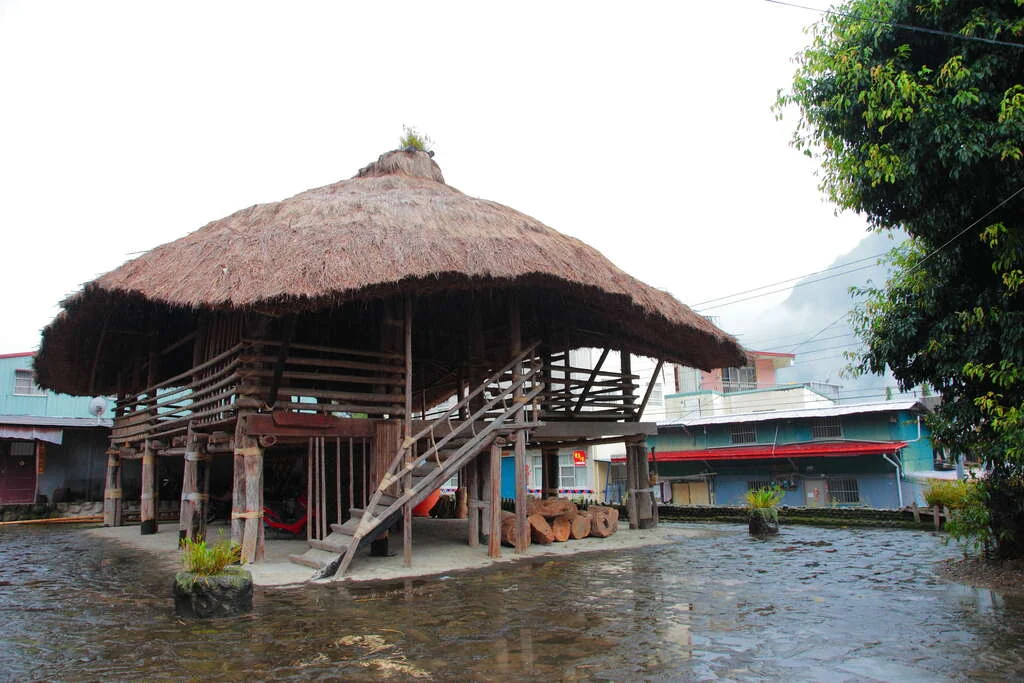
The 2024 roof repair began with weeks of gathering materials.
Mayasvi and the millet harvest ceremony occupy different social spaces.
Objects return to local interpretation through the culture centre.
Before the ceremony, go and find the grass
In January 2024, Tapangu leader mo’o ’e peongsi, Wang Chi-te, described a task already under way since December: replacing the entire roof of the kuba. The old covering had deteriorated badly, bringing the repair forward by a year. Gathering the required materials alone took around twenty days to a month. The familiar silhouette depended on many days of work beyond the building itself.
White cogon grass and silvergrass would form the renewed roof. Younger workers learned beside elders, receiving instructions about both construction and conduct. This was not simply a contractor replacing a worn surface: the work prepared the community’s ceremonial centre for Mayasvi, while giving another generation the experience of maintaining it.
A ceremonial year reaches beyond the kuba
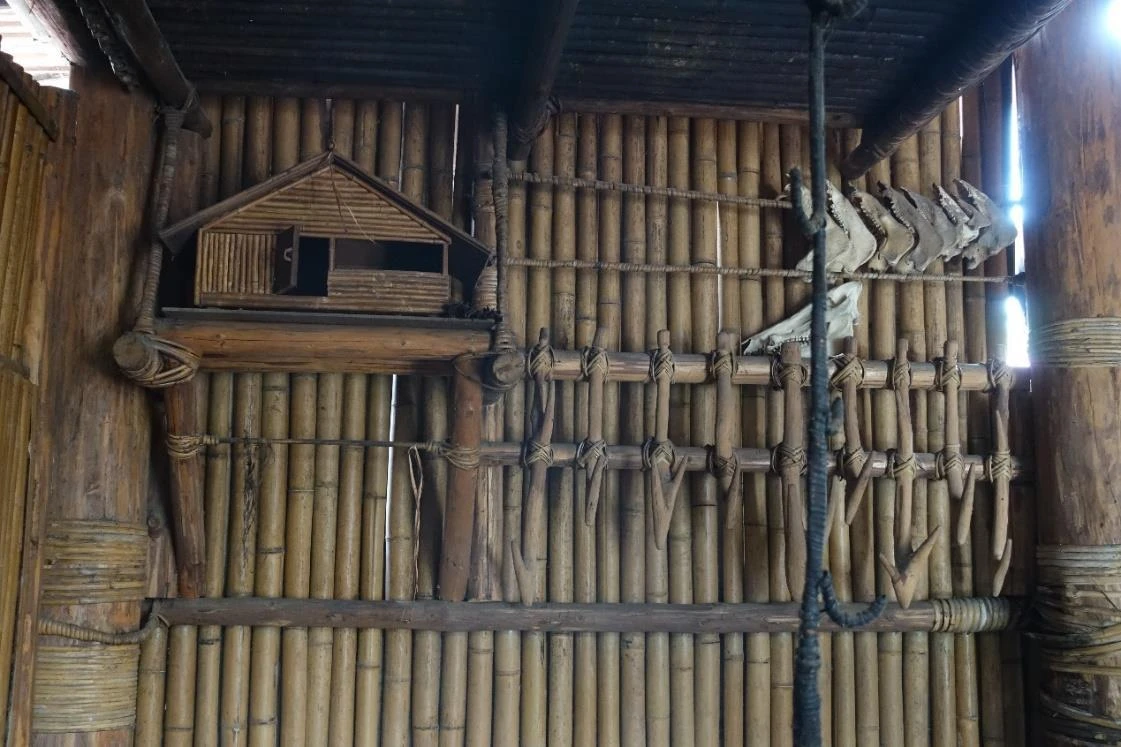
The kuba belongs to the large-community organisation of Tsou society. Millet ceremonies lead into another set of places: family ritual houses and sacred millet fields. In Homeyaya, the harvest gathering, the organisation of relatives and the handling of millet bring family histories into the same space. Different places carry different responsibilities within the ceremonial year.
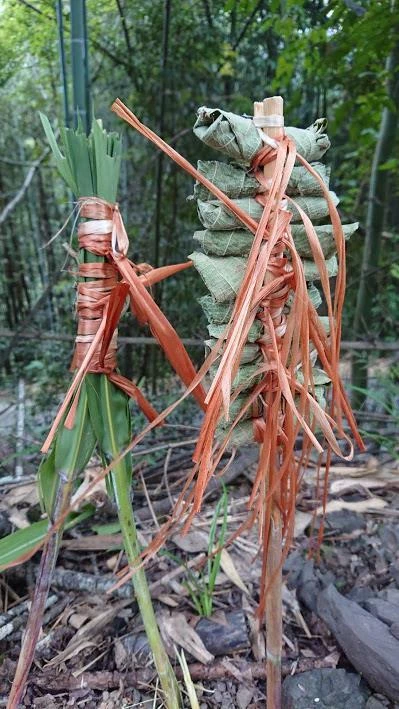
Pu Chung-yung’s photographs of 2020 and 2021 preserve some of these details: a family ritual-house interior, and a grass knot with hibiscus sticks used in a rite connected with hunting abundance. Millet is therefore more than a food displayed beside a festival. It connects cultivation, kinship and the mountain places for which families hold knowledge.
The cultural park's account uses Dabang's Wang family as a specific example of a millet ritual house. A square store woven from grass stems serves as a temporary dwelling for the millet deity; nearby are baskets, a wine strainer and millet containers. Family elders also make staffs associated with protecting the officiant's movement through the field. A small room thus connects storage, cultivation and ritual responsibility.
A museum asks the community to name its objects
The culture centre’s 2025 kuba exhibition brought the 2024 repair into photographs, interviews and models. A further encounter began in May 2026 with the exhibition maine’e, meaning “return home”. Curators Cheng Pei-chien and Huang Chih-hui had spent three years taking photographs of forty-five objects to elders at nine community care centres, asking about names, uses and memories.
Objects collected by Academia Sinica in the 1950s and 1960s were shown alongside belongings kept by community elders. A label could recover a name missing from an older catalogue; an account of use could return an object to a person’s life. Visiting the centre before walking through Tapangu makes that exchange visible: buildings and collections remain meaningful because people continue to explain, repair and use them.
The same account notes that some families moved ritual millet stores out of dwellings into separate structures during the Japanese period. It also states that ritual-house utensils are not reassigned to other uses, and that the sacred route between tree and kuba is not a casual crossing during rites. A museum model can clarify these distinctions; it does not turn an active family ritual house into an open exhibition room.
Look closer
Use the photographs to compare the kuba and family ritual house in materials and spatial purpose.
Follow an object’s Tsou name, maker and remembered use.
Visiting information
- Visit
- Tsou Nature and Culture Centre, No. 21, Neighborhood 1, Dabang Village, Alishan Township, Chiayi County.
- Hours and enquiries
- The centre's listed hours are Monday–Saturday 08:00–12:00 and 13:00–17:00. Confirm current opening and exhibitions at 05-2511982 before travelling. Museum access does not include entry to family ritual houses or the kuba.
- Travel and return
- From Chiayi railway station, take Chiayi County Bus 7314 to Dabang. Check the return departure before walking through the village, or arrange a return car transfer.