
Cultural place
Before the gorge, listen to the interpreters
The terrace at the mouth of the Liwu River is a place to connect geological scenery with community history, film and the people who explain it.
Taroko Visitor Center: A First Way to Read the Gorge
Begin at the visitor-center frontage and information counter. Relief models, observation panels and everyday objects offer ways to understand Taroko.
90 seconds · English captions in the film; optional English and Traditional Chinese CC.
The center usually opens 08:30–17:00 and closes on the second Monday of each month and Lunar New Year Eve, subject to holiday notices. It opens at 10:00 on 28 November 2026. Confirm the center, Buluowan and gorge roads and trails separately; this film makes no outdoor access promise.
Film sources and complete bilingual captions
The source was uploaded on 11 September 2022; the exact filming day is unconfirmed. It records the displays and interactions of that visit. Check current management notices for exhibits, programmes and access.
The center usually opens 08:30–17:00 and closes on the second Monday of each month and Lunar New Year Eve, subject to holiday notices. It opens at 10:00 on 28 November 2026. Confirm the center, Buluowan and gorge roads and trails separately; this film makes no outdoor access promise.
- 太魯閣遊客中心|國家公園署
- 遊客中心服務|太魯閣國家公園管理處
- Taroko Visitor Center|Taroko National Park
- 115年11月28日選舉日開館時間公告|太魯閣國家公園管理處
- 走向峽谷之前,先聽解說的人|島嶼年輪
- 橘世代慢活—木魚 【旅遊景點】太魯閣國家公園管理處遊客中心(花蓮秀林)
Music: 把時間留下 · AI-generated instrumental.
00:00:00,000 --> 00:00:05,100
Taroko Visitor Center,
in Hualien, Taiwan.
太魯閣遊客中心,位於臺灣花蓮。
00:00:05,100 --> 00:00:08,200
A visit shared in 2022
begins at the information counter.
這段於2022年公開的走訪,先來到資訊櫃臺。
00:00:08,200 --> 00:00:13,200
Then explore the park
through its exhibitions.
再透過展示,認識這座國家公園。
00:00:13,200 --> 00:00:20,200
A relief map gathers
mountains, valleys and coast.
地形模型把山、谷與海岸放在一起。
00:00:20,200 --> 00:00:25,400
Follow the shapes,
and see how the land fits together.
沿著起伏,看土地如何彼此相連。
00:00:25,400 --> 00:00:33,400
Animal displays invite you
to slow down and look closely.
動物展示,讓人慢下來仔細觀察。
00:00:33,400 --> 00:00:42,500
An open panel invites
a closer comparison.
掀起的面板,讓人近距離比較。
00:00:42,500 --> 00:00:45,500
A button opens
another way to explore.
一個按鈕,打開另一種認識方式。
00:00:45,500 --> 00:00:52,200
Bird images and listening points
bring attention to sound.
鳥類影像與聆聽裝置,讓注意力轉向聲音。
00:00:52,200 --> 00:00:58,400
An indoor river scene
brings the landscape into the room.
室內的河流展景,把地景帶進房間。
00:00:58,400 --> 00:01:06,200
Move from natural displays
to stories of people and place.
從自然展示,走向人與地方的故事。
00:01:06,200 --> 00:01:15,200
Objects and images
add a human scale.
器物與影像,加入人的生活尺度。
00:01:15,200 --> 00:01:19,600
Notice the woven forms
behind the glass.
留意玻璃後方的編織形狀。
00:01:19,600 --> 00:01:22,600
Look at shapes and textures,
then read the labels.
看看形狀與紋理,再讀一段說明。
00:01:22,600 --> 00:01:28,000
Begin your Taroko visit
with questions worth asking.
帶著值得追問的問題,開始認識太魯閣。
00:01:28,000 --> 00:01:30,000
Taiwan, Layer by Layer
島嶼年輪
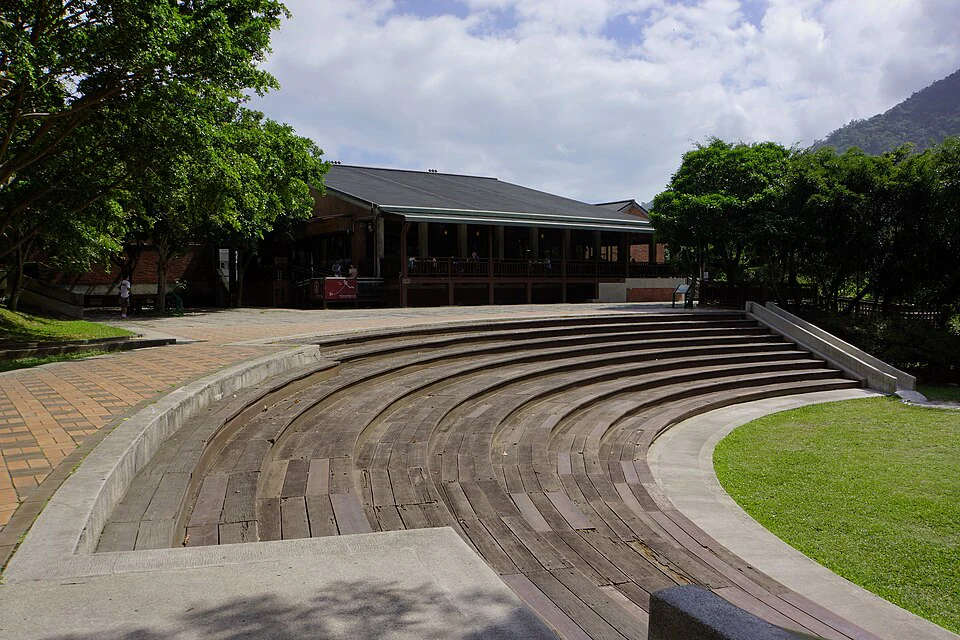
Start with the visitor centre’s displays and a film, then read the terrace around it.
The 2026 story map connects nine themes with the work of six interpreters.
A film begins before the lights go out
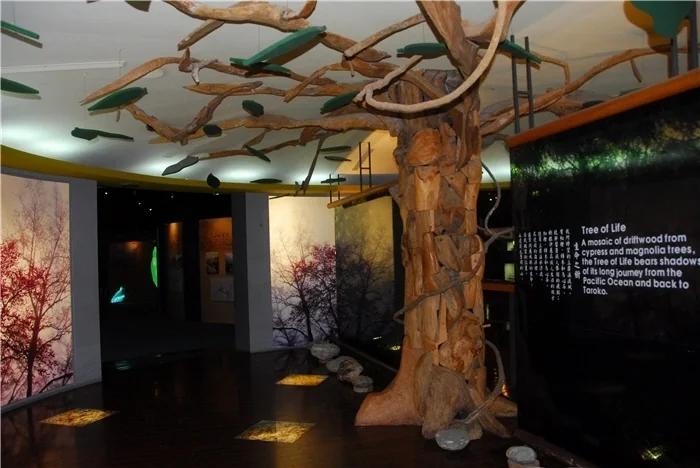
Taroko volunteer Chen Ming-chin described preparing a short introduction before screening a park film: he first learned who the visitors were, then chose details that might help them watch more closely. His account also records preparing notes before guided visits. Interpretation takes work before a visitor hears the first story.
Inside the centre, a model, an object and a spoken explanation each draw attention to something different. A film can introduce the scale of the gorge; a display brings it back to a particular tree, animal or human activity. Allowing time for both changes the visit from a quick collection of views into an encounter with how knowledge about a place is assembled.
A map made by walking and listening
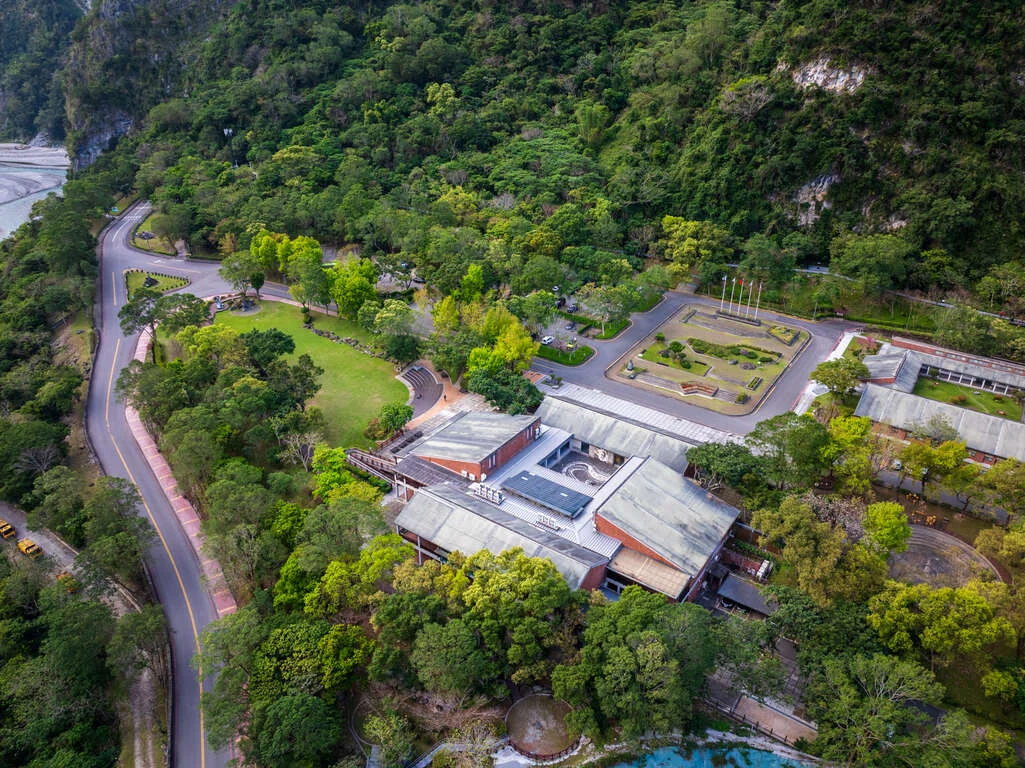
A later project extended this work online. Announced in January 2026, the Taroko Terrace story map was made by six contracted interpreters with guidance from National Dong Hwa University’s Kuo Chun-lin. They combined field visits, research and nine themes to connect the terrace’s landforms, ecology and human activity.
The story map can be opened by scanning a code at the visitor-centre service desk. Use it to choose a theme, then compare the screen with the terrace around you. Buildings, vegetation and river direction are no longer isolated details: they provide a physical setting for the interpreters’ account. A map works best here when it sends the eyes back to the place.
The terrace has more than one history
The centre brings geology, ecology and human history into neighbouring rooms. Read the names of communities and places as carefully as the geological diagrams, and notice who provides the account. Moving between these different forms of interpretation reveals a landscape that has been studied, inhabited and remembered in different ways.
The terrace was the site of the Truku community of Dekalun and later had military uses before becoming the national park’s service hub. That sequence changes the meaning of the broad lawns and brick buildings. The land was lived on and reorganised before it became a visitor destination; place names and displays bring some of those earlier uses back into view.
Read a gorge in two directions
A gorge photograph can be read in two directions. A National Parks explanation supplied by senior interpreter Lin Maoyao uses Yanzikou as a comparison point: downstream to the east lies a broader, yellow-brown gneiss valley; upstream to the west is a narrower, steep-sided marble gorge. The account connects these forms to erosion. In this example, compact marble resists lateral erosion as the river cuts down, while collapse along the gneiss slopes widens the valley. The useful question links rock, water and valley shape; it does not classify one rock as universally safe. This 2019 explanation offers a way to read gorge imagery at the centre, not evidence that a trail has reopened. Learning to distinguish the forms in an image need not become an invitation to enter damaged sections.
Look closer
Choose one place name and follow its explanation from a display to the outdoor setting.
Compare the human-history rooms with the ecology displays; note where their subjects overlap.
Visiting information
- Address
- 291 Fushi, Fushi Village, Xiulin Township, Hualien County
- Opening
- 08:30–17:00; closed on the second Monday of each month (next day if a national holiday) and Lunar New Year’s Eve.
- A visit to plan
- Allow 1.5–2 hours for displays, a film and the visitor-centre terrace. Films start at 09:30, 10:30, 11:30, 13:30, 14:30 and 15:30. The park has advertised a weekday terrace programme for groups of 5–30, booked at least three days ahead. Confirm current availability with the centre before arranging it.
- Transport and return
- From TRA Xincheng take bus 302 to Taroko Visitor Center; from Hualien Bus Station use 310. Both currently turn back at the centre instead of continuing through the gorge to Tianxiang. Return from the centre to the same railway hub used for arrival.