
Annual ritual
Taitung Handan: the people who carry a night of fire
A bamboo chair, a temple on Zhengqi Road and the workers who clear the streets connect the spectacle with everyday Taitung.
Taitung Handan: From Chair to City Streets
90 seconds. English captions are part of the film. Optional Traditional Chinese subtitles are available in the player.
From the Taitung Handan recording uploaded by 蕭張油肚伯 on 21 February 2025. Visible signs name the 2025 festival and Taitung Xuanwu Temple; exact filming dates remain unconfirmed. Daytime, street and night excerpts show different sessions, not one continuous ceremony. This is neither current-event footage nor an announcement for a future edition.
Read the complete five-chapter article → · 繁體中文
Complete English captions and Traditional Chinese translation
00:00:00,000 --> 00:00:06,000
Taitung Handan
Scenes from the 2025 festival
臺東炸寒單
2025年節慶影像
00:00:06,000 --> 00:00:13,900
At Xuanwu Temple,
preparations bring people together.
在玄武堂,
準備工作讓人們聚在一起。
00:00:13,900 --> 00:00:19,600
Before the fire,
a team prepares together.
炮火之前,
整個團隊一同準備。
00:00:19,600 --> 00:00:23,100
Handan's image appears
on the team's clothes.
寒單的形象,
也出現在隊伍服飾上。
00:00:23,100 --> 00:00:28,900
The figure on the chair
depends on many hands.
竹椅上的身影,
由許多雙手共同支撐。
00:00:28,900 --> 00:00:33,700
Firecracker crews prepare
the next burst.
炮手準備著
下一回炮火。
00:00:33,700 --> 00:00:39,500
A banyan branch in hand;
a bamboo chair below.
手中是一束榕枝,
身下是一張竹椅。
00:00:39,500 --> 00:00:46,500
Local belief links the fire
to warming Lord Handan.
地方信仰將炮火,
連結到為寒單爺驅寒。
00:00:46,500 --> 00:00:51,500
Look beyond the fire:
watch the people around the chair.
不只看炮火,
也看看竹椅周圍的人。
00:00:51,500 --> 00:00:56,500
One striking figure.
A team behind every appearance.
一個醒目的身影,
每次出巡都有團隊承接。
00:00:56,500 --> 00:01:04,200
Red paper covers the ground
as people cross the square.
人們走過廣場,
紅色炮紙覆在地面。
00:01:04,200 --> 00:01:08,200
The street needs care,
as well as celebration.
街道承接慶典,
也需要有人整理。
00:01:08,200 --> 00:01:16,700
By night, the ritual
fills the street with light.
入夜之後,
儀式讓街道充滿光亮。
00:01:16,700 --> 00:01:25,500
Watch the whole team,
and keep their working space clear.
觀看整個團隊,
也為他們留下工作空間。
00:01:25,500 --> 00:01:30,000
Taitung
A ritual carried together.
臺東
由眾人共同承接的儀式。
Around the fifteenth and sixteenth days of the first lunar month; view from a designated area.
Begin with Xuanwu Temple, then follow the bearers and the work of returning the streets to daily use.
A deity finds a home on Zhengqi Road
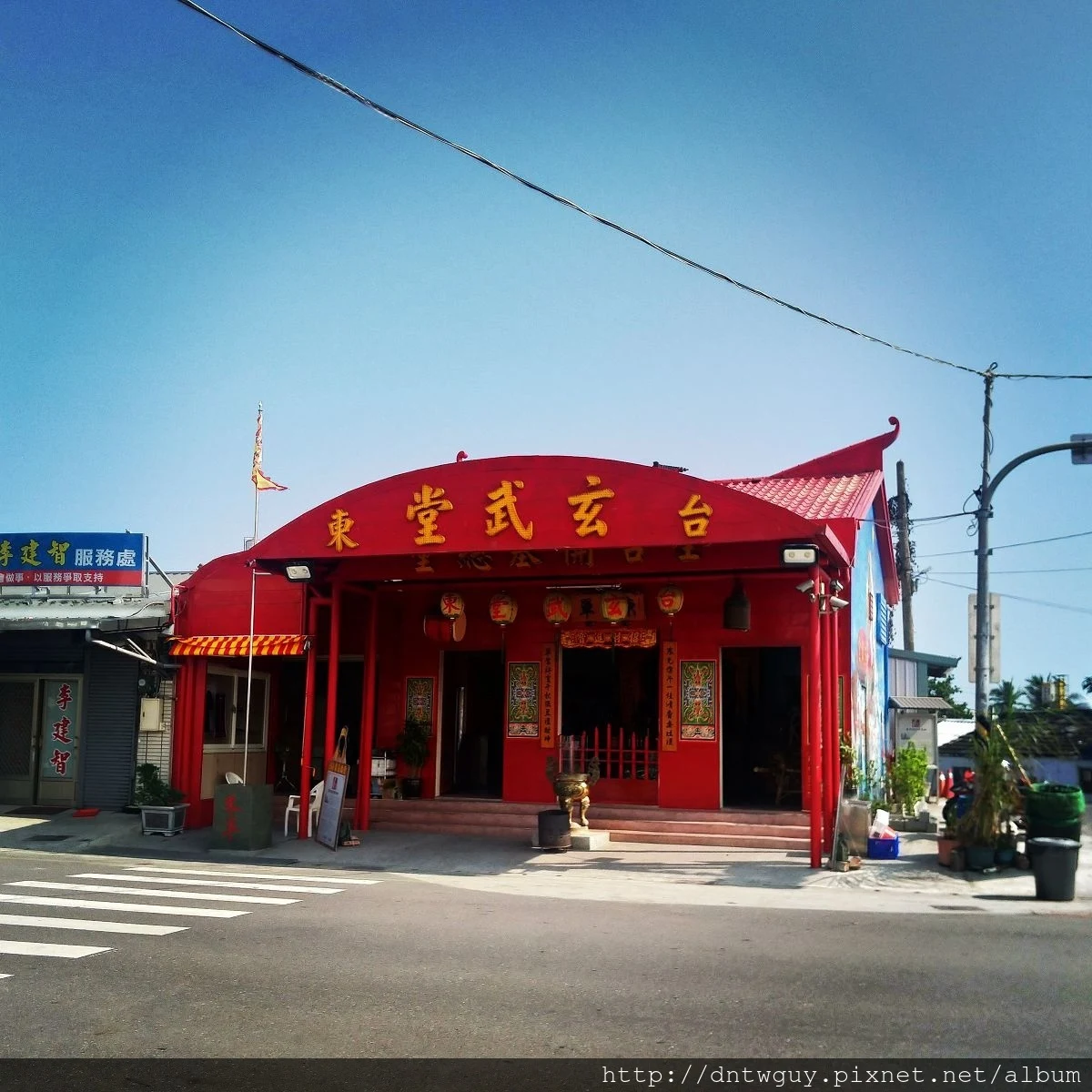
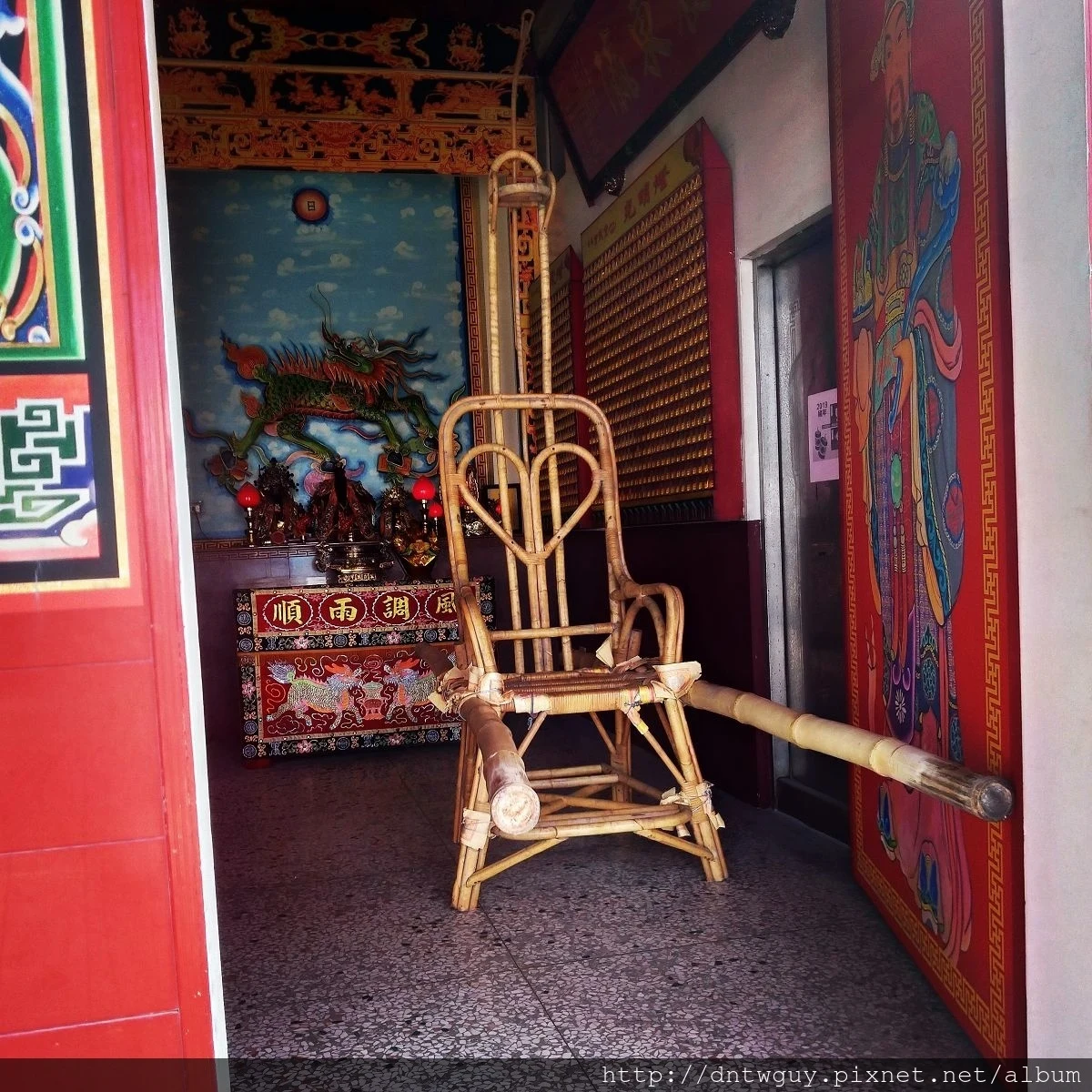
Near the seaward end of Zhengqi Road, Xuanwu Temple has a red frontage and a mural of the Handan ritual on its side wall. The bamboo chair inside makes an unusually direct connection between a quiet temple visit and the scene that fills Taitung streets at the Lantern Festival: a man representing the deity stands above the bearers as firecrackers burst around him. Outside the festival, the chair lets you see the physical support that the smoke usually conceals.
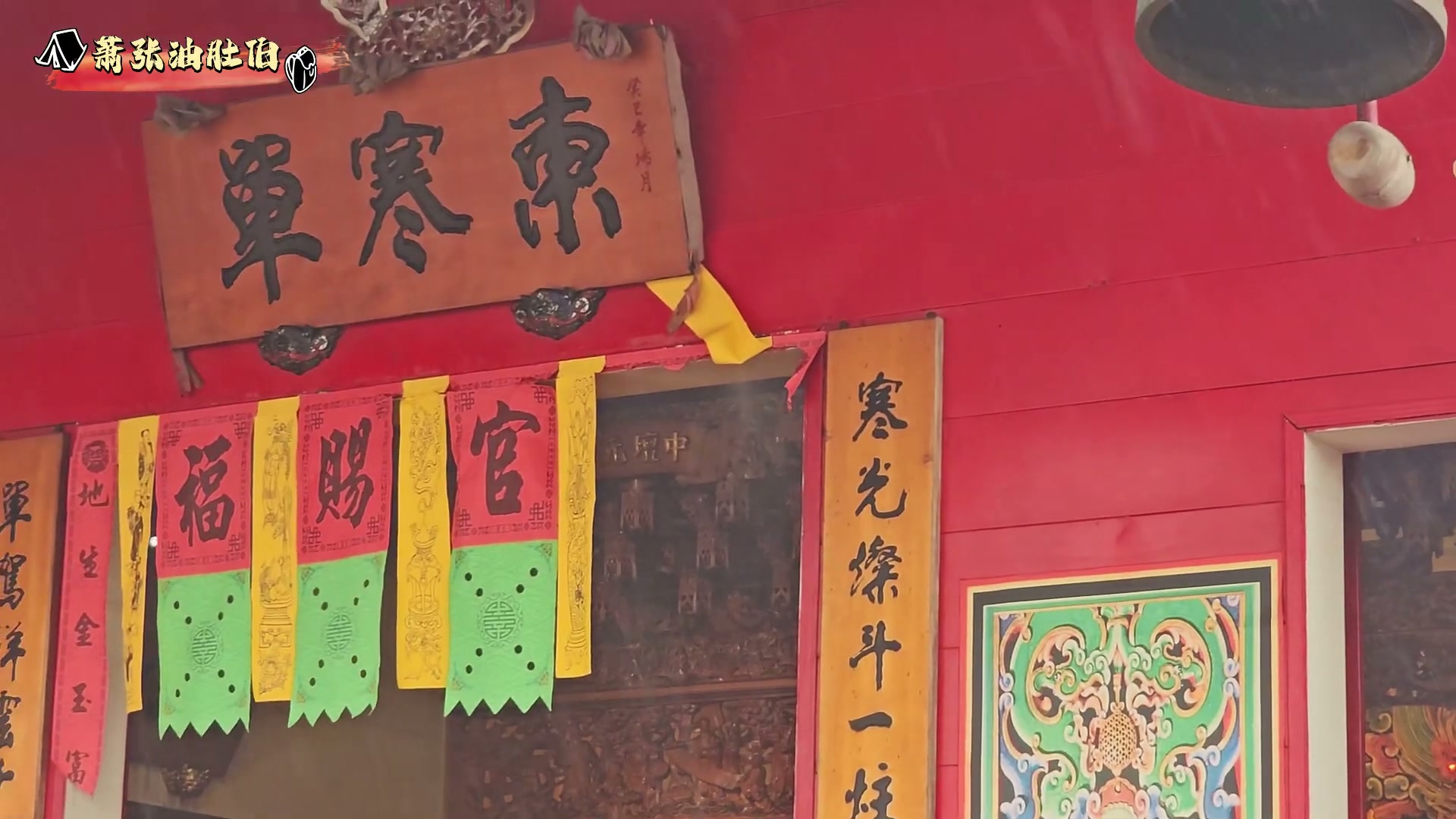
The deity image was once cared for by rotating household hosts. In 1989, the serving host Li Jianzhi established Xuanwu Temple, giving the worship a permanent address. The firecracker ritual had already passed through interruption and revival; cooperation with the city office from 1998 helped bring it into the public Lantern Festival programme. A household obligation thus became part of the city calendar, while the temple continued to provide the people and objects that made the ritual possible.
Preparing the chair is part of a longer religious preparation. The religious-heritage account describes inviting the deity, readying the palanquin and its spirit attendants, and using divination to confirm installation before offerings are made. It records a temporary lodging at the seaside park in that account. The sequence explains how a location becomes a ritual base; it does not establish where a later edition must set up or where visitors may enter.
The body on the chair, the shoulders below it
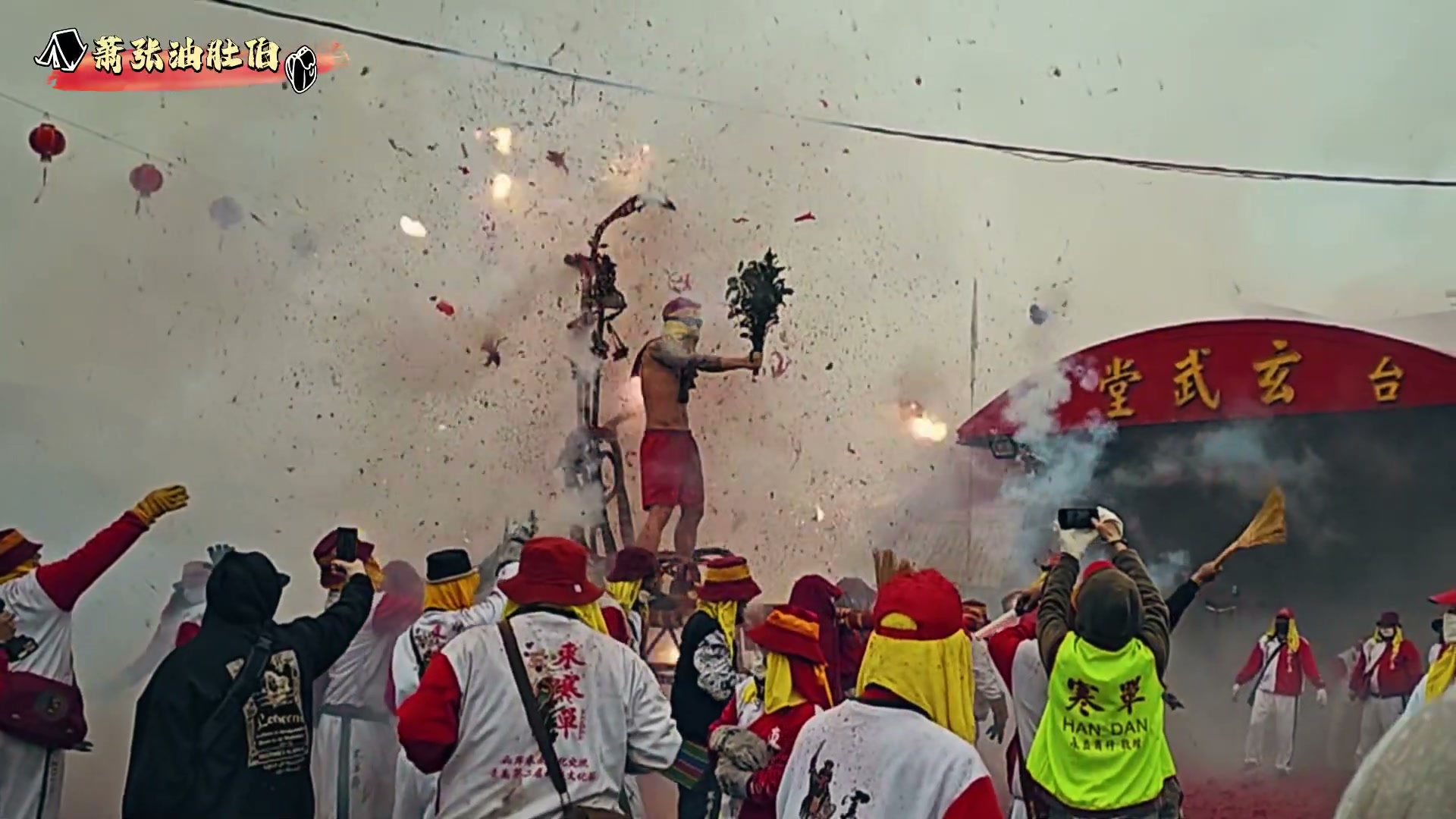
Local belief explains the firecrackers as a way to warm the cold-fearing Lord Handan, associated with the martial god of wealth. The human representative wears a headcloth and red shorts, covers his mouth and nose, and holds a banyan branch. Those forms belong to a religious role. Below him, the bearers must hold the chair steady; around them, organisers manage the space between the ritual and the spectators. The striking single figure depends on a group working together.
There are two different rhythms to the appearances: joining the deity procession through the city, and visiting businesses that have invited the temple for a scheduled firecracker ceremony. In 2026, more than twenty Handan and Handan-related appearances accompanied the 3–4 March Lantern Festival celebrations. The action moves between streets and hosts, rather than remaining on one stage. Choosing one organised viewing place allows you to follow an entire arrival, preparation and departure.
There are also two different presences on the bamboo chair: the standing human representative and a Handan statue installed above the rear. The official description records a gong leading the chair and a three-step advance and retreat before a host's premises. Watching from the designated boundary, these details distinguish the procession's greeting from its firecracker firing. The human participant does not replace the statue, and neither the chair nor the clothing makes exposure to explosives safe.
The branch is also a way to communicate
The branch in Handan’s hand is not merely part of a silhouette. The Interior Ministry’s cultural-heritage account records it as a tool for shielding the body and communicating the performer’s condition to the bearers below. It also preserves a local story about how a branch was first taken from a roadside tree. That story is an account of origin, not a dated incident independently established here. The documented use draws attention to a practical relationship between the person above and the people carrying the chair.
Clothing and representation have changed too. A separate official account describes the older practice of painting a divine face, known as kailian, and its later omission when a wet towel covered the face. Looking at the towel, branch and chair together reveals a ritual that has adjusted its visible form. These objects carry beliefs, but they also answer the needs of real bodies; their presence should never be read as making exposure to firecrackers safe.
When the procession leaves, another shift begins
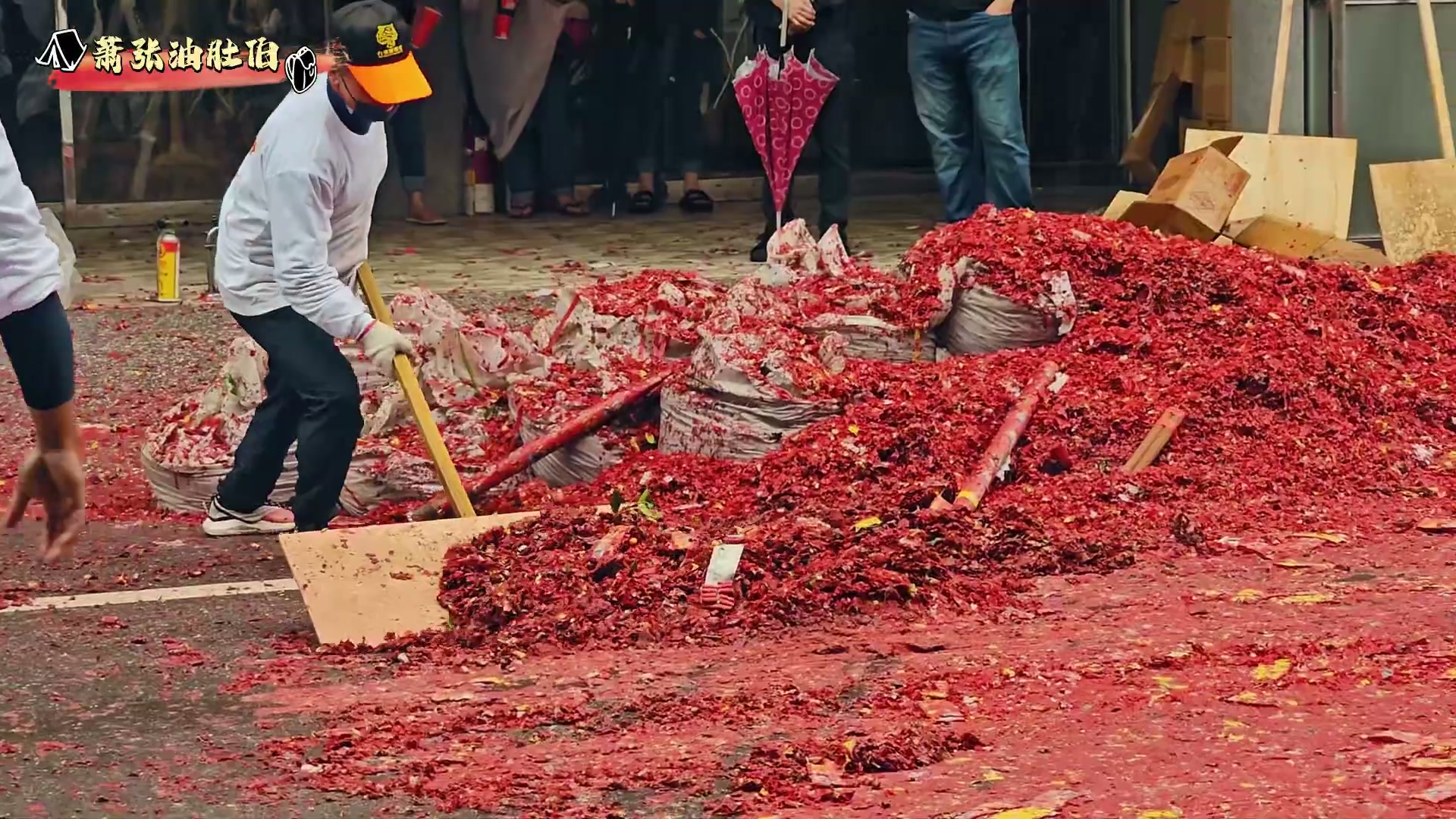
Firecracker paper remains after the sound has gone. At the end of the 2026 celebrations, cleaning crews worked into the early hours of 5 March, combining hand sweeping with machinery to reopen the streets. The next morning, residents and shopkeepers needed the same roads for work and deliveries. The festival therefore has an ending that rarely appears in its most dramatic photographs: clearing the surface on which ordinary city life resumes.
A visit gains depth when it includes both the temple and the public street. In daylight, the chair and deity images explain how the ritual takes shape; at night, the bearers, spectators and workers reveal how much coordination it demands. Keeping the viewing boundary clear and taking your rubbish away are practical ways to share that space with the people whose neighbourhood hosts the celebration.
Look closer at the places in the film
See the chair before the fire
The fire catches the eye, but the chair connects the scene. The human representative holds a leafy branch above the bearers while the surrounding crew occupies a wider space. Begin with the whole figure, chair and team before following the bursts. These excerpts come from different sessions in the 2025 recording; they are neither a continuous ceremony nor footage of an event happening today.
A permanent home for the deity
The red temple entrance, deity image and banner connect the street ritual with Xuanwu Temple. The National Cultural Memory Bank records an earlier tradition of rotating household hosts, followed by a permanent temple in 1989 and cooperation with the city office in 1998. The temple and festival street belong to the same story: one gathers people and objects; the other receives the procession.
Many roles support one figure
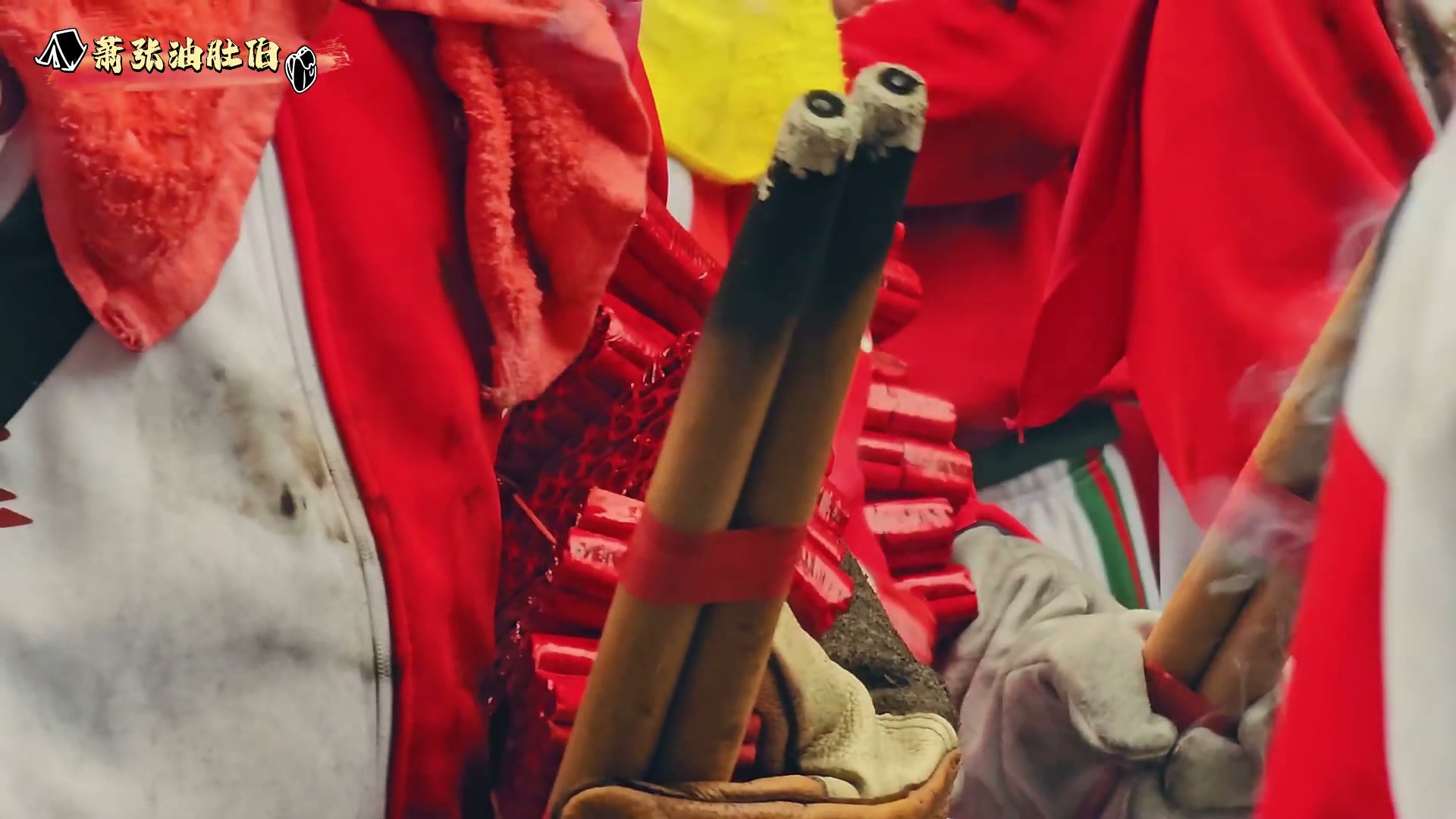
Headcloths, face coverings, gloves and equipment reveal the preparation behind the spectacle. The Ministry of the Interior describes leaders, representatives, bearers, firecracker crews and support roles. It also notes that the banyan branch can signal to the bearers. From an organised viewing position, follow the relationship between the people and the chair rather than moving towards the nearest burst.
The street has another task
Red firecracker paper gives the ritual a scale beyond the flash. The recording shows people crossing it and a worker moving it into piles. These daytime views are not presented as the cleanup after the night session. The same streets serve residents and shops outside the festival. Take personal rubbish away and leave a clear passage when you watch.
Leave room for a whole visit
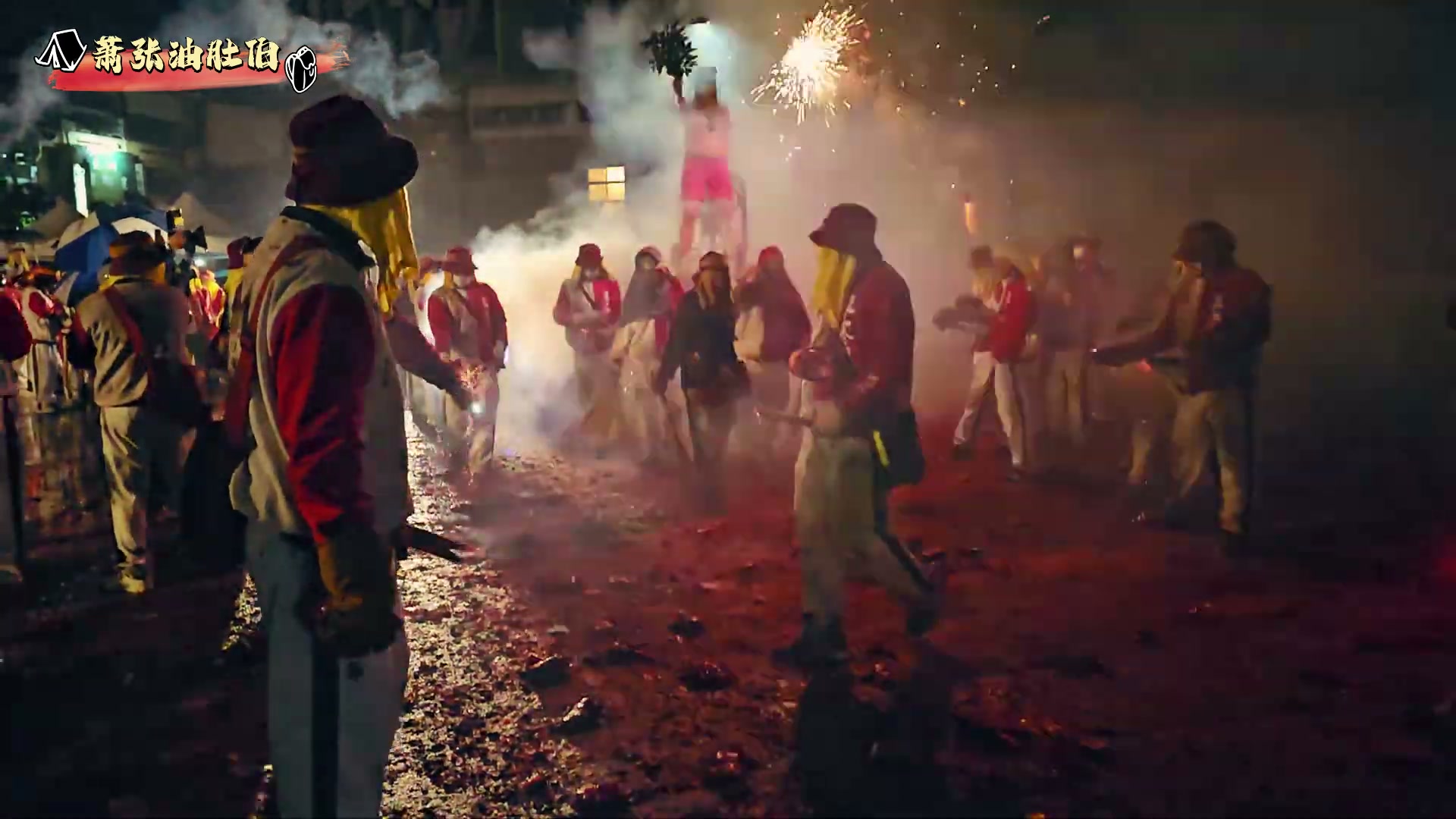
The night view brings the chair, bearers and working space together again. Taitung’s arts magazine places Handan within the city’s Lantern Festival and describes the importance of team training and protective equipment. Before travelling, confirm a named session, location and viewing arrangements. A general festival programme does not guarantee a Handan appearance at your arrival time. The film uses an added G music track with the source sound muted; its soundtrack is not live festival audio.
Film, article and image sources
From the Taitung Handan recording uploaded by 蕭張油肚伯 on 21 February 2025. Visible signs name the 2025 festival and Taitung Xuanwu Temple; exact filming dates remain unconfirmed. Daytime, street and night excerpts show different sessions, not one continuous ceremony. This is neither current-event footage nor an announcement for a future edition.
- 震撼心靈的民俗盛宴 | 台東 炸寒單 | 元宵節活動 | 炮炸肉身邯鄲
- 內政部臺灣宗教文化資產:炮炸肉身寒單爺
- 內政部宗教百景:臺東炮炸寒單爺
- 國家文化記憶庫:臺東市玄武堂
- 臺東縣文化處:114年臺東藝文1月號
1. 蕭張油肚伯 · 2025
2. 蕭張油肚伯 · 2025
3. 蕭張油肚伯 · 2025
4. 蕭張油肚伯 · 2025
5. 蕭張油肚伯 · 2025
Music: 跨海的一段路 (AI-generated instrumental).
Look closer
Look at the carrying chair and its poles before the festival, then watch how the bearers move together from the designated viewing area.
Observe the preparation and street clearing as well as the burst of firecrackers.
Visiting information
- When
- Around the fifteenth and sixteenth days of the first lunar month; the 2026 city celebrations were 3–4 March. The listed 2026 events have ended.
- Temple
- Xuanwu Temple, 2-1 Zhengqi Road, Taitung City; individual festival appearances take place at several city locations.
- Getting there
- From Taitung railway station, take bus 8101 towards Taitung Bus Station, then walk towards the seaward end of Zhengqi Road; a taxi is simpler with luggage.
- Viewing and return
- Stay behind the event boundary with hearing and eye protection. Arrange a city stay or a taxi pickup outside the closure area for late sessions.