
Cultural story
Clothes that enter a museum: reading The First Wave in Taitung
A museum garment can hold a maker’s skill, a designer’s collaboration and a wearer’s choices. The First Wave brought these relationships together, moving between Taiwan and Australia without reducing their peoples to a single style.
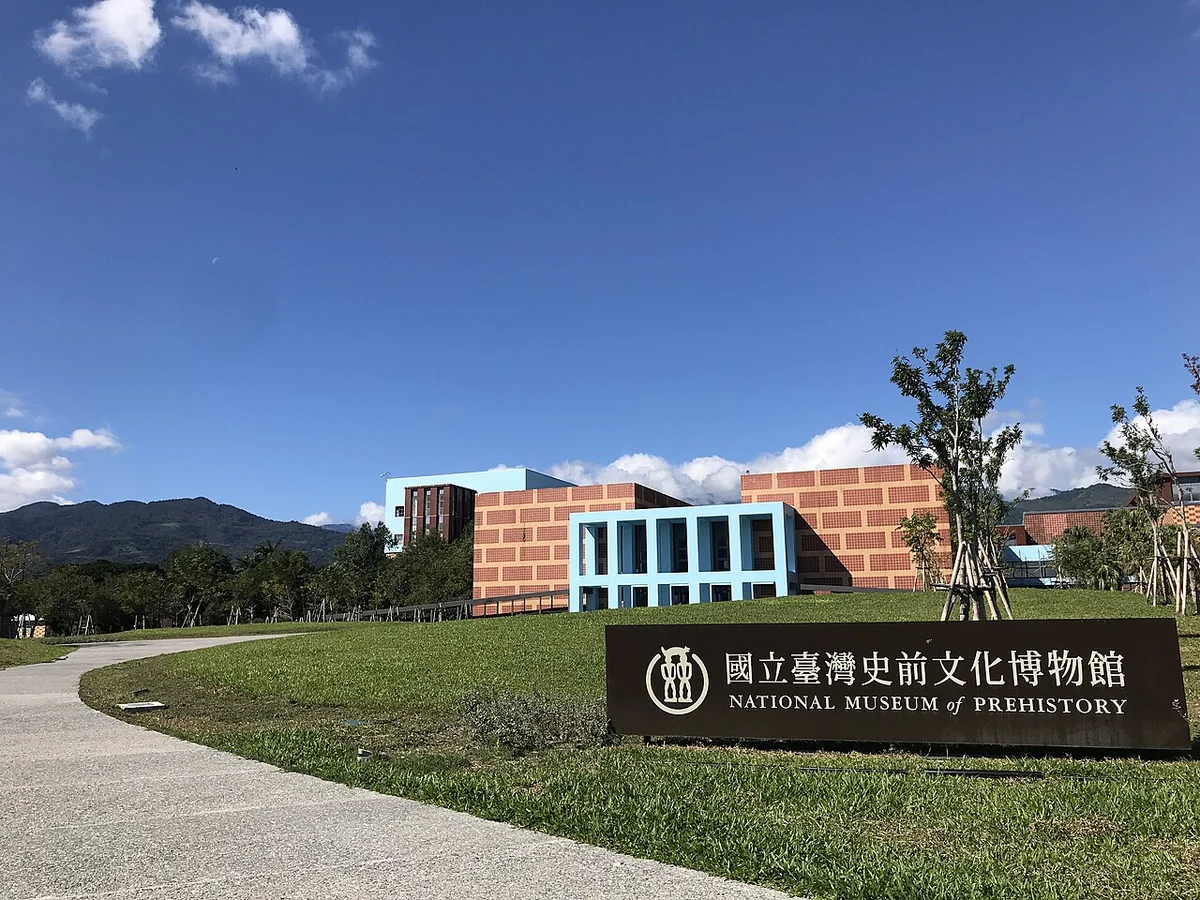
The 2025–2026 Taitung exhibition grew from an earlier exchange with Australia.
Traditional garments and fashion designs were shown in relation to one another.
Three Seediq-weaving and DYCTEAM designs entered the museum collection.
An exhibition travels, and its questions change
The First Wave began its Taiwan journey through a dialogue with Piinpi, an exhibition developed by Bendigo Art Gallery in Australia. When the National Museum of Prehistory presented it at its Southern Taiwan Science Park branch in 2022, Taiwanese Indigenous fashion joined the conversation. Bringing the work across the sea did not mean copying one country’s exhibition into another; it created room to compare how contemporary clothing carries different cultural histories.
The later curatorial account dates the Taitung main-site exhibition from 11 November 2025 to 17 May 2026. Its four units brought together 14 brands, 28 designers and 40 works. That range matters: it presents distinct creative practices rather than making one outfit stand for every Indigenous people.
A garment has more than one author
The exhibition included work connected with makers such as Paiwan embroiderer Ljavaus Aluguyan, Chen Li You-mei, and Seediq weaver Seta Bakan, Chang Feng-ying. Their names identify bodies of knowledge as well as people. Embroidery and weaving involve different structures and ways of handling a surface; placing the makers alongside fashion designers helps keep those differences legible inside a finished silhouette.
Three outfits made through the collaboration between Seta Bakan and DYCTEAM were donated to the museum. The donation gave an institutional home to work that had crossed between weaving knowledge and contemporary fashion. Collection records can preserve collaborators, materials and the circumstances of production alongside the object itself, so a later viewer has more to read than its colour or shape.
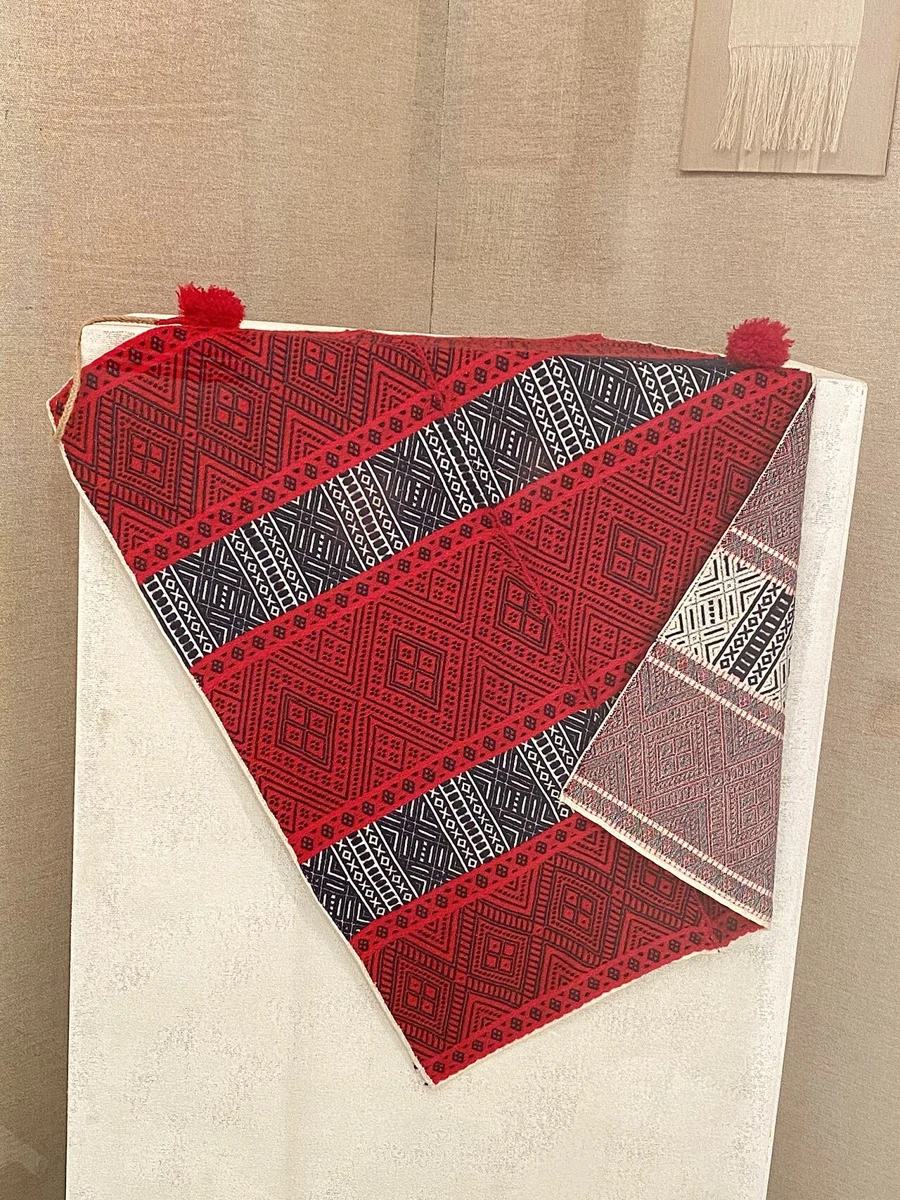
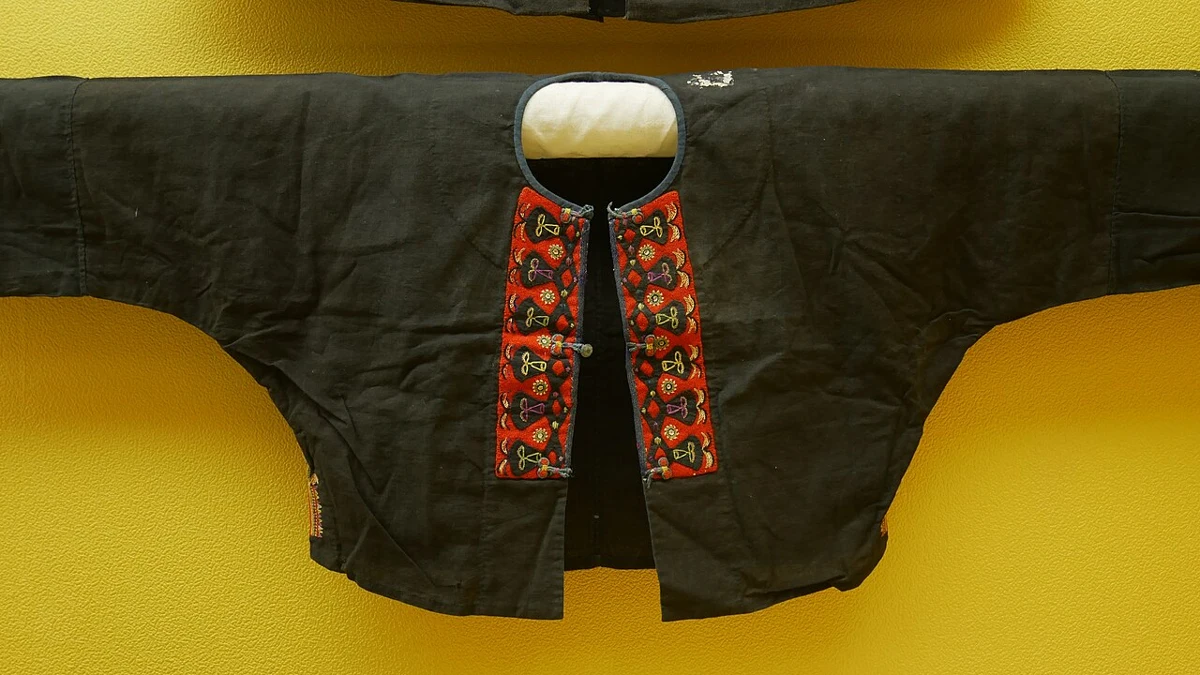
The accompanying collection photographs offer two reference points outside The First Wave: a Seediq shawl replica and a Paiwan short jacket. Their different proportions and arrangements of colour make the question of transformation visible. A contemporary designer starts with particular techniques and objects, not an interchangeable store of “Indigenous patterns.”
In 2025, designer Ruan Chih-chun used bead embroidery to suggest a woven surface on a Paiwan man's kacing, an open-backed lower garment. Curator Huang Yu-lun describes his experiment as a response to the time demanded by traditional weaving. The choice concerns who can keep making and wearing locally distinctive clothes, as well as their appearance.
From a body to a display, and back to living choices
The gallery placed garments on forms while photographs brought wearers into the same space. These are two different views of clothing. A stationary display makes construction and surface available for close attention; an image of a wearer brings back posture, styling and a relationship to everyday life. The curatorial account described mixing non-professional models with professional styling, making the people who wear fashion part of the exhibition’s argument.
The exhibition has ended, but its questions remain useful in a museum of prehistory. A collection concerned with long histories can also document new work being made now. Reading the date, maker and collaboration beside a garment connects continuity with change: an inherited technique may remain recognisable even as its scale, cut and intended use are reconsidered.
The exhibition images also required negotiation. Bunun stylist Ali Takisvilainan worked with the museum and Paiwan photographer Cegaw Tjudjaliman on three outfits and four settings. The curator sought the original designers' agreement to the restyling; mannequin tests preceded fittings with young models. A finished photograph thus records several people's decisions, rather than an anonymous traditional look.
Look closer
In The First Wave’s curatorial records, read maker and designer names separately, then examine what their collaboration changed.
Read the construction in the collection photographs alongside the posture and styling described in the curatorial records.
Visiting information
- Museum
- National Museum of Prehistory, Kang Le main site, No. 1, Museum Road, Taitung City.
- Visit
- Visit the museum's current galleries; the curatorial account gives 17 May 2026 as the closing date of The First Wave exhibition discussed here. It has ended.
- Opening hours
- Tuesday–Sunday 09:00–17:00; ticket sales end at 16:30. Closed Mondays except national and substitute holidays.
- Admission
- Main-site exhibition halls: adult NT$100; concession NT$60 for eligible children and students.
- 2026 maintenance
- The main site is closed from 28 November to 4 December 2026.
- Travel and return
- Use a train that stops at Kangle station, then walk to the museum. Plan the return train from the same station before setting out.