
Cultural place
The sugar warehouse that a neighbourhood kept
Residents saved the warehouses on Dali Street; volunteers and a theatre company brought new work inside. Taipei’s sugar heritage is also a story of who gets to shape a neighbourhood.
Taipei’s Sugar Warehouses: A Walk Inside and Out
90 seconds. English captions are part of the film. Optional Traditional Chinese subtitles are available in the player.
Film and five stills use OuPa Walker’s real walking footage published 26 July 2023. The title identifies July 2023; the exact filming day is unconfirmed. Displays and access can change. Music is an added score.
Read the complete five-chapter article → · 繁體中文
Complete English captions and Traditional Chinese translation
00:00:00,000 --> 00:00:08,000
Taipei’s sugar warehouses.
A quieter side of Wanhua.
臺北的老糖倉。
萬華街區裡,安靜的另一面。
00:00:08,000 --> 00:00:14,000
Sugarcane still grows
beside the paths.
甘蔗仍種在步道旁。
00:00:14,000 --> 00:00:21,000
Outdoor displays recall
the work behind the sweetness.
戶外展示,讓人想起甜味背後的工作。
00:00:21,000 --> 00:00:29,000
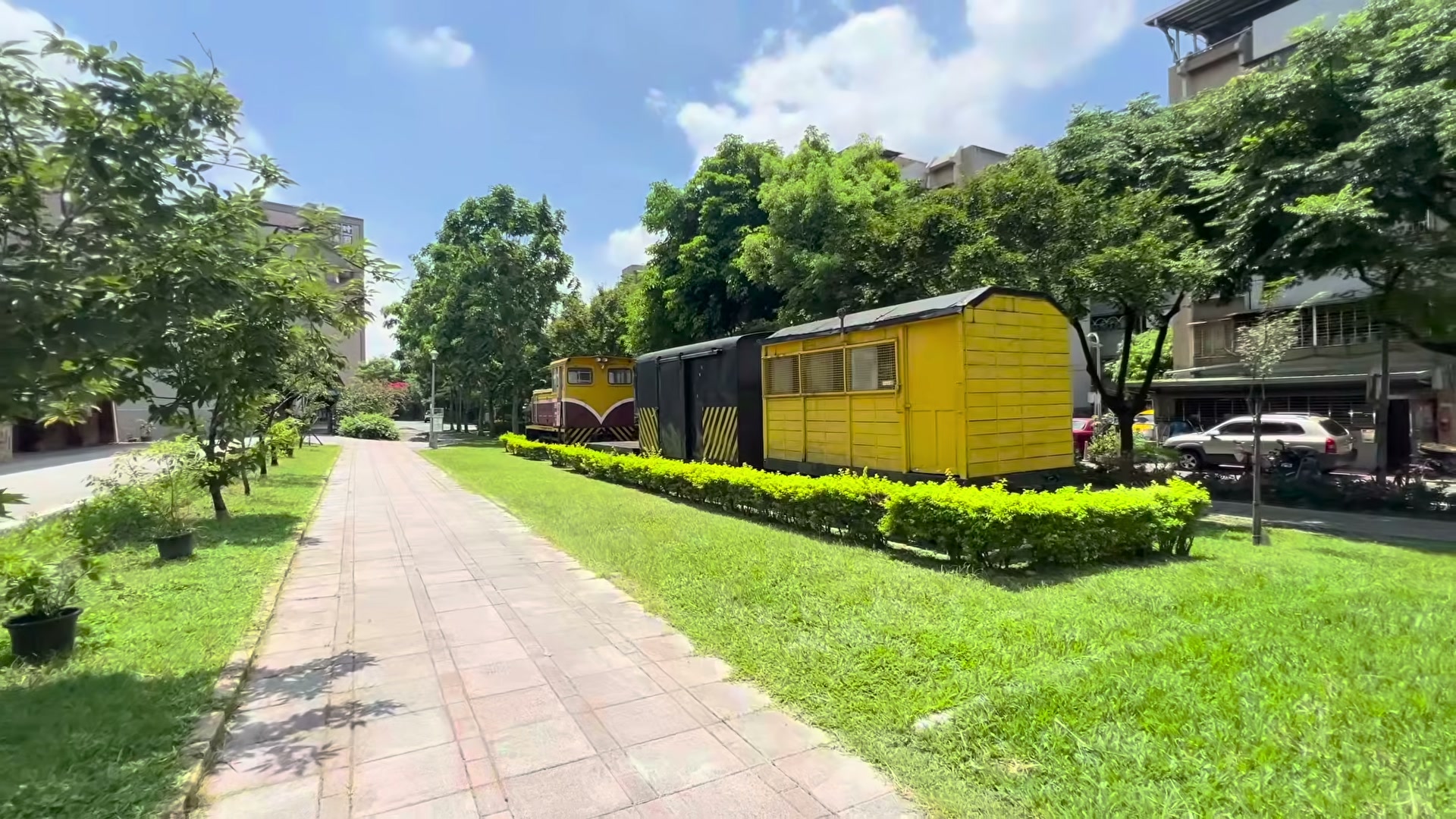
A small sugar train recalls
the movement of cane and goods.
一列糖業小火車,
留下甘蔗與貨物運輸的記憶。
00:00:29,000 --> 00:00:35,000
Look along the locomotive,
then continue through the garden.
沿著機車看過去,
再繼續走進園區。
00:00:35,000 --> 00:00:42,000
Arched doors open
beneath a deep timber roof.
深長的木構屋簷下,拱門迎向來人。
00:00:42,000 --> 00:00:49,000
Inside Warehouse A,
the sugar story comes into view.
走進A倉,製糖的故事慢慢展開。
00:00:49,000 --> 00:00:55,000
Look above the displays
to the warehouse roof.
看展陳,也抬頭看看糖倉的屋架。
00:00:55,000 --> 00:01:02,000
Tools, models and old photographs
connect the building with daily work.
器具、模型與老照片,
把建築連回當年的日常工作。
00:01:02,000 --> 00:01:09,000
The exhibition makes room
for discovery at a slower pace.
展場留下一個空間,
讓人放慢腳步,慢慢認識。
00:01:09,000 --> 00:01:15,000
Familiar sweets bring
industrial history closer to home.
熟悉的糖果,讓產業歷史貼近日常。
00:01:15,000 --> 00:01:22,000
Outside again, a shaded corridor
leads back to the neighbourhood.
再次走回戶外,
沿著遮蔭長廊,回到街區。
00:01:22,000 --> 00:01:30,000
Wanhua, Taipei.
Old warehouses, new ways to gather.
臺北・萬華。
老糖倉,繼續讓人相聚。
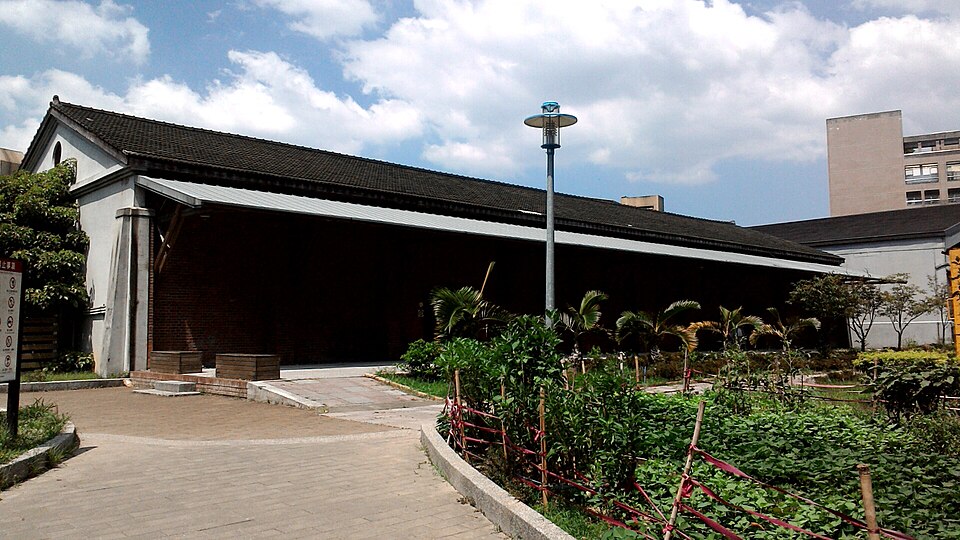
Three warehouses and the old platform were protected in 2003 after a community preservation campaign.
Warehouse A tells the sugar story; Warehouse B now receives audiences as Wan Theater.
From an industrial edge to a neighbourhood question
Sugar once organised work around Dali Street. Workshops, railway tracks and storage replaced an earlier landscape of small sugar mills and cane fields. Production left traces larger than a factory building: it helped shape the surrounding jobs and transport. The brick warehouses and loading platform preserve a small part of that industrial arrangement within today’s dense Wanhua streets.
In 1997 a proposed care facility on the former factory land brought residents together. Their campaign developed into a demand for a park and preservation of the remaining buildings. The community association was established in 2001, with Lin Chien-cheng as its founding chair. When the warehouses and platform gained monument status in 2003, the result reflected years of local organising, not simply an expert discovering an old building.
Residents also help tell the history
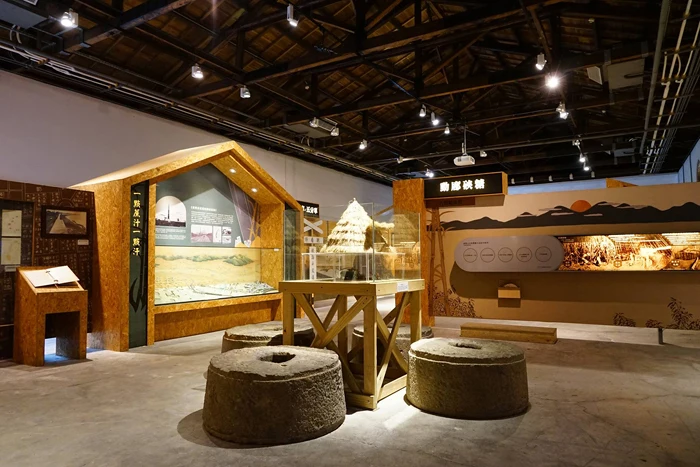
Warehouse A’s sugar exhibition grew from documentary research, oral-history interviews and workshops. Community volunteers help welcome visitors and explain the displays. Residents therefore appear in the site’s story twice: as people whose work and surroundings changed, and as people helping decide how those changes are remembered.
A 2025 visitor account noticed the familiar glass sweet-shop cabinet among the displays. Such ordinary objects bridge the distance between industrial production and what a household bought or ate. The brick shell tells how goods were stored; exhibits bring sugar back to hands, tools and consumption. Moving between the two gives the warehouse a social scale beyond its architecture.
An audience enters the next warehouse
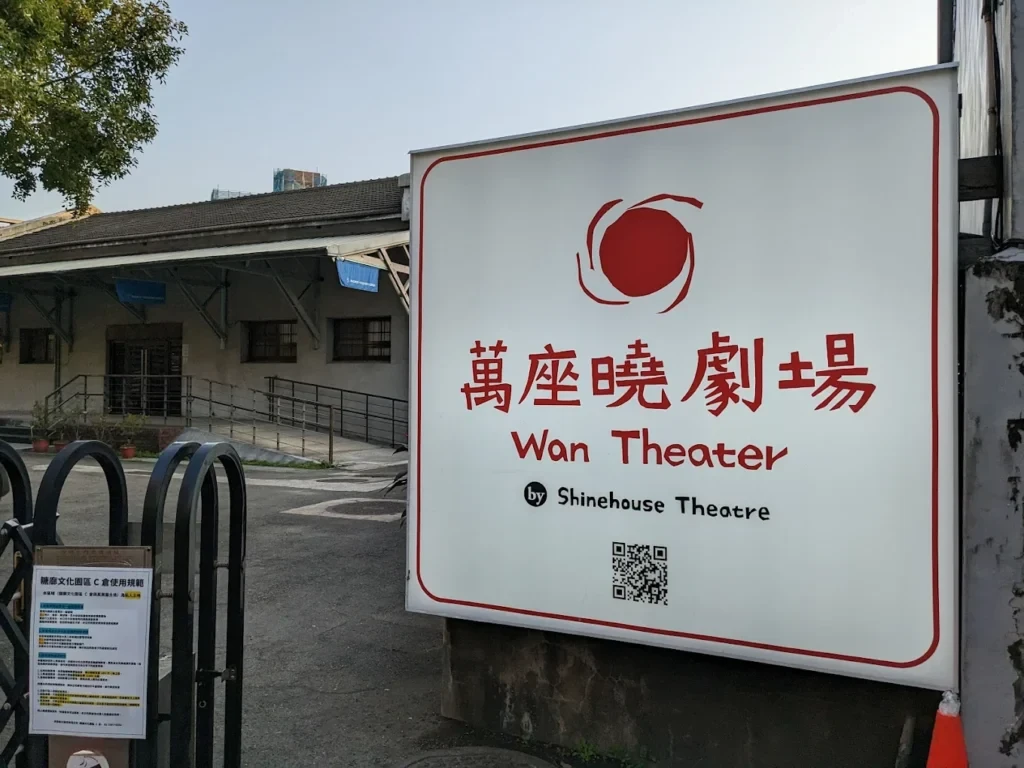
Shinehouse Theatre had worked in Wanhua’s basements and old apartments before obtaining operating rights for the warehouse in 2019. Turning it into a theatre required conservation plans, funding and building work. Working with architect Lu Ta-chi, the company finally opened Wan Theater in 2022. Its route from rented rooms to a permanent stage added another chapter of labour to the old industrial site.
The company’s relationship with its neighbours preceded this move: community drama classes began in 2014, inviting local residents to perform. The new venue provides 200 seats, and its name combines Wanhua with the idea of a theatre. In 2024 it received a Taipei Old House New Life Best 10 award. A place that once stored sugar now gathers people for rehearsal and performance; the neighbourhood remains part of what makes the building useful.
Three warehouses, rather than the whole factory
What survives is not the entire sugar factory. Taiwan Sugar records three warehouses and the platform remaining after the 1979 demolition of facilities including the chimney. The city’s cultural department identifies brickwork, arched openings, trapezoidal columns and wide-span framing as warehouse features. Compare openings, supports and roof spans from outside, then the platform, without treating the whole park as original factory fabric. Naming records another change. Following the monument-name revision on 21 August 2024, Tangbu Cultural Park became Taipei Sugar Refinery Cultural Park, stating its industrial identity more clearly. Warehouse A’s exhibition, B’s theatre and C’s separate uses have different arrangements. Comparing their exteriors does not imply that every building is freely accessible.
Look closer at the places in the film
Begin with the warehouse and its garden
Turn from the streets into a garden of low warehouses, lawns and shade. Red brick, a long projecting roof and a curving path change the pace of the walk. Seeing the building within its grounds helps connect the platform and small train that follow.
Older signs and films call this Tangbu Cultural Park. Taipei’s cultural-points guide records its 2024 renaming as Taipei Sugar Refinery Cultural Park. The two names refer to the same place beside everyday Wanhua.
Cane and a small train keep work in view
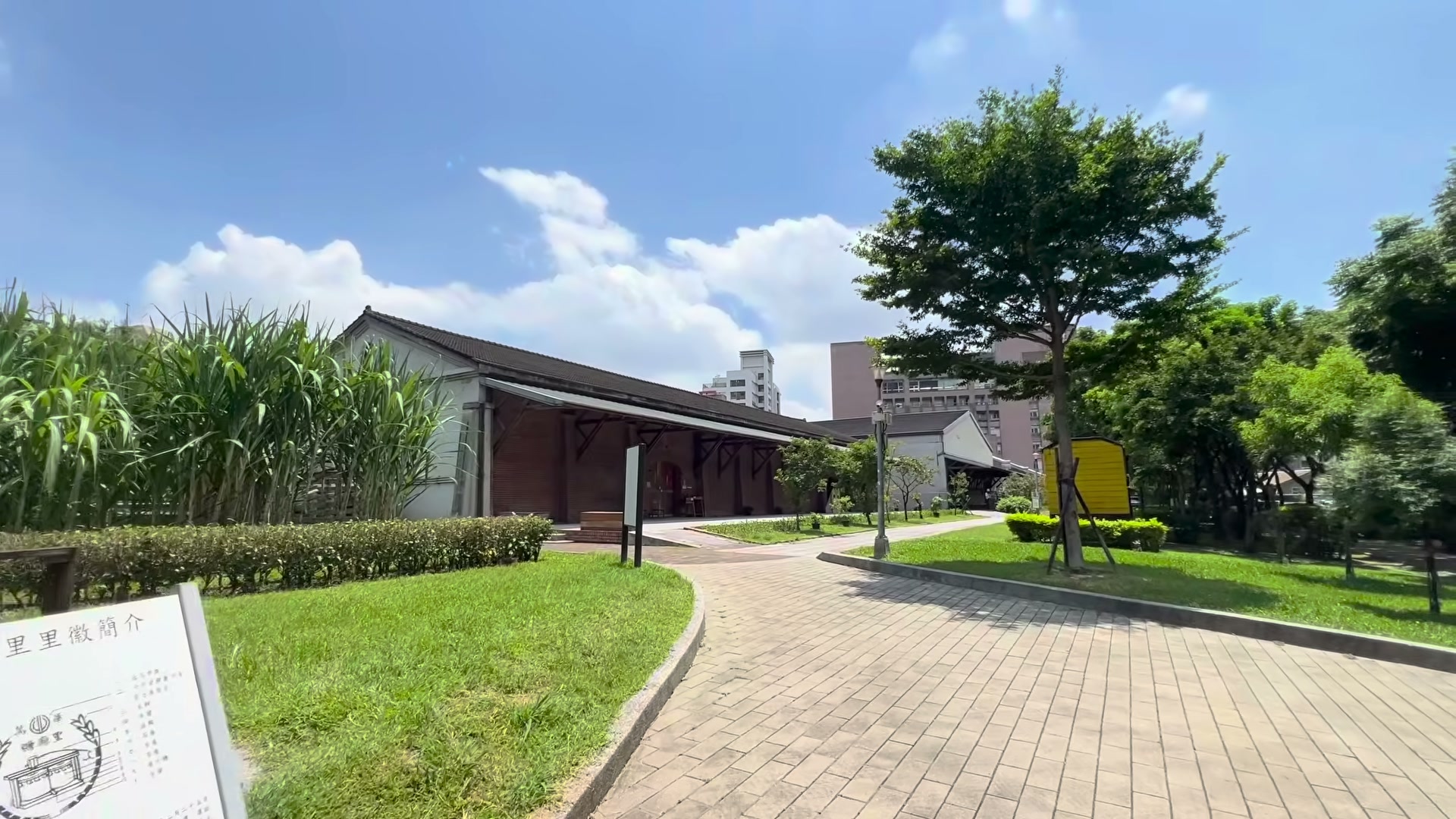
The path passes growing sugarcane and an outdoor display of figures, a buffalo and milling stones. The display is at rest, but it brings attention to bodies, tools and effort behind the finished product.
A complete sugar railway display stands behind the hedge, with locomotive, carriage and a short track visible. The train is preserved as a display. After seeing the whole train, look back towards the warehouse and consider the relationship between storage and transport.
Read what survived at the brick threshold
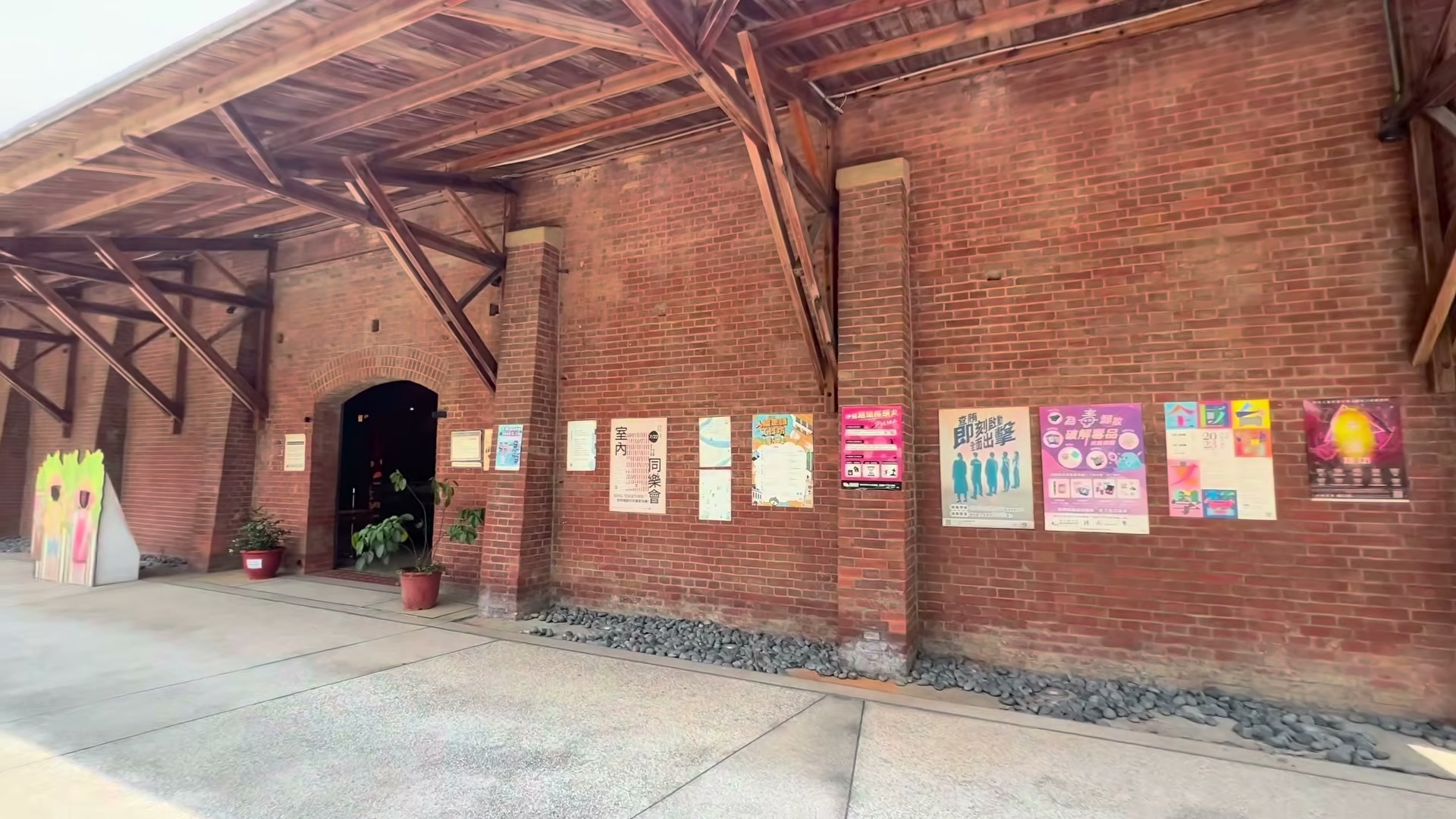
Approaching Warehouse A, red brick and a high timber canopy hold the view outside for a moment. The arched entrance, deep shelter and edge of the platform reveal more than a wall for photographs: they show a building arranged around arrival, handling and waiting.
Local residents helped secure the site’s survival. The official cultural-points guide records the designation of three warehouses and the old platform as municipal heritage in 2003. Under this roof, the material remains also recall a neighbourhood’s decision to keep them.
Inside, connect exhibits with daily life
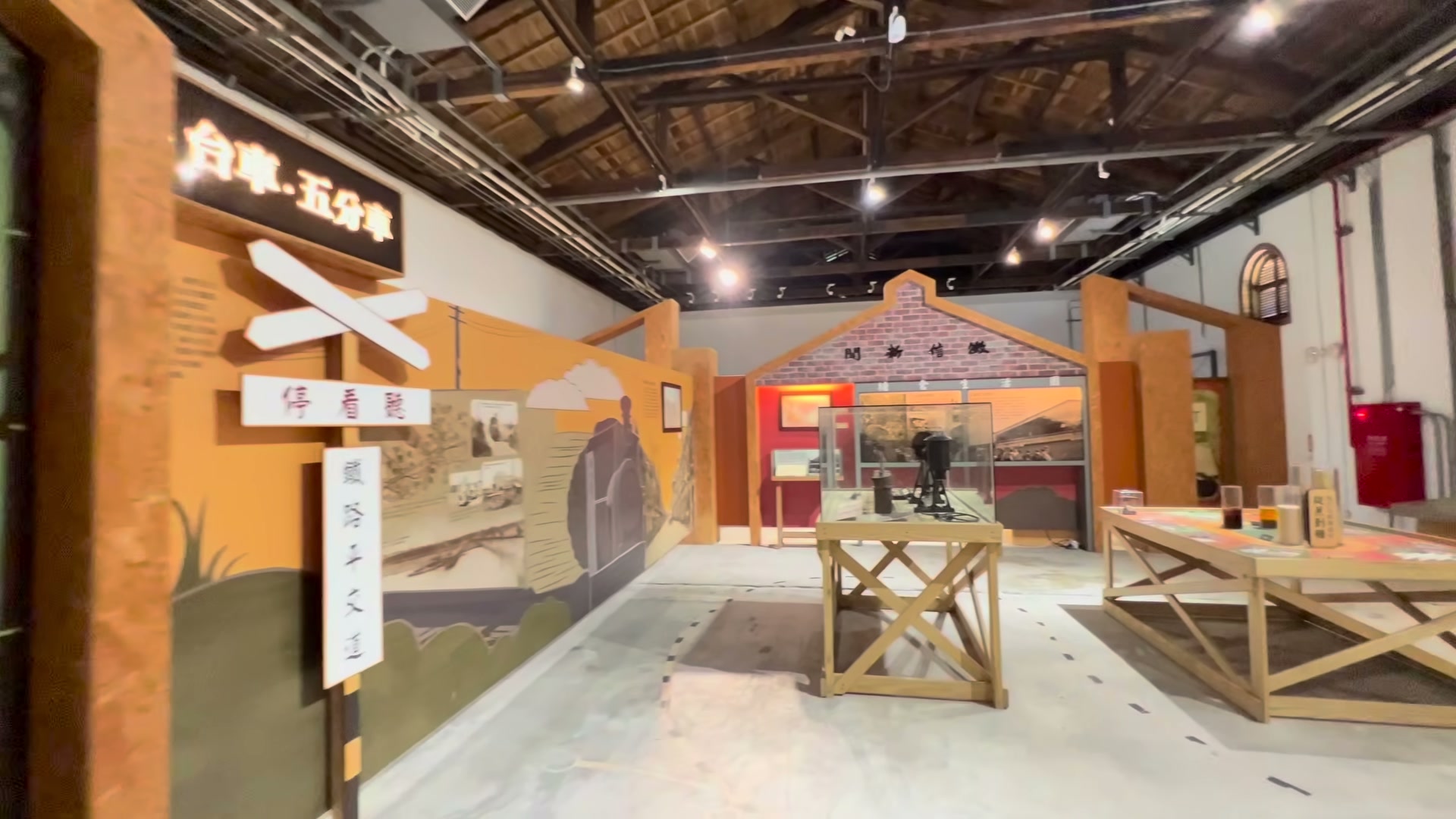
Beyond the threshold, the room stays visible around its displays. Roof structure remains overhead while models, tools and interpretation sit below. The walk changes scale, from a room to an object, then towards familiar images and memories of sweets.
The cultural bureau describes Warehouse A’s permanent exhibition as drawing on documents, oral histories and workshops, with community volunteers helping visitors. These archive views show the arrangement in a video published in 2023; individual displays may since have moved or changed.
Follow the corridor back to Wanhua
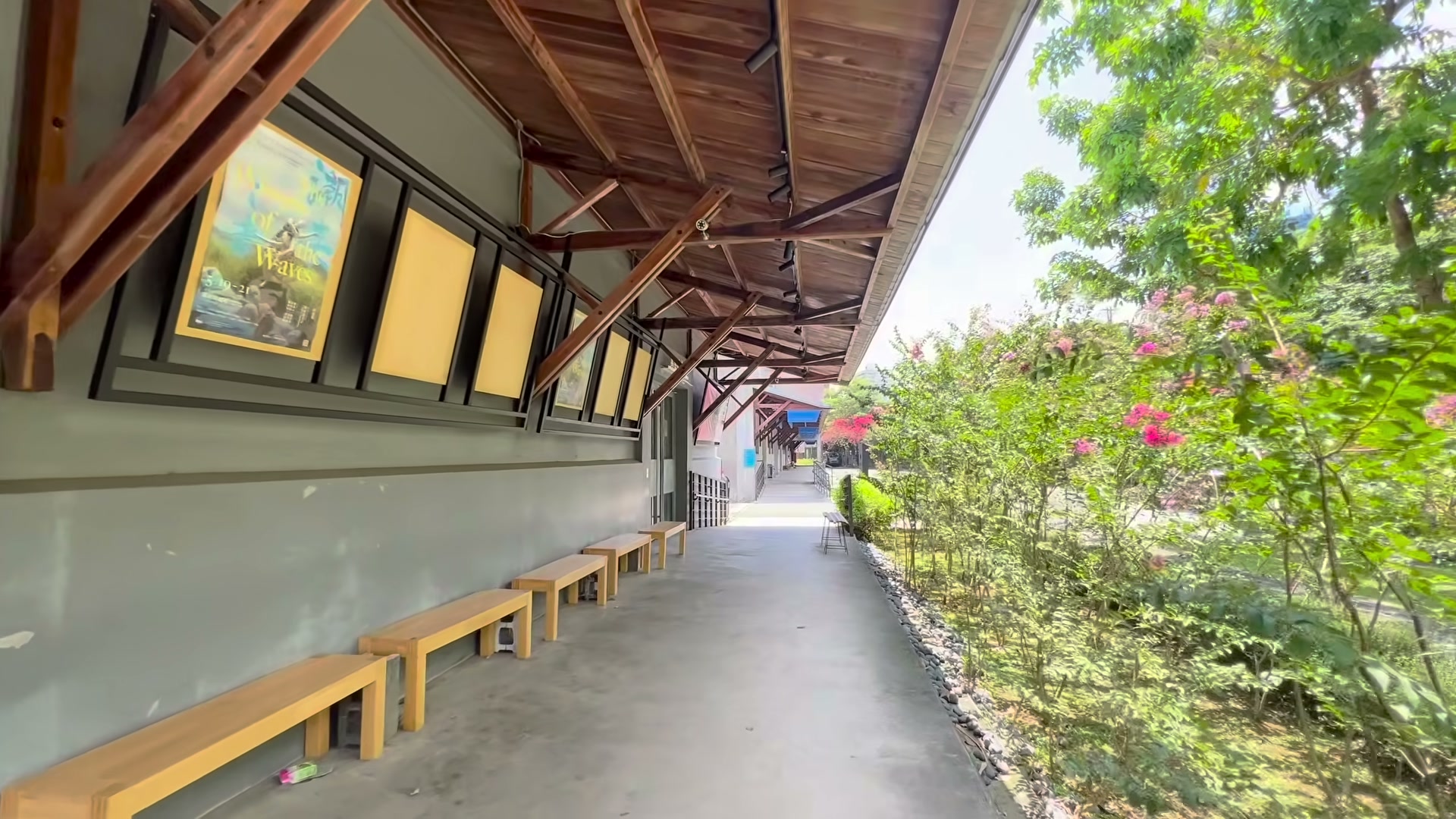
Back outside, the covered corridor holds the sunlight beyond its edge. Brick, planting and shade reconnect the exhibition with the garden. Leaving does not require another landmark: the short return to the courtyard makes the neighbourhood feel close again.
The warehouses have new users, too. The city’s theatre directory identifies Warehouse B as Wan Theater, run by Shinehouse Theatre for performance and artistic exchange. Check exhibition, tour and performance arrangements separately, then leave some time simply to walk.
Film, article and image sources
Film and five stills use OuPa Walker’s real walking footage published 26 July 2023. The title identifies July 2023; the exact filming day is unconfirmed. Displays and access can change. Music is an added score.
- OuPa Walker|萬華新富市場→大理街→糖廍文化園區(2023-07-26發布;本片只取園區段)
- Taipei City official venue information
- Taipei City official venue information
- Taipei City official venue information
1. OuPa Walker · recording year unstated
2. OuPa Walker · recording year unstated
3. OuPa Walker · recording year unstated
4. OuPa Walker · recording year unstated
5. OuPa Walker · recording year unstated
Music: 把時間留下 (AI-generated instrumental).
Look closer
Compare the warehouse’s large structural span with the smaller tools and models in the display.
Look at the platform’s position beside the warehouses, then locate the theatre entrance.
Visiting information
- Address
- Warehouse A: 132-10 Dali Street, Wanhua District, Taipei; Wan Theater: 132-9.
- Opening
- Warehouse A: Tuesday–Sunday 10:00–17:00; Monday closed. Theatre entry follows the performance programme.
- Visit and tours
- Allow 45–60 minutes for Warehouse A and the outdoor platform. Groups of ten or more can request a tour at 02-2720-8889 ext. 3540; park enquiries: 02-23067975.
- Transport and return
- Use MRT Longshan Temple or TRA Wanhua and walk towards Dali Street. Return to the same station after the visit; allow about 10–15 minutes each way for the street walk.