
Cultural story
A road facing the ancestral sea
On the fifth day of the ninth lunar month, food is carried to a farm road southwest of Kabuasua’s great shrine. The direction, offerings and songs keep a journey of remembrance in the present.
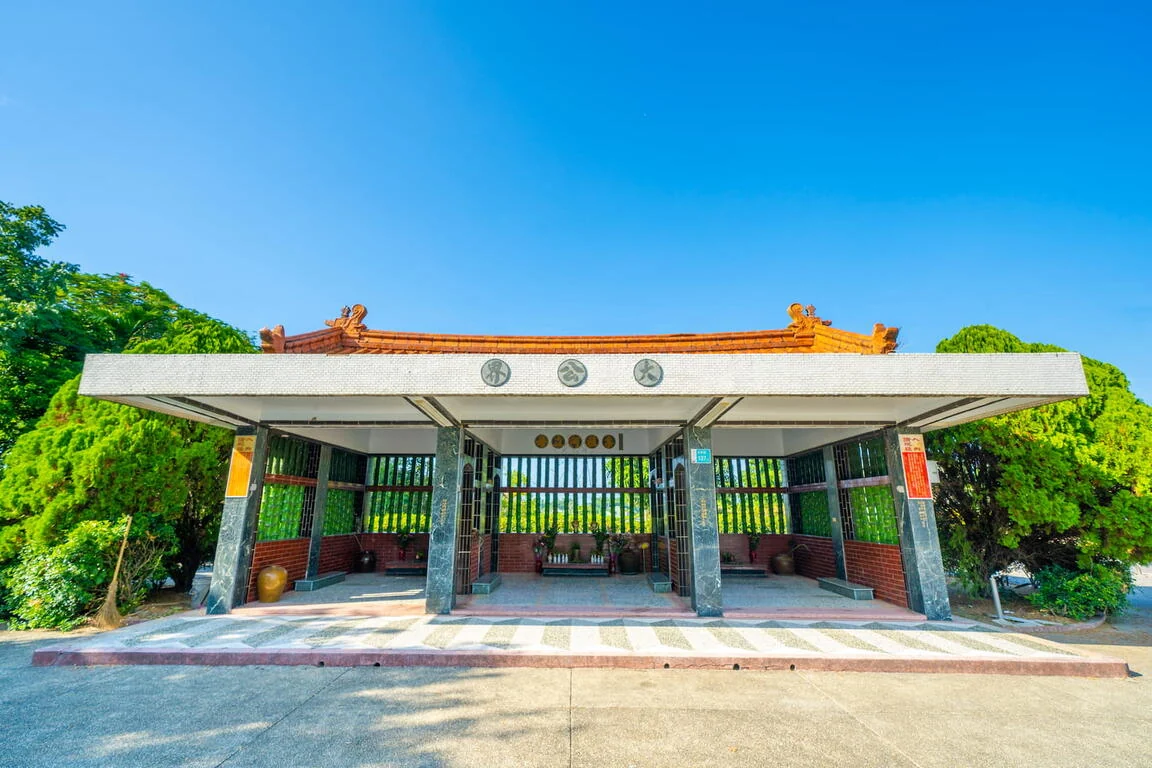
The ceremony follows the night ritual and faces southwest.
Alak Akatuang emphasises remembrance in the name xiaohai.
Learning continues in the community classroom beyond the festival.
A place remembered through direction
The sea cannot be seen from the farm road where Kabuasua holds xiaohai. Yet southwest remains the direction of remembrance, towards the former Soulang homeland near present-day Jiali. Oral accounts connect the rite with ancestors lost at sea, or with A-hai, remembered for helping the community’s forebears. The gathering keeps gratitude alive through a shared direction and an annual return.
Alak Akatuang, Tuan Hung-kun, argues for the character 孝, associated with respect for ancestors. Older written names had emphasised crying, especially the movements and voice of ritual specialist Li Jen-chi, who died in 2001. Choosing the name changes what a visitor first notices: grief is present, but so are affection, gratitude and responsibility to those who came before.
Food laid along a farm road
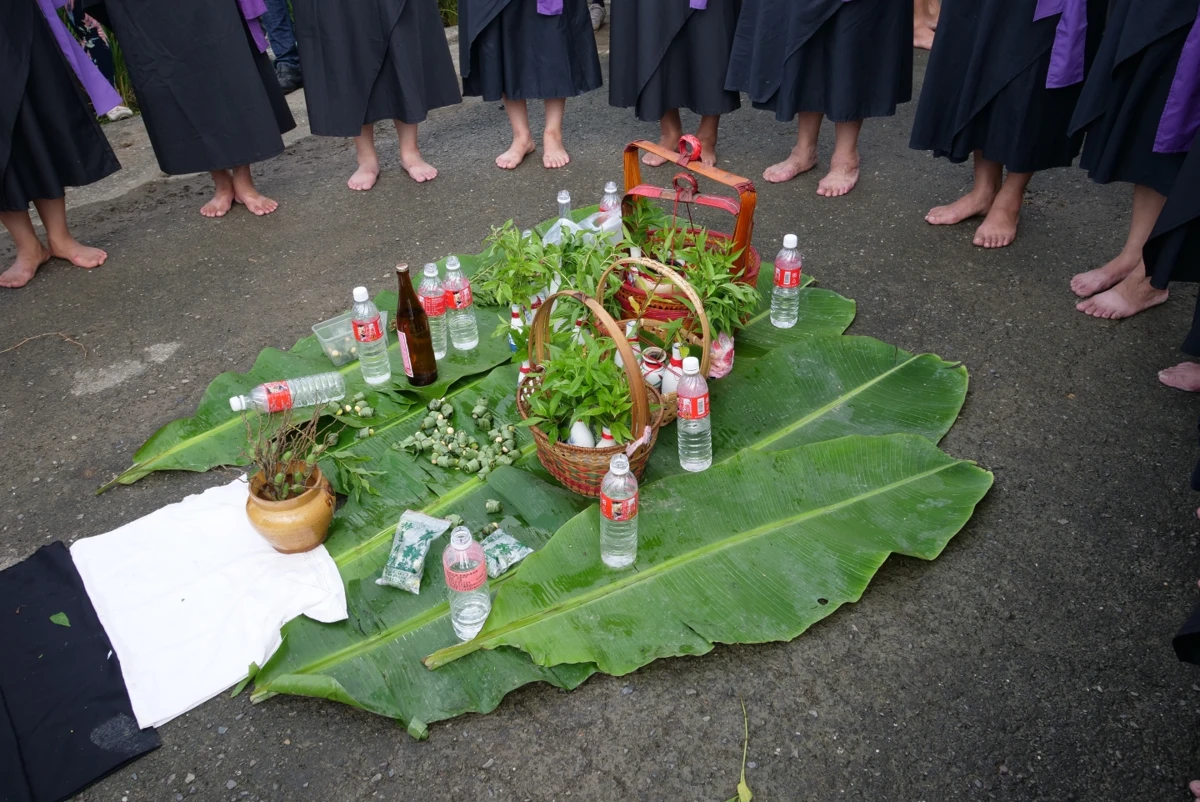
Families bring prepared food to the road, while banana leaves form the surface of a temporary altar. Ritual vessels, betel nuts and green leaves gather at its centre. Women sing in a circle nearby. Unlike a fixed stage, the setting is assembled through things carried from homes and shrines; when the ceremony ends, the road returns to everyday use.
During the inspection of offerings, called dian fancai, the officiant acts on behalf of the ancestors. Removing sugarcane leaves from the rice-wine bottles marks the acceptance of the food. The songs continue until the ritual sequence is complete. A meal prepared by one household becomes part of a shared exchange with ancestors and neighbours.
The school places this autumn observance within a longer learning year. In a 2022 interview, director Wang Tsung-wen described a curriculum following local seasons: cotton trees in spring, art in summer, and night rites and xiaohai in autumn. Renaming the school Kabuasua in 2010 had followed community and school discussion. The name and timetable both brought local knowledge into an institution children used every day.
The children return in another role
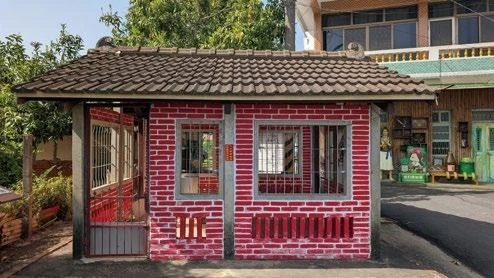
The annual rite is one part of a longer educational effort. In 2023 the Kabuasua community classroom’s summer camp had already run for nine years. Liu Hung-jui, once a participant, returned as a counsellor because he wanted to give back the help he had received as a child. Hom-hom, Lin Yu-chen, found that the work connected learning about her own community with meeting other people.
A community visit can connect these places: the great shrine, smaller family shrines, the washhouse and the classroom. Each tells a different scale of the story, from household responsibilities to public learning. The festival’s continuity depends on this ordinary work as well as on the afternoon when everyone faces the ancestral sea.
The community’s sacred geography includes the great shrine and five family shrines. The east shrine to Alimu is maintained by descendants of the Cheng family. Moving between these places with a local guide reveals why community history cannot be reduced to one ceremonial stage: responsibilities also remain with particular families.
Returning teacher Chen Yi-chun taught crafts including cord-making and screen printing, gradually adding animals from the surrounding environment to geometric motifs. Lien Wan-ling adjusted dance teaching to individual children's abilities, with those who learned first helping classmates. These are concrete teaching choices. A school dance lesson is distinct from ceremonial qianqu, and its existence does not make classes or household rites open to unarranged visits.
Look closer
Notice how banana leaves, vessels and offerings define the temporary altar.
Listen to the community’s explanation of the southwestward direction.
Visiting information
- Place
- Kabuasua great shrine and community, Donghe Village, Dongshan District, Tainan. The xiaohai gathering takes place on a farm road southwest of the shrine.
- Guided visit
- Contact the Kabuasua cultural-history workshop on 06-6233190 with the date and group size. Half-day and full-day community visits are arranged by appointment.
- Travel and return
- Arrange a vehicle from Xinying railway station to Donghe Village and agree the pickup point with the guide. Night-ritual visits need a return vehicle arranged in advance.