
Shishan Shell Ginger: From Fibres to Everyday Life
Begin with shell ginger fibres and making hands, then read how Shishan’s cooperative carries everyday craft into its warehouse.
90 seconds · English captions in the film; optional English and Traditional Chinese CC.
Film sources and complete bilingual captions
Re-edited from the cooperative record published in 2016 and its own Shishan Warehouse channel film published in 2023. Filming dates were not independently confirmed. The older community workshop is not presented as the current sugar-factory warehouse. The 2023 film is an authored promotional record; displays and personnel may change. 16.47 seconds originate in 720p, with 73.53 seconds in 1080p including the source’s letterboxing. Output resolution is not a claim that every shot is native 1080p. A few original process labels remain; no television-programme titles or full-screen cards are used.
00:00:00,100 --> 00:00:02,900
Shishan
A Hat Begins with a Plant
石山月桃
一頂帽子,從植物開始
00:00:03,150 --> 00:00:07,300
Start with a leaf.
Step inside Shishan Warehouse.
從一片葉開始,
走進石山倉庫。
00:00:07,850 --> 00:00:17,950
Kakawasan, Taitung
Workshop footage published in 2016
臺東石山部落
以下工坊影像於2016年公開
00:00:18,800 --> 00:00:25,400
Follow shell ginger
from the hillside to the workbench.
跟著月桃,
從山坡走向工作桌。
00:00:26,000 --> 00:00:32,100
Watch the stems
carried back by hand.
看月桃莖,
怎麼由雙手帶回。
00:00:33,000 --> 00:00:40,150
Open the leaf sheaths.
Find the fibres inside.
把葉鞘分開,
看見裡面的纖維。
00:00:41,000 --> 00:00:48,100
Split broad pieces
into narrower strips.
從寬的材料,
慢慢分成細條。
00:00:49,000 --> 00:00:57,900
Pull them apart,
one careful length at a time.
順著纖維拉開,
一次留下一條。
00:00:58,700 --> 00:01:07,200
Now follow the needle
through the woven hat.
再跟著針,
穿過編好的帽面。
00:01:08,000 --> 00:01:13,950
A braided edge.
A final trim.
編出帽緣,
修去多餘的末端。
00:01:14,650 --> 00:01:20,800
From separate fibres
to something you can wear.
從分開的纖維,
變成可以戴上的日常。
00:01:21,400 --> 00:01:24,100
Back in the warehouse,
look closer at the work.
再回到倉庫,
靠近看完成的作品。
00:01:24,600 --> 00:01:29,400
Taitung, Taiwan
Taiwan, Layer by Layer
臺東,臺灣
島嶼年輪
Cultural story
Shishan shell-ginger craft: the scraps that became a hat
At Kakawasan, work with shell ginger moved from containers to hats, training and a cooperative. Its story turns on how people learn, share work and find new uses for familiar fibres.

The hat began with fibres left over from making containers.
Skills were developed through visits, invited instructors and repeated trials.
The Taitung sugar-factory venue combines a shop with a working space.
What was left on the workshop floor
When shell-ginger containers were being made, thin leftover strips accumulated on the floor. Song Po-fang saw something still usable in them. Braided into cord, the strips suggested another shape: a hat. That shift was small enough to begin with an experiment, yet large enough to change the workshop’s range of products.
Song had worked in banking before returning to Taitung. Community work connected her with the makers of Kakawasan, the Amis community also known as Shishan. The hat was not simply the rediscovery of an object everyone already knew how to make. The group visited other craft centres, learned from instructors and adjusted its methods, linking local material knowledge with newly acquired production skills.
The 2018 interview gives the change of shape a precise starting point. Among the women’s experiments with leftover material was a hemispherical betel-nut basket, passed around at gatherings with nuts, leaves, lime and a small knife inside. Song Bo-fang tried the emptied basket on his head. The new hat began by looking again at a familiar container, rather than by discarding the knowledge used to make baskets.
From a stalk to a shape that can be worn
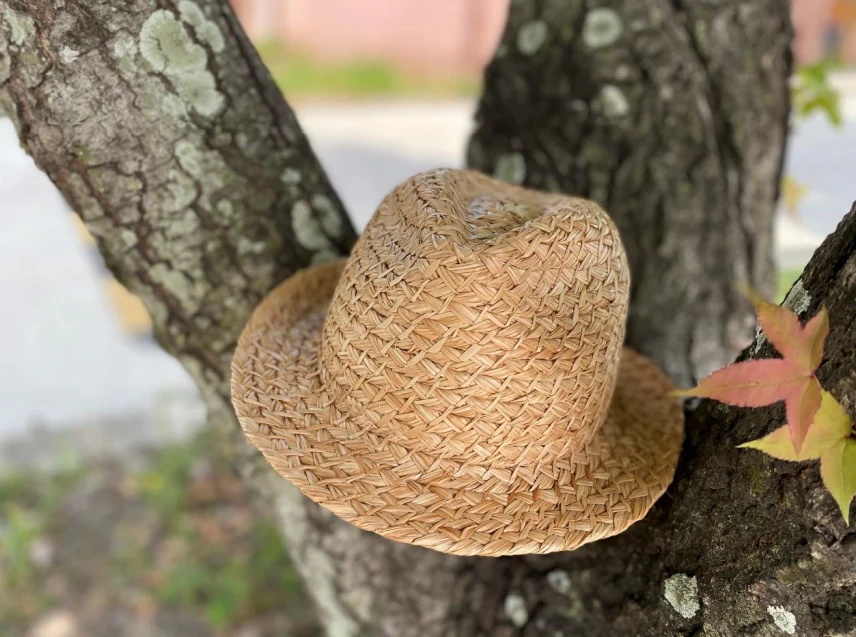
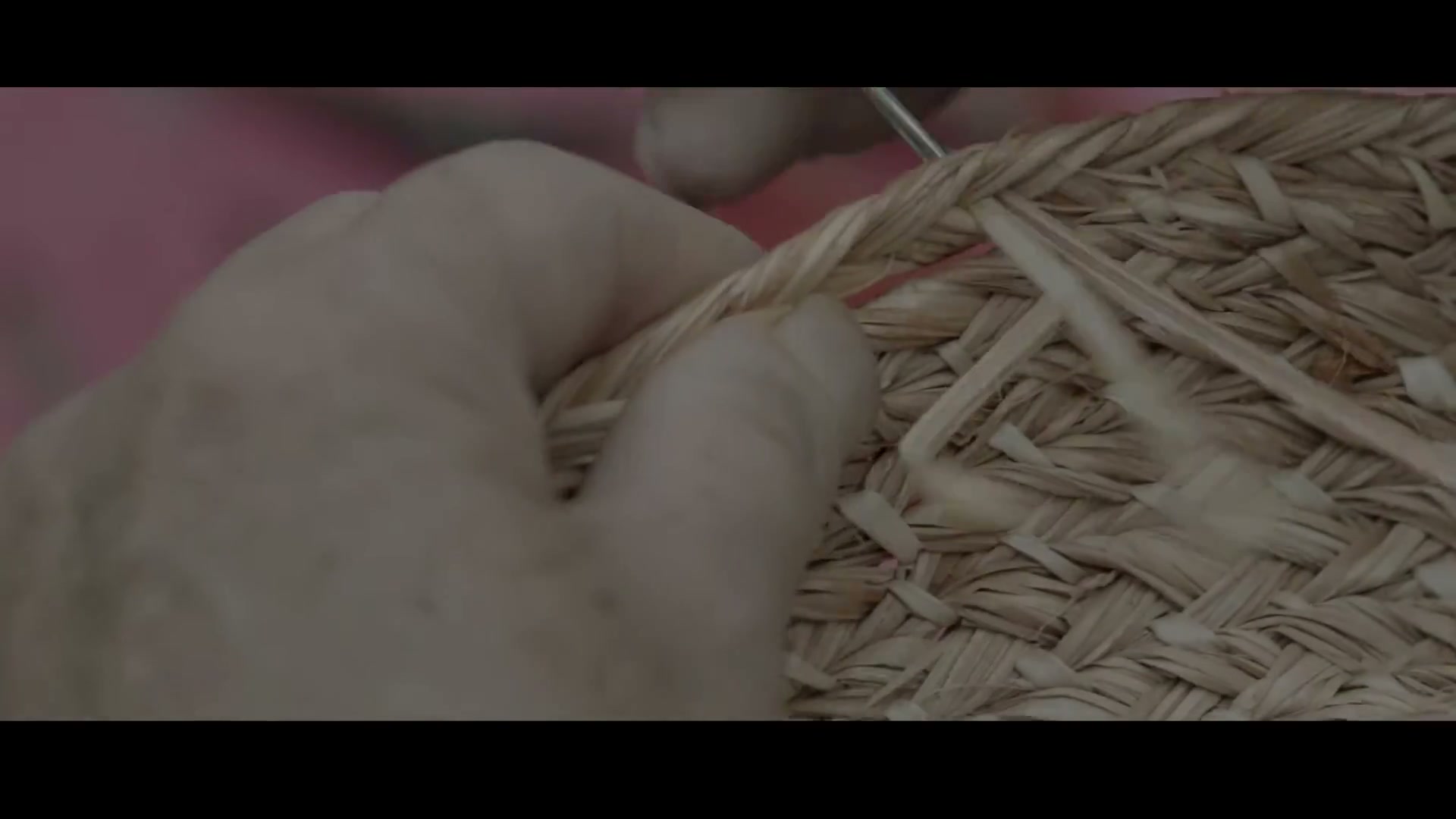
Shell ginger has to be prepared before it becomes a woven product. Its stems are separated and dried, then worked into strips or cord. A hat needs a continuous structure with a crown and brim; the maker has to bring pliable fibres into a stable curve. Looking at the rows around the brim makes the difference between loose material and a wearable object especially clear.
The workshop also learned to work with rice straw for Japanese shimenawa. In a 2018 interview, Song described training and cooperation extending beyond a single community. These projects show why a craft business needs more than an attractive final product: material supply, shared standards and enough people able to finish the work all affect whether an order can become lasting employment.
The long braid is only an intermediate form. The interview describes shaping the shell-ginger cord on a mould and sewing it with thread made from the same plant. The maker’s own product description likewise moves from peeled and dried stems to split material and braiding. When the maker permits handling, following the lines from the crown to the brim helps distinguish the braided material from the stitching that holds the hat’s shape.
That construction also helps explain why a finished hat is not the work of weaving alone. Song’s account separates gathering, preparing material and making products, with cooperation extending beyond Shishan. The interview describes a 2018 stage of the cooperative’s development; its employment figures and order levels are not present-day promises. The enduring point is the division of work that connects a plant in the field to an object in a shop.
A workshop also needs ways to meet the public
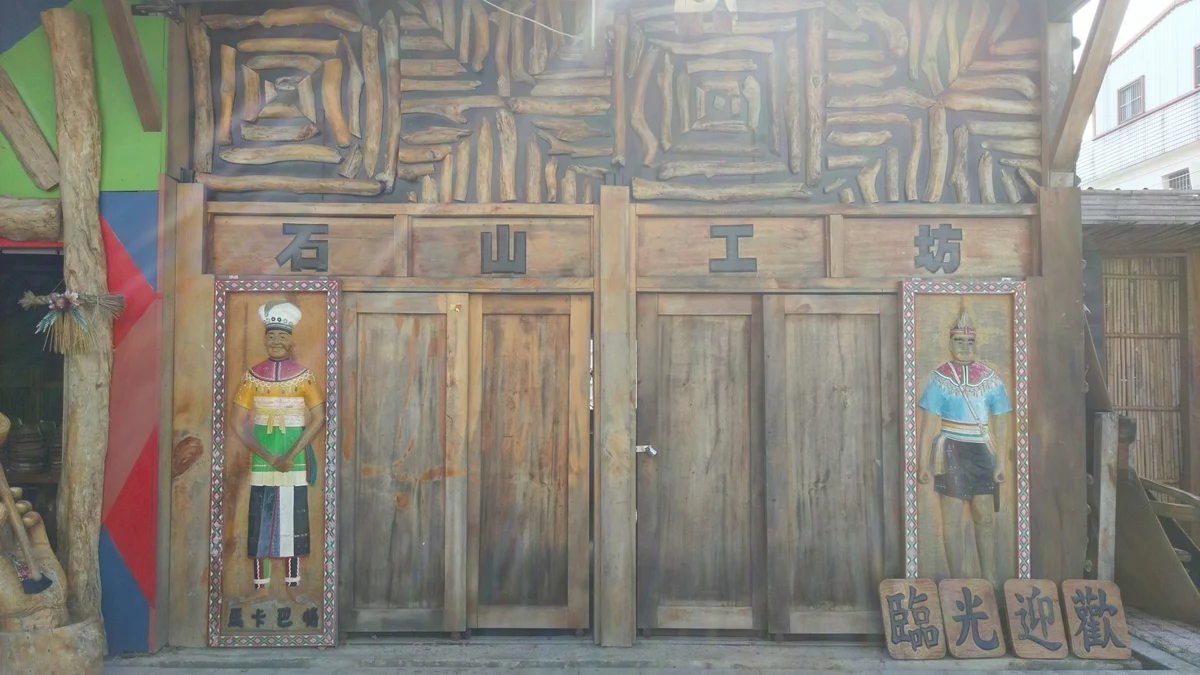
Two student interns in 2016, Wu Ching-ju and Chen Ting-yu, first encountered the work through sorting materials and learning to weave. They later helped with the visual and spatial arrangements for the community’s shell-ginger season: clothing, flags and a backdrop were part of the project. Their experience makes visible another layer of craft work, between making an object and explaining it to visitors.
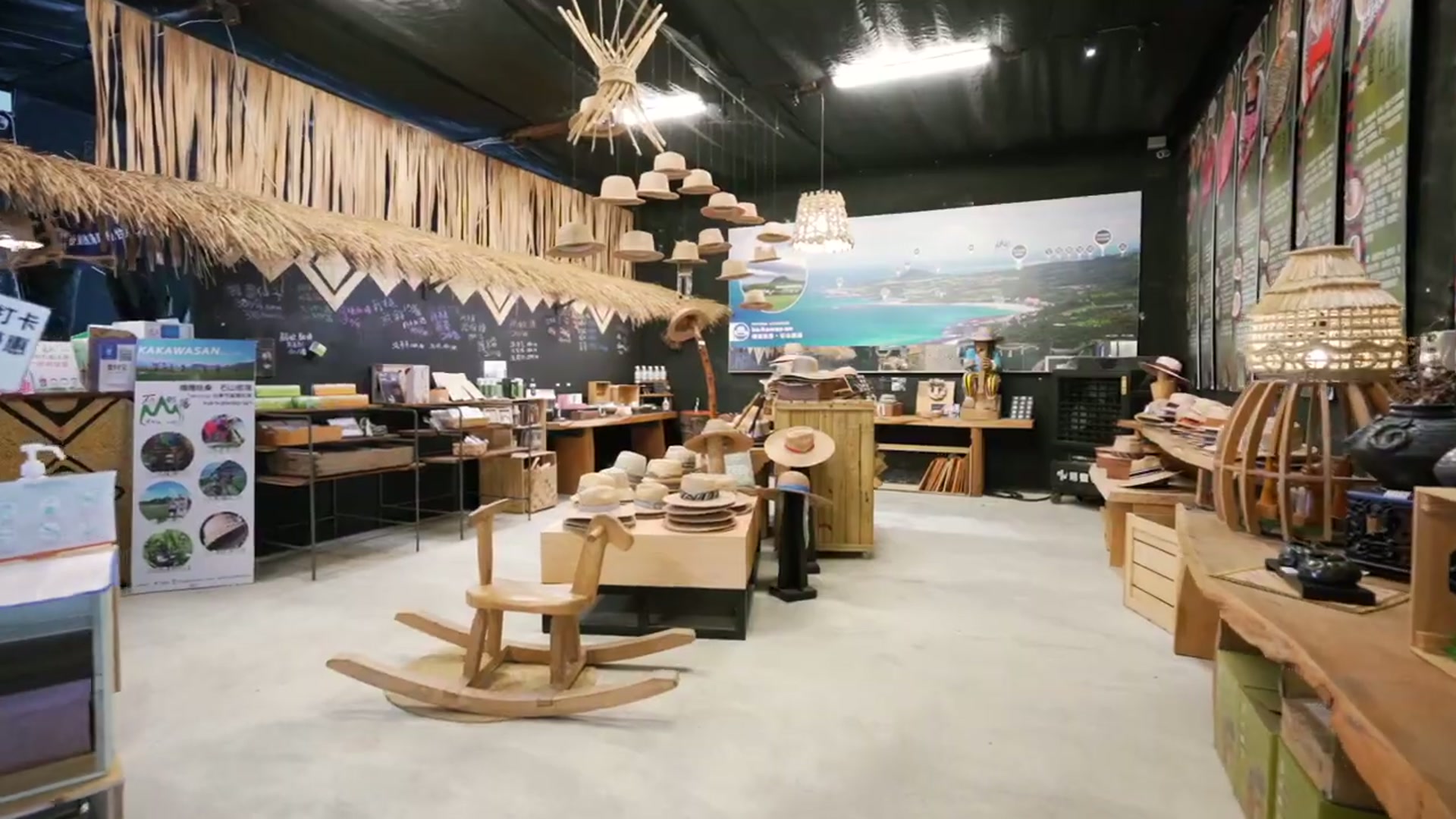
The Shishan Warehouse venue in the Taitung Sugar Factory Cultural and Creative Park brings those tasks together through a shop and a work area. Hats sit alongside other fibre, wood, leather and textile pieces. Reading the objects by material and process reveals a working community’s changing repertoire, rather than treating every item as a fixed emblem of Amis culture.
Teaching time matters alongside production. In a 2022 interview, Shishan stallholder Li Nian-jie drew attention to the older women who still held the weaving knowledge. A booked introductory activity and the ability to make a saleable hat are different commitments. Before travelling, ask which material and stage the session covers and whether work can be observed; a shop’s opening hours do not mean that every maker or process will be available that day.
Look closer
Follow the rows of fibre from the crown to the brim of a hat.
Distinguish shell-ginger work from rice-straw, wood and other materials on display.
Visiting information
- Venue
- Shishan Warehouse, Taitung Sugar Factory Cultural and Creative Park, No. 191, Section 2, Zhongxing Road, Taitung City.
- Visit
- The craft-centre listing gives Tuesday–Sunday, 10:00–17:00. Arrange a workshop activity separately with the venue.
- Travel and return
- Take a taxi from Taitung railway station to the sugar-factory park; agree on a return pickup at the park entrance.
1. Begin with a finished hat
Start with the outline of a hat, then follow its edge. The weave changes direction across the curved surface, leaving the joining of fibres visible in an everyday object. Shishan’s shell-ginger craft rewards that closer look: behind a hat lies a sequence of material preparation and shaping.
The opening display comes from the cooperative’s own film published in 2023. Styles and arrangements belong to that recorded visit, rather than a current stock list. The original article explains the experiments behind the hats; this film does not identify one visible bundle of scraps as the exact material of one finished hat.

2. Follow the plant back to the work
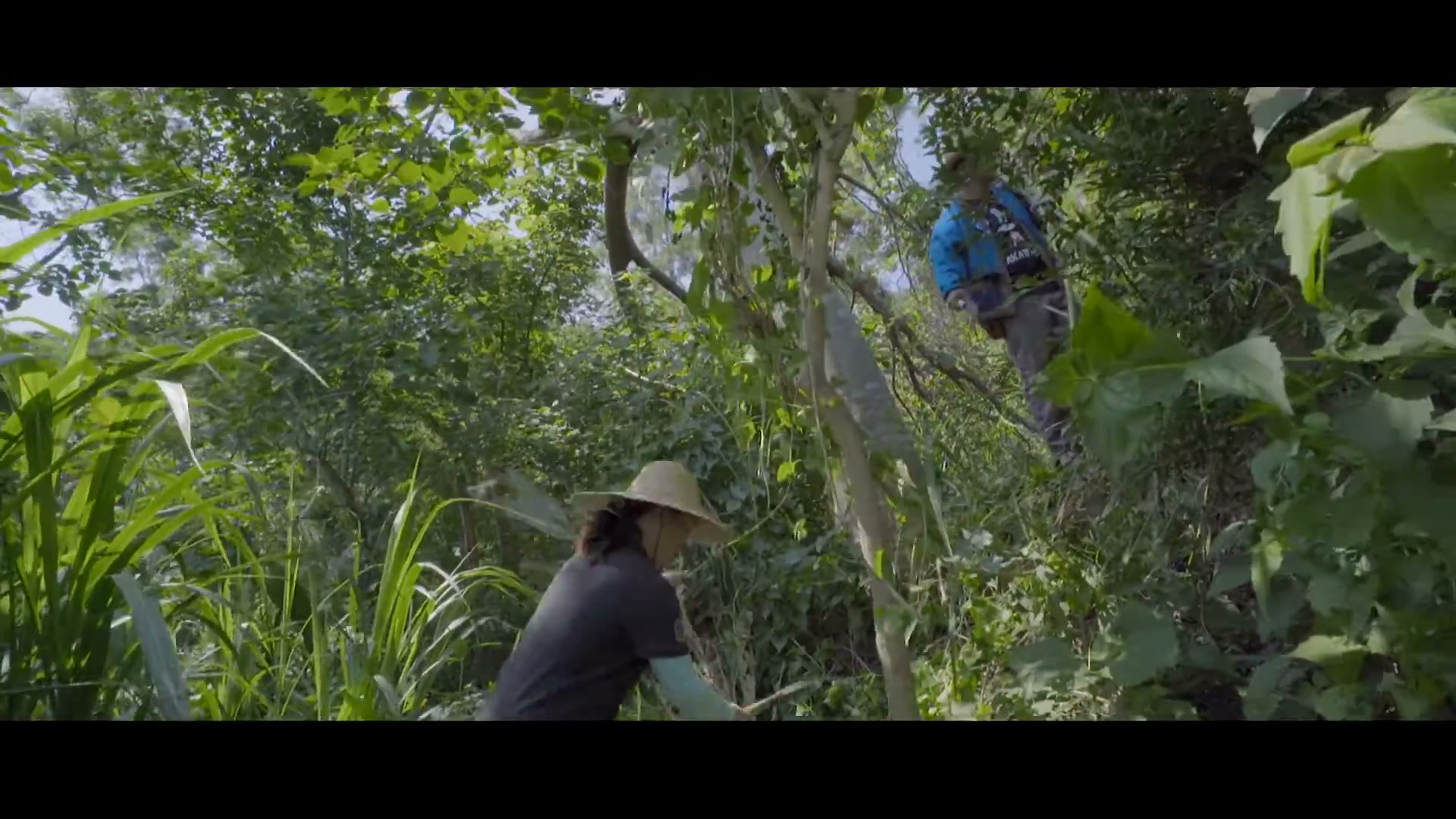
Between a green plant and usable fibre is work that a display shelf rarely shows. The cooperative’s 2016 record follows gathering, carrying and preparing shell ginger. Watch the length of the material and the movements of the hands before looking again at the finished hat.
These are historical work scenes. The community and older workshop in this footage are not the same address as today’s Shishan Warehouse at the Taitung Sugar Factory. Plan a visit using current contact and service information.
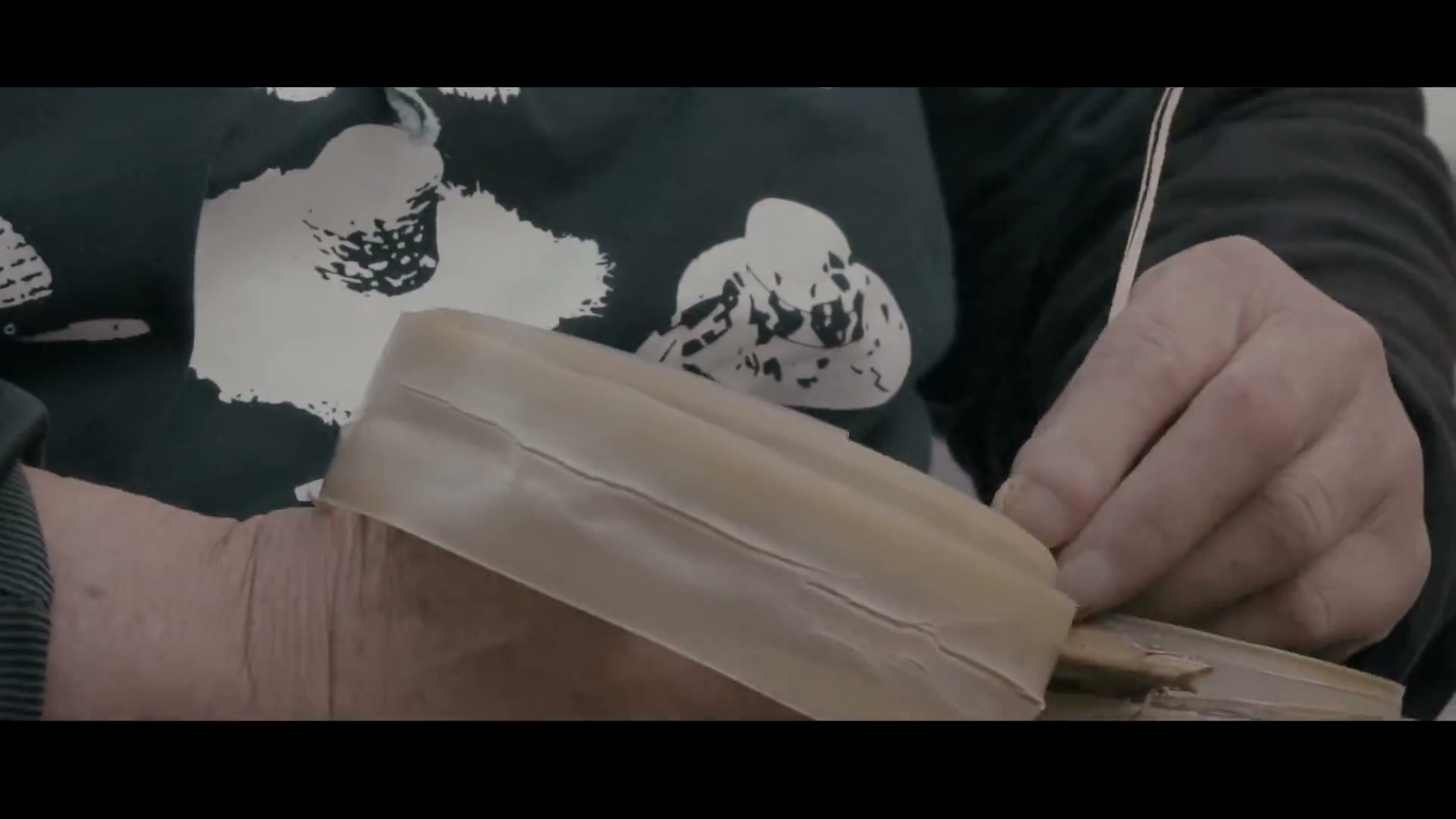
3. Find the strands inside the sheath
The film leaves time for separating, splitting and drawing out fibres. Material on a table is not yet a hat: widths, lengths and joins affect the weaving that follows. Choose one strand and watch how it leaves the broader piece.
The National Taiwan Craft Research and Development Institute also describes drying, stripping, drawing fibres, braiding and sewing. Not every preparation stage appears in the film, which is an introduction to looking rather than a complete hat-making lesson.
4. Follow the needle around the hat
Closer views reveal the needle’s path and the places held by the fingers. Braided edging and a final trim follow. The movements give loose material a usable form, making handwork visible as a sequence of decisions.
The original article describes learning, experiments and cooperative work. The film preserves the makers at work without assigning unverified names from the article or implying that one person performs every stage.
5. Take these questions into the warehouse
Shishan Warehouse is in the Taitung Sugar Factory cultural and creative park. The front display presents finished work, while the workshop views point back to materials, tools and shared labour. Roped furniture appears near the close; the film does not identify its unverified rope material as shell ginger.
The current craft-centre listing gives showroom hours of Tuesday to Sunday, 10:00–17:00, with other times by arrangement. Classes and experiences require separate planning. Confirm opening and what work can be seen before visiting; an open shop does not guarantee walk-in DIY or every maker’s presence. Address: 191, Section 2, Zhongxing Road, Taitung City, within the Taitung Sugar Factory cultural and creative park.
Article, image and music sources
Re-edited from the cooperative record published in 2016 and its own Shishan Warehouse channel film published in 2023. Filming dates were not independently confirmed. The older community workshop is not presented as the current sugar-factory warehouse. The 2023 film is an authored promotional record; displays and personnel may change. 16.47 seconds originate in 720p, with 73.53 seconds in 1080p including the source’s letterboxing. Output resolution is not a claim that every shot is native 1080p. A few original process labels remain; no television-programme titles or full-screen cards are used.
- 工藝遶境|月桃部落-石山倉庫
- 2026 TIDE official exhibitor|月桃部落-石山倉庫
- 正式母文
- 有限責任台東縣東海岸原住民社區合作社-石山部落 KAKAWASAN
- 來點台東生活味-嘎嘎哇桑幾咧
Music: 跨海的一段路 · AI-generated instrumental.