
Cultural story · Craft and making
Sanyi Woodcarving Festival: from a prize-winning work to the street that sustains it
Museum awards, workshop encounters and the worship of a craft patron bring different generations of woodcarving into the same mountain town.
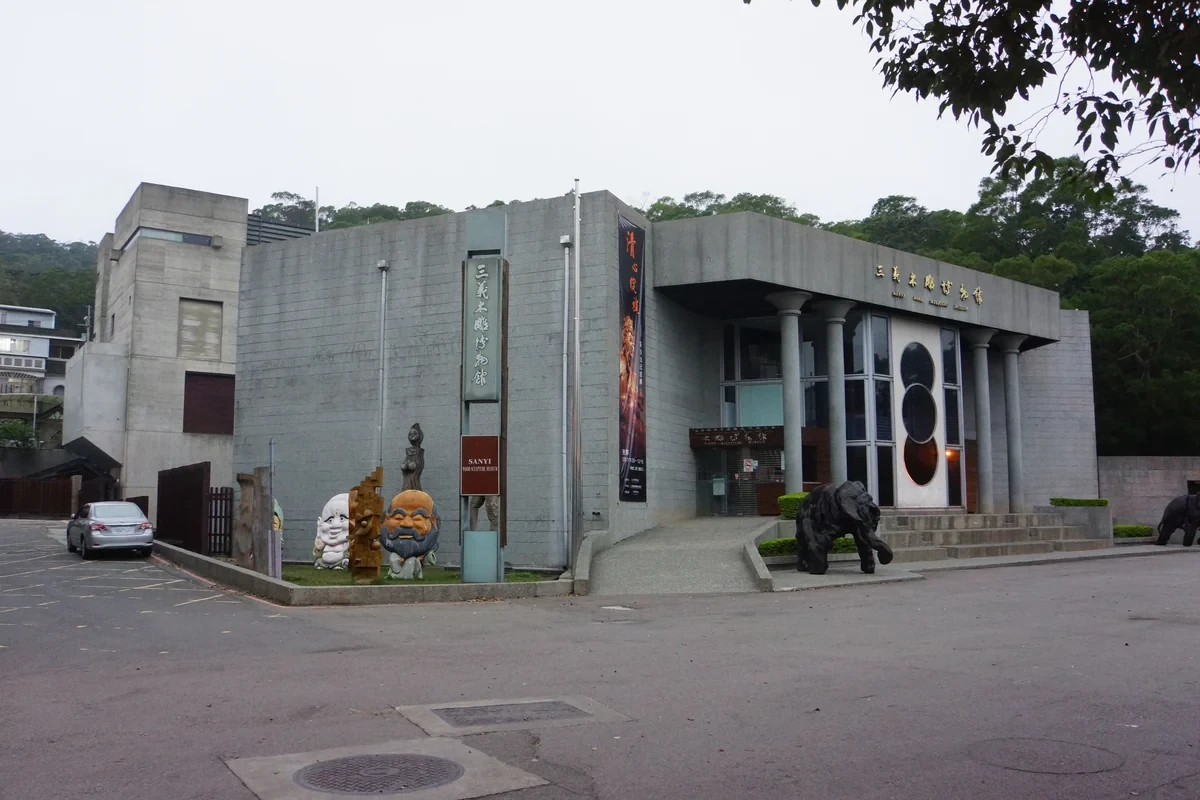
The 9–11 October 2026 festival events at the museum and Shuimei Art Street have ended.
The international exchange and competition exhibitions were scheduled through 18 October 2026; that advertised period has ended.
For another visit, confirm the museum’s current exhibitions and opening arrangements, then explore Shuimei Art Street; studio workshops are booked separately.
Two awards, different questions
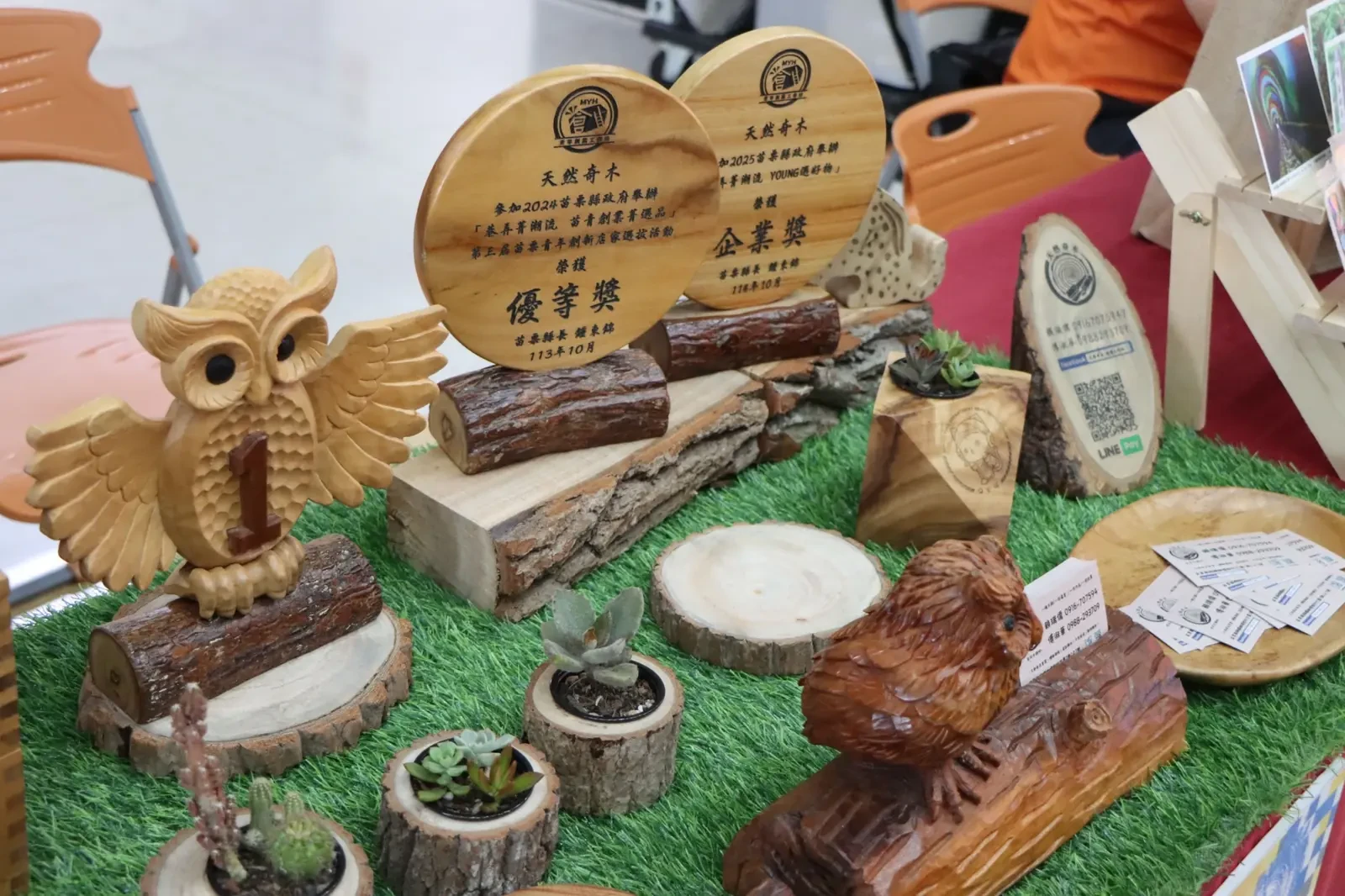
On 9 October 2026, the Sanyi festival opened by announcing the Taiwan International Wood Sculpture Competition results. Liu Chin-wen’s Chuan Xiang received the craft grand prize, while Huang Wei’s Lao Yao won the contemporary sculpture prize. The two categories share a material, yet give the exhibition more than one way to discuss what a carved object can become.
The award for passing on woodcarving knowledge went to Huang Ma-ching from Lukang. His presence places Sanyi within a wider network of makers rather than treating every work as the product of a single town. The exhibition began in August, before the October celebrations; looking closely at a finished sculpture belongs to a longer season of selection, exchange and discussion.
The exchange exhibition’s theme, Empty Cup, Flowing Water, was developed by curator Chang Fu-chun with Korean co-curator Kim Ki Young. Forty artists were invited, while the accompanying competition selected 45 works from 67 entries. The two exhibitions bring invited perspectives and juried submissions into the same museum, giving visitors several paths through contemporary wood sculpture.
Huang Ma-ching’s choices can be examined through a named object beyond the festival award. The Chiang Kai-shek Memorial Hall collection records his lotus carving Xinyi Xiuhe, number CR10000800. It uses openwork, removing wood to leave spaces through the composition. Flowers and leaves lean towards the viewer’s right, with grasses behind strengthening the impression of wind. This is a work in that institution’s collection, not evidence that it appeared in the 2026 Sanyi exhibition.
The museum opens onto a working street
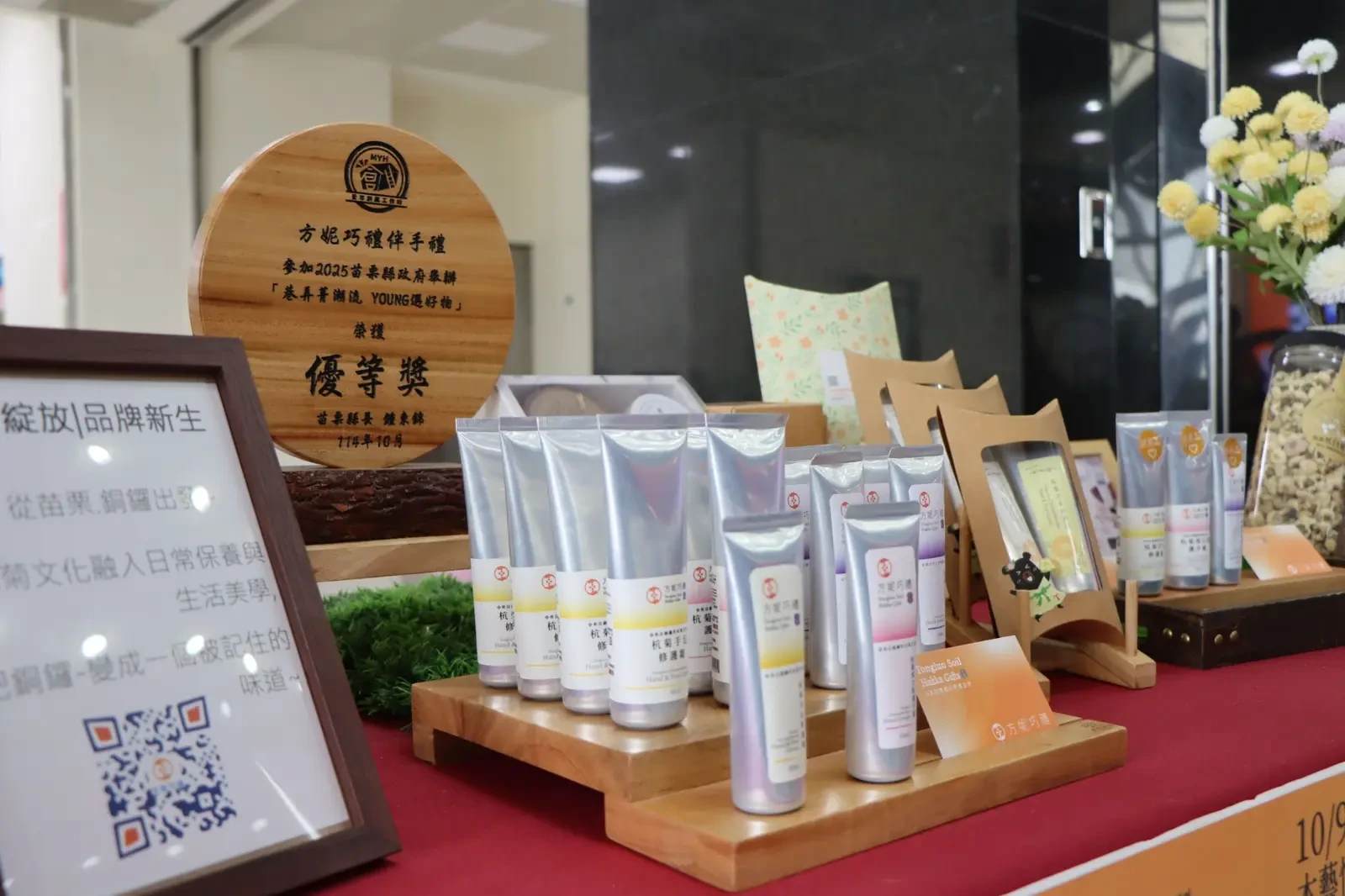
Shuimei Art Street gives that institutional story another scale. Visitors pass shop windows and enter businesses where wood objects must find a buyer as well as a place in an exhibition. The 2026 programme connects the street with guided walks, craft challenges and hands-on sessions, allowing a visit to move between looking at an object and asking how it was made.
Earlier festival workshop records include sawing wood, making small keepsakes and working together on a two-person saw. These modest tasks expose the resistance of the material before a visitor encounters elaborate carving. A souvenir and a competition sculpture occupy different markets, but both depend on time, tools and decisions that the finished surface can easily conceal.
The press-conference displays show another side of that range: carved owls, small wooden objects and presentation pieces occupy the same table. Scale changes how an object is encountered. A large sculpture asks for space around it; a small piece may be turned in the hand or placed within an ordinary room, bringing woodcraft into a different rhythm of use.
The collection description draws attention to carved petal and leaf veins, turning rigid material into the impression of a leaf rolling in wind. Huang left this piece in its natural wood colour, without paint or varnish. When looking at another carving, these become useful questions rather than assumptions: which edges are cut through, which details remain on the surface, and is colour coming from timber or a finish? Ask about the particular object; a shop’s complete stock need not use the same method.
A festival also gathers its neighbours
The opening day began with a ceremony for Lu Ban, the patron of craftspeople. In 2026, the Mazu deity from Sanyi Tianhou Temple was invited to remain at the venue for three days. A community talent contest and a Chinese orchestral concert followed. Worship, neighbourhood performance and professional judging consequently met within the same programme.
A rewarding visit therefore needs two kinds of time: an unhurried circuit of the exhibition and a longer conversation or activity outside. Returning from the street to the museum, the carved object becomes easier to place among its makers, teachers, customers and neighbours. Sanyi’s annual celebration briefly makes those relationships visible together.
The artist’s collection record also describes a move beyond architectural components and devotional images towards independent carvings of flowers, animals and other natural subjects. That helps explain what an award for passing on skills can include: a technique may continue while its intended setting and subject change. For visitors in Sanyi, the useful conversation is therefore also about purpose—whether a piece is made for a shrine, a room or an exhibition—and how that purpose changes its size and carving decisions.
Look closer
Compare the competition categories and the labels of individual works.
At a workshop, follow the change from raw wood to the first worked surface.
Visiting information
- Date rule
- The organiser sets an autumn programme; the 9–11 October 2026 festival events have ended.
- Exhibition
- The 2026 international exchange and competition exhibitions were advertised through 18 October at Sanyi Wood Sculpture Museum. That period has ended; check the museum’s current exhibitions before travelling.
- Places
- Museum: 88 Guangsheng Xincheng, Guangsheng Village, Sanyi, Miaoli; combine with nearby Shuimei Art Street.
- Museum hours
- Tuesday–Sunday 09:00–17:00; last ticket/admission 16:30. Closed Mondays except national holidays and consecutive holiday periods.
- Transport and return
- From Sanyi railway station, take a taxi (about 5 minutes) or walk about 35 minutes. The holiday Happiness Bus D route serves the museum. Return to Sanyi station; leave time for the uphill/downhill walking connection.
- Hands-on sessions
- Festival workshop dates have passed. For a separate studio class, confirm the session, availability and charge before booking.