
Cultural story
Palamal: giving history a place in the present
A fire at Guofu recalls the 1878 destruction of Takubuwan. The ceremony also tells a more recent story: descendants rebuilding a public name, a gathering place and a shared memory.
Palamal commemorates people lost in the 1878 conflict.
The modern ceremony began in 2006, alongside the recognition movement.
Preparation, procession and the final fire form a sequence of remembrance.
A fire remembers particular people
On 7 October 2023, Palamal took place beside Guofu Bridge in Hualien. Lin Chang-wen, the traditional leader of Genneui, served as chief officiant. As the gathering reached its final stage, the ritual house was burned in remembrance of those who died in the nineteenth-century conflict, including leader Komod Pazik and his wife Icep Kanasaw.
In 1878, Qing forces attacked Takubuwan and set fire to its bamboo defences. Survivors dispersed, many living among Amis communities. Publicly naming the dead and recalling the attack gives the ceremony its historical weight: the flames point toward people and a lost settlement, rather than existing simply as an impressive sight.
The gathering was made by later generations
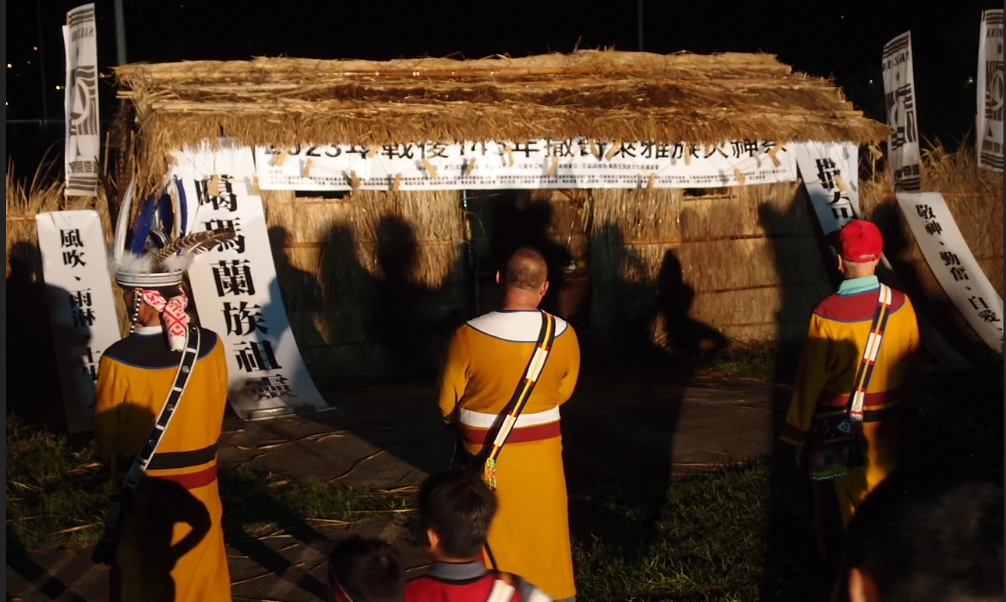
The first modern Palamal was held on 1 July 2006 at Guofu. It emerged during the movement seeking recognition of Sakizaya identity; official recognition followed in 2007. The ceremony therefore belongs to the work of descendants who assembled a way to remember, using ritual to make a long-suppressed history visible in public again.
The sequence includes welcoming, blessing, procession, offering and farewell. Participants prepare the space and carry out distinct roles before the fire is lit. The 2023 gathering continued from afternoon into night, with a house first standing in the gathering ground and later disappearing in flames. Time spent together gives the ending its meaning.
The colours around a ceremony also have a history of discussion. The account by Tsai Wen-chin and Laung Chin-cheng describes Sawyun Wulao and designer Siku Sawmah drawing on elders' memories because old photographs could not establish colour. Earth-gold, dark red and deep blue were given meanings connecting land, blood and gratitude for Amis shelter. This was an active contemporary reconstruction, not an untouched colour chart from 1878.
The place remains after the fire
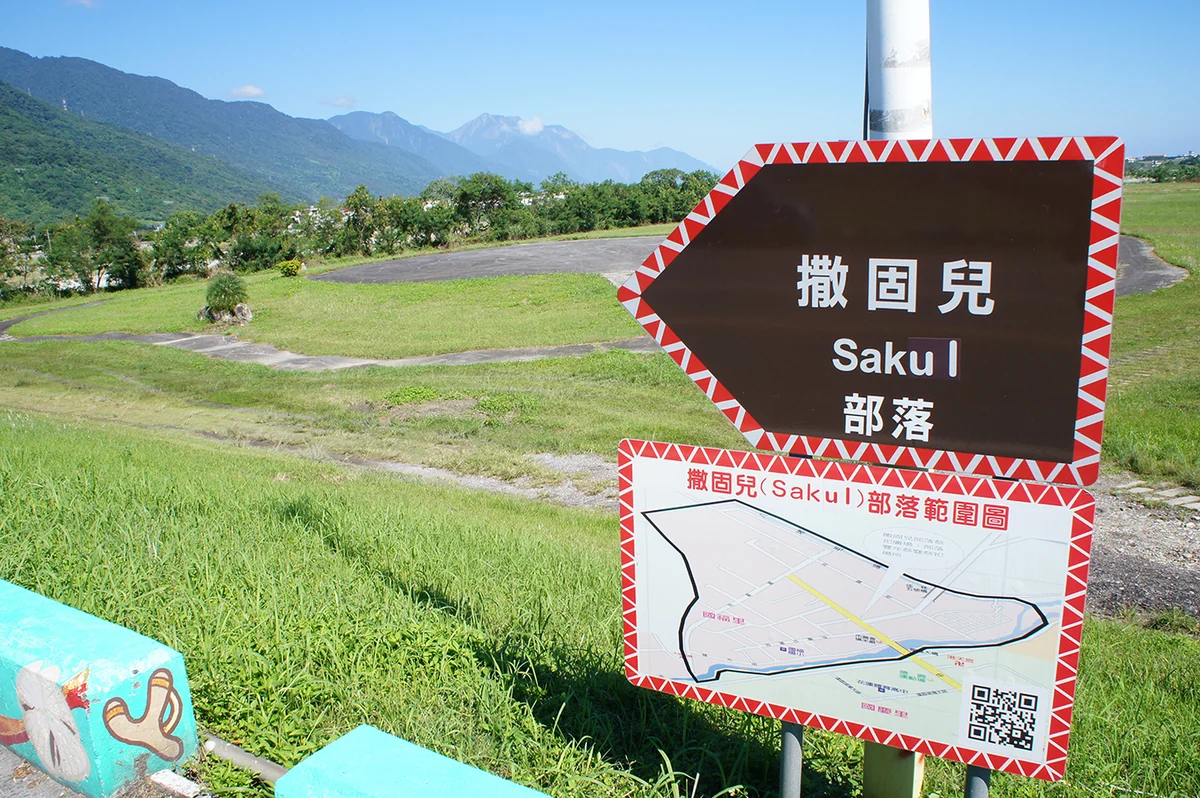
Guofu’s cultural landscape also includes community meeting places, story walls and signs naming Sakur. These public elements give history a presence during ordinary days. The settlement’s names and narratives can be encountered while people continue their daily lives; recognition is sustained through such repeated uses of place and language.
Hualien County’s Indigenous Cultural Center offers a public introduction to the county’s six Indigenous peoples. Its displays can help visitors distinguish Sakizaya histories from those of neighbouring communities before travelling to Guofu. At a ceremonial gathering, follow the hosts’ arrangements for where to stand and when to move, allowing the work of remembrance to remain at the centre.
Maibul offers another perspective in the same account. Some residents could not afford newly commissioned clothes after recognition; younger participants continued wearing inherited palimayan. Their choices drew criticism from some advocates of the new dress. For a visitor, an unfamiliar garment is therefore a reason to ask about its owner and community, rather than judge whether someone looks sufficiently Sakizaya.
Look closer
When viewing the 2023 fire photograph, keep the names of the people commemorated with the image.
In the 2023 ceremony account, follow how the space changed through preparation, procession and farewell.
Visiting information
- Public museum
- Hualien County Indigenous Cultural Center, No. 460, Beixing Road, Hualien City.
- Opening hours
- Tuesday–Sunday 08:30–17:00; closed Mondays.
- Interpretation
- Exhibitions and group interpretation: 03-8222312.
- Travel and return
- Take a taxi from Hualien railway station and arrange the return pickup. A separate visit to Guofu should allow time for its community spaces.