
Cultural story
A rattle remade from memory
Chang Pan San-mei’s craft links a family ritual object with years spent learning bamboo and rattan work. Seeds, thread and bamboo pipes turn remembered knowledge into something that can move and sound again.
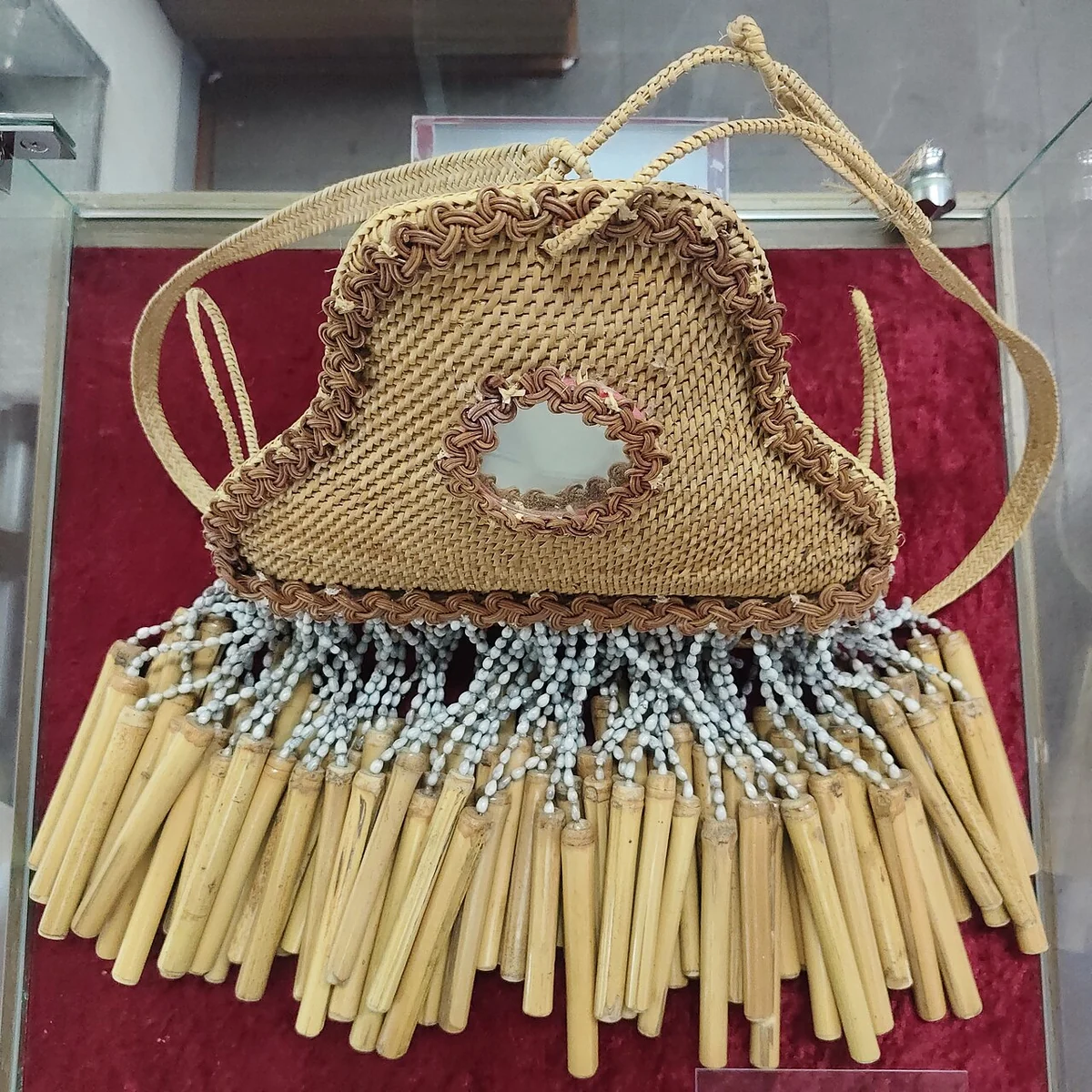
Chang began studying bamboo and rattan craft in 1984.
Elders’ memories guided her reconstruction of a family rattle.
A documented museum object reveals how pattern, seeds and sound fit together.
Learning takes time from an ordinary day
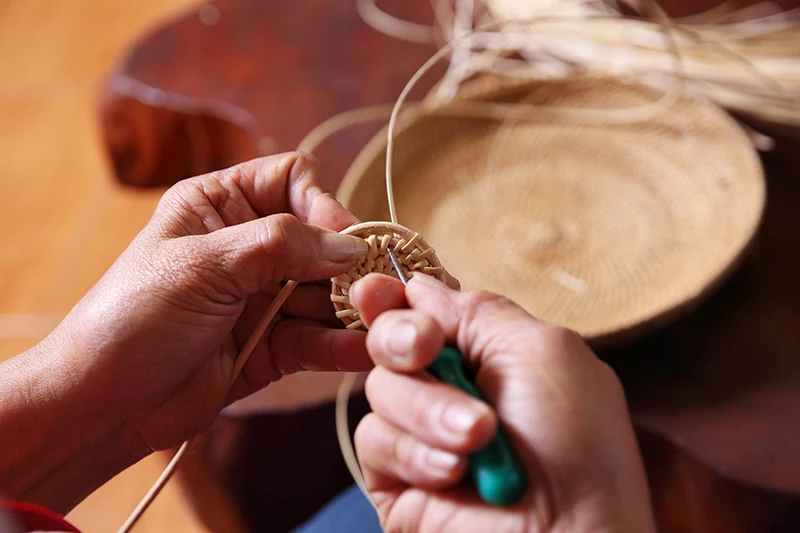
In 1984, a weaving course in Nanzhuang brought Chang Pan San-mei into contact with craft teacher Chang Hsien-ping. She was already raising a family. Learning meant practising the weave and preparing material, including splitting bamboo into usable strips. What her father had once made as everyday tools became a field she chose to study deeply.
She later worked at Chang’s Zhunan workshop making flower vessels for export to Japan, commuting for more than a decade. Repeated work refined her handling of bamboo and rattan. Returning to establish Penglai Workshop, she carried those skills into her own cultural questions, asking how an object could retain the knowledge of people whose voices she still remembered.
Materials change the sound of memory
The rattles Chang remembered from childhood used cloth, shiny decoration and metal tubes. To recover an earlier form for her family, she asked elders and worked with ramie, bamboo and Job’s tears seeds. The task involved decisions about material and construction, bringing oral memories into a form that could be worn and moved.
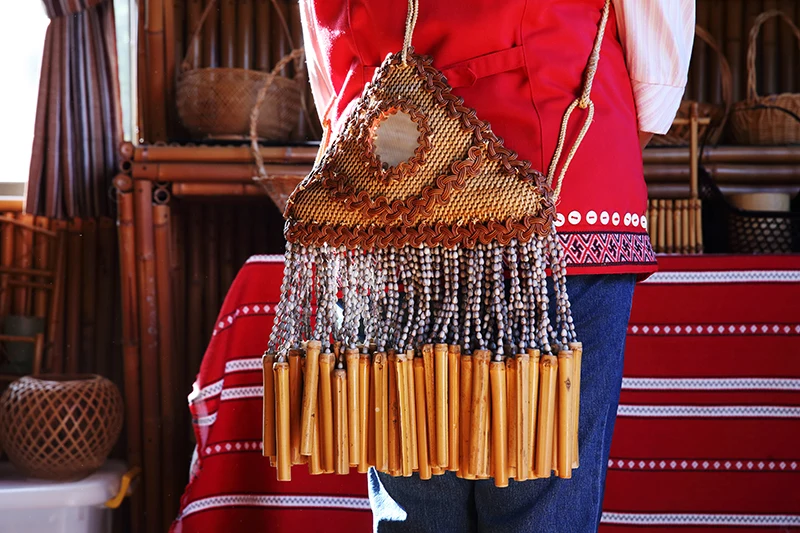
One rattle made by Chang entered the National Taiwan Museum in 2015. Its roughly triangular body is covered in red cotton with thunder-woman patterns, crossed bands and three round mirrors. Strings of Job’s tears seeds connect the body to hanging bamboo pipes. When the wearer moves, the pipes strike one another; the instrument’s sound depends on its suspended structure as well as the dancer. A separate photograph of Chang’s bamboo-woven rattle shows the relationship between its woven upper body, seeds and hanging pipes.
Another object by Chang Pan San-mei makes comparison possible. Shung Ye Museum records M132500 as made and acquired in 2004. Its bell-shaped rattan body uses hexagonal weaving and carries one circular mirror, unlike the red-cloth, three-mirror piece described above. Naming the museum and object keeps two works by the same maker from becoming a single generic hip bell.
The object returns to a wider material world
At Xiangtian Lake, the Saisiyat Folklore Museum places bamboo and rattan craft beside textiles, farming tools and ceremonial interpretation. A visitor can follow a material across several uses: the flexibility needed to form a basket is different from the movement needed for a rattle. Each object asks the maker to solve a particular problem.
The museum also provides a setting for new teaching. In 2024, craftsperson Feng Shun-en led a small-rattle workshop using simplified materials. This kind of public lesson lets learners understand how movement produces sound, while family ceremonial rattles retain their own occasions and responsibilities in paSta’ay. Learning an object’s construction and knowing its place in life belong together.
On M132500, woven loops hold two shoulder straps; strings of Job's tears and rattan balls lead down to bamboo tubes. The attachment points help carry the moving weight. The museum cautions that this may be a craft piece never worn in a rite. Its structure can teach us how an object works without proving a ritual biography, or allowing visitors to wear or handle family ceremonial belongings.
Look closer
Compare the flexible thread, hard seed shells and hollow bamboo pipes.
Look for the maker’s name and the particular object’s construction.
Visiting information
- Public museum
- Saisiyat Folklore Museum, No. 25, Xiangtianhu, Donghe Village, Nanzhuang Township, Miaoli County.
- Hours and admission
- Tuesday–Sunday 09:00–17:00; closed Mondays. General admission NT$30.
- Workshops
- Book scheduled craft activities through the museum at 037-825024.
- Travel and return
- Arrange a car from Zhunan railway station to Xiangtian Lake, including the return. Allow time for the mountain road beyond Nanzhuang.