
Rinari, a New Home with Living Traditions
Begin with Rinari’s public spaces, then read how Ayum’s embroidery workshop carries skills into a new home.
90 seconds · English captions in the film; optional English and Traditional Chinese CC.
Film sources and complete bilingual captions
The opening uses real footage published by Jason’s Life on 10 January 2024. The revised 68–90 second ending uses Rinari aerial footage published by 發仔旅行攝 on 5 June 2020. Filming dates were not independently confirmed; the film does not document current services or one continuous visit.
00:00:00,300 --> 00:00:05,900
Rinari, Pingtung
A New Home, Living Traditions
屏東禮納里
新家裡,繼續生活的文化
00:00:06,100 --> 00:00:13,900
Three villages share
this new ground.
三個部落,在這裡
展開新的生活。
00:00:14,400 --> 00:00:20,100
After Typhoon Morakot,
families rebuilt here.
莫拉克風災後,
居民在此重建家園。
00:00:20,600 --> 00:00:26,900
Look closer at the walls.
Stories take shape in stone.
靠近石牆,
看故事如何有了形狀。
00:00:27,500 --> 00:00:38,100
Colourful house fronts and churches
share the same streets.
彩繪屋舍與教堂,
共享這些街道。
00:00:38,700 --> 00:00:46,300
From homes to a memorial,
rebuilding remains part of daily life.
從家屋到紀念碑,
重建的記憶仍在日常裡。
00:00:46,800 --> 00:00:52,600
Begin in a public space.
Let the artwork invite questions.
先從公共空間開始,
讓眼前的創作帶出提問。
00:00:53,000 --> 00:00:59,400
The fabric, beads and hats
invite a closer look.
看近一點,
留意織物、串珠與頭飾。
00:00:59,900 --> 00:01:01,400
Ask about the patterns.
請教紋樣背後的故事。
00:01:01,800 --> 00:01:07,900
Pause for a local coffee.
停下來,認識一杯在地咖啡。
00:01:08,400 --> 00:01:11,800
Step back for a wider look
at Rinari.
退後一步,
看見禮納里的全貌。
00:01:12,300 --> 00:01:17,100
Homes, trees and churches
share the hillside.
家屋、樹木與教堂,
相連在同一片山腳。
00:01:18,000 --> 00:01:24,600
Behind each roof,
life continues.
每一座屋頂下,
生活仍在繼續。
00:01:26,000 --> 00:01:29,450
Rinari
Taiwan, Layer by Layer
禮納里
島嶼年輪
Cultural story
Stitches carried into a new home
In Rinari, Ayum’s workshop tells a story of relocation through work: skills learned at home, products made for new customers, and paid work shared among women.
Ayum returned to Tavalan in 2003 to teach and make textiles.
Rinari brings together communities with distinct origins.
A finished bag carries design, production and livelihood decisions.
A return before the relocation
Ayum, Hsu Shu-hui, grew up with women skilled in weaving, embroidery and plant-fibre crafts. After studying home economics, she worked in Tainan making car-seat covers. In 2001 she entered a traditional textile teacher-training programme and spent two years travelling to Taipei to study. Returning to Tavalan in 2003 meant bringing both family knowledge and new techniques back into the same workshop.
Teaching in the village gave women caring for children or elders another way to earn money. Learners could later accept production work. The workshop’s purpose therefore extended beyond one maker’s signature: it linked skills, available hours and paid tasks among several households.
Three communities become neighbours
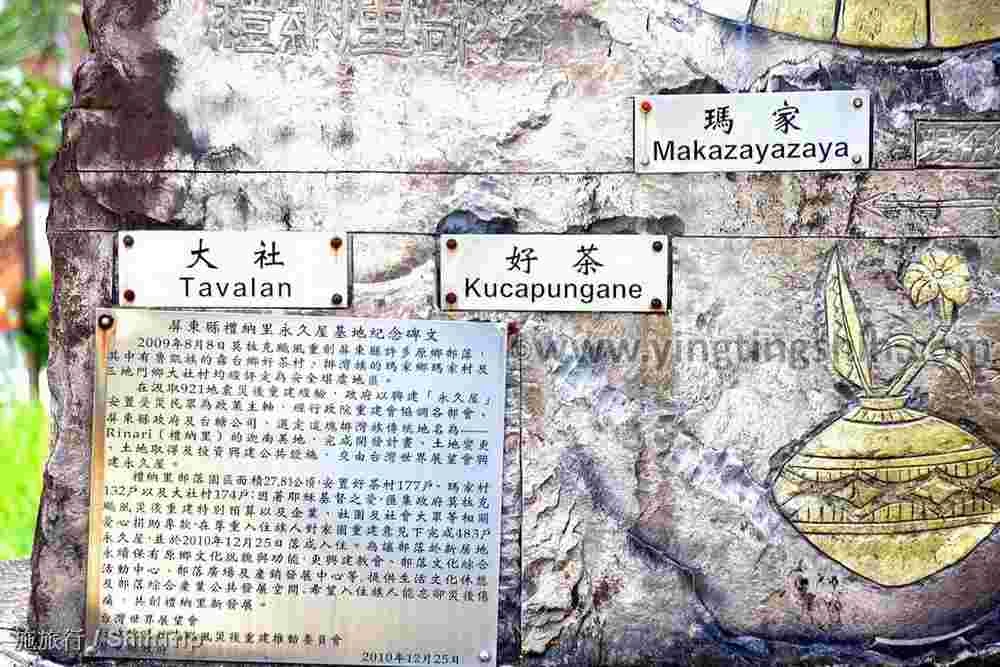
Typhoon Morakot in 2009 disrupted these working relationships as well as homes and roads. The workshop subsequently moved to Rinari. Residents from Tavalan, Makazayazaya and Kucapungane established new homes there; the Paiwan and Rukai communities retained their own histories and social ties. A common street plan did not turn them into one interchangeable village.
In Tavalan’s church, community craftspeople also contributed to rebuilding. A metalworker made the outdoor cross, while the church interior brought Christian symbols together with the lily familiar in Paiwan cultural expression. Domestic work, artistic work and worship all helped residents give the new settlement meanings of their own.
A textile also needs a way to explain itself beyond the workshop. In the assistance described by Hsu's 2022 interview, she learned to write the stories of motifs, while partners supported packaging and delivery arrangements. The stitched surface and the written explanation became related jobs. Asking about a particular pattern during an arranged visit can reveal whose account accompanies the object, without treating all Paiwan motifs as interchangeable decoration.
Making a living from the finished stitch
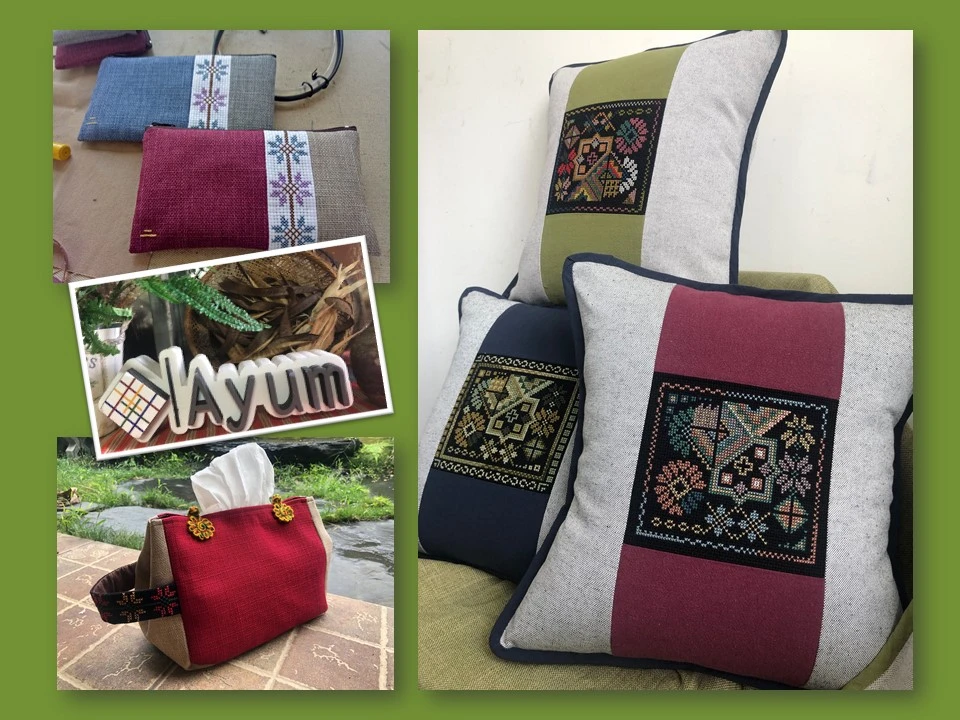
The workshop joined the Taiwan Indigenous Women Style programme in 2014. Some work was sold on consignment; other products were developed with designers and purchased through commissioned production. The difference mattered: makers had to consider unsold stock as well as the time spent embroidering. In 2017 the business became Tavalan Colourful Fabric Workshop, with Ayum as its own brand.
Bags, purses and household textiles carry embroidery into everyday use. During the pandemic, even when sales fell, Hsu continued commissioning work from long-term craft partners and paying them. The finished object thus holds another question alongside its pattern: can the people who know how to make it keep working together?
The wider programme had initially pursued overseas sales through an APEC-linked handicraft initiative, but later focused on Taiwan because of factors including customs and the difficulty of producing at scale. That change matters for a small workshop: finding buyers must fit the amount of work people can actually make. It is a documented adjustment in that programme's history, rather than proof of an unbroken international success or a description of today's contracts.
Look closer
Look at how embroidered panels meet the bag’s seams and handles.
Listen for the original community name when each maker tells a story.
Visiting information
- Workshop visit
- Tavalan Colourful Fabric Workshop: No. 5, Lane 61, Section 2, Heping Road, Dashe Village, Sandimen Township, Pingtung (Rinari). Contact Hsu Shu-hui on 0912-482755 to arrange a visit.
- What to arrange
- When arranging a visit, ask about textile viewing, custom work or whether teaching can be offered, and confirm the visit time.
- Travel and return
- Use Pingtung railway station as the transfer point and arrange a taxi or booked vehicle to Rinari. Agree on the return pickup point and time before entering the workshop.
1. A new home beside the hills
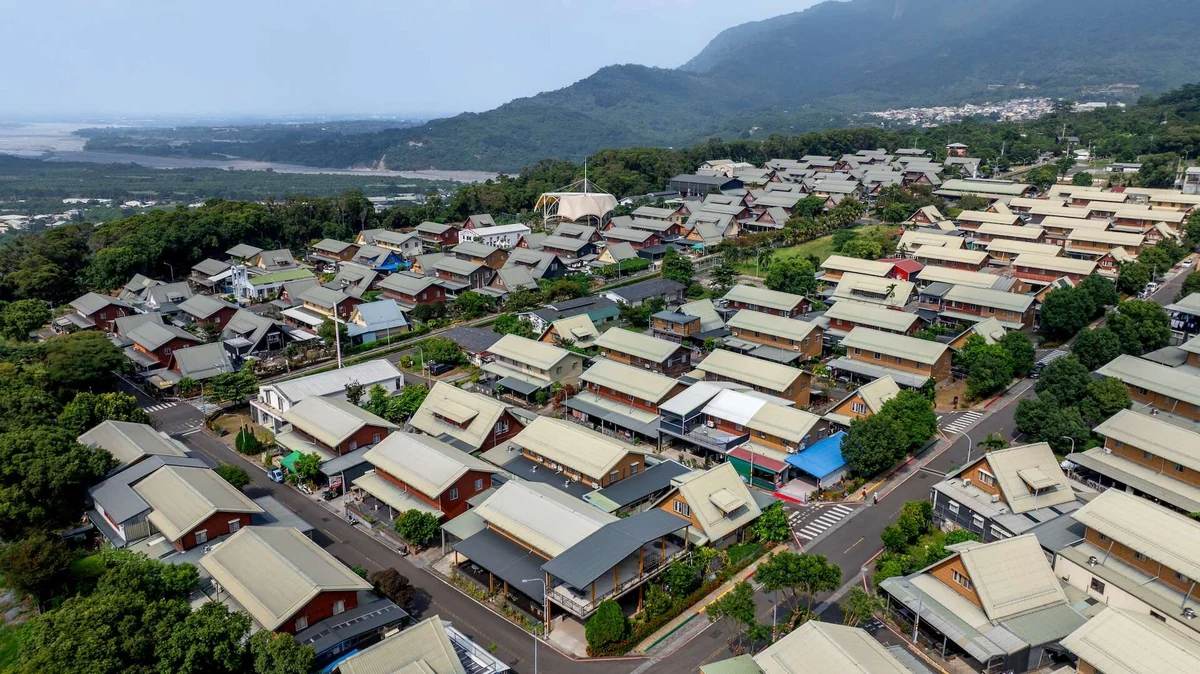
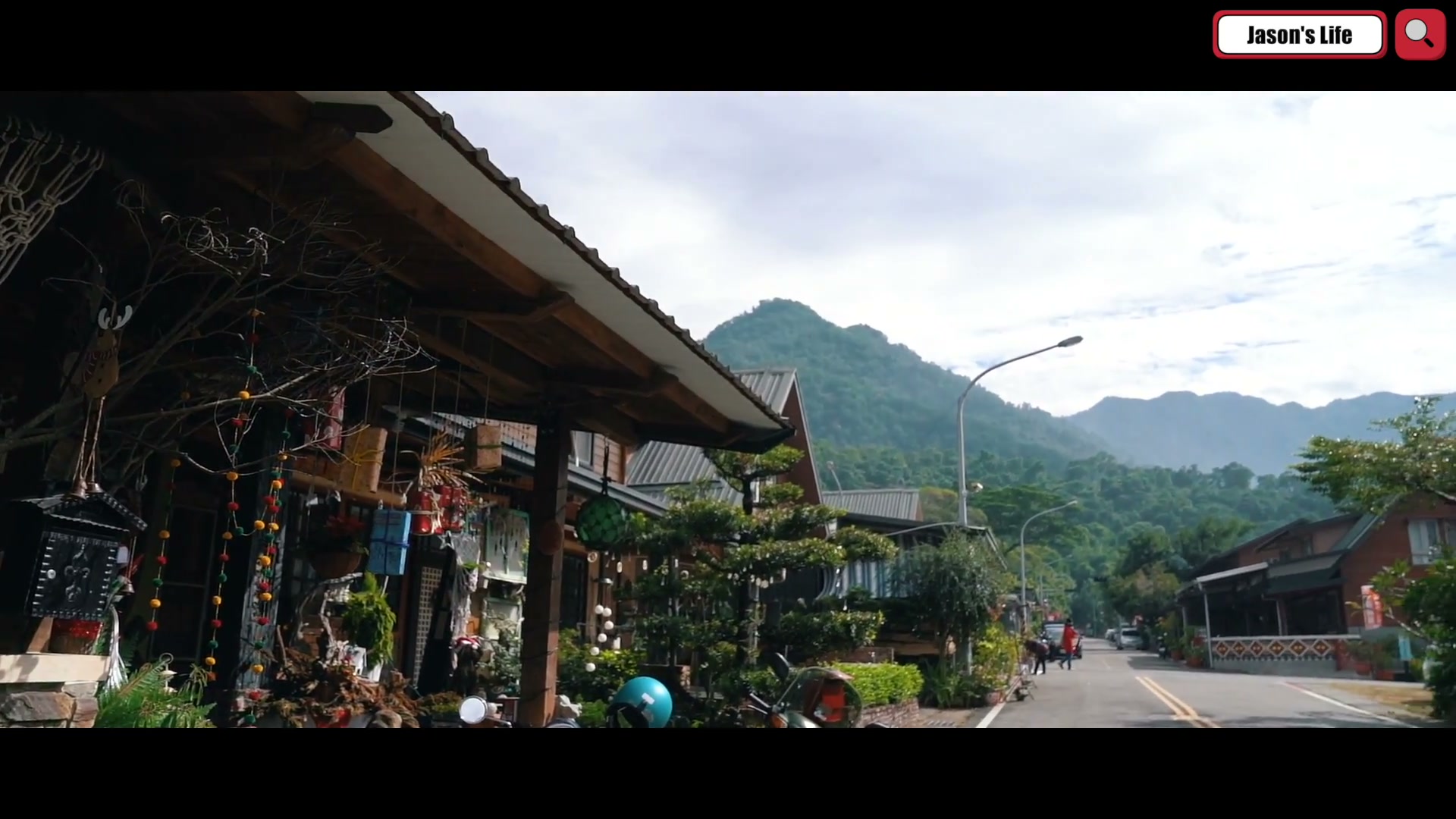
Hills surround rows of homes in Rinari. An aerial view establishes the settlement before the film approaches a rebuilding memorial bearing the names Majia, Dashe and Haocha. Families from these three communities moved here after Typhoon Morakot.
Coming closer changes what there is to notice: plants beside an entrance, a church and a carved wall belong to a lived place. Begin in public spaces, notice the distance between homes, then ask the local people welcoming visitors about the life of the settlement.
2. Churches and carved walls
Carvings and flowers in a wall invite a pause. The camera continues past wooden-fronted homes and churches: painted fronts, white crosses and different buildings share the streets. Looking from a whole building to its entrance, then back to the street, helps the place become legible.
A local guide or the visitor centre can help identify particular works and decorations. Public observation leaves room for questions and respects the boundary of a home.
3. Let clothing begin a conversation
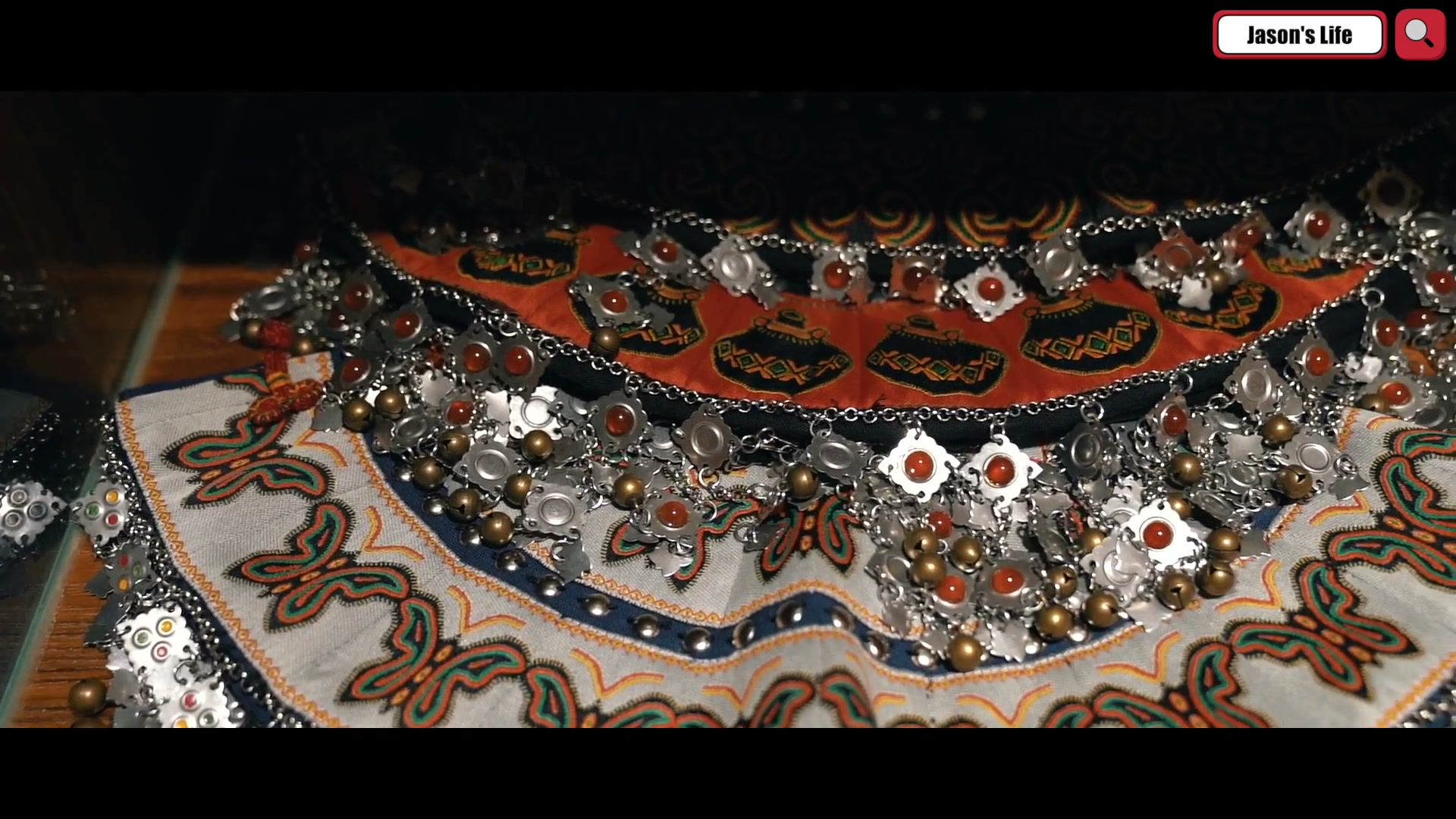
Patterns on fabric, beads and hats invite a closer look. The film now stays with clothing details and hands. Ask who wears a garment, when it is used and what a pattern means; local hosts familiar with the culture can give these details context.
Maolin’s official visitor-centre information describes clothing experiences. Confirm the available garments, interpretation and arrangements before visiting. Questions about a pattern, an occasion or the way something is worn give the encounter more context.
4. From small shops to the whole village
Bracelets and accessories bring attention back to the near view. Ask the shop about a piece’s maker, material and pattern. A pause beside the coffee beans can slow the pace further, leaving time for conversation with the people welcoming visitors.
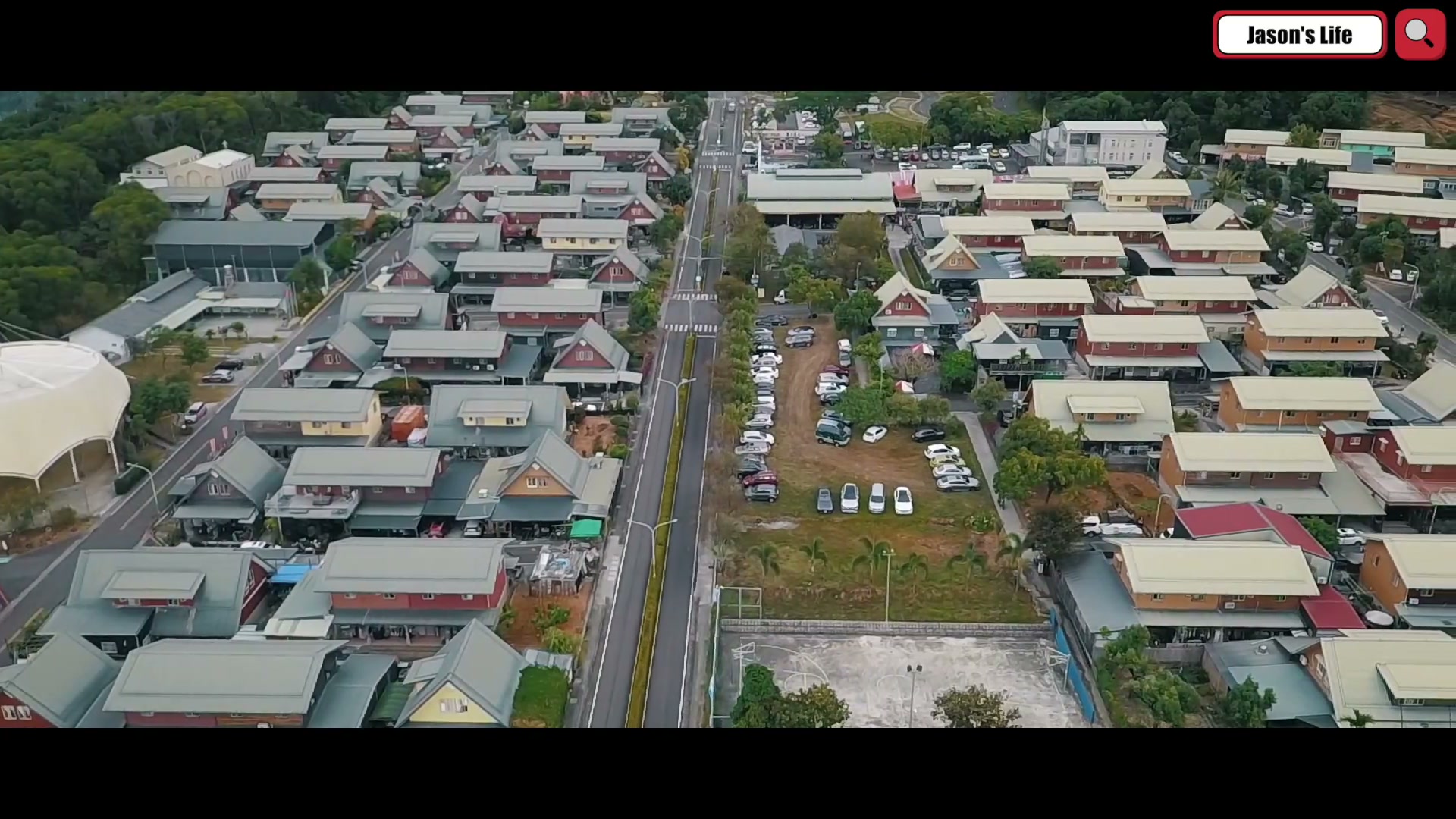
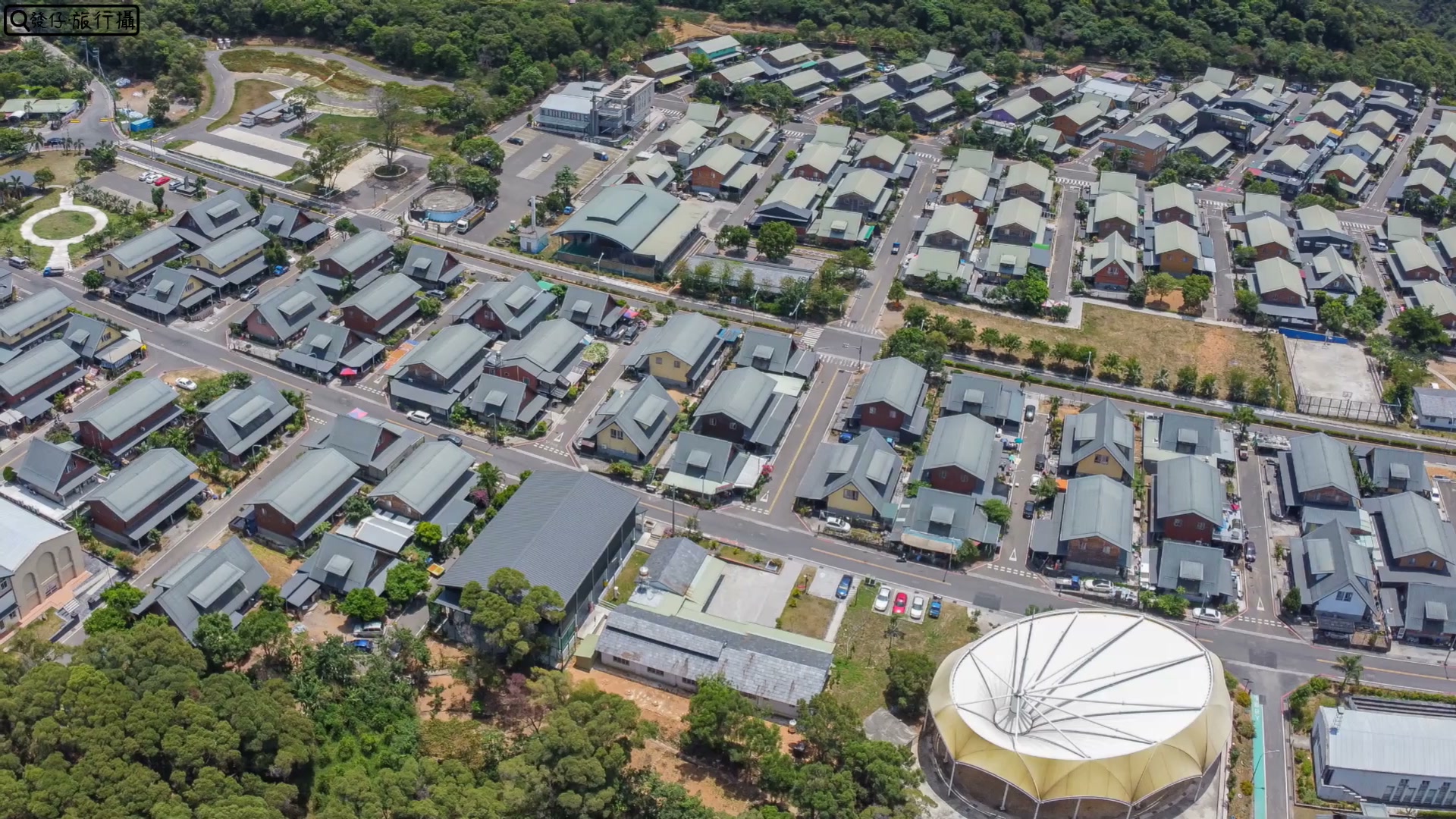
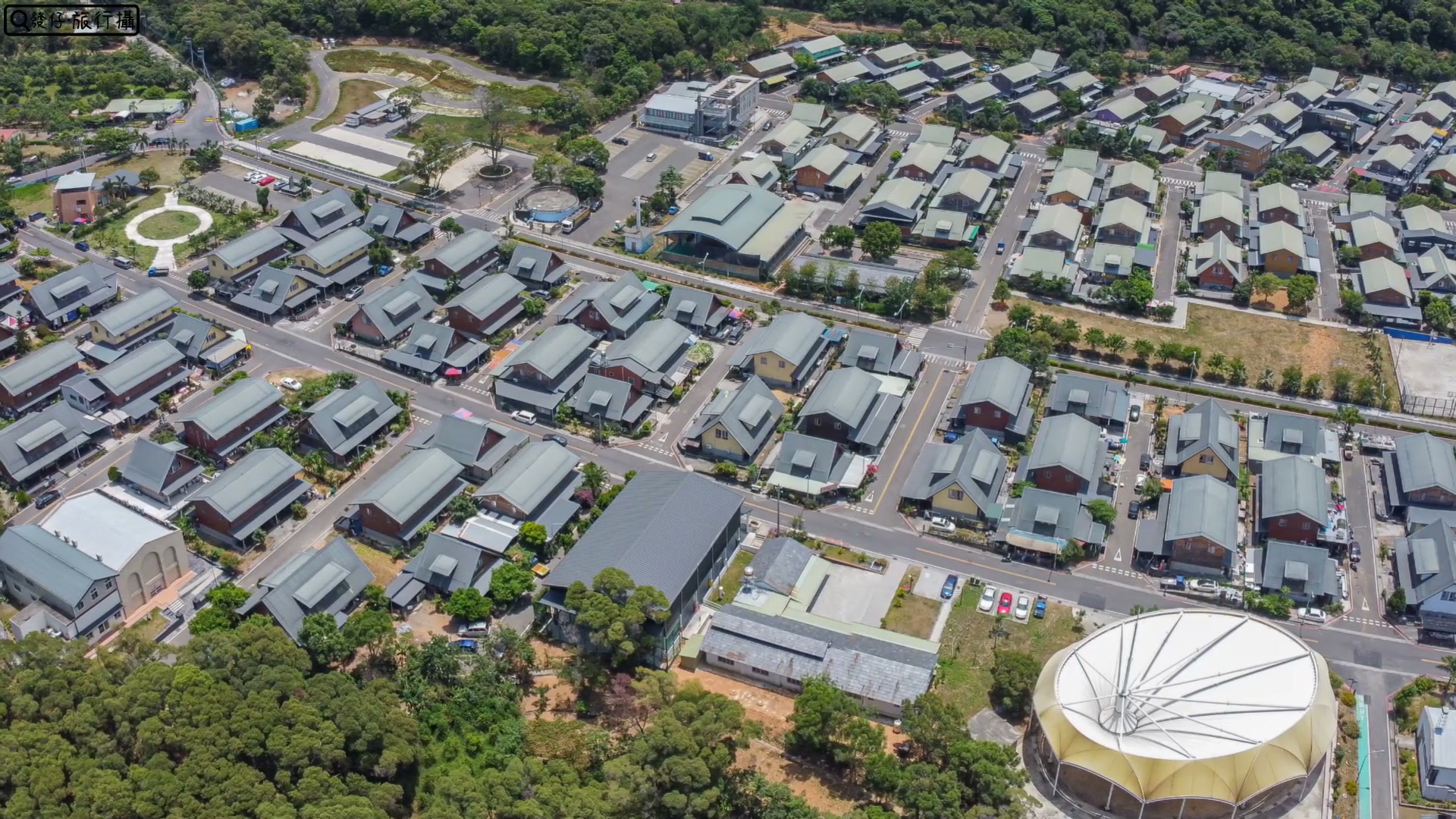
The ending steps back from clothing and coffee to look at homes and streets from above. Roads and green spaces lie between the roofs. Returning details to the scale of the settlement shows daily life within the foothills. On a real visit, begin at the visitor centre and public streets, then ask local hosts about a suitable way to spend time here.
5. Visit with room for local life
Homes, streets and wooded hills form one landscape. A visit can hold both a view and a conversation. Begin at Rinari Visitor Center, public streets and shops receiving visitors, then decide where to spend more time.
Enter homes only by invitation and ask before photographing people, interiors or activities. Check clothing experiences and guiding with the visitor centre, then plan around local opening arrangements, weather and trail conditions.
Article, image and music sources
The opening uses real footage published by Jason’s Life on 10 January 2024. The revised 68–90 second ending uses Rinari aerial footage published by 發仔旅行攝 on 5 June 2020. Filming dates were not independently confirmed; the film does not document current services or one continuous visit.
- Maolin: Rinari settlement
- Maolin: Rinari Visitor Center
- Maolin: Rinari surrounding trail
- Jason’s Life: Rinari travel footage
- 發仔旅行攝: Rinari aerial footage
The visitors, helpers and shop figures are not identified as Ayum from the original article or as members of any specific community.
Music: 跨海的一段路 · AI-generated instrumental.