
Cultural place
The work beneath Qishan’s stone arches
Under the old street’s stone arches, materials, trade and repair meet. Start with the corner of a shop-house and follow the covered passage into the town’s working history.
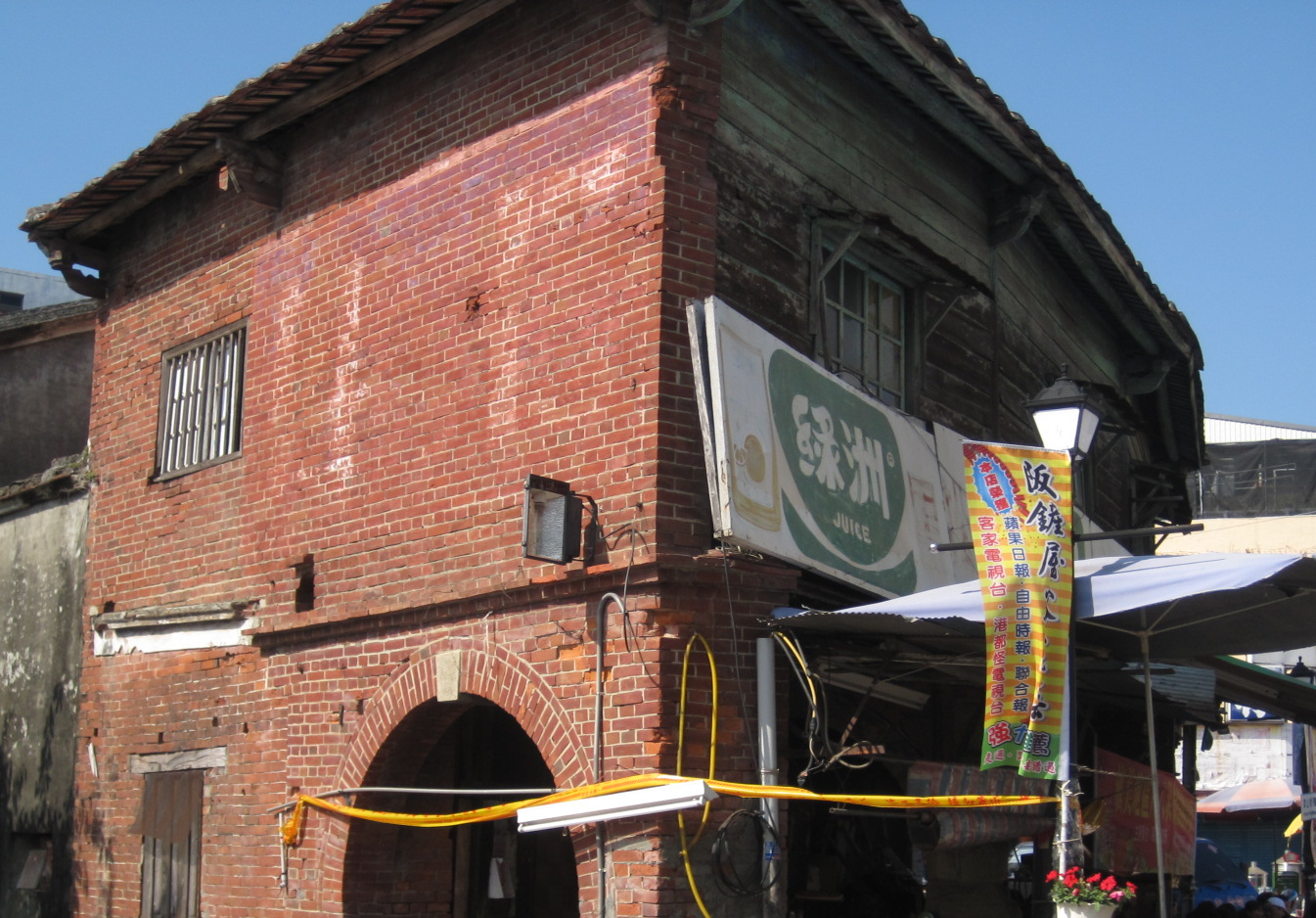
The stone arcades connect local sandstone with Japanese-period street improvements.
Inspection and emergency-support records add a history of maintenance behind the familiar façade.
Local stone in a changing street
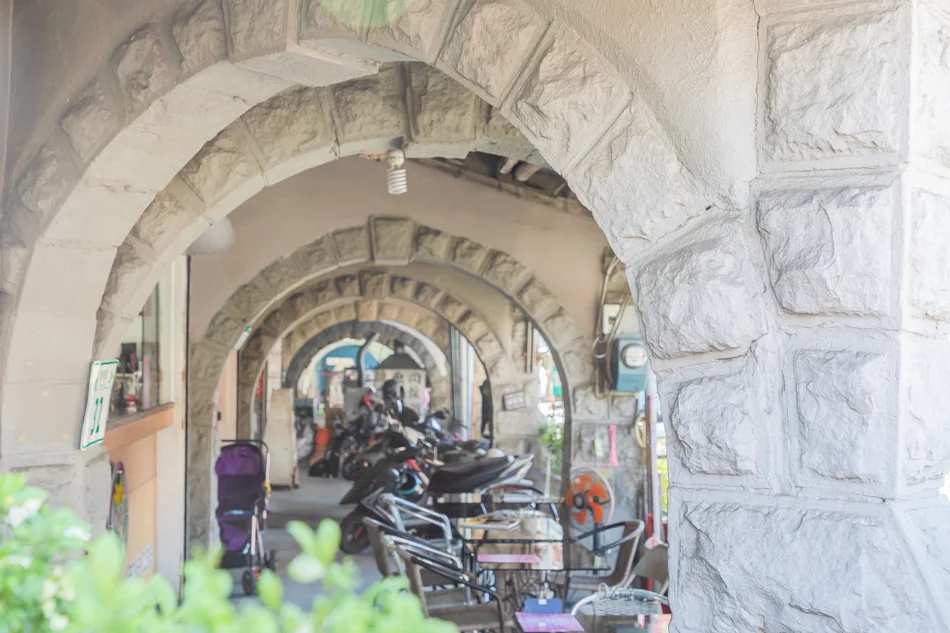
At a corner of Qishan’s old commercial streets, three stone arches spread outward from the inner supports. The district office describes sandstone arcades made with stone from below Qiweishan. These covered shopfront passages belong to the street improvements of the Japanese colonial period, but their material also connects them to the local landscape.
An arcade has to do two things at once: provide a sheltered route along the street and meet the openings of individual shops. At the corner, that task becomes more complicated because two directions join. The arches make this negotiation visible. Look from the foot of a support towards the adjacent span, then back towards the doorway it serves.
The façade is only the beginning
Preserving that familiar outline has required more than retaining a façade. A 2020 restoration-design summary records emergency strengthening of the corner arches in 2011. An interior inspection in 2017 found damaged floors and roofing; emergency supports followed in 2018. These records reveal a building with ageing materials and practical repair needs behind the street view.
The repair chronology separates what can be seen from the street from what keeps the building stable. Roofs and floors may be outside a visitor’s view, yet their condition affects the whole structure. Reading the dates of inspections and emergency support brings maintenance into the history of the street, alongside the better-known stories of commerce and architectural style.
The arcade remains a passage
From Zhongshan Road and the connected lanes, compare the public arcades, shopfronts and corner junctions. The stone passages reveal an old street through its construction as well as its produce. This is a walk through a functioning town centre, where a doorway is still someone’s entrance and the sheltered path still has people to carry.
The arch itself records a method of construction. The district office describes fifteen sandstone blocks forming the curved span, seven on each side and a trapezoidal keystone closing the centre. Rectangular blocks form the supports below. The arcade’s familiar curve therefore depends on the cutting and placing of individual stones, as well as on the street plan it serves.
A locomotive had to find its way back
Beyond the arcades, Qishan Station records another kind of preservation. In its account of the station-repair initiative begun in 2015, the Cultural Affairs Bureau describes oral-history research and the discovery of steam locomotive No. 353, formerly assigned to the Qiwei Line. It was restored and lifted back to the station, whose building became a sugar-railway museum. Its presence includes a later search and return, rather than uninterrupted survival in that spot. The arcade carried pedestrians; the railway carried passengers and goods. A vehicle number, assignment record and restoration account connect a particular object to that network. Historical transport, museum display and an operating passenger service remain separate things; this repair history promises no train movement on a visit.
Look closer
At a corner, trace how the arches meet their supports without blocking the passage.
Compare stone joints, covered walking space and the entrances of adjoining shops.
Visiting information
- Where to begin
- Begin at the Qishan Old Street section of Zhongshan Road, Qishan District, Kaohsiung, and explore the adjoining stone-arcade lanes.
- Visit timing
- Allow 1–1.5 hours in daylight for façades and public arcades. Shops have individual opening hours; the visit described here uses the street and publicly accessible passages.
- Transport and return
- Check the operator’s current E01A stops and timetable before planning the HSR Zuoying–Qishan Bus Transfer Station journey. From the transfer station, walk towards Zhongshan Road. For the return, confirm a service to HSR Zuoying rather than one continuing towards Meinong.