
Cultural story · Food and local life
Qishan bananas: the work behind a town’s golden name
Packing baskets, farm records and new foods connect the banana fields with the streets of Qishan.
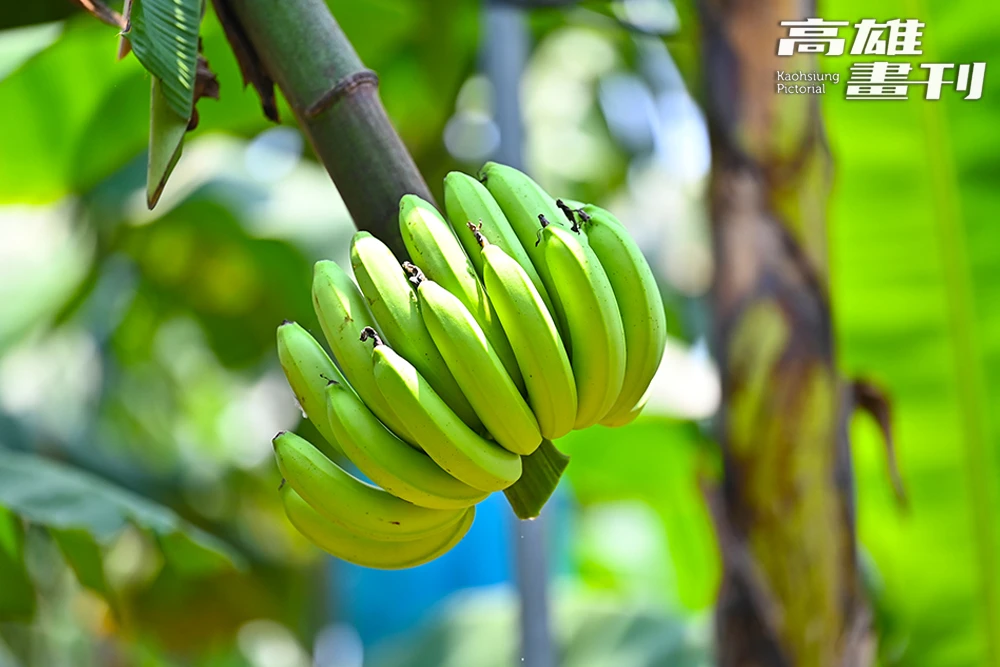
The cultural festival usually falls around autumn; the 26–27 September 2026 edition has ended.
For an ordinary visit, combine the farmers’ association shop with the old streets.
A basket carried more than fruit
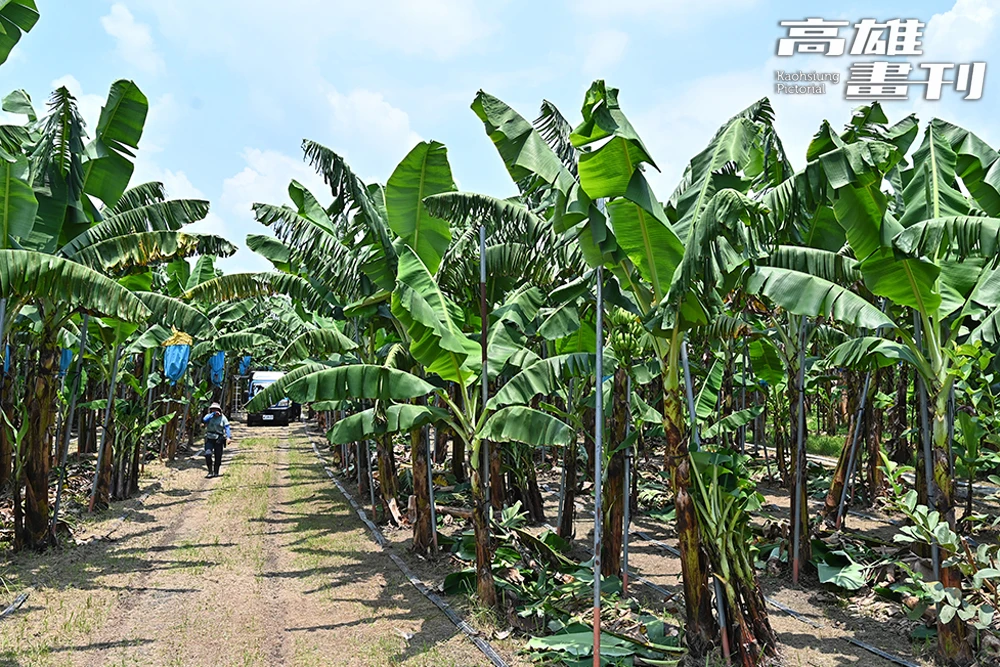
Before a banana reached a shop overseas, someone had to pack and carry it. Qishan resident Chuang Tse-jung remembered bamboo baskets weighing 48 kilograms, stacked two or three high in crowded collection sheds. The photograph preserved with his account shows fruit spread across the floor. The town’s export success depended on these repeated acts of sorting, binding and lifting, far from the clean display of a fruit stall.
Heavy baskets could leave fruit bruised during transport. After 1967, exporters changed to cartons, initially holding 16 kilograms and later 12. A smaller container changed the burden on workers as well as the condition of the product. Seen this way, a packing shed belongs in Qishan’s history alongside its fine buildings: it was where the requirements of a distant market became a change in local working methods.
A farmer learns to record the field
Chang Hung-shih first trained as an agricultural-machinery mechanic before choosing to grow bananas. When his production group began traceability work in 2005, recording a crop also meant learning computers. He paid for lessons, while his wife helped upload the records. In the 2014 account of his work, the difficult part was not only technology: relatives and older growers also had to agree on a new way of organising information.
Those records helped him understand costs and the timing of production, not simply attach a label to fruit. Two decades later, a 2025 walk by the Youth Banana community team followed collection points and produce sellers around Qishan. One vendor, known as Auntie A-chu, described shifting from customers choosing vegetables on site to preparing deliveries for regular clients. Farm and market had both changed their routines while continuing to supply food.
Learning from farmers also reached the kitchen. Tai-Ching-Chiao's own product account describes learning banana sweet rice cake from older women growers: glutinous rice is ground and drained, combined with the local old Beijiao banana, then steamed and moulded. Here the fruit enters an existing rice-food technique rather than merely becoming a new flavour label. The account identifies whose knowledge the team learned from, without supplying individual names or an undocumented family recipe.
The harvest takes another form
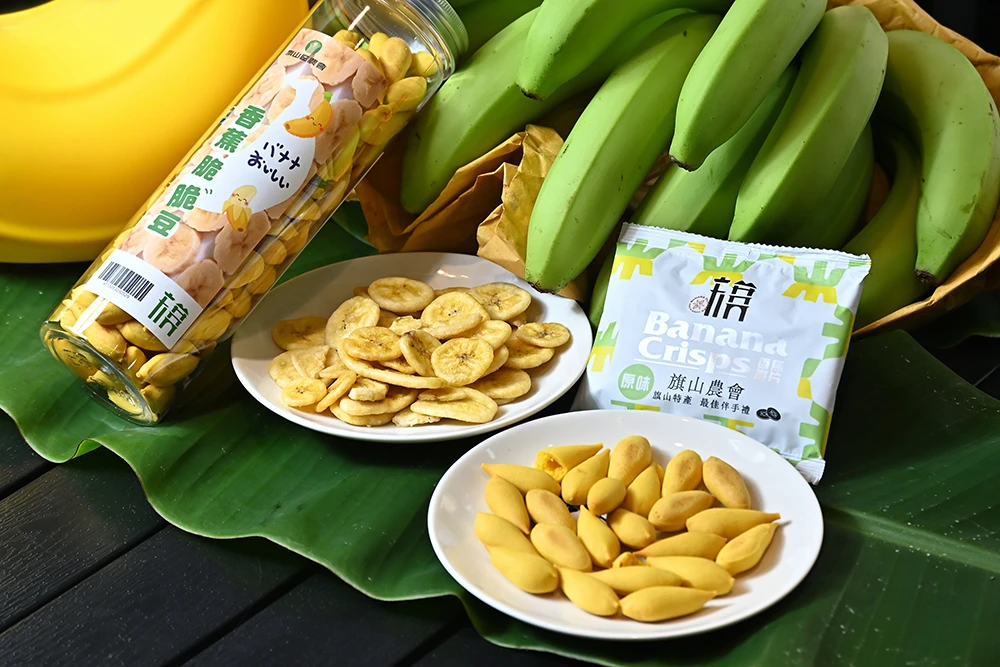
Today the farmers’ association sells banana crisps, dried fruit and filled pastries. These products extend the ways a harvest can be carried, stored and shared. At the 2026 cultural festival, families could also use fibres from the banana’s pseudostem for cord or make prints with its sap. A plant usually reduced to its edible fruit became a source of materials, giving visitors a different reason to look closely at it.
On 26–27 September 2026, the programme used Qishan Stadium and the association’s rice mill, combining a produce market, quality awards and rural images. A walk between these settings and the old streets places the festival back inside the town that makes it possible. Before leaving, compare a fresh bunch with a packaged snack: the difference records choices about labour, transport and selling, not only a new flavour.
Its dried bananas take a different route. The team's description specifies at least nine days in the sun, repeatedly turning the fruit so it dries evenly. Compare that elongated dried fruit with a steamed rice cake: one concentrates a harvest through drying, the other brings it into a moist rice preparation. These are two documented processes of this maker, not a universal drying time or an assurance that either item is available on a particular day. Confirm stock and any teaching session separately.
Look closer
Compare fresh fruit, packaging and processed foods, asking how each reaches its buyer.
At a fibre or printing workshop, identify which part of the banana plant supplies the material.
Visiting information
- Usual season
- Around autumn. The 2026 cultural festival ran on 26–27 September and has ended; bananas and local foods remain part of an ordinary street visit.
- Festival settings
- The 2026 programme used Qishan Stadium and the farmers’ association rice mill in Qishan District, Kaohsiung. The edition has ended; ordinary visits can focus on the shop and old streets.
- Year-round stop
- Qinong Shop, 65 Zhongshan Road, Qishan; 07-6628666. The association’s published customer-service hours are 08:00–16:30; contact the shop for a planned group visit.
- Arrival and return
- Take the E01 Qimei express corridor from HSR Zuoying to Qishan Bus Station, then continue into the old streets on foot. Keep the return bus departure in the day’s plan, especially after evening programmes.