
Cultural story
A roof made from a thousand bundles of grass
In Katatipul, the meeting house needs new thatch and the youth organisation needs people’s time. Cutting grass, teaching songs and helping families are connected parts of keeping the community together.
Katatipul: A House Kept by Many Hands
Look back at the July 2020 meeting-house repair in Katatipul. Carrying materials and working together reveal a house kept within community life.
90 seconds · English captions in the film; optional English and Traditional Chinese CC.
This records work in progress in July 2020, not the finished repair, a current ceremony or an invitation to enter freely. Community, meeting-house and ceremonial spaces have their own protocols. Confirm arrangements with local hosts before a visit.
Film sources and complete bilingual captions
A look back at the meeting-house repair in July 2020, through materials and shared work. The images record work in progress rather than the completed repair.
This records work in progress in July 2020, not the finished repair, a current ceremony or an invitation to enter freely. Community, meeting-house and ceremonial spaces have their own protocols. Confirm arrangements with local hosts before a visit.
- 卡大地布蹲馬步 【KTTP VIBE】EP.01|巴拉冠耳朵大翻修!蹲點新兵初參上|蹲點.台灣 2020
- 卡大地布女路走讀|臺東縣婦女福利服務中心供文
- 卡大地布的學習與地名|原住民族文獻
- 蹲點日誌:部落學習與巴拉冠
Music: 跨海的一段路 · AI-generated instrumental.
00:00:00,000 --> 00:00:05,000
Katatipul:
A House Kept by Many Hands
卡大地布
許多雙手,照顧一座會所。
00:00:05,000 --> 00:00:10,000
Taitung, Taiwan.
A roof repair, documented in 2020.
臺灣,臺東。
2020年的屋頂修繕紀錄。
00:00:10,000 --> 00:00:18,000
The Palakuwan is
a place of learning.
巴拉冠青年會所,
也是學習的地方。
00:00:18,000 --> 00:00:24,000
Bamboo, timber and thatch.
Materials that need care.
竹、木與茅草,
都需要人照料。
00:00:24,000 --> 00:00:30,000
Before the gathering,
there is work to share.
在相聚之前,
先有一起分擔的工作。
00:00:30,000 --> 00:00:37,000
Old thatch comes down.
Many hands guide its weight.
舊茅草往下卸,
許多雙手接住它的重量。
00:00:37,000 --> 00:00:44,000
A bundle moves
from one person to the next.
一束材料,
從一雙手交到另一雙手。
00:00:44,000 --> 00:00:51,000
See the house
through the work around it.
從屋旁的工作,
認識這座會所。
00:00:51,000 --> 00:00:58,000
Care happens
one shared task at a time.
共同照顧,
從一件件分工開始。
00:00:58,000 --> 00:01:05,000
Look beneath the thatch.
Notice the bamboo frame.
往茅草下方看,
留意竹材交接的結構。
00:01:05,000 --> 00:01:12,000
One person passes.
Another reaches to receive.
有人往上遞,
有人伸手接。
00:01:12,000 --> 00:01:20,000
Skill lives
in small, repeated actions.
手藝,
留在細小而反覆的動作裡。
00:01:20,000 --> 00:01:25,000
Read the story.
Visit with local guidance.
先讀故事。
到訪時,跟著在地引導。
00:01:25,000 --> 00:01:28,000
A living place,
cared for together.
共同照顧的,
是一處仍在使用的地方。
00:01:28,000 --> 00:01:30,000
Taiwan, Layer by Layer.
島嶼年輪。
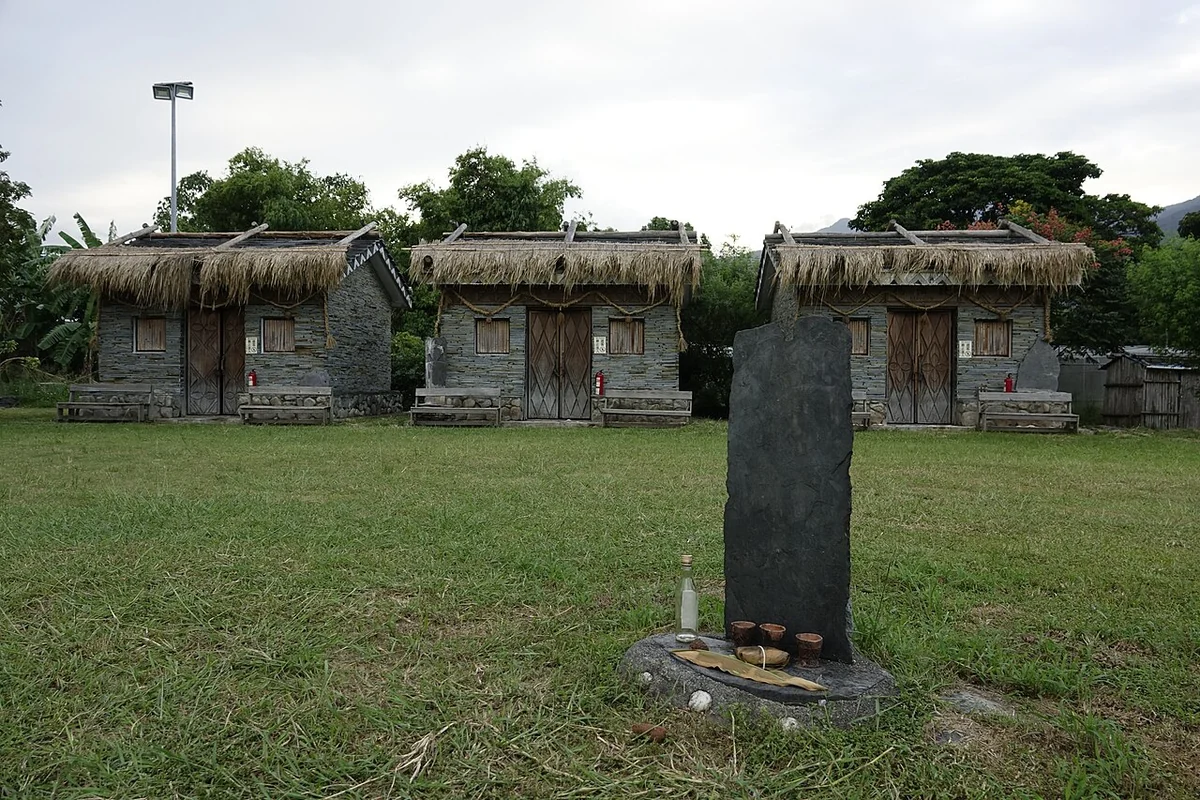
Meeting-house roofs are renewed through collective labour.
A 1992 performance helped young people reconnect with local institutions.
Older children pass songs and practical skills to younger ones.
Before the ceremony, the roof needs attention
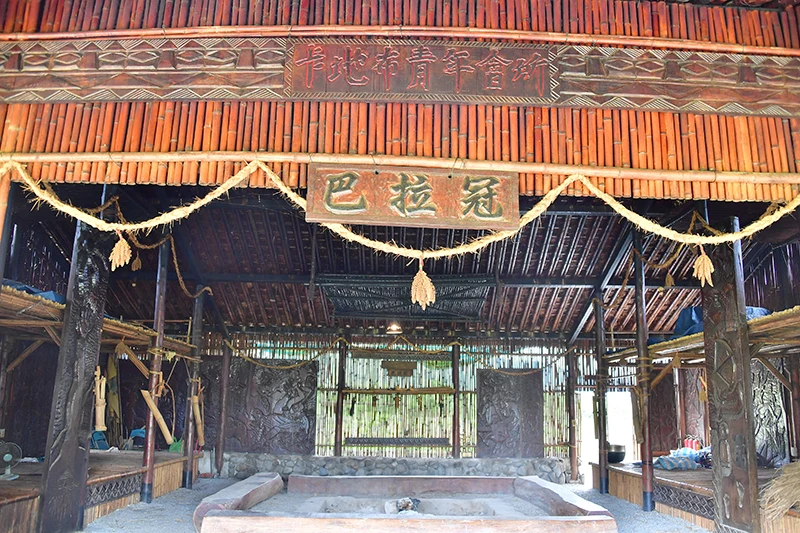
In May 2020, Katatipul youth leader Lin Yu-chang described an unfinished job: around two hundred bundles of grass had been cut, while each meeting-house roof needed about a thousand. The group planned a longer trip to Manzhou in Pingtung to gather more. Fresh thatch was added annually, with larger repairs every three years.
The work supports both the takuban, the boys’ house, and the palakuwan, the young men’s house. These buildings are used and maintained, rather than left as scenery. Harvest work, weddings, funerals and ceremonial preparations also call on the youth organisation. Carrying a bundle of grass is one visible part of a wider responsibility to other people.
The organisation has been rebuilt too
In 1992, a Puyuma dance project at the National Theater brought different communities’ performances together. Katatipul young people returned home wanting to recover their own practices. They organised, rebuilt ceremonial buildings and renewed the age-group system. Later, Lin also described members leaving and fewer young people joining: a restored building did not automatically provide the people needed to sustain it.
The connection with home also follows paths beyond the meeting house. Lin Chin-te’s 2016 book on Katatipul place names gathered histories carried in the names of places. In 2020, young people from Katatipul and the Bunun community of Kunuan shared journeys retracing ancestral migration routes in a museum programme. Returning involved learning the landscape as well as entering a building.
Skills also travel between Puyuma communities. In August 2025, elder and bamboo-and-rattan craftworker Cheng Hao-hsiang from Puyuma village taught a basket-making class at Katratripulr. Two local rahan joined the opening. The learners began with a useful container and traditional tools, encountering bamboo's flexibility through handling it rather than learning only the name of a building material.
A song travels from the classroom into a field
During Katatipul’s 2016 summer cultural programme, teenagers guided younger children through songs, dance and visits to elders. On one day they worked in a field, singing Sararaipan, a song associated with the work team. On another they brought snacks and songs to older residents. Language was used while doing something for someone, beyond a lesson in vocabulary.
Families took turns providing lunch. The programme depended on teenagers’ patience, elders’ time and adults cooking for the group. For a first visit, the National Museum of Prehistory provides a public introduction to Indigenous social life; a community-led visit to Katatipul offers a different encounter, arranged with the people who use these houses and spaces.
The announced course linked weaving with bamboo harvesting, hot-spring processing, design and practical construction, involving local schools. It helps explain why restoring a thatched meeting house cannot be separated from knowing and preparing its materials. These were the programme's plans at its launch; they are neither evidence that every class was completed nor a standing invitation to join a community workshop.
Look closer
In the meeting-house repair account, follow the work of gathering, bundling and placing thatch on the roof.
Notice the roles of young organisers, elders and households in a shared activity.
Visiting information
- Public introduction
- National Museum of Prehistory, No. 1, Museum Road, Taitung City. Begin with its Indigenous culture galleries.
- Hours and admission
- Tuesday–Sunday 09:00–17:00. Closed Mondays except national holidays and flexible holidays; also closed on election days, Lunar New Year’s Eve and Lunar New Year’s Day. General admission NT$100. Additional 2026 closures: 27 October and 28 November–4 December.
- Group visit
- Museum enquiries: 089-381166. Community meeting houses remain in use; access is arranged by their hosts.
- Travel and return
- Take a train serving Kangle station, then walk 5–10 minutes to the museum. Arrange the return train from Kangle before the visit.