
Cultural story
Glove puppetry: before the character comes alive
Follow a costume, a carved head and a moving hand to see the many kinds of work behind one character.
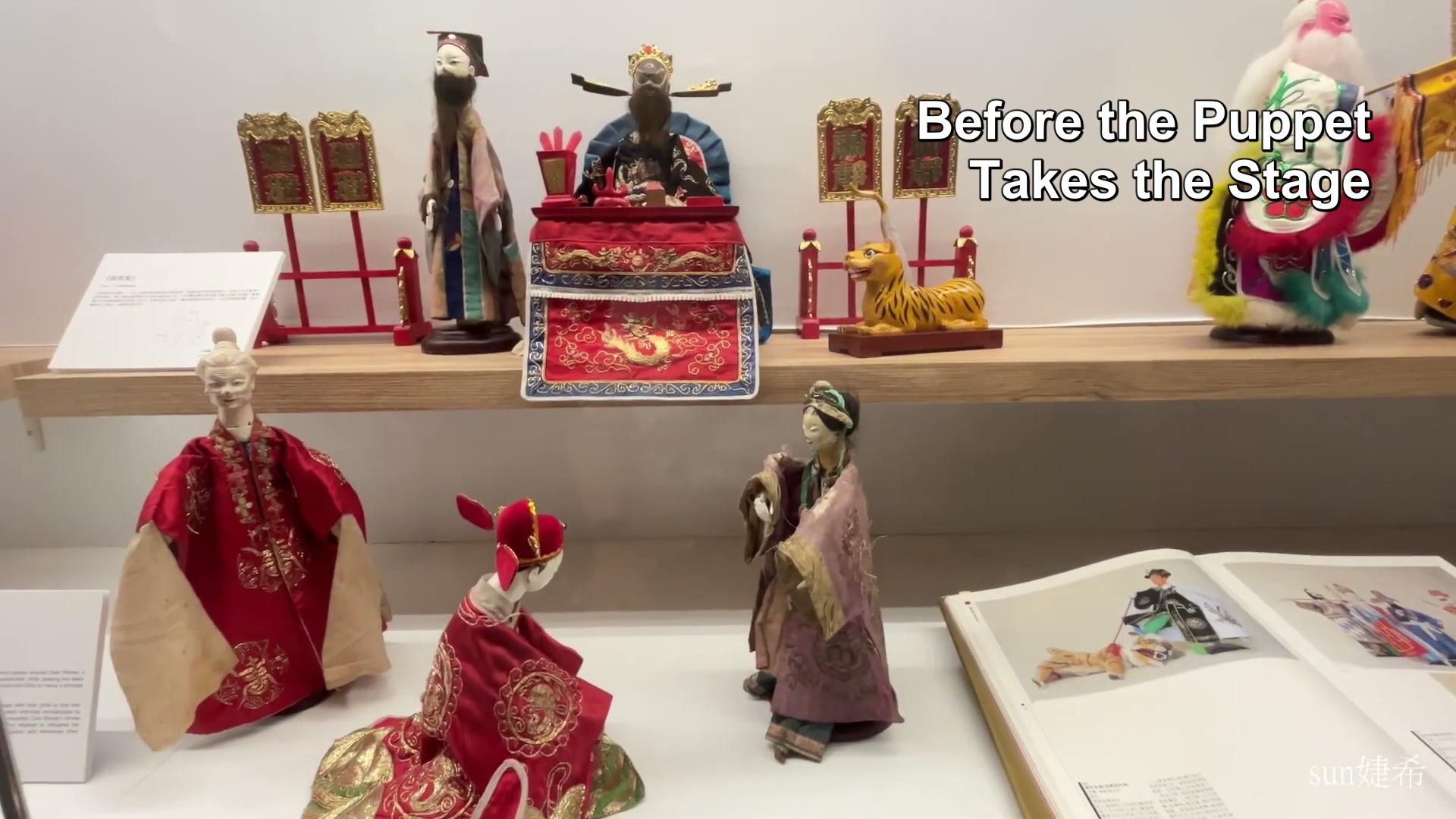
Before the Puppet Takes the Stage
Follow the work behind a puppet costume, then take a closer way of looking into the museum.
90 seconds · English captions in the film; optional English and Traditional Chinese CC.
Film sources and complete bilingual captions
The 2020 Yunlin project and 2025 Taipei visit are distinguished. No on-site survey was performed; publication dates are not filming dates.
00:00:00,150 --> 00:00:04,800
Before the Puppet
Takes the Stage
一件偶衣,讓角色準備上場
00:00:05,150 --> 00:00:09,800
A 2020 Yunlin project.
Costume-making, step by step.
2020年雲林工藝計畫,一步步看偶衣製作。
00:00:10,150 --> 00:00:14,800
Begin with a drawing.
先從圖樣,想像角色的衣服。
00:00:15,150 --> 00:00:21,000
Shape the costume on paper.
先在紙上,調整衣服的樣式。
00:00:21,350 --> 00:00:26,000
Cut along the shape.
沿著形狀,慢慢裁下。
00:00:26,350 --> 00:00:31,000
Guide the cloth, stitch by stitch.
扶好布料,一針一針接起來。
00:00:31,350 --> 00:00:36,000
Colour begins with small choices.
色彩,從一個個小選擇開始。
00:00:36,350 --> 00:00:41,000
Look closer at the details.
靠近一點,看見細節。
00:00:41,350 --> 00:00:46,000
Try the fabric against the form.
把布放上去,比一比、調一調。
00:00:46,350 --> 00:00:50,300
A skill grows through practice.
手藝,從動手練習中累積。
00:00:50,650 --> 00:00:56,000
Tools for the next small step.
下一步,要用的工具。
00:00:56,350 --> 00:01:01,000
Small adjustments shape the finish.
一點點調整,接近完成的樣子。
00:01:01,350 --> 00:01:06,000
A two-metre
display puppet.
一尊兩公尺高的展示戲偶。
00:01:06,300 --> 00:01:07,000
Adjust.
調整細節。
00:01:07,450 --> 00:01:09,300
Dressed anew.
重新,穿上新衣。
00:01:09,850 --> 00:01:12,200
Taipei, 2025.
2025年,回到台北的另一個展場。
00:01:12,500 --> 00:01:19,800
A new way to look
at puppet costumes.
換一種眼光,看看戲偶的衣服。
00:01:20,150 --> 00:01:23,300
Look closer.
靠近一點,看見細節。
00:01:25,150 --> 00:01:27,300
Visit the Puppetry
Art Center of Taipei.
走進台北偶戲館,從偶衣開始看。
00:01:27,550 --> 00:01:29,900
Taiwan, Layer by Layer.
島嶼年輪
Read costume, face and movement together.
Carving, clothing and manipulation each contribute to a stage character.
A character is assembled before it is played
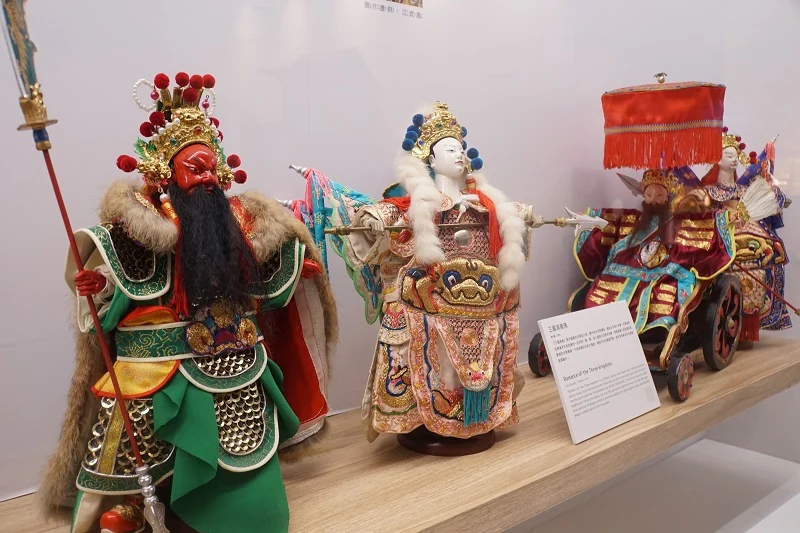
A glove puppet brings unlike materials together: a carved head, a cloth body, hands, feet, clothing and accessories. A robe tells the eye something about a character before a line is spoken. Yet the same robe must leave room for the performer to move. Appearance and action meet in an object designed to be animated by a hand.
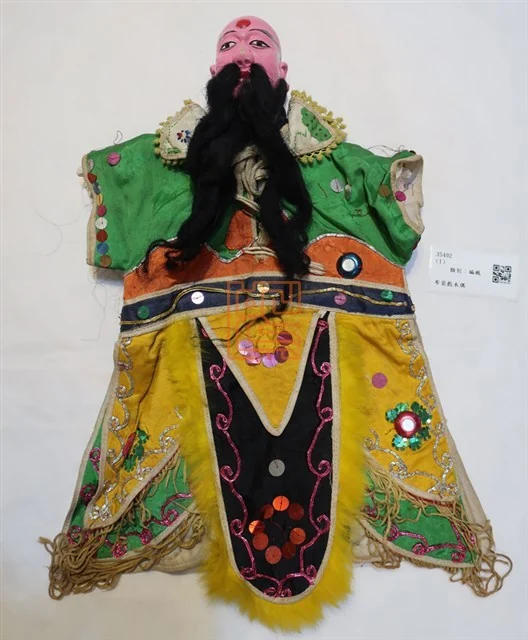
The wooden puppet numbered 35402 in the National Museum of History offers a specific example. Its green robe is paired with an orange waist ornament and a yellow front skirt carrying ingot patterns; the split rear skirt has a yellow chrysanthemum on either side. Reading front and back together gives more than a general impression of an ornate costume. A figure that turns can reveal another arrangement of colour and embroidery, even though its catalogue does not name a dramatic character or explain the maker’s tailoring decisions.
One museum puppet has a red-bearded head attributed to maker Hsu Hsi-sen. Its record describes how changes of clothing allowed the head to take different roles. The character therefore lives in the relationship between head, costume and story. A display case preserves the object, but imagining it in use helps explain why its parts were made to work together.
From collecting costumes to making them
Ni Shen-fa worked in jewellery metalwork and collected puppet clothing before studying with Chen Hsi-huang in 2008. Interest in a finished garment turned into an apprenticeship in making it. The change moved him from selecting objects to understanding the small procedures that let them fit a puppet and function in performance.
His account of learning emphasises watching brief movements closely and asking about them. A teacher’s hand can finish a step before the student has recognised its importance. Repeated work turns that passing gesture into something the learner can do independently. Such knowledge occupies the interval between seeing an object and being able to make it.
Watch the sleeve and the gesture together
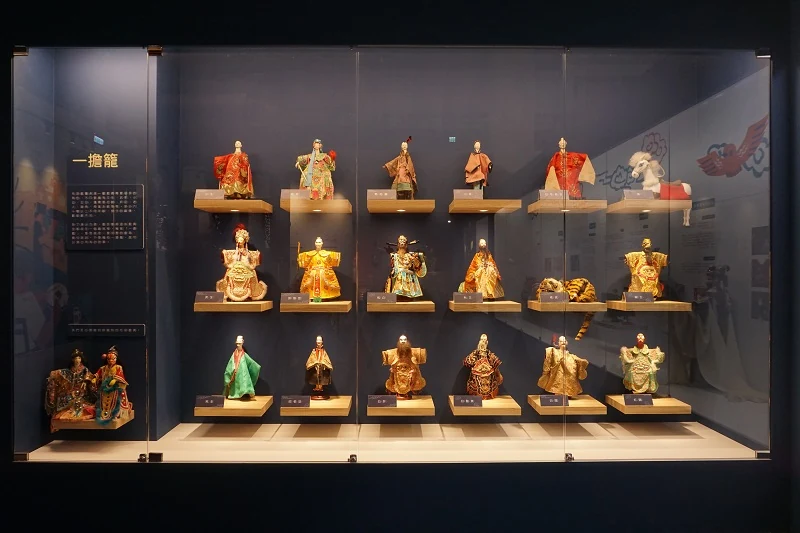
An account of Taipei Puppet Theatre Museum’s renewed permanent exhibition in 2021 describes moving from the front of the stage towards its backstage crafts. Carvers, costume makers and performers come into view as different contributors. The shift is useful even outside a museum: looking at a character can become a way of noticing the team that makes a performance possible.
Choose one entrance or turn and follow the relationship between costume and movement. Then, in a display, examine the same features at rest: the sleeve opening, headwear and accessories. Performance and exhibition offer two speeds of looking. Together they restore movement to the object and material detail to the moving character.
Look closer
Follow one character’s sleeve, headwear and turn; at a display, compare those details with how the costume fits the body.
Visiting information
- Place
- Taipei Puppet Theatre Museum, 2F, 99, Section 5, Civic Boulevard, Taipei.
- Visit
- Read the current permanent display, then check any performance or hands-on session separately. The cultural bureau lists regular opening of 10:00–17:00 with Monday closure; temporary changes follow the museum’s announcements. Telephone 02-2528-9553. The historical objects and 2021 display photographs used in this article do not promise the same exhibits today.
- Getting there
- Leave Nanjing Sanmin MRT station through Exit 2 and walk along Jixiang Road towards Bade Road, then continue towards the museum. The city’s directions give a walk of roughly five to ten minutes.
- Return
- Walk back to Nanjing Sanmin station after the exhibition or performance. Allow additional time when leaving after a scheduled event.
Start with what the puppet wears
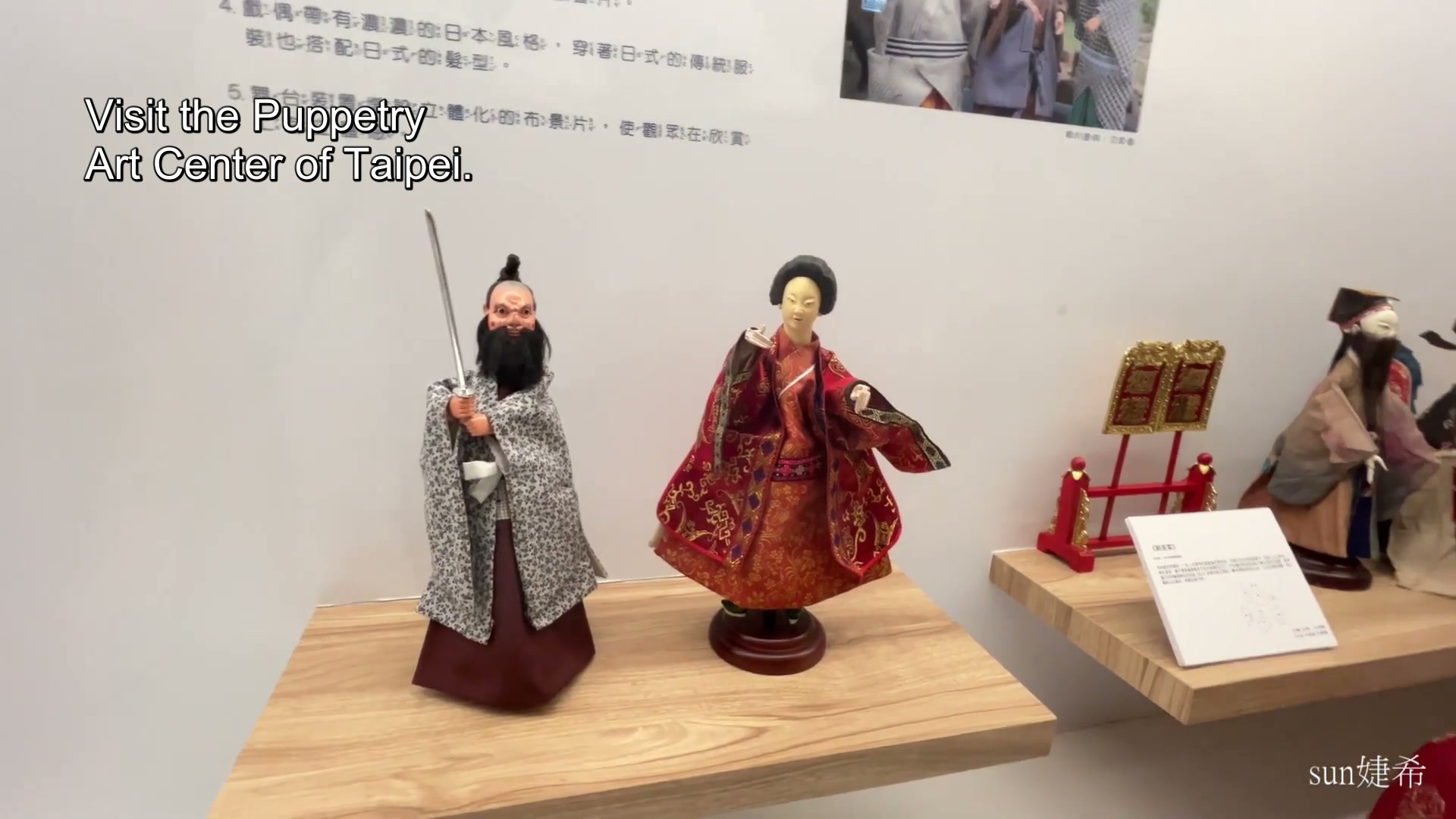
At the Puppetry Art Center of Taipei, begin with the clothes rather than trying to name every character. Notice collars, sleeves, belts and hems. Compare how fabric surrounds a body and makes one figure look different from the next.
The opening museum views come from a creator’s 2025 visit. The film then turns to an official craft record released by the Yunlin Puppet Theater Museum in 2020. These are different places and times; the displayed puppets are not identified as the students’ work.
From a drawing to cloth
The official 2020 film follows costume maker Chen Yu-ru of Red Bean Costume Studio and a skills-transmission course. Drawings, patterns, cloth and the sewing machine reveal work that comes before a finished puppet costume.
This is an archival record, not an advertisement for a current class. Studio work and the Yunlin classroom are intercut. A sewing close-up is therefore not presented as proof of work being carried out inside the museum today.
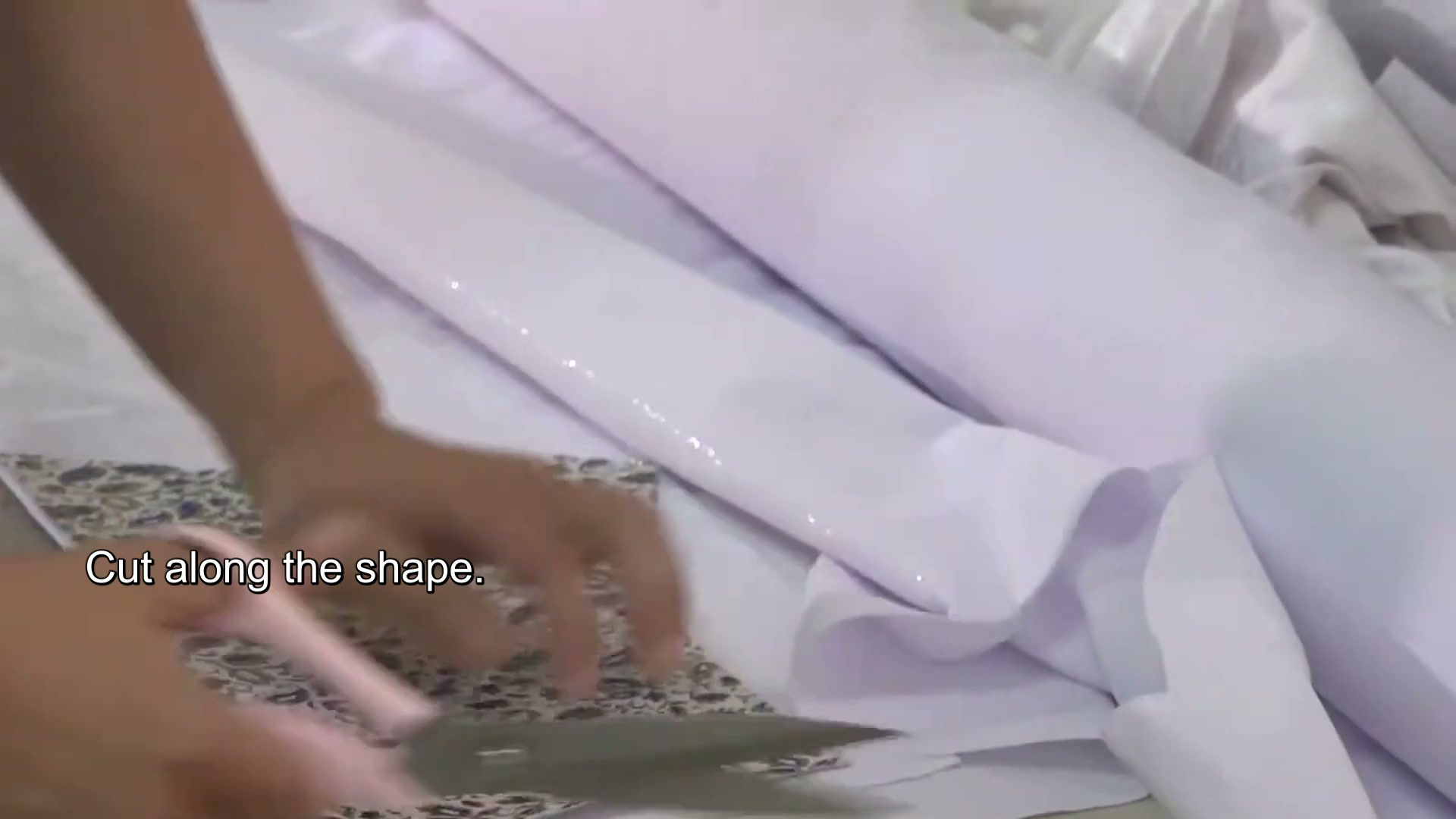
Learning beside other makers
The course description lists ten lessons, moving from design and pattern-making to finished garments. Individual costume work came first; a collaborative project followed. Learning involved making, receiving guidance and adjusting work alongside others.
Threads, small decorative pieces, scissors and fingers enter the frame in turn. They make the time behind a finished costume visible. The film does not turn a particular colour or ornament into a fixed character identity without evidence.
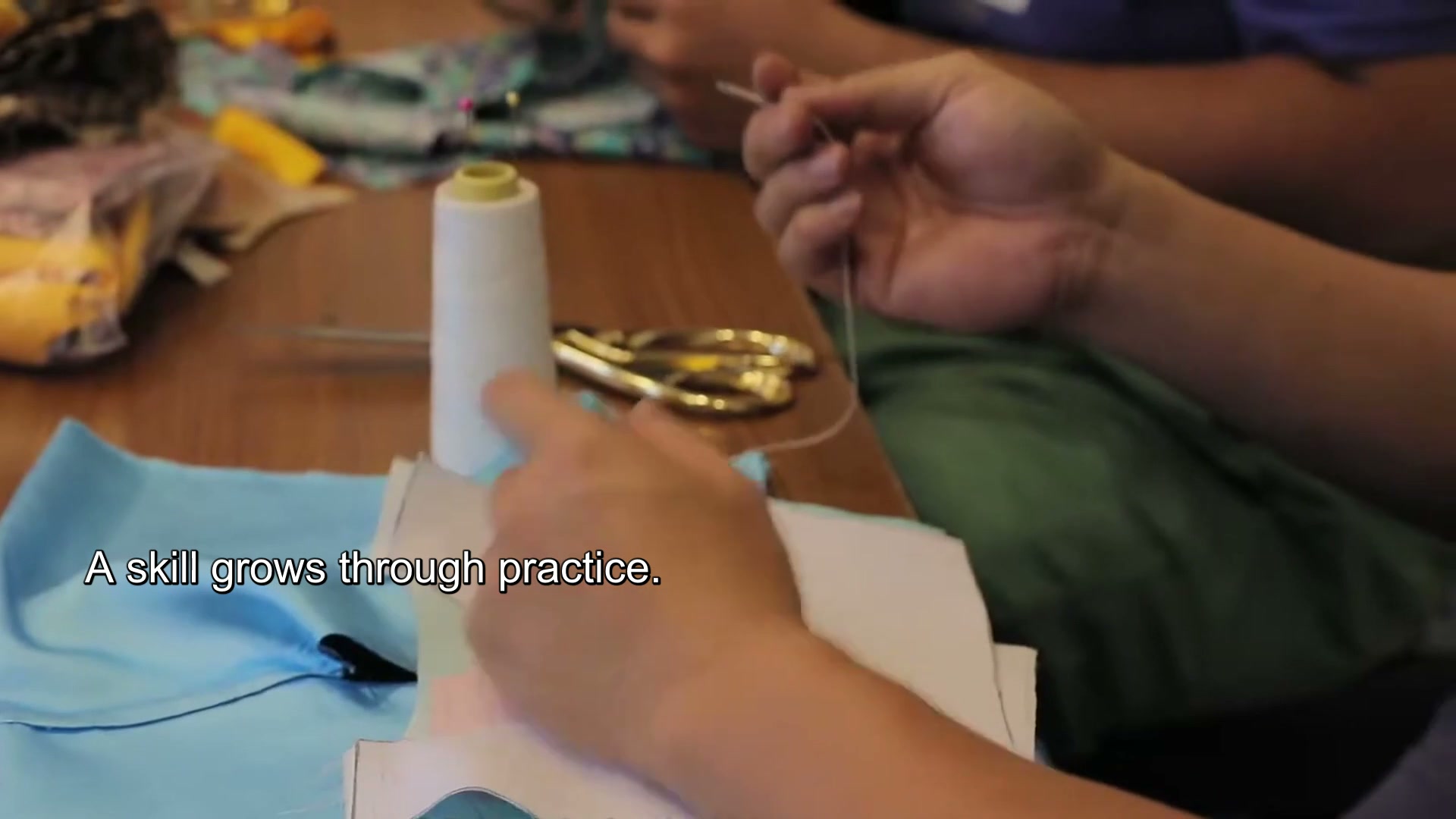
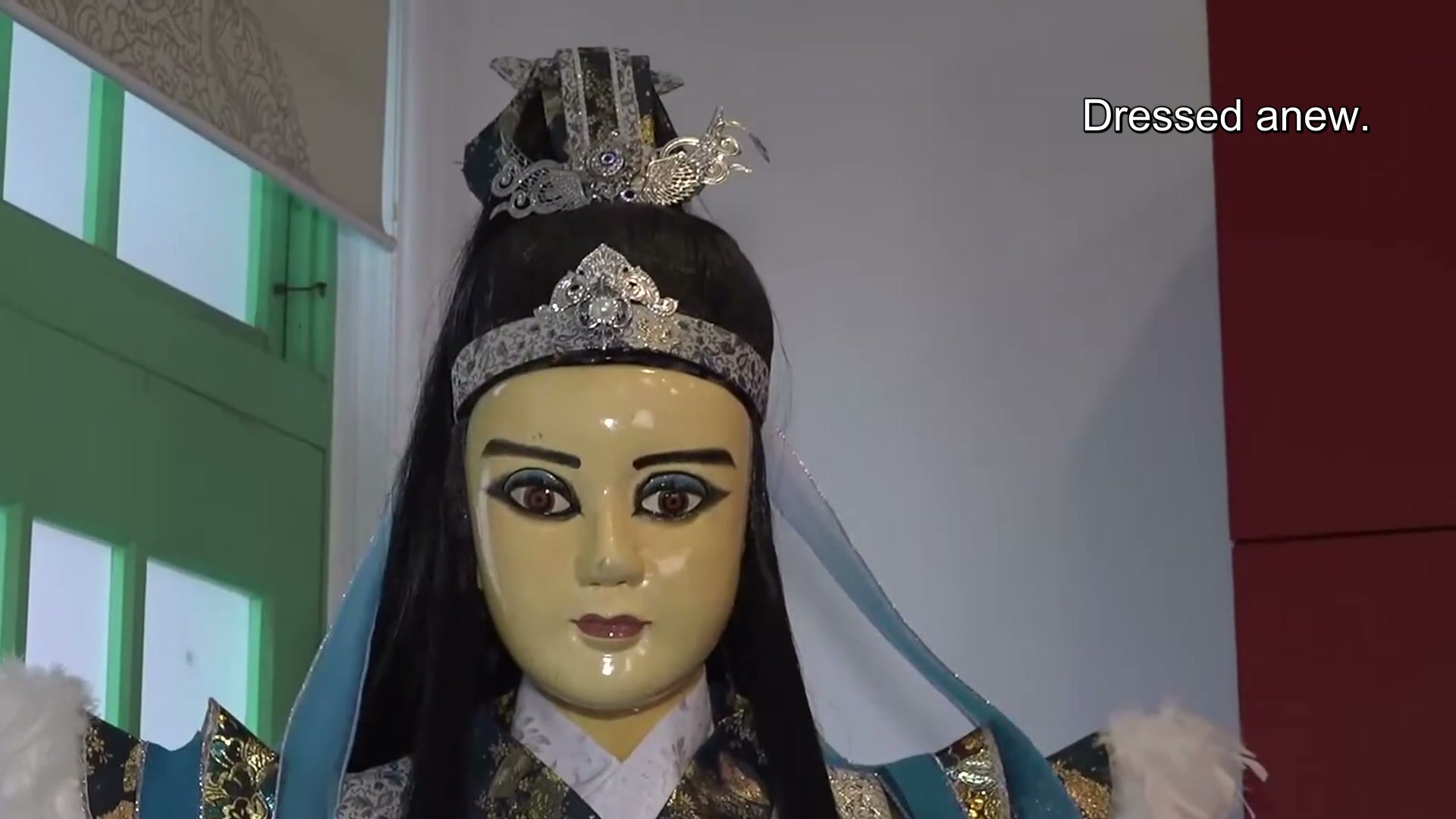
Many hands, one large display puppet
The group challenge was to design and make a new costume for a display puppet roughly two metres tall. The official record shows the old layers being examined, a new outer garment being fitted, the collar adjusted and the completed group result.
This is the redressing of a large display figure. It is not described as an ordinary hand-operated glove puppet or edited into a live stage performance. The change of scale lets us see people sharing one practical task.
Take a closer way of looking into the museum
The ending returns to a separate 2025 visit to the Taipei museum. On a future visit, look at how clothing meets the body before reading a character’s or troupe’s story. Knowing something of the making helps small details become visible.
The museum is at 2F, No. 99, Section 5, Civic Boulevard, Taipei. Check its official visitor information, exhibitions and opening notices before travelling. Historical footage does not guarantee that every object is still displayed or that the 2020 Yunlin course is currently offered.
Article, image and music sources
The 2020 Yunlin project and 2025 Taipei visit are distinguished. No on-site survey was performed; publication dates are not filming dates.
Music: 跨海的一段路 · AI-generated instrumental.