
Seasonal maritime culture
Northeast coast sailing: the work behind a sail at Fulong
From Chan Cheng-feng’s early boats to lessons in wind and water, Fulong’s sailing story begins with people learning to use the coast.
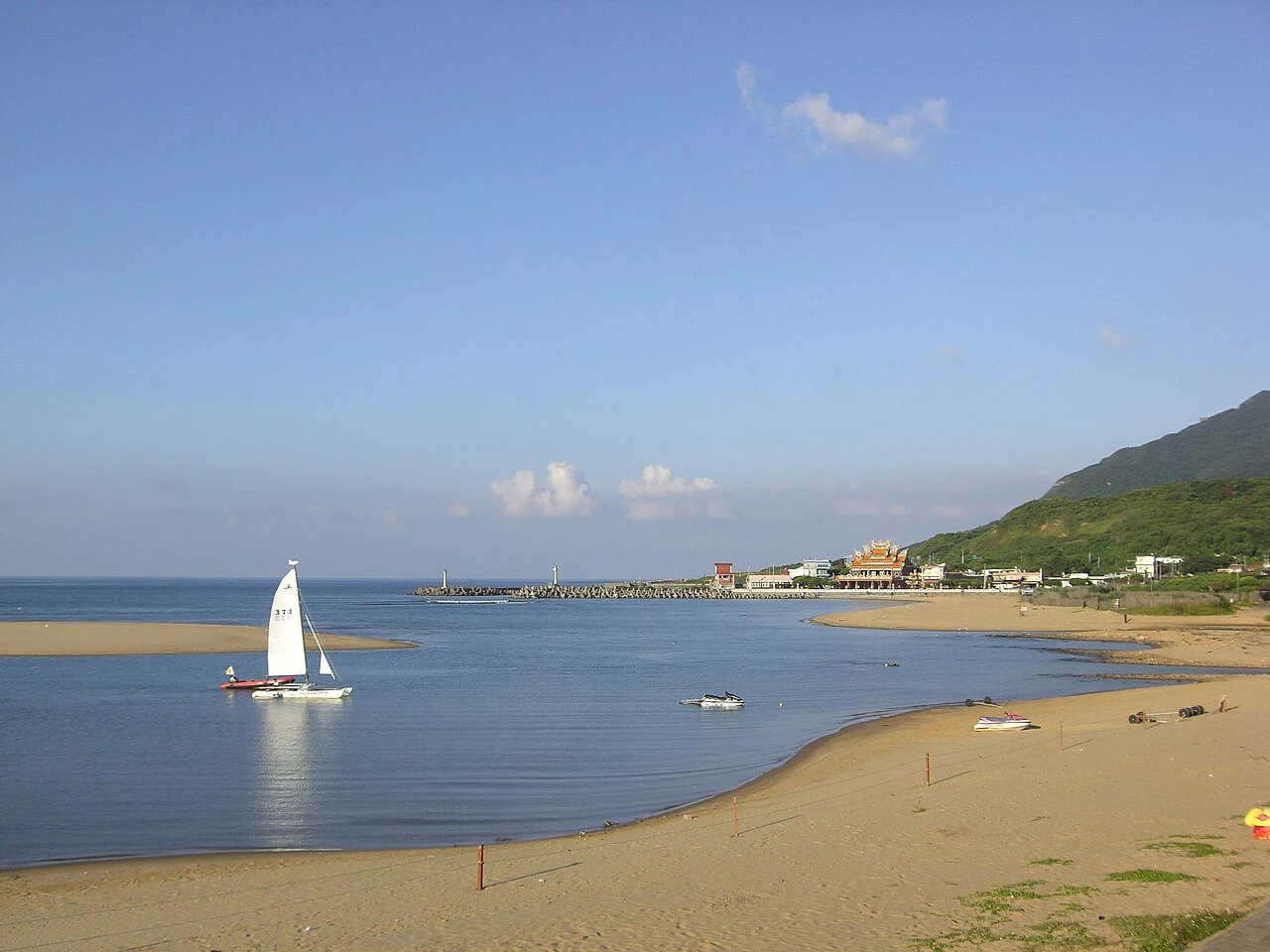
Fulong’s sailing story connects a personal career change, competition and teaching.
Fulong’s estuary and beach connect sailing history with water recreation.
Book a current operator’s course separately; a coastal walk is not a sailing booking.
Five boats and a change of direction
In a 2013 interview, sailing educator Chan Cheng-feng recalled a visit to his elder brother near Fulong while considering life after military service. The brothers went towards the Shuangxi River and imagined working with water sports. Chan remembered buying five sailing boats carried by a British merchant vessel and bringing them to Fulong. The recollection gives the coast a human scale: a decision about one person’s future became part of a new recreational practice.
His later teaching in Kaohsiung returned to the same essential relationship between a person, a boat and conditions on the water. Students first learnt to notice waves and wind rather than treating the sail as a device that could simply be switched on. The Fulong origin and the southern teaching career belong to one life, but are different places and periods. Holding those distinctions preserves the actual journey behind the familiar image of a sail against the sea.
In a later, 2023 interview, Chan adds a material route to the five-boat memory. He and his brother bought the idle craft from a British freighter awaiting dismantling in Qijin, obtained further equipment in Kaohsiung’s Yancheng hardware streets, and sent everything by small truck to his brother’s home in Fulong. A new leisure practice began with second-hand objects that still needed assembly and additional parts, connecting the beach to another city’s working trades.
Before a boat leaves the shore
A 2019 tourism programme at Fulong shows how that learning was organised for visitors. Professional instructors introduced sailing principles and equipment, explained basic assembly and practised movements on land before moving to the water. Each step turned an unfamiliar object into something the participant could understand. The order matters: the scenic moment offshore depended on preparation that photographs rarely make central.
Fulong sits where the Shuangxi River reaches the sea. River and open coast provide different environments, separated in part by the beach and sandbar. That physical setting helps explain the range of water activities associated with the area, but it is not a guarantee that conditions suit a particular lesson on a particular day. An instructor’s choice of water, equipment and timing is part of the activity itself, not an inconvenience added to it.
Chan’s co-authored sailing introduction distinguishes a small dinghy from a larger keelboat. The former has a light hull for one or a few sailors and generally lacks living accommodation; the latter uses more equipment and a divided crew. It also identifies OP as a training class and Laser, now called ILCA, as another small-boat family. These names help a visitor ask what a course actually uses, rather than assume every product called ‘sailing’ offers the same seat, task or learning experience. The examples explain equipment, not the current inventory of a Fulong operator.
From a race course to a visitor’s shoreline
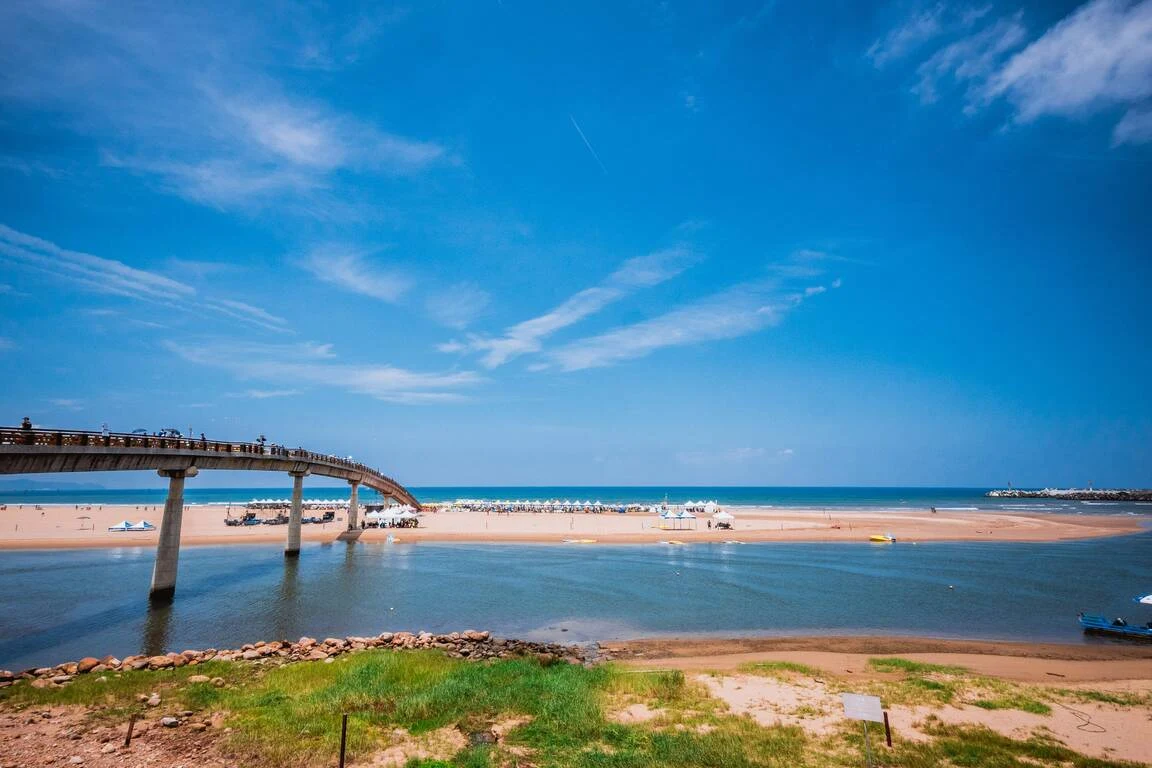
The coast also became a race course. The Northeast Coast administration’s anniversary chronicle records an international Hobie race on 3–4 August 1991, with a course from Emerald Bay to Fulong. The entry puts Fulong within a wider coastal network rather than an isolated beach. Sailors approached it through wind and distance; visitors arriving by train encounter the same coast through the river mouth, bridge and sand. These are different ways of reading one place.
A land-based visit can still make the story visible. From the beach precinct, notice how the estuary, sandbar and open water differ, and how leisure activity fits around the town’s transport and services. If taking a course, confirm the actual operator and meeting point first, then build the rest of the day around it. Fulong becomes more interesting when sailing is understood as a skill and a local history, not merely a summer decoration.
Look closer
Compare the estuary, sandbar and open coast from permitted land areas.
For a booked lesson, pay attention to the sequence from equipment preparation to entering the water.
Visiting information
- Event status
- No current annual programme under the historic Northeast Coast Sailing Season title was verified on 9 October 2026. This article introduces the local sailing story.
- Timing
- Individual courses use booking dates and suitable conditions rather than a fixed festival date.
- Area
- Fulong beach and Shuangxi River mouth; use the operator’s confirmed meeting point for any water activity.
- Travel and return
- Take Taiwan Railways to Fulong. Walk to the beach precinct and return to the station; reserve time after a course for changing and equipment return.
- Booking
- Confirm the course type, operator, equipment, eligibility and cancellation arrangements before travelling.