
Cultural place
Neiwan: the cinema that a family chose to keep
Read the railway, the scale of a wooden theatre and a family’s preservation work together.
Neiwan: From the Station to the Old Cinema
Begin with the station, street and old cinema as whole places. Then move closer to timber doors, small shops and everyday journeys in this mountain town.
90 seconds · English captions in the film; optional English and Traditional Chinese CC.
Film sources and complete bilingual captions
This film uses original-author visits from2021–2025, not newly recorded2026 conditions. The cinema is presented as an exterior viewing point; current interior access and business arrangements are unverified. Check current train services, shop openings and facility notices before travelling.
00:00:00,000 --> 00:00:02,000
Neiwan
Hsinchu, Taiwan
內灣
新竹,臺灣
00:00:02,000 --> 00:00:04,000
Recorded visits, 2021–2025
歷年走訪影像,2021–2025
00:00:04,000 --> 00:00:10,000
The branch line ends here.
內灣支線,在這裡抵達終點。
00:00:10,000 --> 00:00:14,000
Begin at Neiwan Station.
先從內灣車站開始。
00:00:14,000 --> 00:00:19,000
Trains bring visitors into the hills.
列車,把旅人帶進山城。
00:00:19,000 --> 00:00:26,000
From the station,
follow the shopfronts.
離開車站,
沿著一間間門面往前走。
00:00:26,000 --> 00:00:31,000
Keep the whole street in view.
把整條街,一起放進眼裡。
00:00:31,000 --> 00:00:37,000
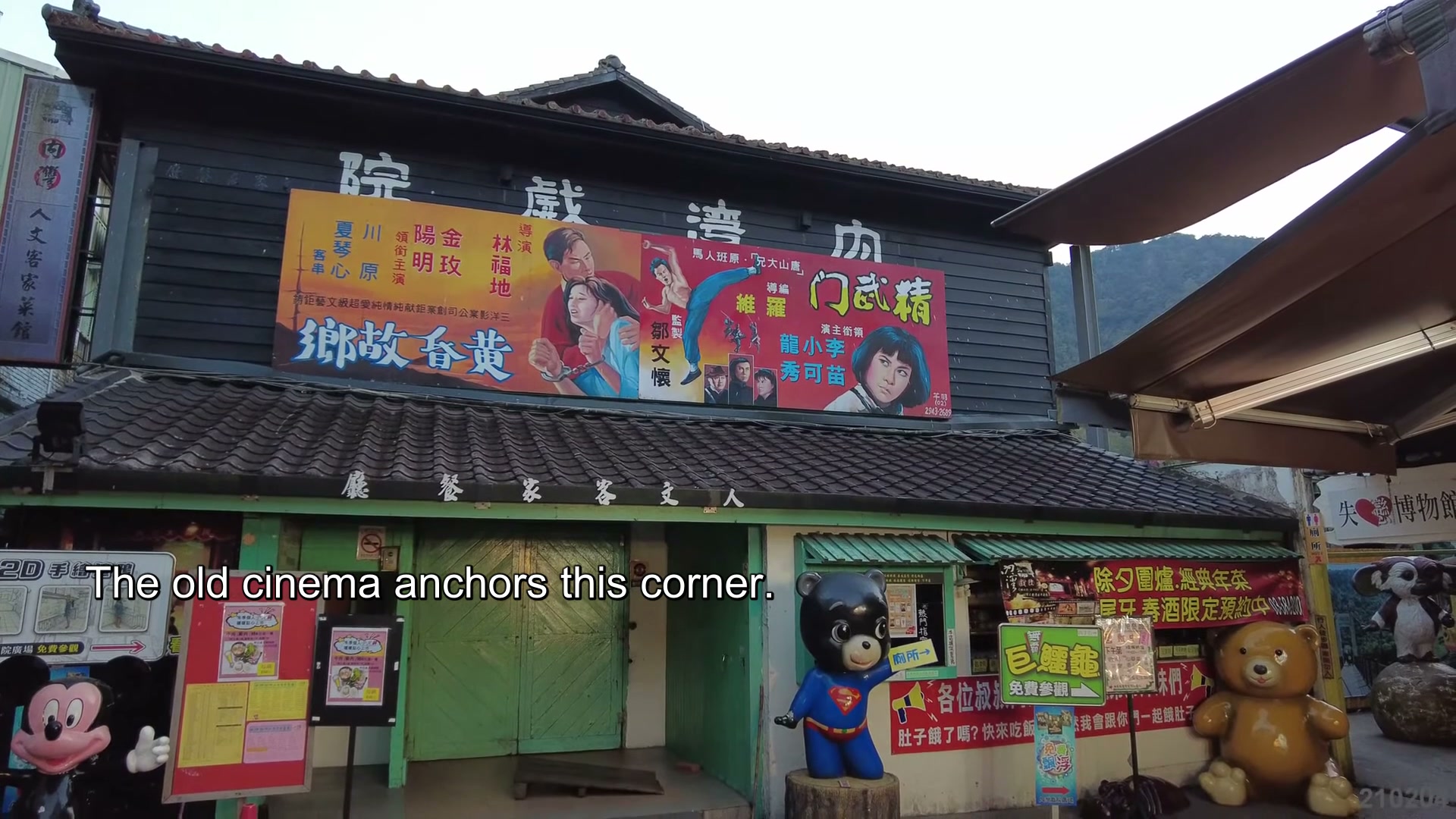
The old cinema anchors this corner.
老戲院,讓街角有了記憶。
00:00:37,000 --> 00:00:42,000
Look closely at its timber doors.
靠近看看,它的木門。
00:00:42,000 --> 00:00:47,000
Then look up at the old film posters.
再抬頭,看留下來的電影海報。
00:00:47,000 --> 00:00:52,000
Around it, the street keeps changing.
戲院周圍,街道也一直改變。
00:00:52,000 --> 00:00:55,000
From a brushstroke to a shopfront.
從一筆書寫,看進一家小店。
00:00:55,000 --> 00:00:58,000
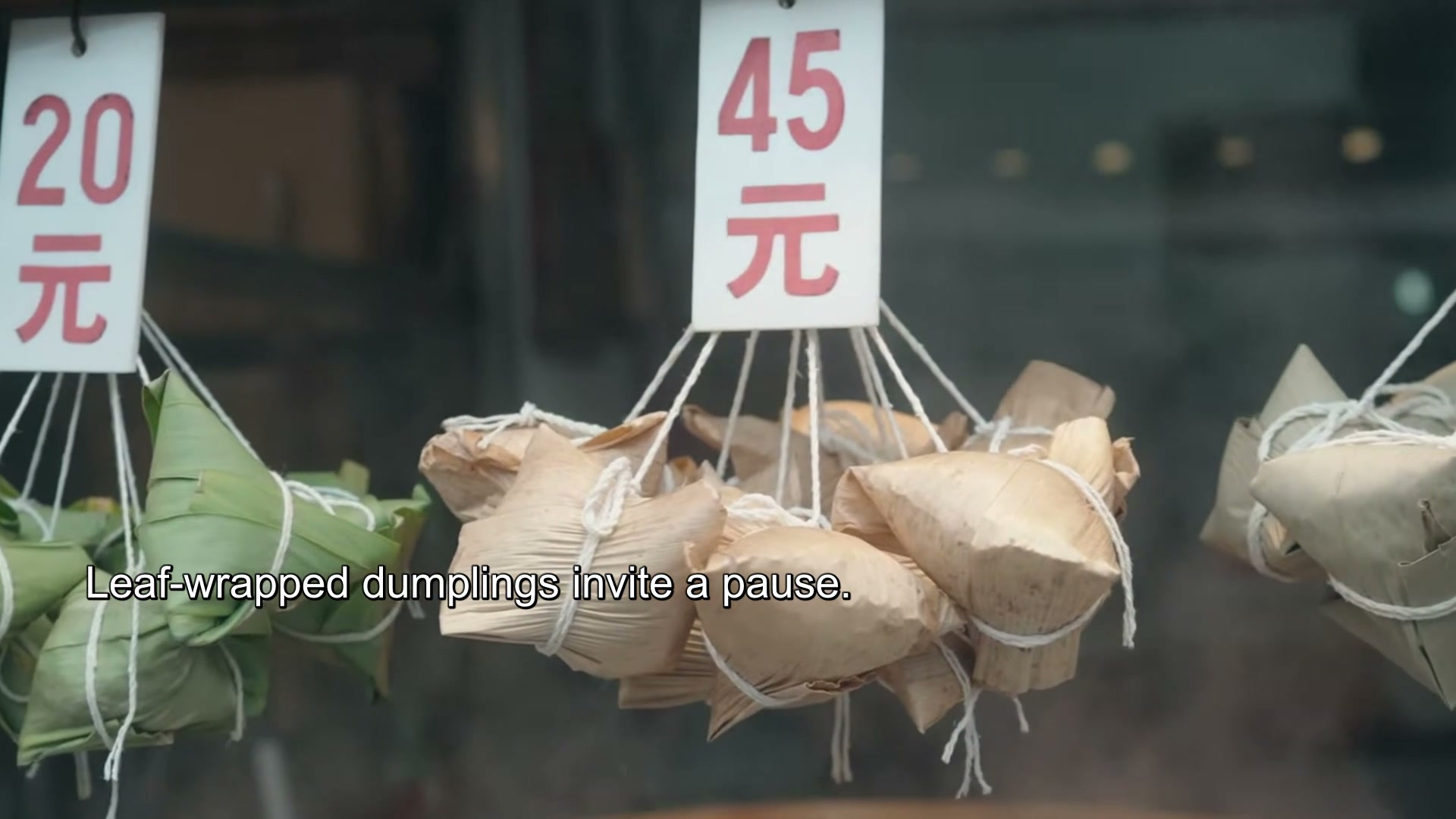
Leaf-wrapped dumplings invite a pause.
葉子包裹的粽子,讓人想停一下。
00:00:58,000 --> 00:01:04,000
The railway is part of the town.
鐵道,也是小鎮生活的一部分。
00:01:04,000 --> 00:01:09,000
There is more between the landmarks.
地標之間,還有更多可以看。
00:01:09,000 --> 00:01:14,000
Turn into another row of shops.
轉進另一排店鋪。
00:01:14,000 --> 00:01:19,000
Let the street set a slower pace.
讓這條街,把腳步放慢。
00:01:19,000 --> 00:01:25,000
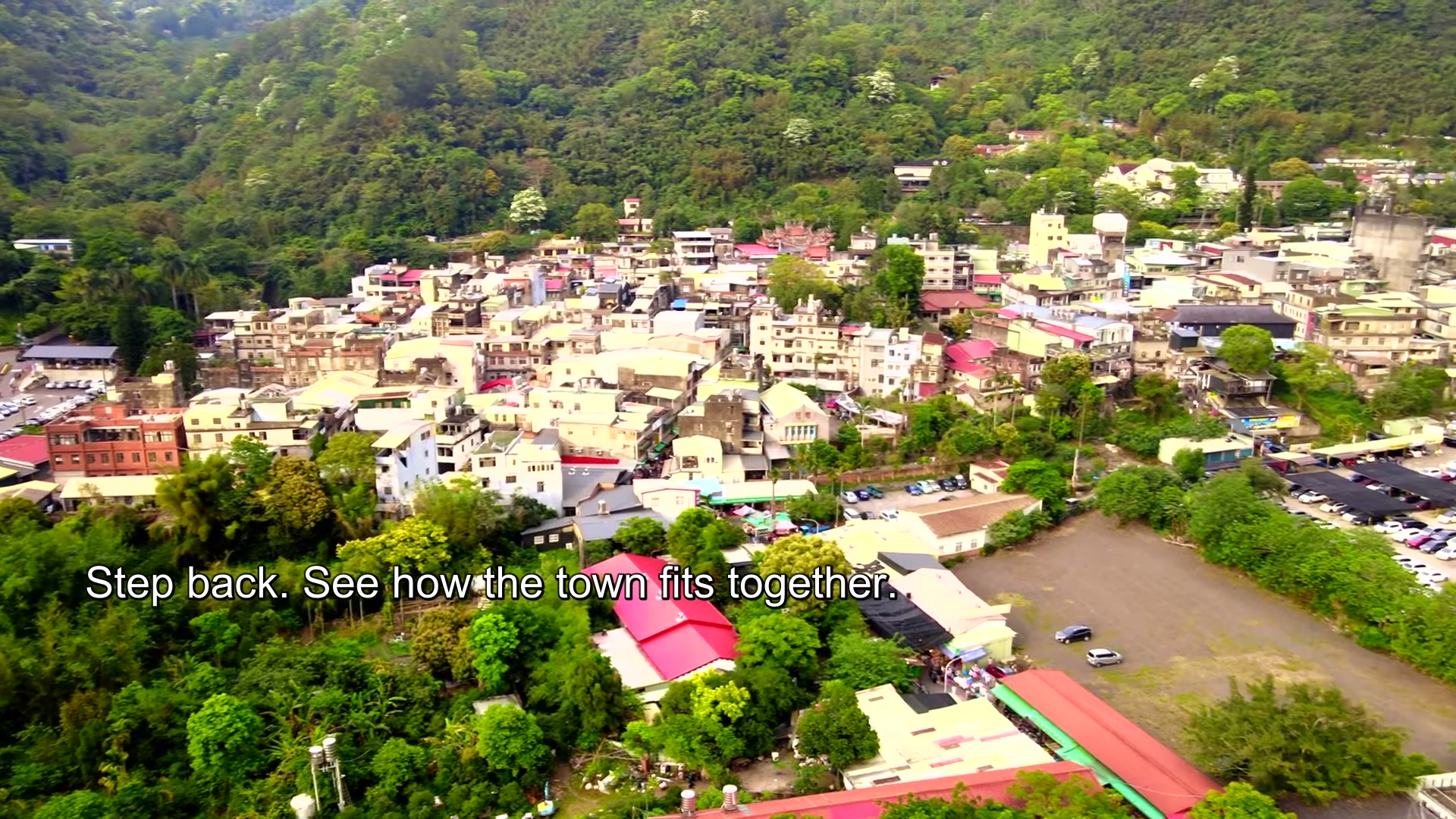
Step back. See how the town fits together.
退後一點,再看山城如何連在一起。
00:01:25,000 --> 00:01:28,000
Hills, streets, and a reason to return.
山、街道,還有再來一次的理由。
00:01:28,000 --> 00:01:30,000
Taiwan, Layer by Layer
島嶼年輪
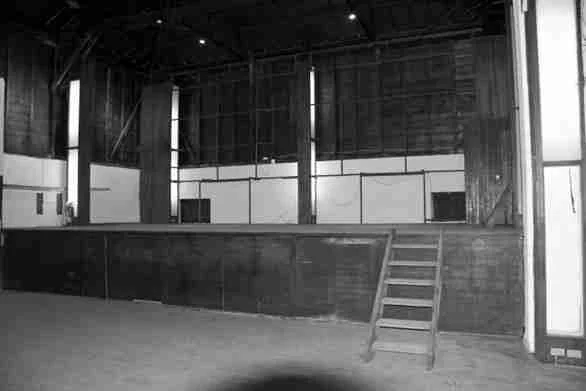
Begin at Neiwan Station and follow Zhongzheng Road to the theatre.
Look for the relationship between the stage, roof structure and audience space.
The railway brought a working town together
Neiwan Station gives a visitor an immediate point of arrival, but the line’s history reaches beyond sightseeing. Railway construction was tied to the movement of timber, coal and industrial materials from the Hsinchu hills. Shops and entertainment grew around a town where labour and transport met. Walking out of the station, imagine the street as a place that supported a working day as well as a holiday.
The theatre makes that demand visible through its size. Its timber structure held an audience facing one stage, bringing many people into the same room. Compared with the narrow shopfronts outside, the broad interior describes a different kind of public gathering. A roof span can tell us something about the social life that a town once needed to accommodate.
A granddaughter brings the building back
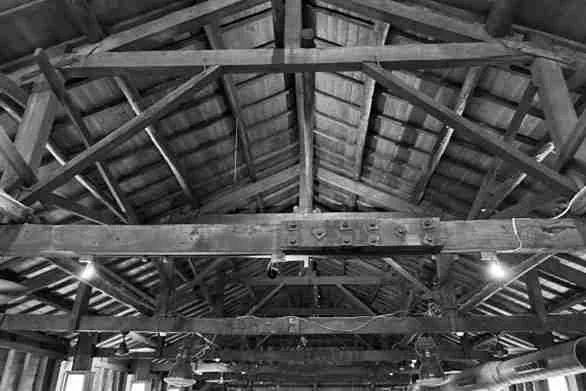
After the industries supporting the town declined, the cinema closed in 1986. In 2001, facing auction, the founder’s granddaughter Huang Chao-chih stepped in to buy it back. Her decision connected a public landmark with her mother’s memories and her grandfather’s building. The place familiar to visitors survived through a family’s willingness to take responsibility for it.
In 2002, architect Lin Chih-cheng helped repair and strengthen the large wooden structure. Preservation required decisions about the roof, walls and the space beneath them. Where viewing is permitted, look up at the timber trusses, then back towards the stage. Their relationship explains what had to remain workable for the theatre’s character to survive.
A new use must live with the old room
The theatre later became known to visitors through dining and displays of film memorabilia. Older travel diaries describe the shift from rows of seats to tables while the stage remained a focus. Those accounts reveal one chapter in the building’s reuse. They also show how a familiar activity can bring people back into a structure after its first purpose has ended.
Return to the street after looking at the theatre. The station, shopfronts and the route between them now form a connected picture: materials and workers once arrived by rail, the town supplied daily needs, and entertainment gathered people after work. Today’s visit adds another layer. Leave time to look at that relationship before heading back for the train.
When the railway nearly stopped at Hexing
The railway to Neiwan once faced stopping one station short. Engineering records examined by the National Archives show that financial difficulties led the provincial government in 1950 to halt work beyond Hexing and prioritise the Zhudong–Hexing section. Hexing had been planned as Shifenliao but was renamed to avoid duplicating a Pingxi-line station. The opening at the end of 1950 did not yet bring trains to Neiwan. Local advocates sought an extension serving Jianshi’s coal resources. Work resumed from Hexing in February 1951, and the complete route opened in September. Shortages, funding and labour preceded arrival at the terminus. Walking from station to theatre adds this earlier chapter to the workers’ town: its supporting railway emerged through constraints, advocacy and staged construction. In older records, even “the whole line” requires checking which section was meant.
Look closer
Compare the theatre’s broad roof with the smaller shopfronts. Inside, follow the venue’s current access arrangement.
Visiting information
- Arrival and return
- Take the TRA Neiwan Line to Neiwan; use Zhuzhong for the appropriate interchange. Check both directions in the dated timetable.
- Where to look
- Neiwan Station, Zhongzheng Road and the theatre at 227 Zhongzheng Road. Confirm indoor access or any scheduled programme with the venue.
1. Read the mountain town before entering the station
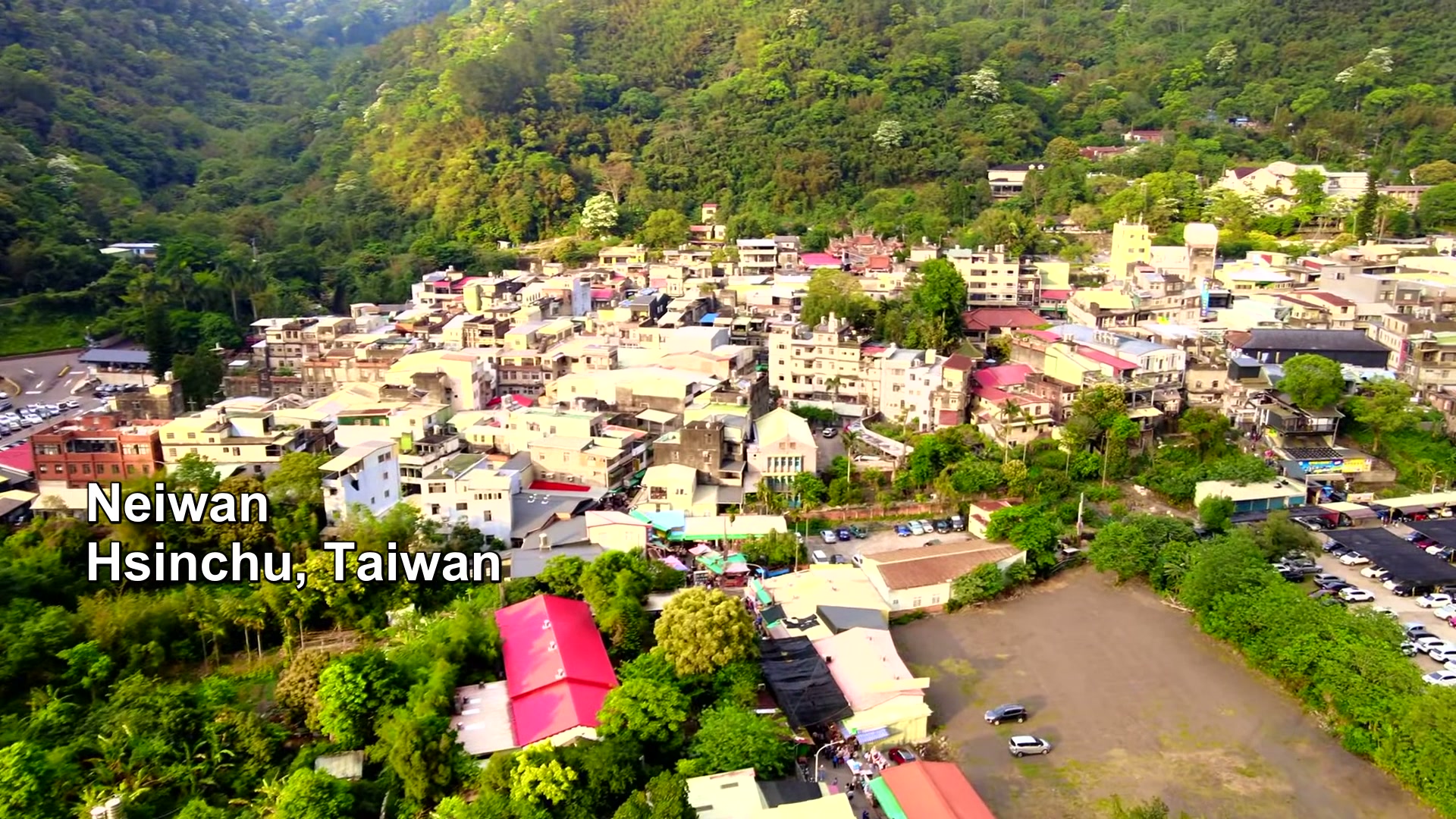
Neiwan lies in Hengshan Township, Hsinchu County, among wooded hills beside the Youluo River. Begin with the town as a whole, then come down to the station. Its shops and old cinema belong to this shared setting.
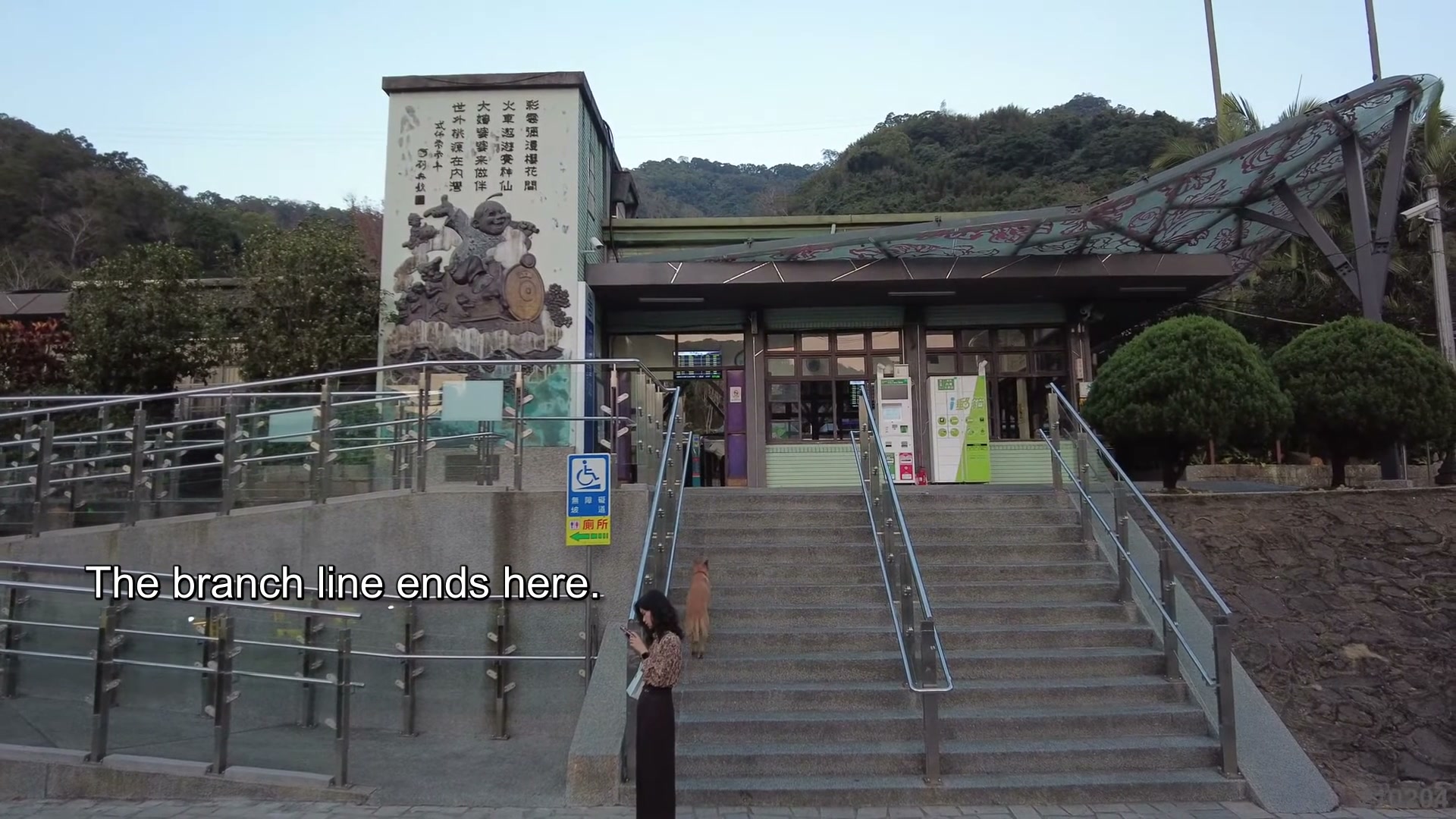
Neiwan Station is the terminus of the branch line. Take in the stair approach, entrance and windows together before moving closer. The relationship between a small station and its surrounding streets gives this walk a clear beginning.
2. A railway carries people as well as history
The branch line served timber, minerals and industries along the route. Hsinchu County’s cultural bureau documents its gradual shift from freight towards passenger travel and cultural tourism. A present-day platform sits within that longer working history.
Watch how the platforms, station and hillside connect, rather than following only the train. The journeys link these places within one visit. Consult current Taiwan Railway information when planning a trip.
3. See the whole cinema before its details
At Neiwan Cinema, pause where the façade can be read as a whole. Its broad frontage, roof, timber boards and film posters make a recognisable street corner. The details become more meaningful once the building has a place in your mind.
Tourism authorities identify the cinema as a local landmark. View its exterior from public space and check current interior access and business arrangements with the operator before visiting. Respect any restrictions on site.
4. Make time for the spaces between shops
An old-street walk can be more than a food checklist. Signs, awnings, façades of different ages and shop displays give the street several layers. Start with the row of buildings, then notice a brush or a bundle of leaf-wrapped dumplings.
Official tourism information highlights Hakka food and wild-ginger-leaf dumplings in Neiwan. The stalls shown are records of particular visits, not promises about every shop’s recipe, prices or opening hours. Let curiosity, rather than a shopping order, set your pace.
5. Look back and connect the landmarks to daily life
Walk beyond the cinema, then look back towards the station and hills. Separate landmarks become parts of a town shaped by railway journeys, commerce and everyday movement. Begin with the whole, then use details to understand the place.
This is a way of looking, not a timed itinerary. Check current train, shop and facility notices before travelling. Choose a stretch of public street and give it time.
Article, image and music sources
This film uses original-author visits from2021–2025, not newly recorded2026 conditions. The cinema is presented as an exterior viewing point; current interior access and business arrangements are unverified. Check current train services, shop openings and facility notices before travelling.
- 內灣車站|觀光多媒體開放資料
- 內灣老街|觀光多媒體開放資料
- 內灣小鎮|交通部觀光署
- 劉興涼-車站功能轉型
- 山水畫家的藝術Taiwan Artist World 熱鬧的螢火蟲季山城記錄│一直很想從高空視角看內灣老街│4K空拍2021新竹內灣風光【山水畫家的藝術】高畫質影像分享#14
- 劉漢順 臺鐵內灣線~終點站~內灣車站及老街漫遊 4k
- Norman Lee 【4K】20251108 @ 內灣老街 Neiwan Old Street (請開啟字幕觀賞)
Music: 跨海的一段路 · AI-generated instrumental.