
Cultural place
Nanzhuang: the post moved out, the building stayed
Read water, steps and a former post office as the working infrastructure of a mountain town.
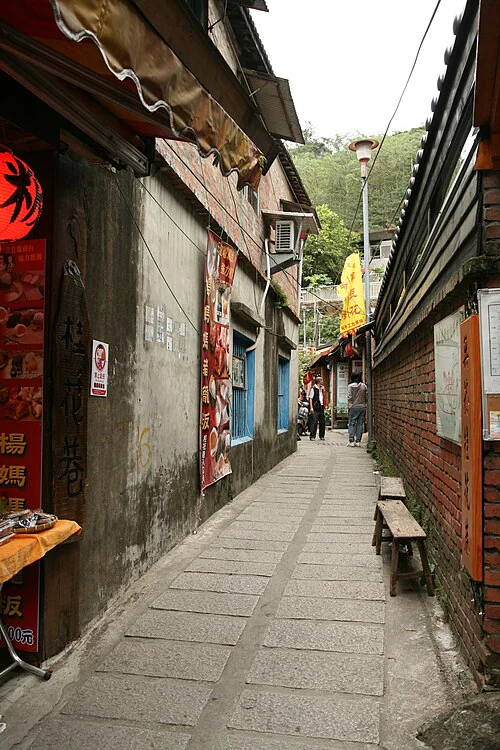
Link Guihua Lane with the washing channel and the old post office.
The postal institution began in 1900; the surviving building was rebuilt after the 1935 earthquake.
Water at the edge of a shopping lane
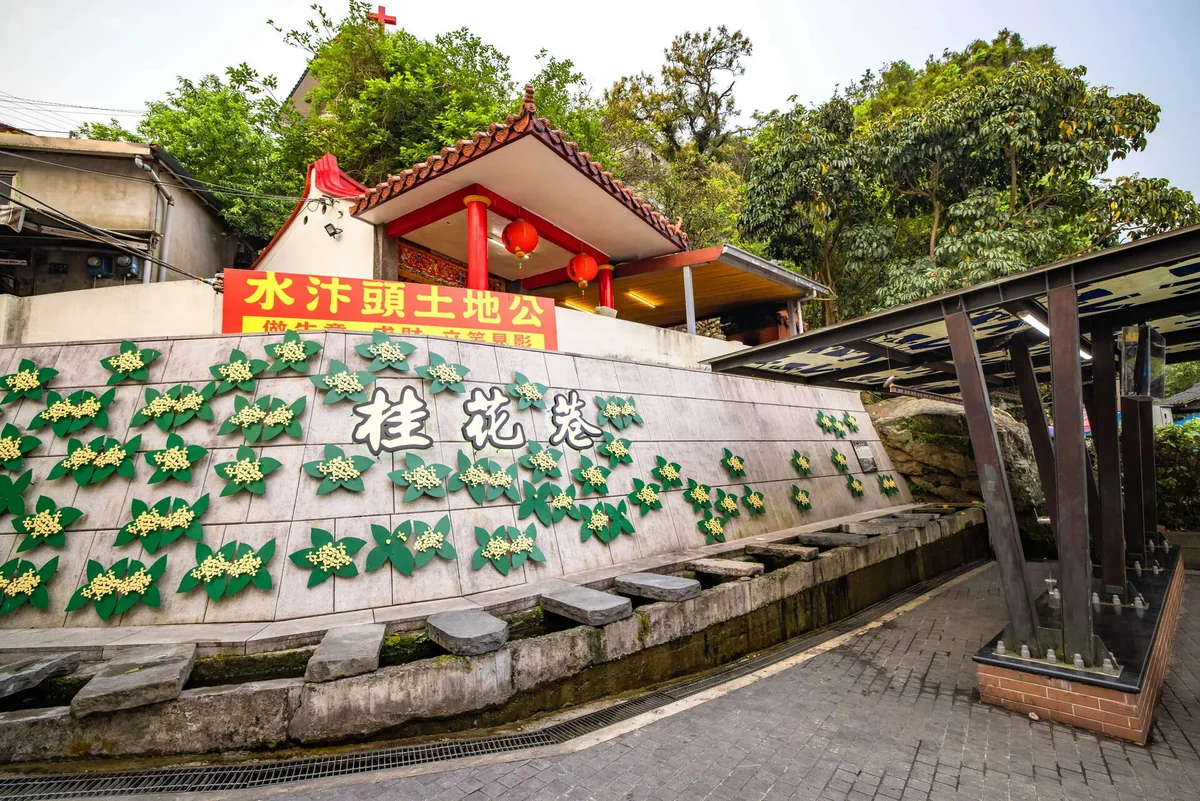
At the end of Guihua Lane, the washing channel known as Shuibiantou or Xishankeng shifts attention away from shop signs. Water passes below the stone washing slabs. Before household taps became widespread, this was a place for washing clothes and produce. The arrangement puts work beside a public passage, making an everyday task part of the town’s shared space.
Today’s lane is known for osmanthus-flavoured foods and visitor shopping. Set that newer identity beside the channel rather than choosing one as the “real” old town. One describes how residents organised a necessity; the other shows how a place gives travellers something to recognise. Following the water and then the shops reveals two different ways a street serves people.
Two dates belong to one post office
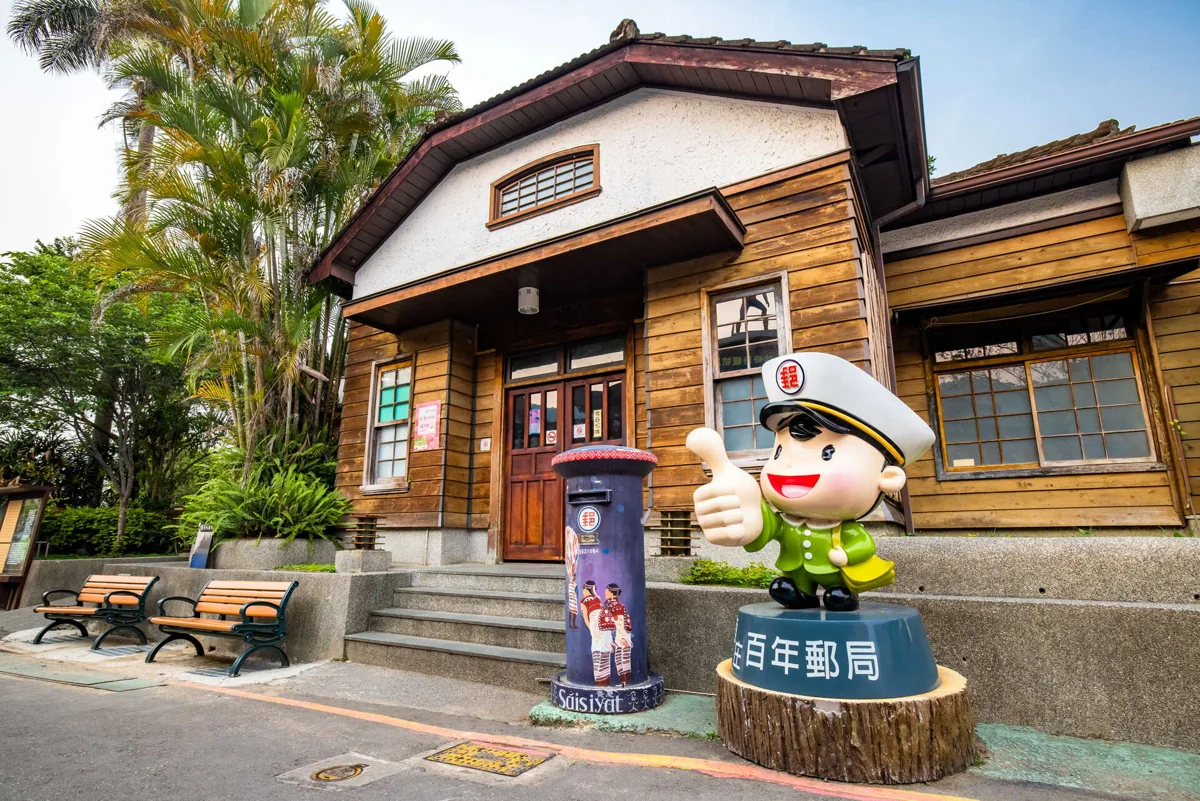
Postal and telegraph services were established here in 1900, but the wooden building seen today belongs to rebuilding after the 1935 earthquake. The distinction changes what the house tells us. Its age includes destruction and decisions to begin again; a surviving institution does not mean that all its original walls survived. Look at the timber exterior and entrance as part of that rebuilt working place.
The post moved to a new location in 1996. In 2001, the vacant building placed sixth in a county vote for historic buildings, and it was registered in 2003. Its future depended on recognising value after the original service had left. A town could keep a familiar building even when letters were now sorted and sent elsewhere.
A different kind of connection
The local tourism association began leasing the old office in 2008 for visitor services. A former communications building had found another public role: helping people orient themselves in Nanzhuang. Its sign can therefore be read twice, once as a record of postal work and again as an invitation to understand the surrounding streets.
Walk down the nearby stone steps and compare the upper building with the narrow lane below. Changes in level, the channel and the location of entrances show how people moved through the hillside settlement. Finish by returning to the visitor centre or your bus stop; the town’s small distances are easier to appreciate when there is time to pause between them.
A bridge carries a different stage in the town’s life
Leaving the post office and lanes for Kangji Suspension Bridge changes the scale of the visit. The scenic-area authority gives its length as 154 metres, above the Dadong River, with views towards the meeting of the local waterways and the Zhonggang River. The river that moves through the washing place now belongs to a wider view of a town shaped by crossings and confluences.
A county-archived photograph records surviving parts of the earlier Kangji Bridge after the 1959 flood. Its description traces a temporary crossing and the shift of the principal road to Nanzhuang Bridge. The township chronology records the suspension bridge opening on 23 December 2009 after reconstruction that June. The bridge used for sightseeing today thus follows an older need to cross, without being the same surviving bridge deck.
The waterfront also holds a difficult public memory
The registered Nanzhuang Incident site gives the waterfront a further history. Its heritage record locates the 17 November 1902 “submission ceremony” near the confluence, and describes Japanese military and police attacks on Saisiyat leader Ri Agui and Atayal leader Xue Dalao and their followers. Ri Agui escaped wounded; Xue Dalao died. This is a history of Indigenous communities and colonial power, alongside the familiar account of a Hakka market town.
The record also says that the ground later served timber handling, changed through floods and was made into a riverside park in 2018. It no longer preserves the landscape of 1902 unchanged. Since 2020, commemorations at the Wanshan Zhujun communal grave have involved Saisiyat, Atayal, Hakka, Minnan and Taokas participants. Their care for the dead adds another form of public use to the town; a quiet memorial visit is different from treating the grave as a shortcut between attractions.
Look closer
Look at the washing slabs, the slope of the steps and the old office’s entrance. Compare their functions before photographing the whole scene.
Visiting information
- Arrival and return
- From TRA Zhunan, take Taiwan Tourist Shuttle 5805A to Nanzhuang Visitor Centre. Check the return timetable before entering the lanes.
- Visit scope
- Wenhua Road, Guihua Lane and the former post office. Shop and indoor hours are separate; the stone steps have level changes.