
Annual festival
Nantun’s giant clogs: waking an old farming town
A pangolin legend becomes a team rhythm, while old streets and jute-leaf food keep the farming town close.
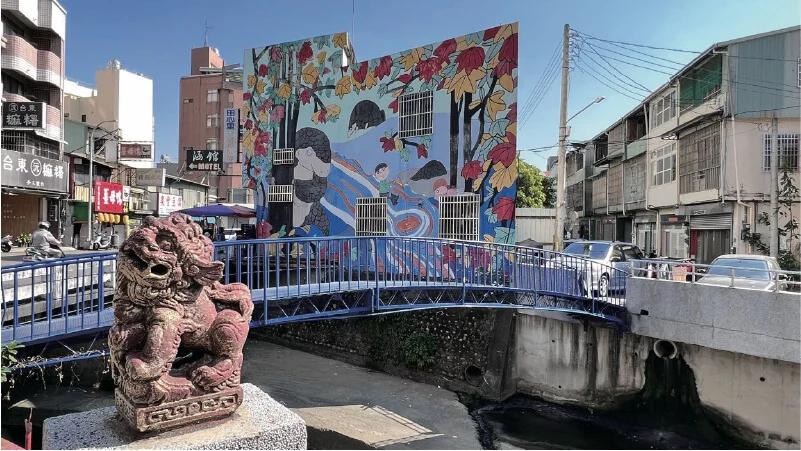
The fifth day of the fifth lunar month; 19 June in 2026. The 2026 public festival has ended.
Visit Wanhe Temple and, on opening days, the Jute Culture Museum; watch the teams coordinate their oversized clogs.
Four people need one rhythm
On the fifth day of the fifth lunar month, giant clogs change the pace of Nantun’s streets. Four people share a pair, and one uneven step can interrupt everyone’s movement. Calling a rhythm, lifting together and setting the wood down together become the heart of the game. In 2026, the Dragon Boat Festival fell on 19 June, bringing the activity back to the old town around Wanhe Temple.
The local legend imagines a pangolin beneath the settlement, asleep when the fields need loosening. Making noise wakes it and invites good conditions for farming. Former neighbourhood leader Zhang Zongxiong helped turn this story into the communal giant-clog activity. What people inherit is therefore both a rural legend and a newer way of telling it through cooperation, laughter and the sound of wood meeting the road.
Behind the animal, a town of tools
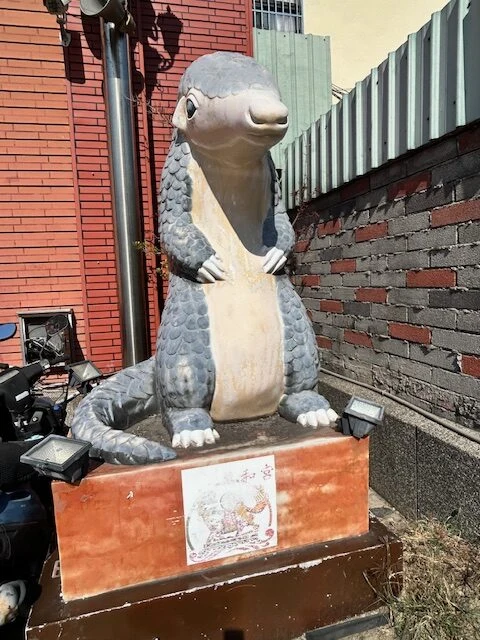
Nantun was once known as Litoudian, the plough shop settlement. Its name ties the market to the making and repair of agricultural tools. Farmers needed equipment that could return to the fields, and shops gathered around that demand. The pangolin’s imagined work underground makes sense within this landscape of soil, tools and cultivation.
Today, a pangolin figure in the neighbourhood gives the story a visible form between brick walls and ordinary buildings. It does not require festival crowds to be meaningful. Walking the lanes towards Wanhe Temple links the playful figure with the market streets that once served nearby farms. The old name becomes easier to understand when the temple, shops and narrow passages are seen together.
The plant’s knowledge is also being broken into teachable tasks. A 2024 report follows Four-H Club volunteer instructor Kuo Chia-wei at Guangfu Elementary School: pupils remove veins, rub the leaves, cut accompaniments, then combine them in soup. Different groups take successive jobs. This is a documented classroom example, not a scheduled visitor workshop, but it makes the link between crop and local memory concrete: remembering a food also requires someone to teach its preparation.
A chosen day becomes a shared holiday
The religious-heritage account describes an earlier practice less organised than today’s giant-clog race. Residents went outdoors on a chosen summer day, walking, running and making noise with household pots and bowls to wake the legendary animal underground. After the war, industrial and commercial working lives made a separately chosen day harder to observe, and the gathering moved to the Dragon Boat Festival. The calendar changed with residents’ lives, while the purpose of collectively stirring the ground remained.
The enlarged community programme of the 1980s added long clogs shared by several people and other neighbourhood games. Local leaders coordinated residents, with Wanhe Temple and the district administration helping the activity grow. A visitor watching the shared step is therefore seeing a later form of the custom. The older noisy walk and the modern team contest belong to different stages of the same local story, each finding a way for people to take part together.
A bitter leaf belongs to the same place
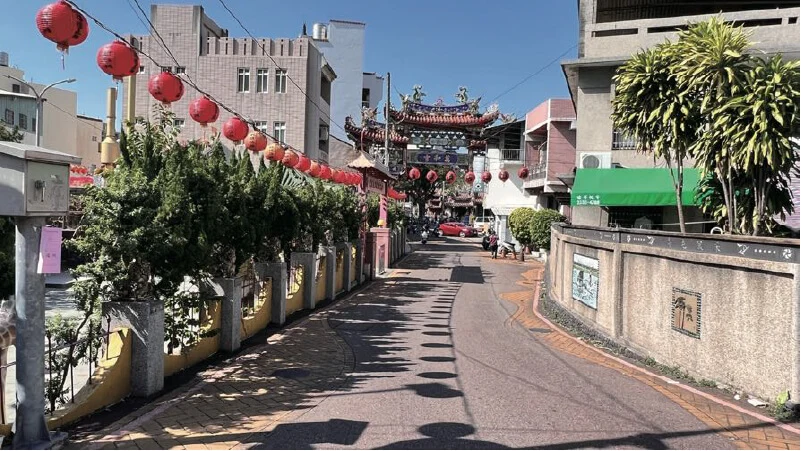
Jute was grown for its fibre, while its young leaves also entered local kitchens as ma-yi soup. The association between a working crop and everyday food gives Nantun another connection to farming. During the 2026 festival, servings of jute-leaf soup joined fish balls and rice dumplings in the community hospitality. Eating becomes another way of meeting the place after the clogs have stopped.
The Jute Culture Museum beside Wanhe Temple extends this connection beyond a single festival day. A visit can combine the temple forecourt, the old streets and the museum during its opening sessions. Together they show why the Dragon Boat Festival here sounds different: it draws on the tools, crops and collective labour of a particular town.
The agricultural preparation guide shows why this takes more than putting leaves in a pot. It calls for removing the main veins, tearing and washing the leaves, then rubbing them in a fine mesh bag and rinsing away the bitter liquid before cooking with sweet potato and small fish. A bowl’s mild taste conceals that prior effort. This describes a recorded preparation method, not a claim that every variety or household recipe needs exactly the same treatment.
Look closer
Listen to the team’s shared count and see how the clogs change an individual step into a coordinated movement.
Visiting information
- Date rule
- The fifth day of the fifth lunar month; 19 June in 2026. The listed 2026 public festival has ended.
- Temple
- Wanhe Temple, 51 Wanhe Road Section 1, Nantun District, Taichung; 06:00–21:00.
- Museum
- Jute Culture Museum, fifth floor, 56 Wanhe Road Section 1; Saturdays, Sundays and the first and fifteenth lunar days, 09:00–12:00 and 13:30–16:30.
- Transport and return
- Bus 290 serves Nantun Market. Continue along Nantun Road and turn into Wanhe Road for the temple; return via the opposite-direction bus stop.
- Taking part
- Watch from outside the clog course; join organised teams through the event arrangements.
Film & source information
The official footage records the 2026 Nantun festival, whose stated date was 19 June 2026; that edition has ended. The pangolin belongs to a local farming legend. The community sculpture photograph has no verified capture date. The view at 70–75 seconds is AI image-to-video based on a real Nantun street photograph, not live footage or present conditions. Music only. Check the next event programme and public access before travel.
- Nantun festival record · 2026 · Original record
- Festival food and hospitality record · 2026 · Original record
- Article photographs · undated · Original record