
Annual ritual
Minxiong Dashiye: making a paper deity move
Before three days of worship, paper workers and bamboo craftsmen have already spent a long period preparing a body that will leave with the festival.
Minxiong: A Town Sees Dashiye Off
90 seconds. English captions are part of the film. Optional Traditional Chinese subtitles are available in the player.
The film draws on the farewell procession, ceremonial burning and return on 26 August 2024. This historical footage is not a current event announcement. Original creator watermarks remain visible and an instrumental soundtrack is added; ninety seconds does not represent the full festival programme or rites.
Read the complete five-chapter article → · 繁體中文
Complete English captions and Traditional Chinese translation
00:00:00,000 --> 00:00:06,000
Minxiong:
A Town Sees Dashiye Off
民雄大士爺
沿著街道送行
00:00:06,000 --> 00:00:12,000
During the Ghost Month festival,
Minxiong gathers after dark.
中元祭典的夜裡,
人們在民雄聚集。
00:00:12,000 --> 00:00:18,000
Paper and bamboo form Dashiye,
guardian of the offerings.
紙與竹構成大士爺的身體,
在信仰中監督普度。
00:00:18,000 --> 00:00:24,000
Offerings and prayers
come before the farewell.
送行以前,
先有供養與祈願。
00:00:24,000 --> 00:00:30,000
Many hands
keep it moving.
靠著許多雙手,
神像沿街前進。
00:00:30,000 --> 00:00:36,000
The procession moves
from the temple into town.
送行的隊伍,
從廟口走進街鎮。
00:00:36,000 --> 00:00:42,000
Smaller palanquins
share the route.
較小的神轎,
也在同一條路上同行。
00:00:42,000 --> 00:00:48,000
Under roads and lanterns,
the farewell keeps going.
穿過道路、沿著燈火,
送行仍在繼續。
00:00:48,000 --> 00:00:54,000
Along the route,
leave room for the carriers.
沿途觀看時,
把通道留給抬行的隊伍。
00:00:54,000 --> 00:01:00,000
At the ritual ground,
people gather once more.
到了昇化場,
人們再次聚集。
00:01:00,000 --> 00:01:06,000
Raised torches mark
the next part of the farewell.
舉起的火把,
標示送神的下一個階段。
00:01:06,000 --> 00:01:12,000
Burning the paper figures
completes the ceremonial send-off.
紙糊神像在火中升化,
完成祭典的送神。
00:01:12,000 --> 00:01:18,000
The figures disappear.
The gathering begins to disperse.
神像逐漸不再可見,
人群也開始散去。
00:01:18,000 --> 00:01:24,000
Back along the streets,
the town grows quieter.
沿著街道走回,
街鎮慢慢安靜下來。
00:01:24,000 --> 00:01:27,000
Minxiong, Chiayi
2024 festival record
嘉義民雄
2024年祭典紀錄
00:01:27,000 --> 00:01:30,000
Taiwan, Layer by Layer
From story to place
島嶼年輪
從故事認識臺灣,再走進現場
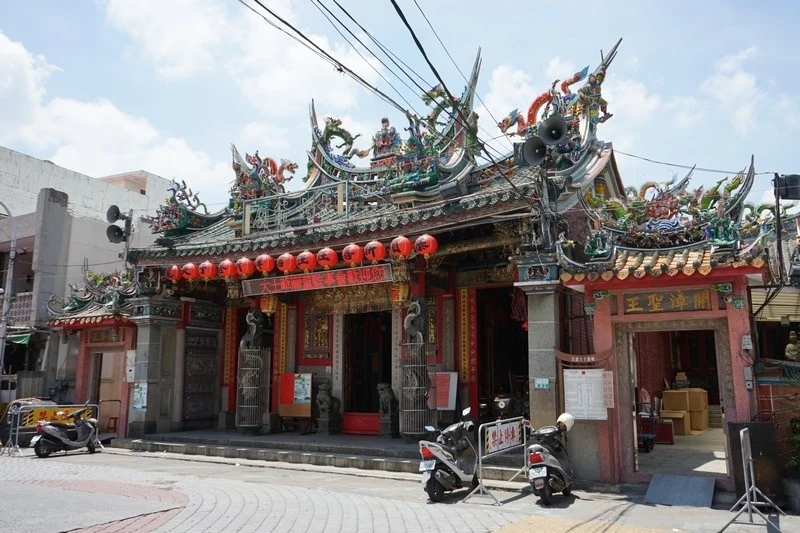
Three ritual days: the twenty-first to twenty-third of the seventh lunar month.
Look at the paper image’s command flag and articulated body, then explore the temple’s combined halls.
Bamboo bones, paper skin
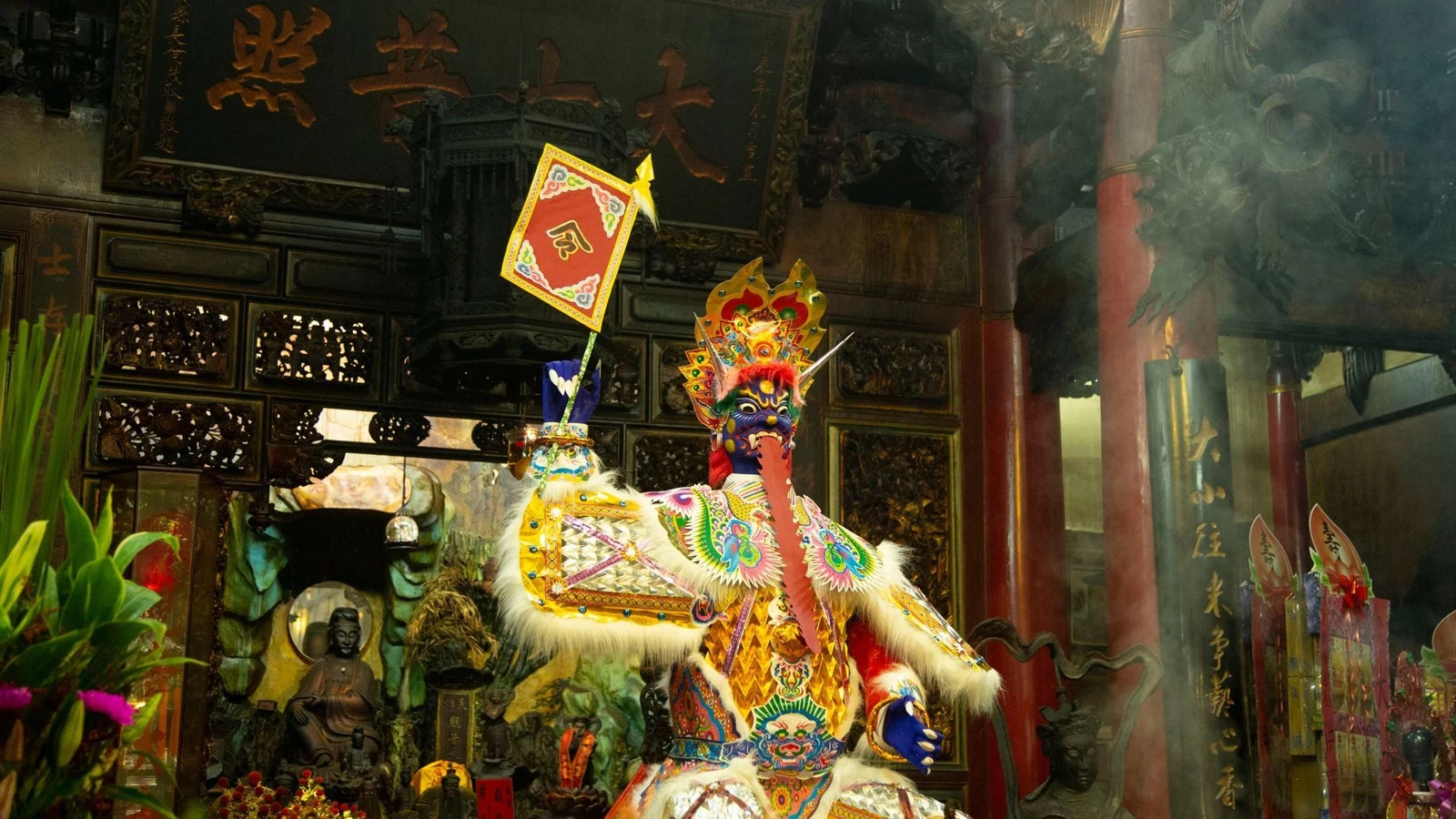
In Minxiong, the paper Dashiye sits with a commanding face and a red square flag. In local belief, this manifestation of Guanyin keeps order at the communal offering for wandering spirits. Its presence is temporary: the image is consecrated for the festival and sent off by fire at its close. The impressive body therefore carries a planned ending from the moment its maker begins work.
Craftsman Huang Ruicun grew up helping his father make paper spirit houses. He later learned to fold strong paper hands and construct the bamboo framework of deity images. Paste, layers of paper and drying weather all matter. Preparing the large figure begins well before the seventh lunar month; joints and a separately supported head allow movement when it is carried. A material that looks light and fragile has to hold its shape through worship and a crowded departure.
In a 2022 talk, Huang Rui-cun called one of the first skills he learnt the Jinmen hand: the name recalled a Kinmen craftsperson earlier in the line of teaching. Its firmness came from folded paper. A hand that appears to make a gesture is therefore also a carefully built structure; the strength of paper depends on how it is folded, pasted and dried, rather than on its apparent lightness.
Movement requires a different decision. Huang described keeping the head and torso frames separate and using a transverse bamboo member to allow movement as the figure is carried. The effect depends on the carriers as well as the maker. His account also notes a change from paper clothing to cloth garments. What people see in the procession is a craft that continues to be adjusted, rather than a figure assembled to an unchanged specification.
The makers also carry the ritual
Huang is also the festival’s ritual specialist. He was invited to recite scriptures in 2017, learned the ceremony from the serving master and later took responsibility for making the paper image. Construction and consecration meet in one person’s work: the figure is not complete merely because its colours and clothing are finished. Opening its eyes and placing it in the ceremony change how the worshippers approach it.
The departure calls on another craft. Bamboo worker Lin Nengkun makes the carrying chair used to move Dashiye away from the offering ground for the final rite. His training began with everyday furniture such as chairs and stools; the same knowledge of bamboo serves a collective religious duty. Paper workers, bearers and ritual specialists each complete part of the journey, so the closing fire is the final stage of linked labour.
The fire is preceded by three days of arrangements
The heritage record lists more than the large Dashiye image at the opening. Sanjie Pavilion, Hanlin Hall and the men’s and women’s quarters are installed in the ritual precinct, alongside places for unclaimed spirits. These names reveal a provisioned setting rather than a single idol display. The organisers prepare different positions and paper structures so that the communal offering can proceed within an ordered space, while the main figure oversees it in local belief.
The same record follows the Lianghuang repentance liturgy through successive volumes over three days, with water lanterns on the second day and a final offering for spirits before the altar is dismissed. These are distinct stages surrounding the closing fire. The 2026 organiser’s notice likewise separates neighbourhood activities from the final sending-off at Fuquan village. Knowing the middle stages changes what the paper figure represents: it presides over sustained care for the dead before its own ceremonial departure.
Three ritual days, a much longer town history
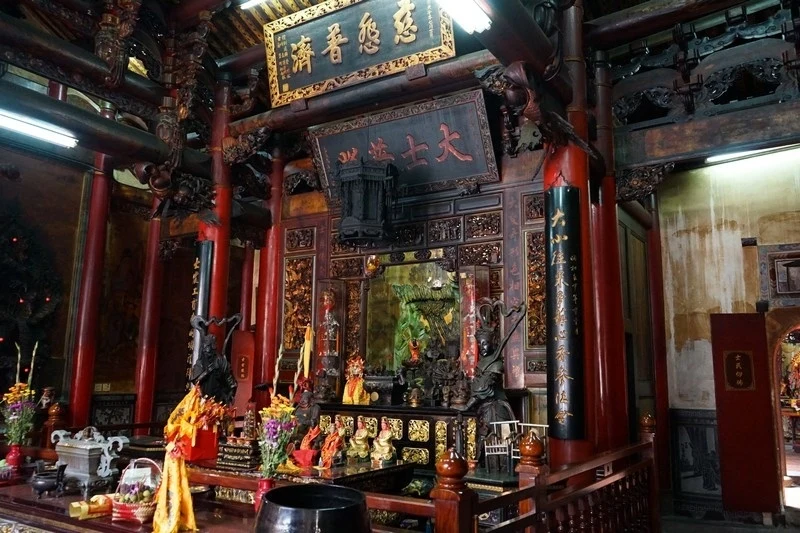
The main rites take place on the twenty-first to twenty-third days of the seventh lunar month. In 2026, they ran from 2 to 4 September; the paper image was consecrated early on the first morning and sent off on the final evening. Neighbourhood worship, offerings and the farewell give the three days different purposes. Arriving before the closing night makes it possible to see the image in place, as well as the departure for which so much preparation has been made.
Dashiye Temple at 81 Zhongle Road also records the town’s recovery from the 1906 earthquake. Rebuilding from 1923 brought together deities from damaged temples, producing halls that accommodate several strands of local worship. During the rest of the year, the Guanyin altar, side halls and old street setting remain. They connect the brief life of the festival image with a community that has repeatedly found ways to keep its worship together.
Not every accessory has a single accepted explanation. The same craft talk records a local legend linking the figure’s handcuffs to a woman and the Bijia Mountain story, while Huang considered the cuffs decorative. Keeping those accounts distinct leaves room for both oral storytelling and the maker’s view. An object can carry several explanations without requiring a visitor to turn one legend into a documented historical event.
A quieter visit also offers clues at the doorway. In their local lecture, Chen Jing-quan and Wu Zhi-kai draw attention to Weituo and Qielan on the doors and the Four Heavenly Kings to either side. These Buddhist protectors help connect the temple to Guanyin, beyond the formidable paper figure of the festival. Look first at which doorway a figure occupies, then at its attributes; the entrance has its own arrangement of roles.
Look closer
Notice the seated figure, command flag and articulated hands without touching the image or its support.
Compare the main altar with the side halls to see how several temple traditions share one building.
Visiting information
- When
- The twenty-first to twenty-third days of the seventh lunar month; 2–4 September in 2026. The listed 2026 festival programme has ended.
- Place
- Dashiye Temple, 81 Zhongle Road, Minxiong Township, Chiayi County.
- Transport
- Arrive at Minxiong railway station and walk into the town centre towards Zhongle Road; return to the same station after a daytime visit.
- Evening visit
- The final farewell takes place at night. Choose a return train before entering the crowd, or arrange accommodation and a pickup point outside the ritual area. Keep the carrying route clear.
Look closer at the places in the film
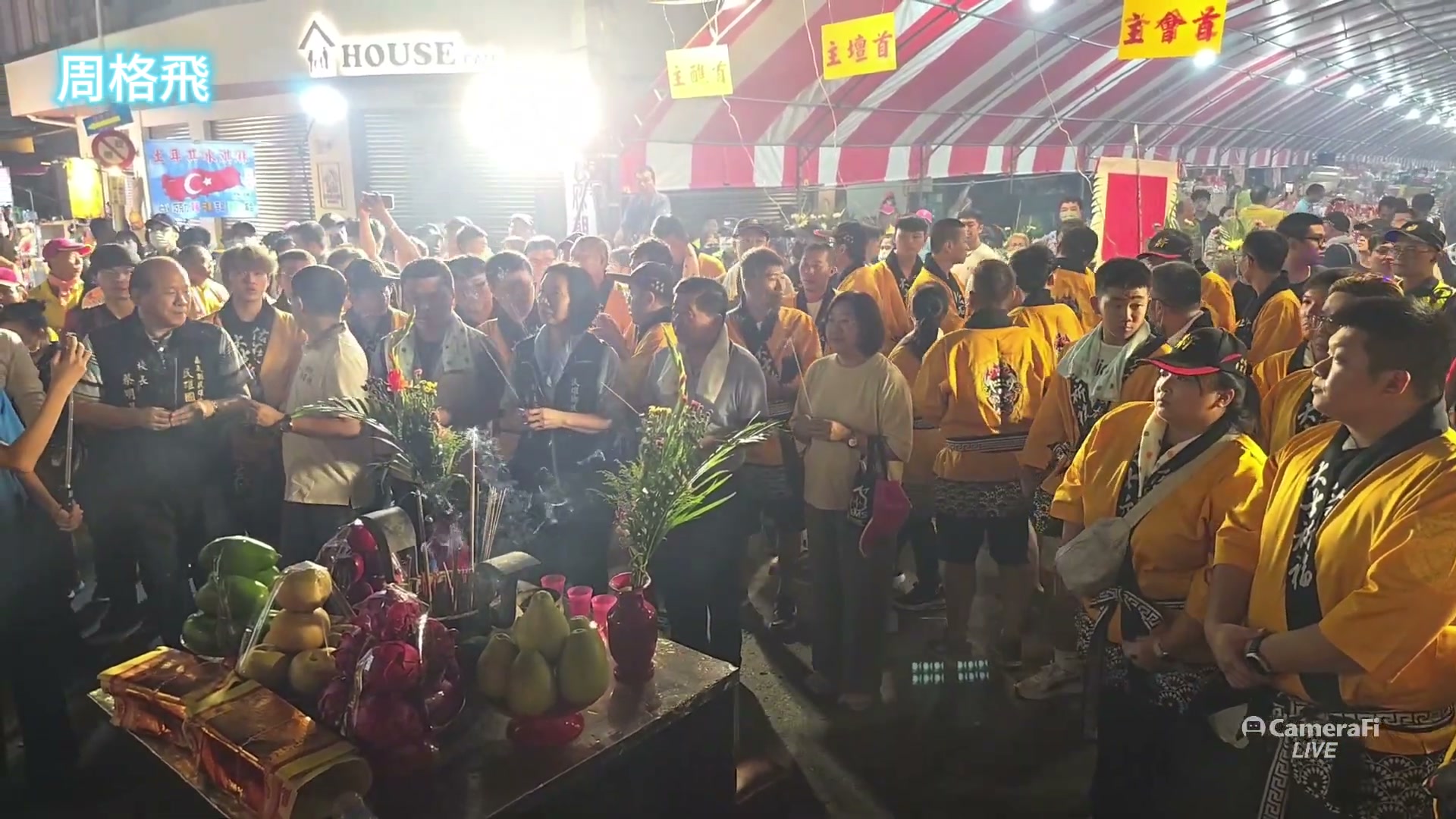
Begin with the figure and the gathering
At night in Minxiong, the paper figure shares the frame with shop signs, temporary canopies and the gathering crowd. Start with its whole form, then look towards the flag, clothing and people supporting it. A familiar street has become a festival space.
The existing article explains the relationship between paper modelling, bamboo work and the rite. The film shows the finished figure and its farewell, rather than a making demonstration. Reading about the craft first gives you something specific to notice as the figure moves.
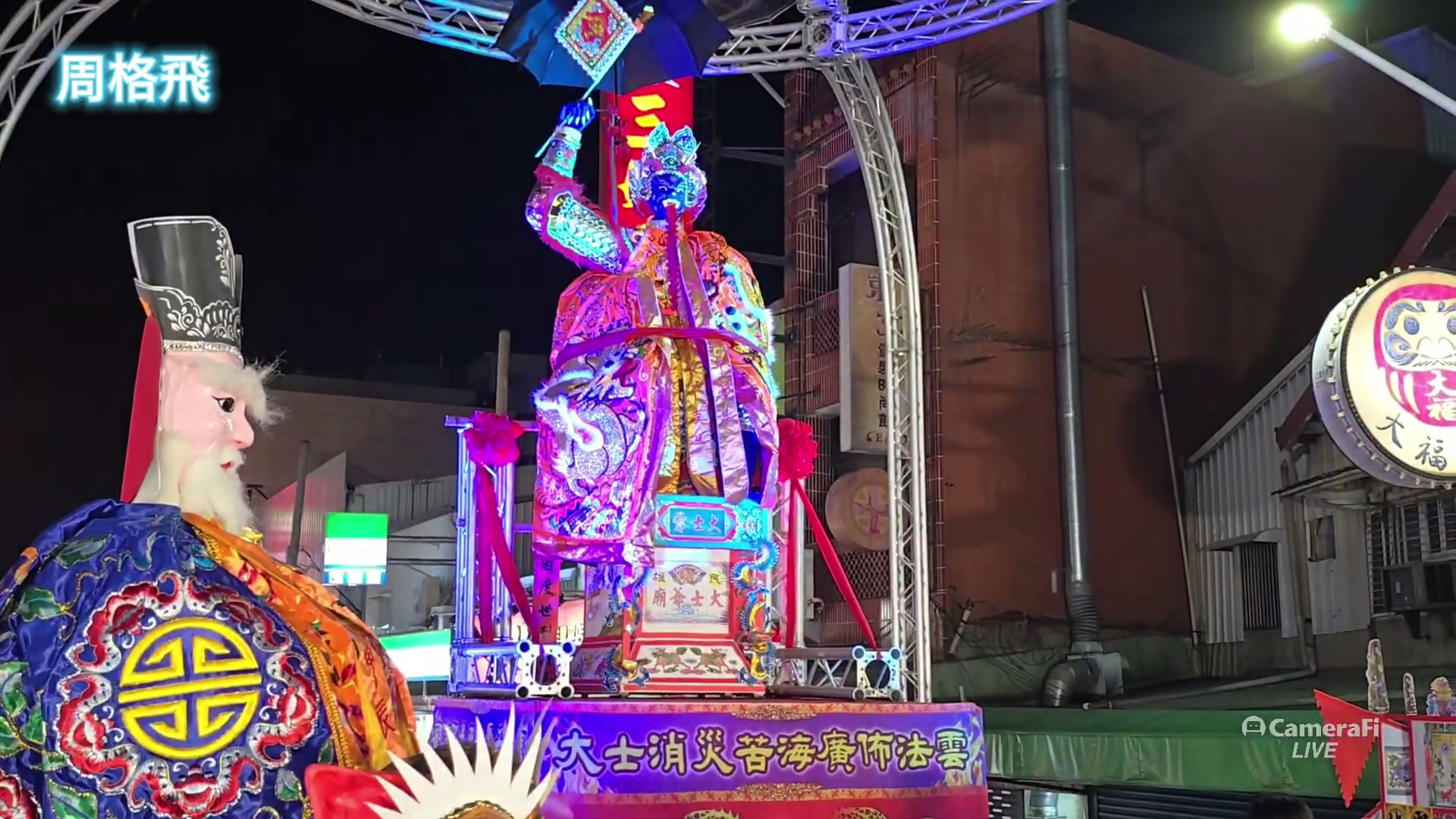
Offerings before the journey
People pause at the offering table while preparations continue around them. Minxiong’s main Dashiye rites take place on the twenty-first to twenty-third days of the seventh lunar month. The final night’s send-off belongs to a sequence that also includes installation, offerings and ritual work.
Keeping the offering table in the film helps explain the later fire. In local belief, Dashiye oversees the order of the offerings. The figure is first received and honoured, then seen off; that sequence gives meaning to the care surrounding its temporary presence.
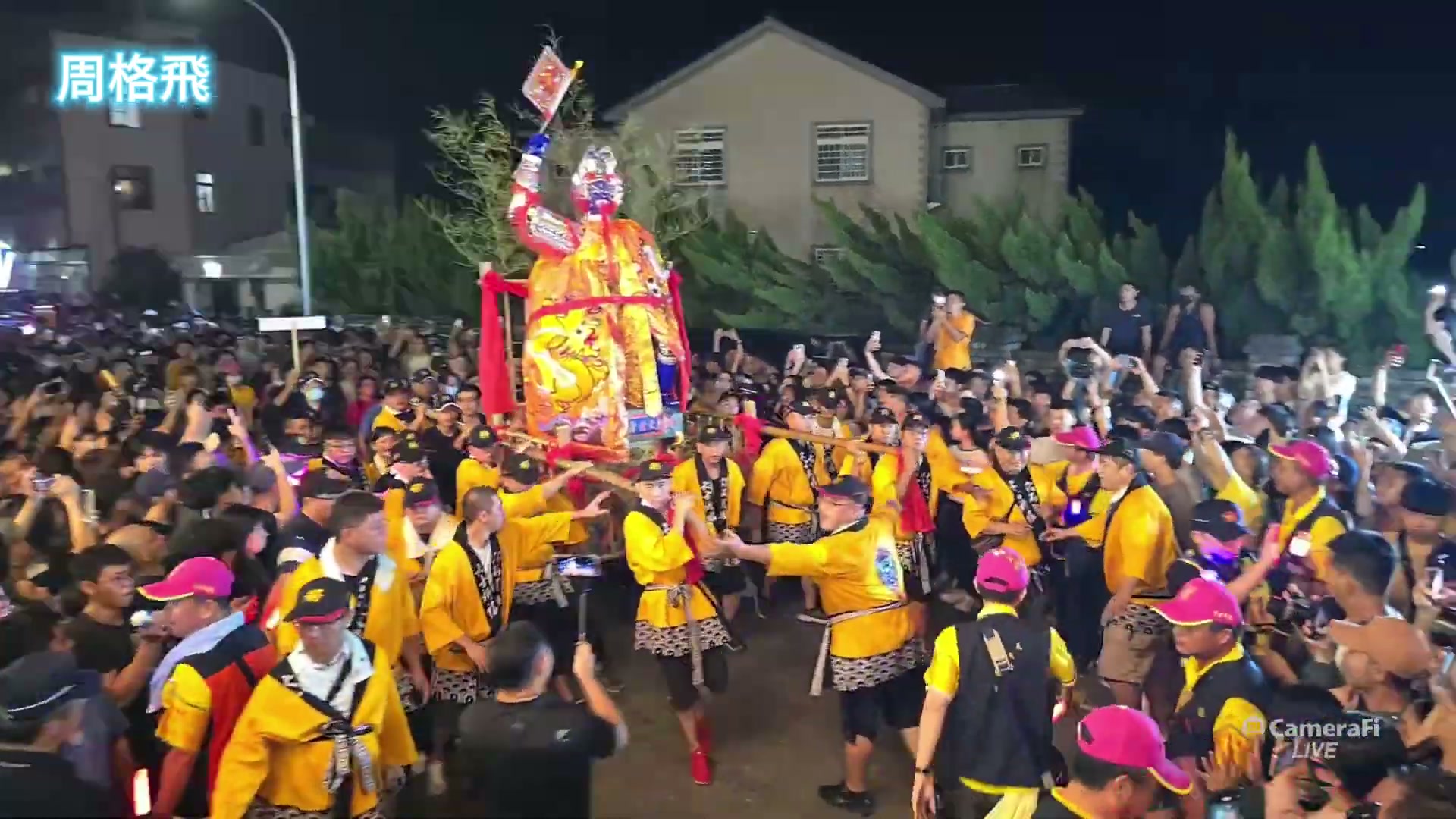
The carriers connect the streets
The route moves from the temple-side streets past lanterns, an underpass and more open ground. The figure’s height first draws the eye. Then look lower: the carrying poles, shoulders and people keeping the passage clear allow it to move.
Notice how the figure responds to footsteps and turns, and how spectators make space. Keep within the guided viewing area and leave the carriers a clear passage. These short scenes are excerpts from the same night’s journey.
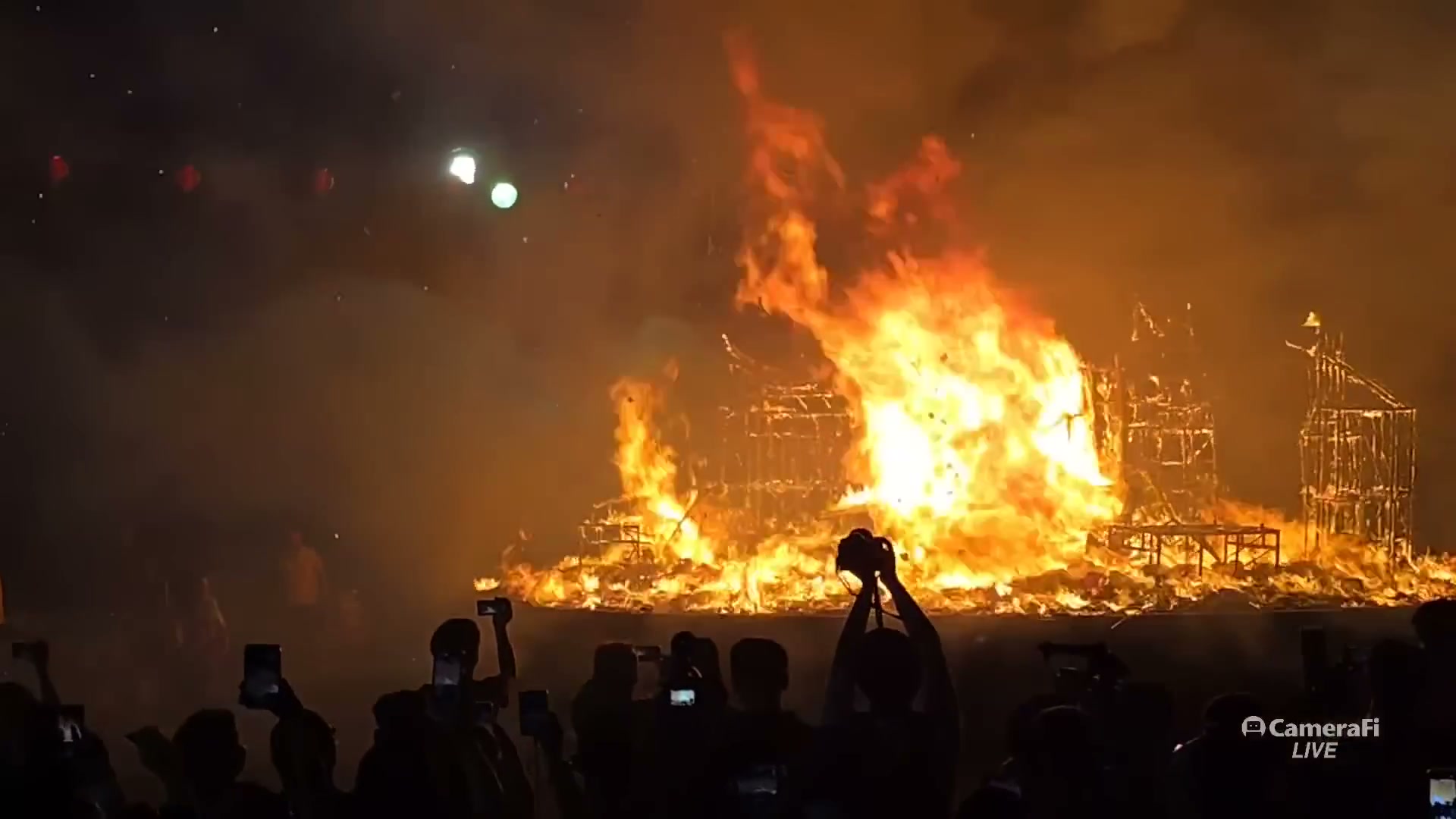
The closing fire
At the ritual ground, the figures stand in an open area. Torches rise, followed by the burning that completes the ceremonial send-off. After the offerings, carrying and gathering, the closing fire can be understood as part of the work that brought everyone here.
These scenes follow the farewell, ceremonial burning and return on the same night, 26 August 2024. Ninety seconds shows how those stages connect; the festival’s other days and rites need separate understanding. Historical footage is not a current event announcement.
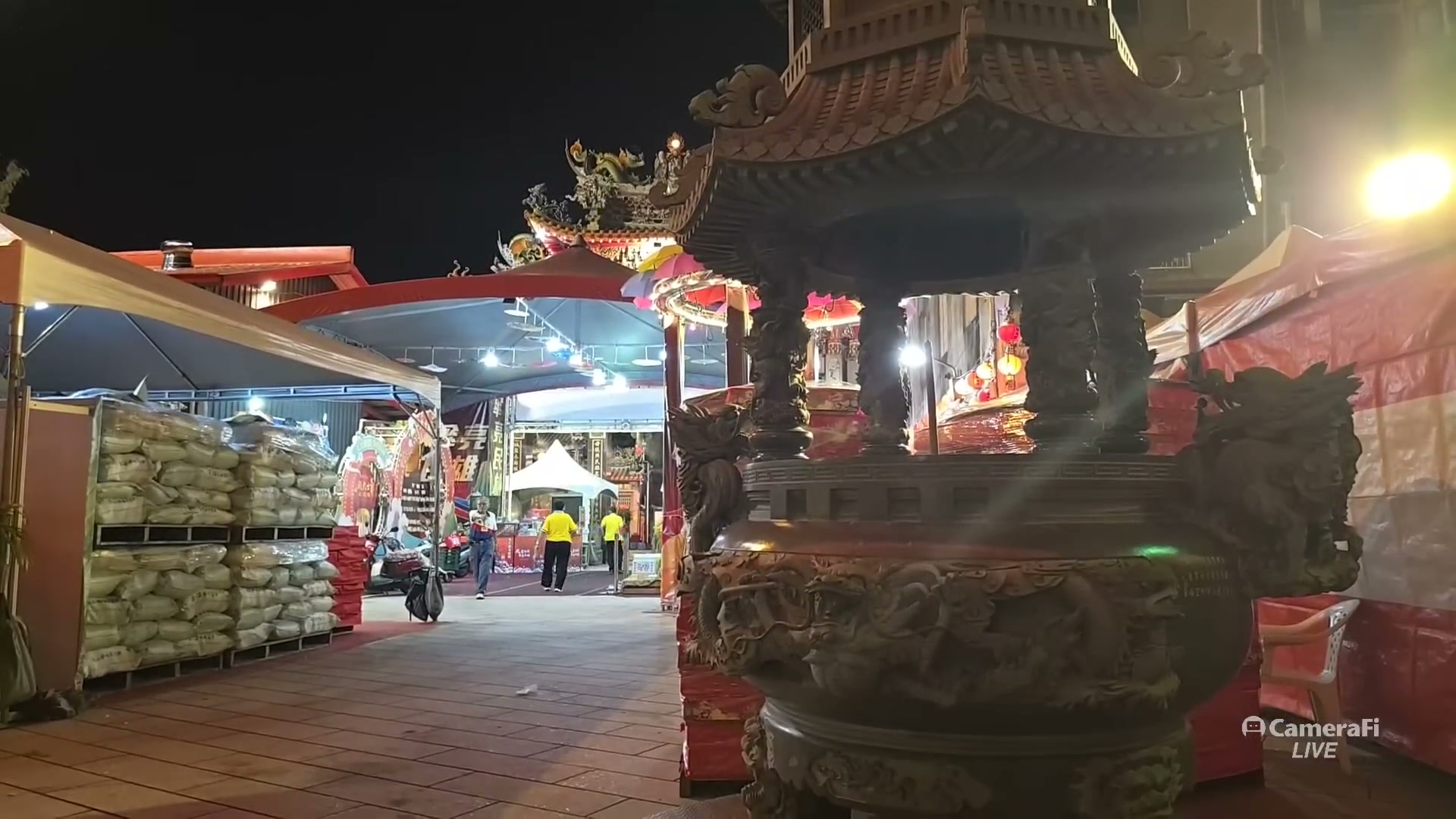
Return to the town
The walk back brings the temple, canopies and thinning crowd into view again. Dashiye Temple is at 81 Zhongle Road in Minxiong, Chiayi County. Outside the festival, its entrance, shared shrines and street-house proportions offer another way to understand its place in the town.
Plan a return train, accommodation or a pickup outside the festival area before a night visit, and follow the on-site guidance. These images are from 2024, rather than a current event notice. Check the organiser’s announcements for each year’s programme and access arrangements.
Film, article and image sources
The film draws on the farewell procession, ceremonial burning and return on 26 August 2024. This historical footage is not a current event announcement. Original creator watermarks remain visible and an instrumental soundtrack is added; ninety seconds does not represent the full festival programme or rites.
1. 周格飛 · 2024
2. 周格飛 · 2024
3. 周格飛 · 2024
4. 周格飛 · 2024
5. 周格飛 · 2024
Music: 跨海的一段路 (AI-generated instrumental).