
Cultural story
Meinong paper umbrellas: turn the beautiful side over
Behind the painted surface are ribs, binding and a family’s changing reasons for keeping a workshop alive.
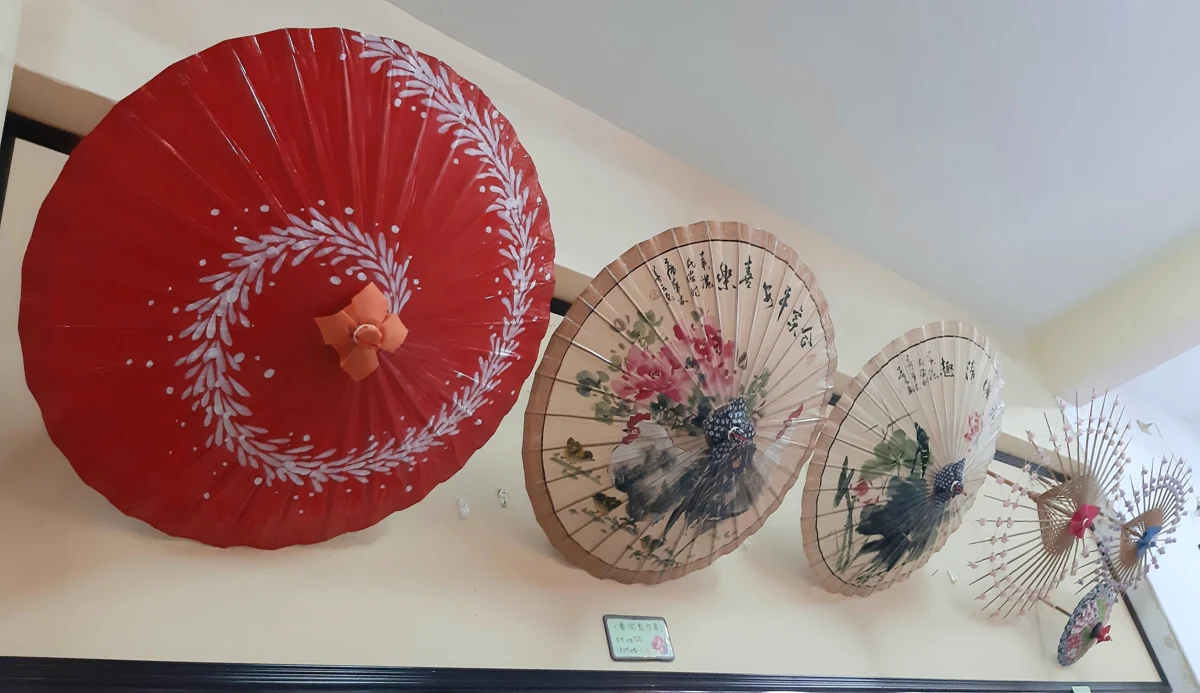
Look beneath the paint at ribs, paper and binding.
Guang Jin Sheng’s family history connects everyday production with craft preservation.
The underside holds the picture up
A painted umbrella first attracts the eye as a circle of colour. Turn your attention underneath: ribs spread from the centre, joints control the opening and threads hold the structure together. The paper’s shape depends on this arrangement. Painting gives the object an image, while the frame makes that image something that can open, close and be held.
Frame making, binding, attaching paper and applying oil occupy different stages of the craft. A painting session starts with much of that work already done. For a closer look, compare an unfinished frame with a finished umbrella: the blank spaces in one explain the support hidden behind the other. The display at Meinong Folk Village places painted umbrellas beside exposed frames, making this relationship between the two sides visible.
One Meinong umbrella in the Taiwan Historica collection records the division between materials more precisely: soaked moso bamboo was cut into ribs, cotton thread joined the frame, and cotton paper received tung oil and a glossy finish. This describes that collected object, rather than today’s recipe at every workshop. Bamboo supports, thread joins and paper covers the gaps; the surface treatment answers another requirement of use. Following the meetings between materials reveals how much lies behind an object described simply as a paper umbrella.
Papering also offers choices. Taiwan Historica’s dictionary records one method using triangular pieces of cotton paper and another using a whole sheet with resin adhesive to save time. Attachment, drying, painting and the final oil treatment do different jobs; adhesive and protective coating should not be collapsed into one process. Lin Rong-jun’s recollection of green-persimmon glue belongs to this work of joining materials. Ask how a particular canopy was made instead of using one formula to judge every Meinong umbrella.
A childhood memory of sticky work
Umbrella maker Lin Rong-jun remembered boiling green persimmons into adhesive as an unpleasant childhood task. In his 2011 account, the dark glue was especially troublesome when it stuck to clothing. The detail shifts attention from a decorative souvenir to the materials handled by a working household. Something delicate began with work that could be sticky and difficult to clean.
He later continued Guang Jin Sheng, founded by his father Lin Siang-lin, together with his wife Wu Jian-ying. His parents had made umbrellas to earn a living; he described his own work in terms of keeping their skills alive. The object stayed recognisable while its place in the market changed, asking the next generation to find a new reason for doing the same demanding work.
Taking over did not mean that childhood observation had made him proficient in everything. In a later interview, Lin distinguishes four specialisms—frame making, papering, oiling and fitting the handle—and says that he still had to work things out after having helped as a child. Knowledge once divided among apprenticeships had to be connected again within a family workshop. Inheritance involves more than keeping tools: it also means recovering how one stage is ready for the next. Painting a finished canopy and learning to make the whole umbrella are different kinds of learning.
Design gives the craft another life
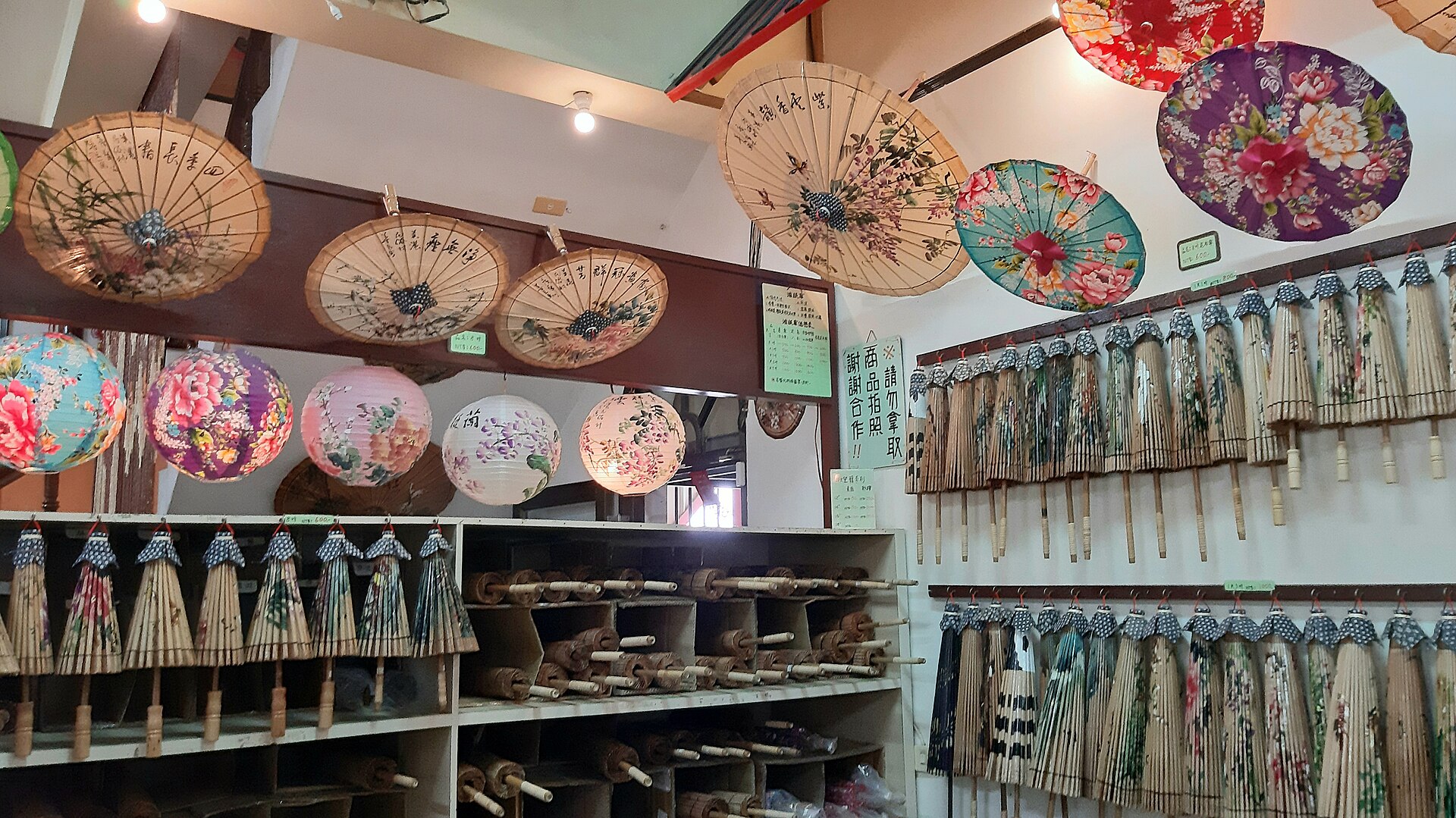
Lin brought calligraphy and painting to the surface, while Wu worked with paper-cut designs. These choices show how a workshop can keep its construction knowledge and still develop a different visual language. Look at the relationship between the pattern and the umbrella’s radial structure: a composition has to work across folds rather than on a flat sheet.
Visitors’ workshop accounts help separate these stages: a small blank umbrella is already a made object before a guest adds colour. Watching a demonstration and painting one yourself reveal different things. Keep both in view and the souvenir can become a reminder not only of the design you chose, but of all the work that made it possible.
A motif can also be read specifically. The National Immigration Agency’s cultural introduction links peonies with prosperity, pine and cranes with longevity, and bamboo with peace. These familiar associations can carry a giver’s wishes, but they do not supply a ready-made explanation for every work by Lin and Wu. When an explanation is available, begin with one motif, then see how it follows the radial frame and continues across folds. Looking at the umbrella can hold two questions together: how was it made, and what does this particular work convey to someone?
Look closer
Look at one rib joint, the binding between ribs and the fold in the paper before considering the painted motif.
Visiting information
- Place
- Guang Jin Sheng Paper Umbrellas, 47 Minquan Road, Meinong District, Kaohsiung.
- Visit
- At the family workshop, compare finished umbrellas with their construction. Contact 07-681-3247 to arrange a craft explanation or a painting session; these require different amounts of workshop time. Arrange access before attending and ask which stages will be demonstrated. A painting session uses an already made umbrella and does not promise observation of the full manufacturing process.
- Getting there
- From Zuoying, take the Qishan–Meinong express coach to Meinong, then walk towards Minquan Road. The city tourism guide describes the workshop as about a twenty-minute walk from Meinong station.
- Return
- Walk back to Meinong station for the coach towards Zuoying. Check the return departure before beginning a painting session so the activity fits the journey home.